
mon-fri 9-13 / 14.30-18.30
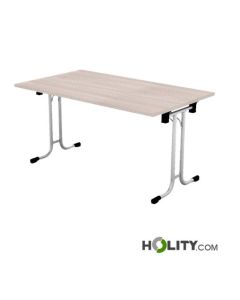
Folding table for conference rooms. Dimensions: W.140 x D.80 x H.72 cm. Melamine top and chrome-plated steel structure.
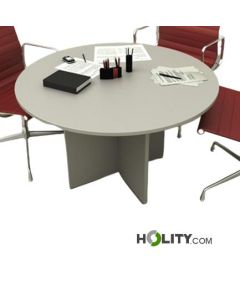
Circular conference table. Dimensions: Ø120 x h.72 cm. Available in multiple finishes.
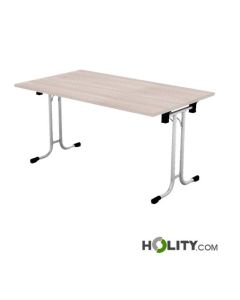
Folding table for meeting room. Dimensions: L.160 x D.80 x h.72 cm. Top available in multiple colors.
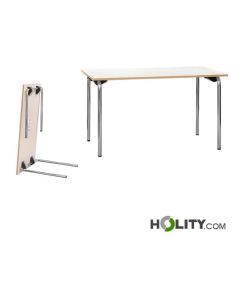
Multipurpose table with metal folding legs, ivory top. Space-saving model. Dimensions: W. 90 x D. 70 x H. 73 cm.
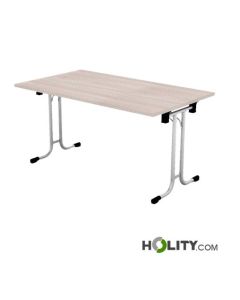
Meeting table with folding legs. Dimensions: W.180 x D.80 x H.72 cm. Chrome-plated steel legs and melamine top.
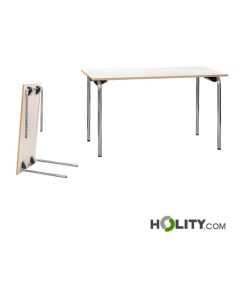
Multipurpose table with metal folding legs, ivory top. Space-saving model. Dimensions: W. 120 x D. 70 x H. 73 cm.
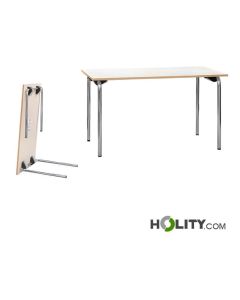
Meeting room table with metal folding legs, ivory top. Space-saving model. Dimensions: L. 140 x D. 70 x H. 73 cm.
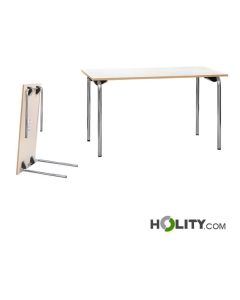
Meeting room table with metal folding legs, ivory top. Space-saving model. Dimensions: L. 160 x D. 60 x h. 73 cm.
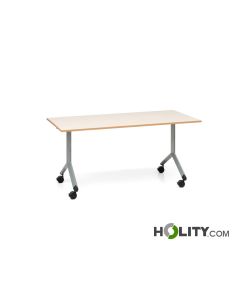
Multipurpose table with folding and stackable top, metal structure with wheels. Dimensions: W 120 x D 80 x H 75 cm.
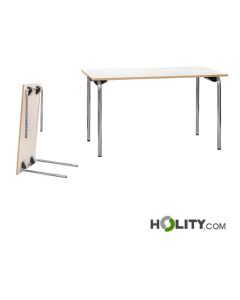
Meeting room table with folding metal legs, ivory top. Space-saving model. Dimensions: W. 180 x D. 60 x H. 73 cm.
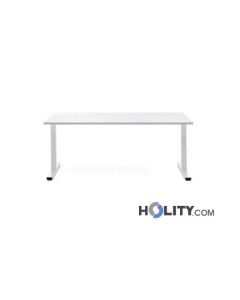
Meeting room table with melamine top available in various colors. Dimension: 120 x 80 cm.
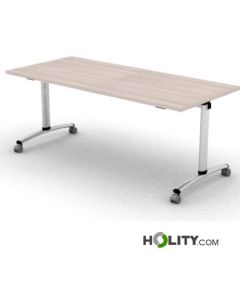
Folding table on wheels for conference rooms. Dimensions: W.180 x D.80 x H.73 cm. Top available in several colors.
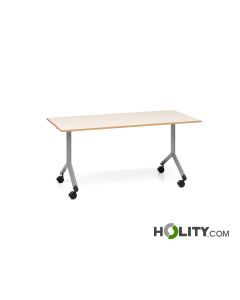
Multipurpose table with flip-top, metal structure with feet. Dimensions: W 160 x D 80 x H 75 cm.
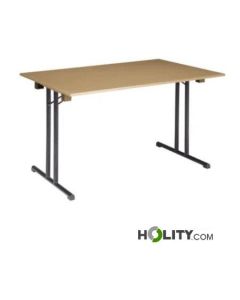
Folding conference table. Dimensions: W.120 x D.45 x h.73.5 cm. Black frame and top available in multiple finishes.
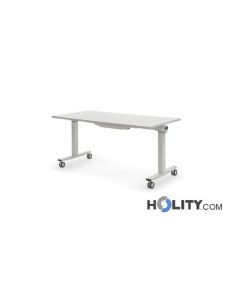
Conference room table with folding top with steel legs and wheels. Dimensions: W.120 x D.80 cm.
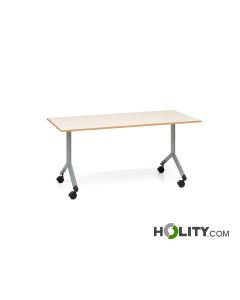
Multipurpose table with flip-top and horizontally stackable. Dimensions: W 180 x D 80 x H 75 cm.
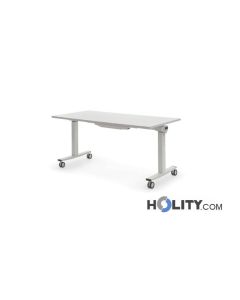
Training course table with folding melamine top. Dimensions: W.140 x D.80 cm. Top thickness: 25 mm.
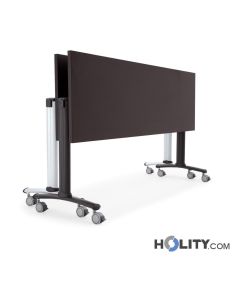
Conference table with black legs and rubberized wheels. Top available in different colors. Dimensions: W.140 x D.80 cm.
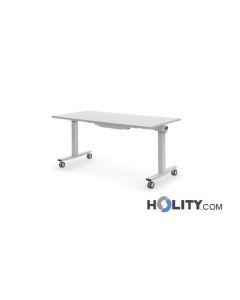
Meeting room table with melamine top with 25 mm thickness. Dimensions: L.160 x D.80 cm.
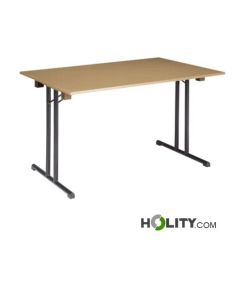
Folding conference room table. Dimensions: W160 x D45 x H73.5 cm. Top available in multiple finishes.
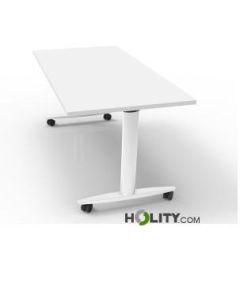
Conference table with folding top. Dimensions: W.140 x D. 80 cm.
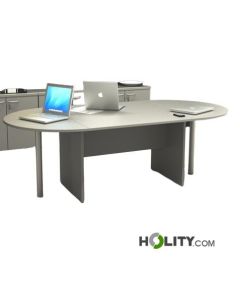
Meeting room table in melamine. Dimensions: W.220 x D.110 x h.72 cm. Available in various finishes.
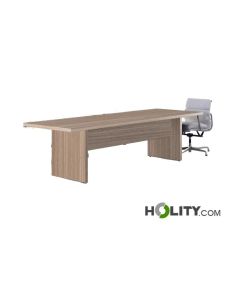
Conference table in melamine. Dimensions: W.220 x D.100 x H.74 cm. Top available in several finishes.
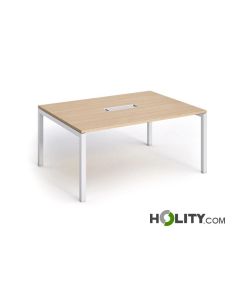
Meeting room table with cable management. Dimensions: W.160 x D.120 x h.72.5 cm. Top available in multiple finishes.
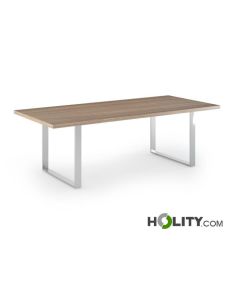
Meeting room table with metal legs and melamine top. Dimensions: W.220 x D.100 x h.74 cm.
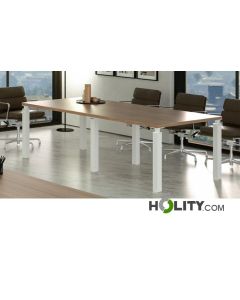
Rectangular table for conference rooms. Dimensions: W.220 x D.100 x H.74 cm. Top available in multiple finishes.
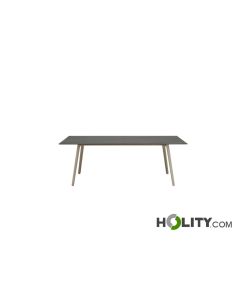
Rectangular conference table. Dove grey painted legs. Dimensions: W.209 x D.100 x H.73 cm.

Meeting room table with die-cast aluminum legs and HPL top. Dimensions: W.209 x D.108 x H.73 cm.
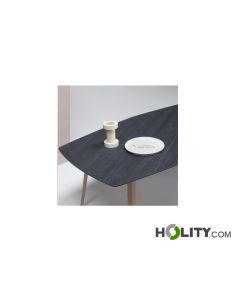
Hexagonal conference room table. Dove grey painted legs. Dimensions: W.299 x D.129 x H.73 cm.
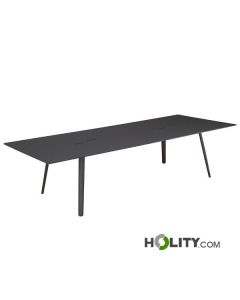
Conference table with cable management. Dimensions: W.299 x D.120 x h.73 cm. Available in various colors.
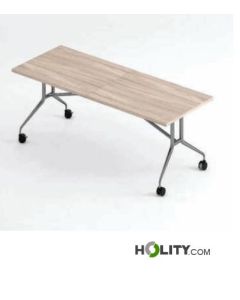
Table for setting up meeting rooms. Folding structure and legs with wheels. Dimensions: W.200 x D.80 x H.75 cm.
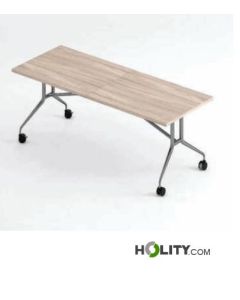
Foldable meeting room table. Dimensions: L.260 x D.80 x h.75 cm. Available in multiple finishes.
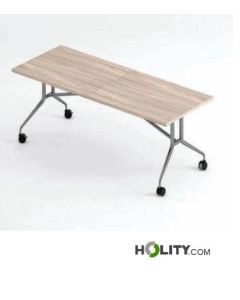
Folding meeting room table. Melamine top and chrome steel structure. Dimensions: W.280 x D.80 x h.75 cm.
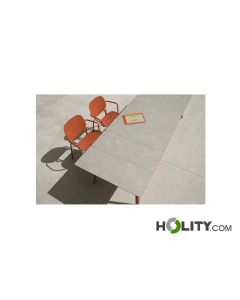
Meeting table with extendable top. Extended dimensions: W.289 x D.100 x H.73 cm.
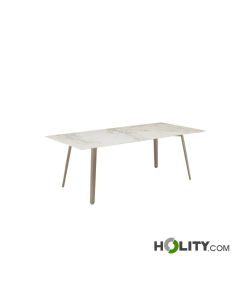
Conference table with aluminium legs and marble top. Dimensions: W.209 x D.100 x H.74 cm.
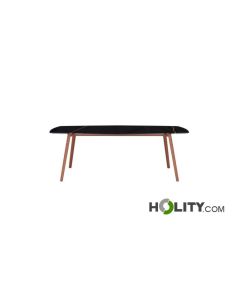
Conference room table with top available in different finishes. Dimensions W.209 x D.108 x H.74 cm.
Conference tables represent a fundamental element in the furnishing of spaces dedicated to meetings, seminars, and corporate events. These furnishings are not simple support surfaces, but solutions designed to foster communication, space organization, and operational efficiency in professional contexts. The choice of conference table directly affects the room’s functionality, the perception of the environment, and the ability to welcome participants comfortably and in an orderly manner. Available in multiple configurations, sizes, and finishes, conference tables meet the specific needs of public bodies, private companies, healthcare facilities, communities, and organizations dedicated to events.
A high-quality conference table combines structural robustness, practicality, and installation versatility. The most popular models include folding versions to optimize space, tilting tables with wheels to facilitate transport and the reconfiguration of the environment, and fixed solutions with melamine tops or other wear-resistant materials. Versatility is a crucial aspect: many models adapt to multiple contexts, from traditional meeting rooms to training courses, from conventions to public events. Dimensions vary to accommodate groups of different sizes, from small meetings to assemblies of dozens of people.
Investing in appropriate conference tables generates tangible benefits for the quality of workspaces and the productivity of meetings. A table well-proportioned to the number of participants creates a professional environment that communicates order and seriousness. Operational functionality translates into more efficient meetings: large surfaces allow for the arrangement of materials, documents, and technical equipment without clutter, while the standardized height (generally around 72-75 cm) ensures ergonomics during prolonged sessions. Conference tables also solve the crucial problem of space: folding and wheeled models allow a multi-functional room to be transformed in minutes, reducing real estate management costs and increasing the flexibility of environment use.
Beyond the functional aspect, a conference table contributes to the visual identity of the space. Finishes available in melamine, wood, laminate, or paint allow the furniture to be adapted to the corporate style, from more traditional to contemporary solutions. Durability is a relevant economic factor: chrome-plated or painted steel structures, wear-resistant tops, and quality construction details reduce maintenance costs over time. For facilities that frequently host meetings, public events, or training courses, a conference table represents an investment that pays for itself quickly based on intensive use and productive longevity.
The conference table catalogue is divided into different structural solutions, each responding to specific operational needs. Folding tables are the most versatile and widespread solution: equipped with legs that fold onto themselves, they allow for a significant reduction in footprint when not in use, facilitating storage in limited spaces or movement between different environments. The tops, generally in melamine, are available in standard sizes ranging from 90 to 180 cm in length, with depths of 60-80 cm. Tilting tables represent another important category: the top, through a simple mechanism, tilts vertically, allowing for the horizontal nesting of multiple units. This feature makes them ideal for facilities with limited storage space or for organizations that require different configurations for the same environment.
Alongside the mobile versions, there are fixed tables with solid steel structures and large tops, designed for permanent medium and large meeting rooms. Some models include integrated cable management, a practical solution for managing power and connection cables for technical equipment (monitors, projectors, audio systems). Circular tables, less frequent but sometimes used in specific contexts, favor a more collegial arrangement and reduce perceived hierarchies during meetings. Top materials include melamine as an economical and practical standard, wood for more refined solutions, and high-wear resistant laminates. The legs, in chrome-plated or painted steel, guarantee stability and allow for the integration of rubberized wheels to facilitate movement.
The selection of a conference table must begin with an analysis of the dimensions of the available space and the number of people who will typically participate. A rule of thumb suggests reserving about 60-70 cm of width for each participant, also considering the space needed for chairs and movement. If space is limited or the room must serve multiple functions, folding or tilting tables are the smartest choice. It is essential to precisely measure storage spaces: a 160 cm folding table, when closed, occupies significantly less space than a fixed one. The frequency of use is another determining criterion: high-use environments, such as large company meeting rooms or training facilities, benefit from robust and durable structures, while settings with occasional use can opt for more economical solutions.
The height of the top is an often underestimated technical aspect, yet crucial for ergonomic comfort during prolonged sessions. The standard height of 72-75 cm ensures correct posture for most users when seated on conventional height chairs. If the environment involves the use of different types of chairs (variable heights), or if it hosts people with specific ergonomic needs, it is advisable to check this parameter. The finish of the top deserves attention in relation to usage: environments where notes are frequently taken or laptops are used require smooth, non-reflective surfaces; spaces where drinks or food are consumed benefit from easy-to-clean materials. Common mistakes include underestimating the necessary dimensions (leading to tables that are too small and create clutter) or overestimating available space (making them difficult to store when not in use). A preliminary analysis of movement flows, the desired configuration during use, and storage methods prevents inadequate purchases.
Conference tables intended for public and professional spaces must comply with regulations on structural safety and ease of use. The DIN EN 527 standard defines the quality and safety requirements for office furniture and workspaces, including tables and work surfaces. This standard establishes parameters for structural stability, the resistance of the top to concentrated and distributed loads, and mechanical durability during repeated opening and closing cycles (for folding models). Tables must guarantee a minimum load capacity (generally 50-75 kg per linear meter), verified through standardized tests. Dimensions and movement spaces must be compatible with accessibility regulations, particularly in public environments: if the table occupies a fixed space, it must allow access for people with reduced mobility.
For medical and healthcare environments, conference tables must meet criteria for hygiene and ease of sanitization. Materials and joints must allow for effective cleaning and the use of disinfectants commonly used in the healthcare sector. Tables intended for schools, universities, or professional training centers are subject to specific regulations on edge safety (they must not have dangerous corners) and resistance to repeated stress. Compliance with European safety standards is an essential requirement, especially for public facilities and entities operating in regulated sectors. Reliable suppliers provide declarations of conformity, structural safety certifications, and complete technical documentation. Recurring aspects to check include weld quality (for tables with steel frames), the resistance of seals and closing mechanisms (for folding ones), and stability under normal use conditions and when subjected to asymmetrical loads.
Explore all products in the category and compare the available solutions to find the one best suited to your operational context. Every conference table in our catalogue has been selected based on criteria of construction quality, versatility of use, and performance-to-investment ratio.
A folding table closes on itself reducing vertical bulk, ideal for limited storage spaces. A tilting table tilts the top vertically and nests horizontally, taking up less height but more floor space. The choice depends on where you intend to store the table when not in use.
The standard height is 72-75 cm from the floor to the top. This measurement ensures correct ergonomics when seated on conventional height chairs (40-45 cm). Check that it is compatible with the chairs used to avoid discomfort during prolonged meetings.
It is recommended to allocate 60-70 cm of width for each person around the table. This measurement considers the space for chair placement, access to the work surface, and a minimum distance to move without obstacles. For large groups, increase the table dimensions proportionally.
Yes, if they are manufactured according to structural safety regulations (DIN EN 527). Stability depends on the quality of materials and fastening mechanisms, not on whether the table is folding or fixed. Always check the manufacturer’s conformity certifications.
Melamine is practical, economical, and resistant to moderate wear. Wood offers greater elegance but requires more maintenance. Laminate is an intermediate solution. Choose based on the corporate context, frequency of use, and the ease of cleaning required in the environment.
Yes, if the environment involves frequent use of technical equipment (projectors, monitors, audio systems). Cable management allows for the orderly handling of power and connection cables, improving the visual order of the room and reducing tripping hazards.
Measure the available space considering: room length and depth, storage area for the table when closed, the number of people who will be around it, the need for chair movement, and passage space. Check that the dimensions of the closed table fit into the designated space.
Maintenance is minimal: clean the top with non-abrasive detergents for melamine, periodically check the stability of the closing mechanisms on folding tables, and check the condition of the wheels if present. High-use environments may require semi-annual structural checks.
 English
  Italian
 French
 German
 Spanish