The choice of walkers for the elderly and disabled It represents an important aspect in the organization of nursing homes, clinics, rehabilitation centers, and care facilities. Users can have very different mobility needs, and not all aids offer the same level of support or the same modes of use. A walker intended for short indoor journeys may have different characteristics than a model used along outdoor routes or during functional recovery activities. Therefore, the selection process must simultaneously consider the user's conditions, the recommendations of healthcare professionals, and the characteristics of the environment.
The availability of numerous configurations makes it necessary to make a comparison that goes beyond the simple distinction between models with and without wheels.Fixed walkers, rollators, devices with seats and braking systems They respond to different usage patterns and require specific checks. Adjustments, load capacity, dimensions, and maintenance conditions impact the ability to use the aid correctly over time. For purchasing managers, understanding these elements means identifying equipment consistent with user needs and the facility's daily organization.
Why choosing a walker requires a specific evaluation
The walker It is an aid designed to provide support during walking, but the way it performs this function varies depending on the configuration. Some models require lifting and repositioning, while others allow for movement via wheels. These differences affect the actions required of the user and the control of movement. Having more features does not automatically make a walker more suitable, because each characteristic must be related to the person's abilities and needs.
In professional facilities, the choice must be part of an evaluation process involving the relevant healthcare professionals. A seemingly practical aid may not be suitable for a person requiring a different form of support. Likewise, a functionally adequate model must be compatible with the spaces in which it will be used. The evaluation should therefore begin with the user and continue with an analysis of the technical and organizational characteristics, avoiding choosing solely based on price or immediate availability.
Intended use and user support needs
The first element to check is the intended use declared by the manufacturerNot all walkers are designed for the same conditions of use, and instructions may include specific limitations regarding the environment, load capacity, and mode of use. In a nursing home, for example, there may be people who require support for short trips and others who use the aid for longer distances. Selection must take these differences into account without automatically attributing a specific model to a clinical indication.
Balance, coordination, grip, and movement control skills must be considered by the healthcare professionals responsible for the assessment. The need for supervision during movement can also impact the organization of use. The walker must be compatible with the person's actual capabilities and should not be chosen assuming that the user can easily adapt to any configuration. This setting is particularly important in facilities that serve users with varying levels of independence.
Fixed walkers: features and conditions of use
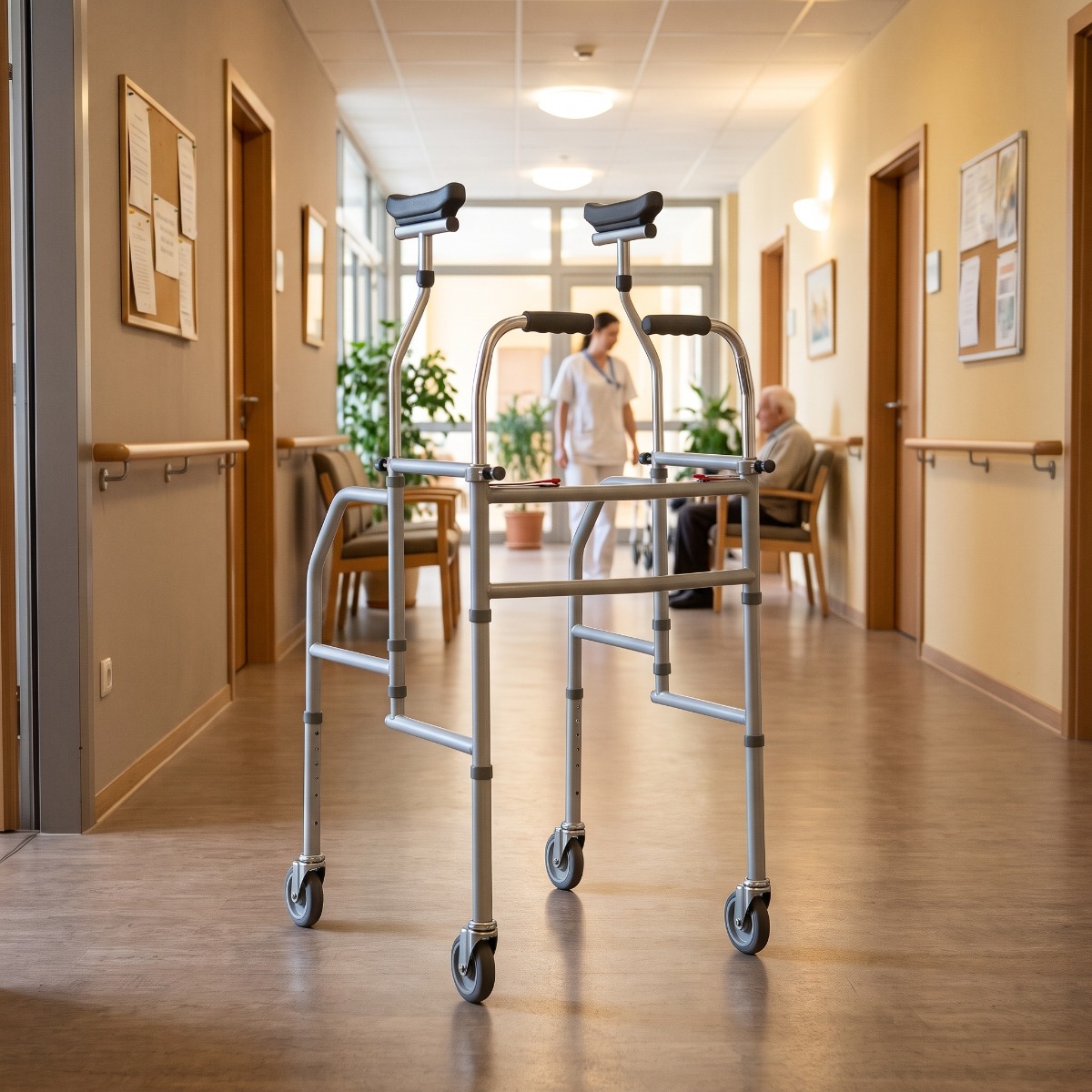 THE fixed walkers They generally feature a wheelless support structure, which is lifted and repositioned as the wheelchair moves forward. This mode requires adequate motor skills to operate the device and maintain control of the position. The structure may offer defined support points, but it should not be automatically considered appropriate for all people with balance difficulties. The choice requires an individual assessment and compliance with the model's instructions.
In a healthcare setting, fixed models can be considered when the advancement method is compatible with the user's needs. The usable surface, the device's dimensions, and the characteristics of the support terminals must also be considered. The correct use of a fixed walker depends on the ability to control each repositioning. For this reason, it is not enough to observe the simplicity of the structure, but it is necessary to verify how the aid is actually used during movements.
Wheeled Walkers and Rollators: What Differences to Consider?
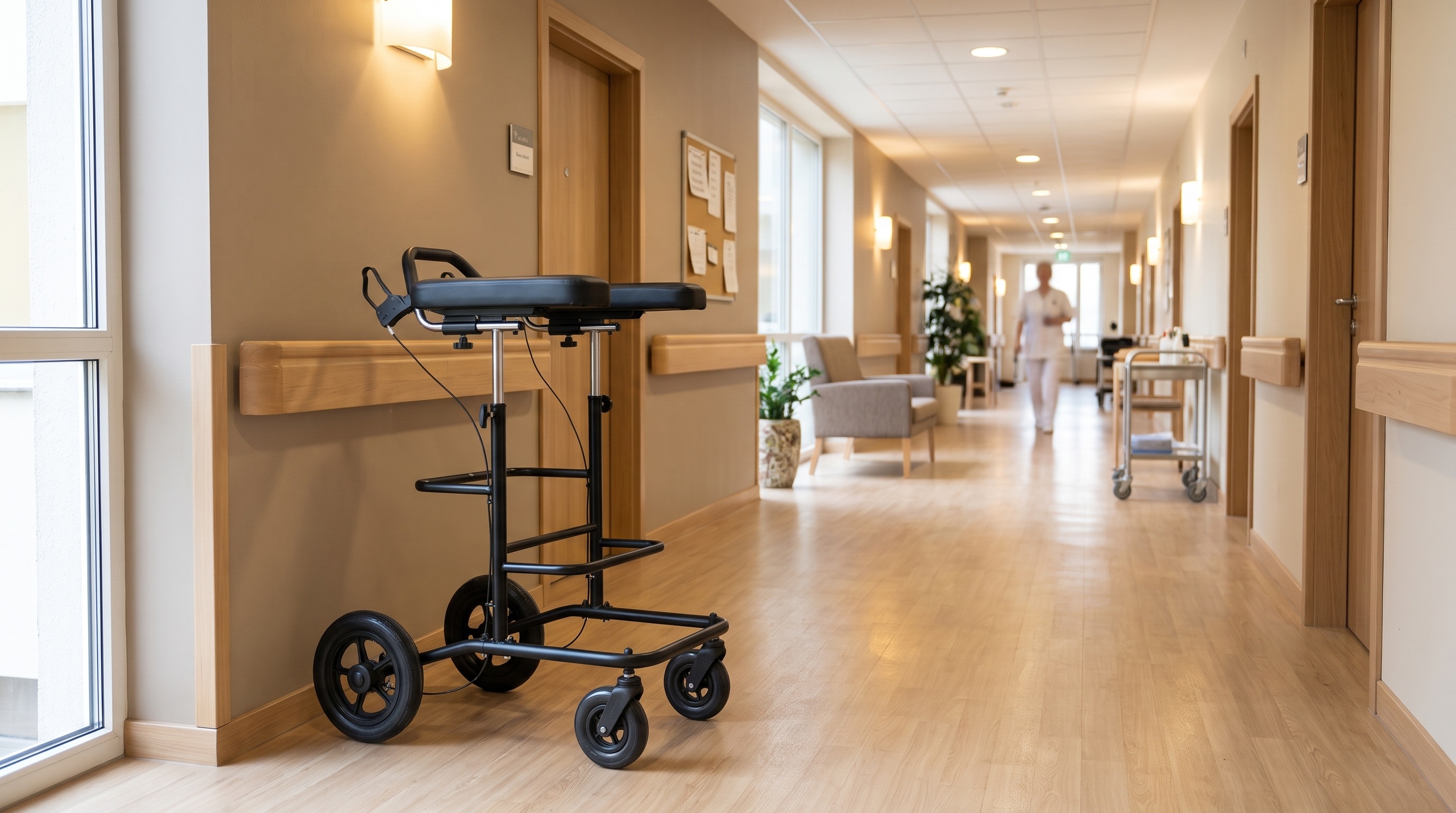
Wheeled walkers allow for different modes of movement than fixed models. The configuration may include wheels on only certain support points or a completely wheeled system. The term rollator It is commonly used to refer to wheeled walkers designed to accompany the user's movement, often equipped with handles and braking devices. The actual features must, however, be verified in the individual product documentation.
The presence of wheels changes the way the device is controlled. The user must be able to control the forward motion and, where applicable, the braking systems. A rolling model may be practical on certain routes, but it isn't necessarily suitable for people who cannot control its movement. The difference between a fixed walker and a rollator mainly concerns the support and advancement methodThe comparison must therefore focus on the skills required of the user and the expected conditions of use.
Rollator with seat and accessories: when are they useful?
Some rollators feature a built-in seat that allows the user to stop and rest, when the device is designed and approved for this function. The presence of a seat can be useful in situations where travel includes scheduled stops, but it should not be considered a necessary feature for every user. It is important to verify the manufacturer's seating requirements, including stability, the use of parking brakes, and the permitted load capacity.
Other accessories may include baskets, bags, or holders for carrying small personal items. These items must also be compatible with the model and used within the specified limits. A rollator with seat It must not be used as a wheelchair to transport a seated person, unless the manufacturer expressly declares such a function for that specific configuration. This distinction is important to avoid improper use of equipment that may appear similar but has different intended uses.
Braking systems and motion control
In rollators equipped with brakes, The locking system is a feature that should be carefully evaluated. Operation methods may vary and require different grip and coordination skills. Some models also include parking functions, useful under the conditions specified by the manufacturer. The presence of brakes alone does not guarantee adequate control, because it is necessary for the user to be able to understand and correctly manage its operation.
When choosing, it's important to check the location of the controls, the activation methods, and the maintenance instructions. A braking system must be maintained in the conditions specified by the manufacturer and inspected according to the facility's procedures. Any difficulty in operating should not be compensated for with improvised adaptations. For nursing homes and rehabilitation centers, checking the functioning of the brakes should be part of the routine maintenance of the aids, especially when they are used frequently.
Height adjustment and user adaptability
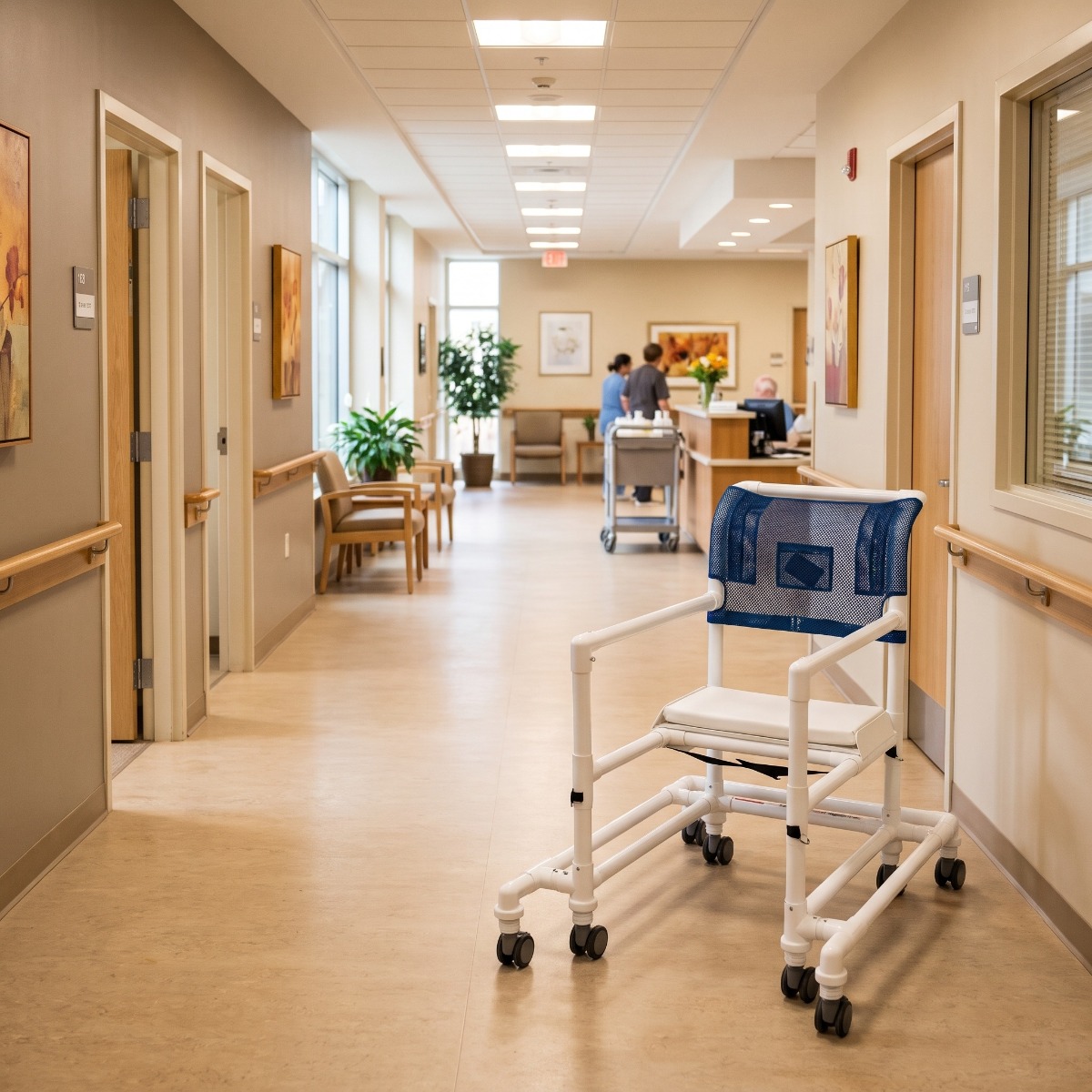 There height adjustment of the walker In models that allow it, the position of the handles can be adjusted to the user's characteristics. This option is particularly important in facilities that must handle people of different heights. The adjustment methods and ranges available are not the same for all devices, so it is necessary to check the technical specifications. The correct setting must be determined by competent professionals based on the individual and the intended use.
An adjustable aid isn't necessarily compatible with every body type. It's important to check that the stated range covers the required configuration and that the locking systems work properly. Adjustments must be made according to the manufacturer's instructions, avoiding unforeseen changes. In healthcare facilities, setting control becomes even more important when the same template is assigned to different users over time.
Load capacity, stability and construction features
There maximum flow rate The declared weight is one of the key factors in evaluating a walker. This value must be compatible with the user's weight and the conditions of use specified by the manufacturer. It's not appropriate to consider a seemingly robust structure sufficient without first checking the technical specifications. The configuration of the support points, the dimensions, and the materials also contribute to defining the device's characteristics, but they must be interpreted as a whole.
There stability It also depends on the conditions in which the aid is used. Flooring, obstacles, and driving methods can affect the device's behavior during movement. The nominal capacity does not replace the verification of the intended use and does not authorize the use of the walker in situations other than those intended. For professional purchases, it is therefore necessary to compare documented technical data, avoiding evaluations based solely on the weight or appearance of the structure.
Walkers for indoor and outdoor environments
Usage conditions can vary significantly between indoor and outdoor environments. Inside a nursing home or clinic, pathways may include corridors, rooms, and common areas with relatively uniform flooring. Outdoor spaces, however, may feature different surfaces, uneven levels, and variable weather conditions. The compatibility of the walker with the environment must be verified in the manufacturer's instructions, without assuming that every wheeled model is also suitable for outdoors.
Wheel characteristics, overall dimensions, and braking modes can affect practicality along different routes. Access to green areas, courtyards, and common areas must also be assessed based on the actual ground conditions. A model suitable for an internal corridor may not be suitable for uneven surfaces. Therefore, it is helpful to identify in advance the routes where the wheelchair will be used and compare them with the declared conditions of use.
The dimensions of the walker They impact the ability to move around the facility. Doors, corridors, room access points, and maneuvering spaces must allow for passage and use of the device under the intended conditions. A particularly large aid may be impractical in spaces with narrow passageways, while a more compact configuration must still provide the support the user requires. The choice of dimensions must therefore reconcile individual needs and architectural characteristics..
It's also important to consider the spaces designated for storing aids when they're not in use. Some models feature folding systems that can reduce their bulk, but the folding and locking methods must be verified. The walker should not be left in positions that obstruct walkways or exits. Organized storage helps keep spaces accessible and makes daily tasks easier for staff.
Choosing the most suitable walkers for the elderly and disabled means evaluating stability, comfort, adjustments, and safety, comparing fixed models and rollators to meet the mobility needs of users in nursing homes, clinics, and rehabilitation centers.
Comfort, grips and ease of use
The handles They represent one of the main points of contact between the user and the walker. Shape, material, and position can affect their practicality while moving. The choice must consider the user's characteristics, including gripping ability and any difficulties in maintaining control of the device. Comfort does not only depend on the presence of soft coverings, but by the set of ergonomic features and the correct configuration of the aid.
It's also important to ensure the simplicity of the operations required to use the device. Adjustment systems, brakes, any locking mechanisms, and accessories must be clearly understood by those responsible for using them. In healthcare facilities, staff must be familiar with the features of the available models and the conditions required for each. Ease of use contributes to more orderly management, but should never replace an assessment of the device's suitability.
Cleaning, maintenance and periodic checks
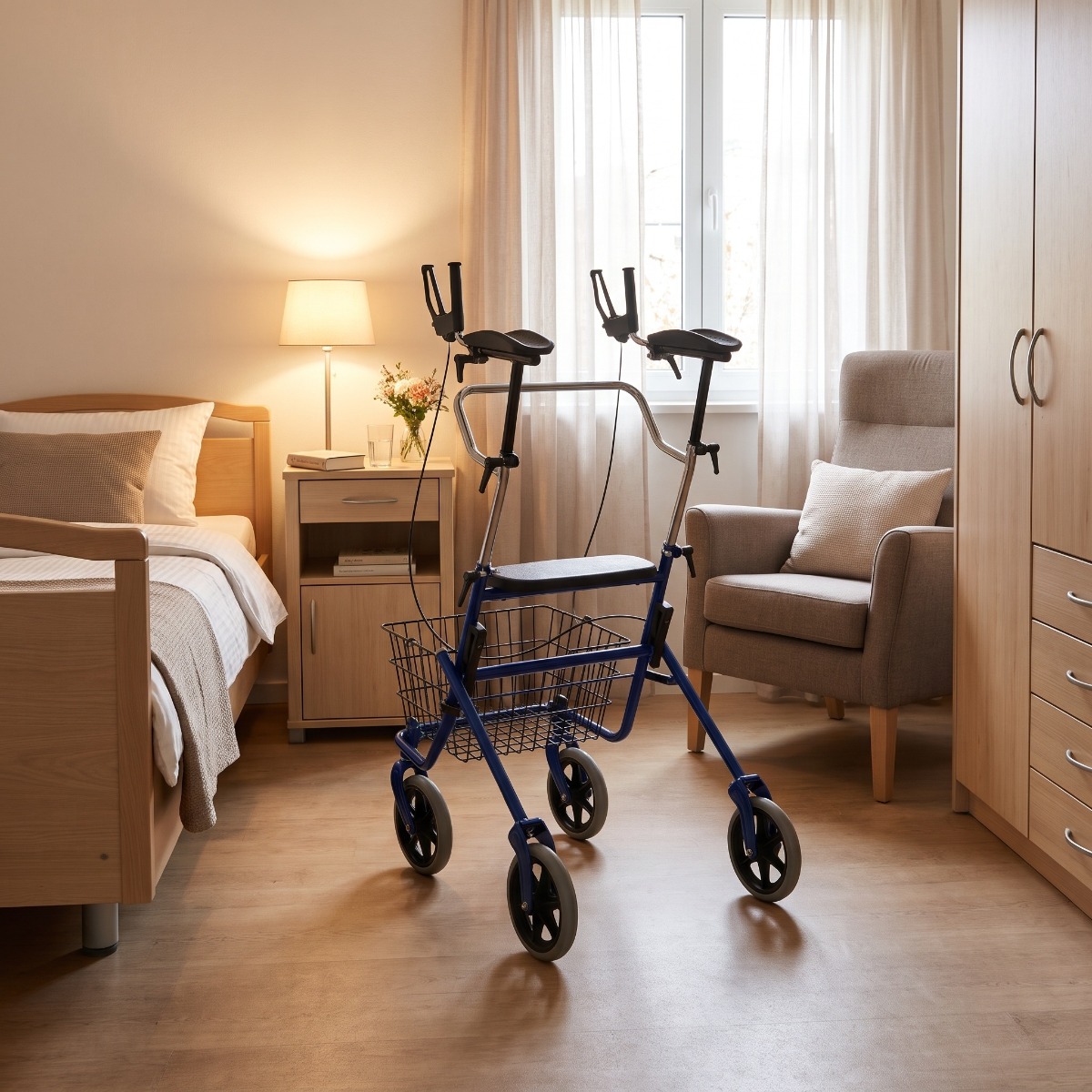 THE walkers Used in professional environments, they require careful management of cleaning and maintenance conditions. Surface treatment methods must comply with the manufacturer's instructions and the facility's hygiene procedures. Materials and components may have different characteristics, so it's inappropriate to indiscriminately use the same products on all models. Ease of cleaning is an important selection criterion, especially when the aids are used in shared departments or environments.
Maintenance also includes checking components subject to wear. Wheels, support ends, handles, brakes, and adjustment systems must be checked according to applicable guidelines. A damaged component can compromise the proper functioning of the aid and require repair before the next use. The facility should therefore provide clear procedures for reporting anomalies and managing temporarily unusable equipment, avoiding improvised repairs.
Management of aids shared between multiple users
In some facilities, walkers can be permanently assigned to one person, while in other situations, they can be used by different users. The second option requires particular attention to the compatibility of adjustments and conditions of use. A device previously configured for one user should not automatically be considered suitable for another. Each new assignment requires a review of eligibility and settings, according to the procedures and responsibilities defined by the structure.
Managing shared aids also includes cleaning, inspections, and the availability of instructions. It can be helpful to establish identification and registration procedures that allow staff to recognize devices and report any problems. These procedures must be appropriate to the size and organization of the facility. The goal is to keep the available aids in appropriate condition, preventing immediate operational needs from neglecting necessary checks.
How to compare walkers before buying
For nursing homes, clinics and rehabilitation centers, the comparison between walkers for the elderly and disabled It should start with a definition of actual needs. It's necessary to identify the types of users, the environments in which they will be used, and the required features, distinguishing between essential and optional features. It's then possible to verify the intended use, configuration, load capacity, adjustments, dimensions, and braking systems. The manufacturer's technical documentation is the reference for assessing the compatibility of different models.
Purchase price is a factor in the evaluation, but it shouldn't be considered separately from operating requirements. Cleaning, inspections, maintenance, and availability of manufacturer-provided components can impact long-term use. Holity, specialist in professional supplies for healthcare and assistance facilities, represents a reference for managers who must compare equipment intended for organized contexts. Effective selection requires documented characteristics and a concrete match between device, user, and environment.
A choice consistent with users, environments and organization of the structure
There selection of walkers It shouldn't be limited to choosing between a fixed model and one with wheels. Each configuration has characteristics that must be considered in relation to the user's capabilities and the expected conditions of use. Adjustments, load capacity, braking systems, seating, and overall dimensions all contribute to determining the suitability of the device. The main criterion remains the compatibility between the person's needs and the intended use of the aid., to be verified with the support of competent healthcare professionals.
For professional facilities, a careful selection process must also include post-purchase organizational aspects. Allocation management, periodic checks, and maintenance ensure the aids remain in the expected condition during their use. Holity, specialist in professional equipment for nursing homes, clinics and care facilities, constitutes a reference for evaluating solutions consistent with the operational needs of the sector. Compare the specifications of the walkers for the elderly and disabled This means identifying appropriate devices not only at the time of purchase, but also for their daily management within the facility.
 English
 Italian
 French
 German
 Spanish