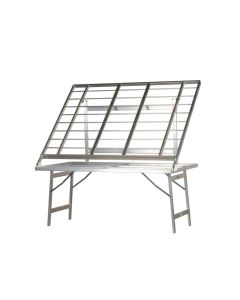
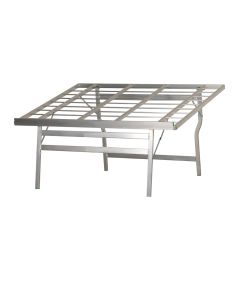
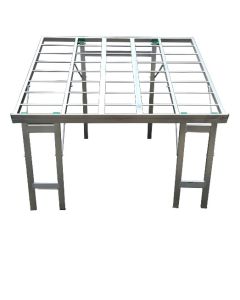
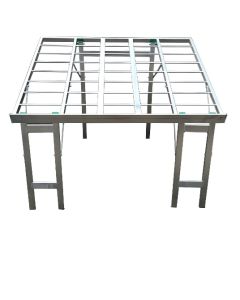
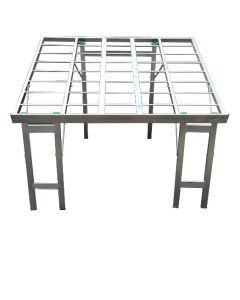
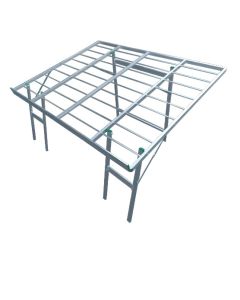
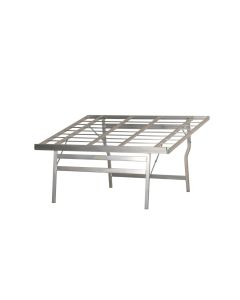
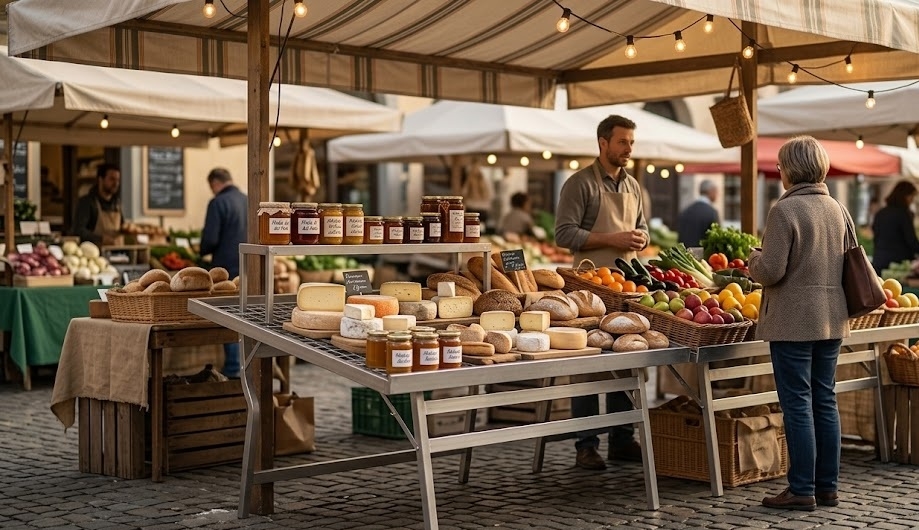
Comparing market stall prices means going beyond the figure indicated in the product sheet and evaluating dimensions, materials, load capacity and configuration of the top. A lightweight stall for small loads has different characteristics compared to a reinforced structure intended for fruit and vegetables or for intensive itinerant use. Foldability, adjustable feet and display surface also affect the value of the supply. The best quality-price ratio therefore arises from the comparison between cost and actual use.
The price of a market stall depends on the configuration
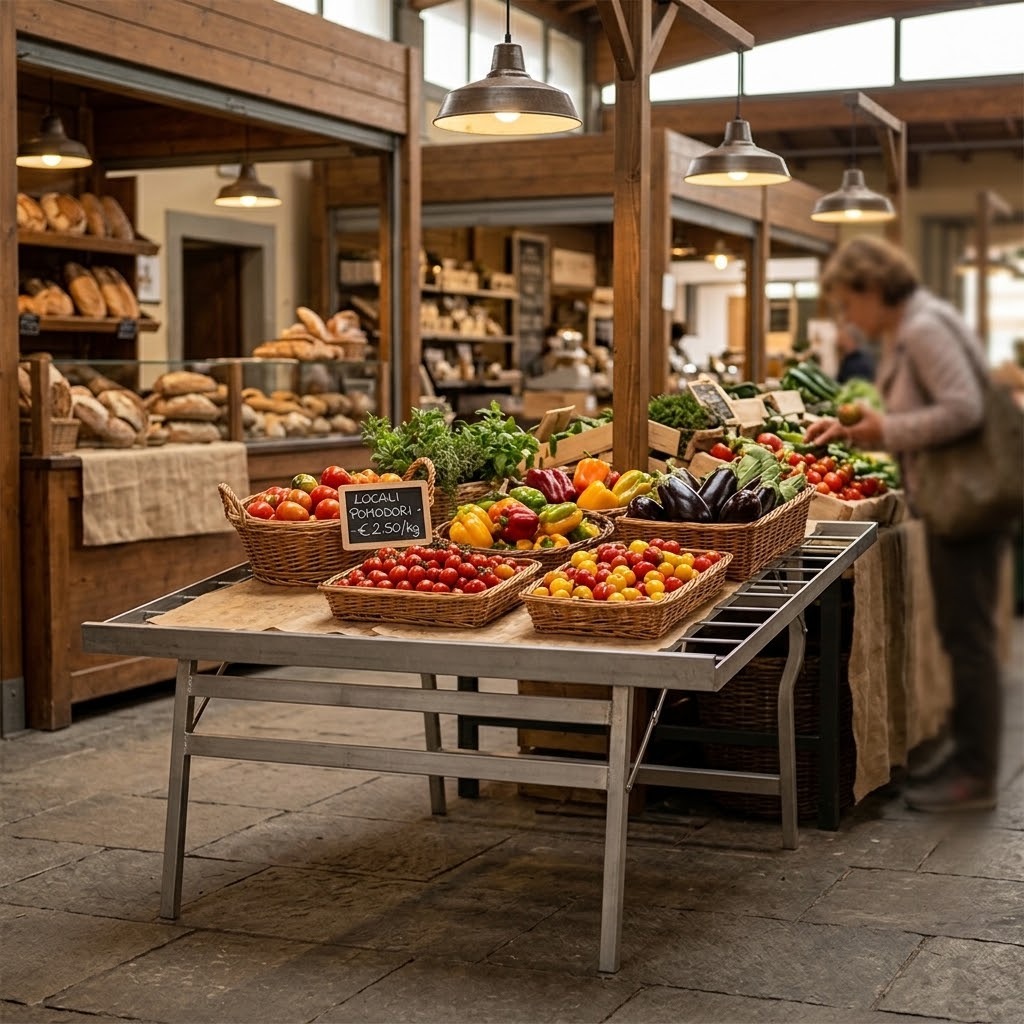 There is no single price valid for every professional market stall. The same category includes compact structures, inclined models for fruit and vegetable crates, horizontal tops, reinforced stalls and solutions with a more structured display surface. Each configuration requires different quantities of material and a structure designed to support specific loads. For this reason, two apparently similar models can be placed in significantly different price ranges.
In the Holity catalogue currently available for consultation, for example, a lightweight 100 x 150 cm counter with a declared load capacity of 40 kg/m² is offered at €115.80 + VAT, while a reinforced folding structure for fruit and vegetables reaches €371.40 + VAT. These are useful values for understanding the breadth of the category, not an immutable price list, because availability and prices can vary over time. The cost must therefore always be linked to the technical characteristics of the individual model.
Dimensions and display surface affect the cost
The surface available for displaying the goods is one of the first parameters that influence the price. A larger counter requires a structure capable of supporting a larger surface and, depending on the configuration, can be too large. use more consistent profiles and reinforcements. However, increasing the surface area does not automatically determine a proportional increase in price. The material, capacity and geometry of the counter continue to affect the overall value.
Holity offers different formats in the same category, with tops that include 100 x 120 cm, 100 x 150 cm and 120 x 150 cm configurations, as well as more complex models. Before purchasing, it is therefore useful to start from the square footage actually required for the display and the available parking space. Choosing an oversized counter can unnecessarily increase investment, weight and transport space. The correct size is the one that allows you to display the intended goods without adding unused surface area.
Materials and structure distinguish the simplest models from the professional ones
The construction of the counter is One of the elements that most explain price differences. Structural profiles, display surface, joints, and feet contribute to determining weight, rigidity, and usage. A model designed for lightweight installation can utilize a basic configuration, while a counter intended for frequent use generally requires a structure consistent with greater stresses and loads. It is therefore not enough to simply compare width and length.
The Holity catalog features models with different profile sections and solutions with aluminum tops. A 60 x 150 cm inclined counter, for example, uses a 35 x 20 mm profile and declares a load capacity of 65 kg/m², while a lighter 100 x 150 cm solution has a load capacity of 40 kg/m². Holity, a specialist in professional equipment for street trading and exhibition spaces, therefore allows you to compare the price together with the construction features and not as an isolated data.
Load capacity and reinforcements become important with high loads
The load capacity must be evaluated in relation to the goods that will actually be placed on the counter. Crates of fruit and vegetables, plants, food packages or other goods can generate very different loads on the display surface. An operator who works mainly with light products may not need the same structure required by someone who fills the counter with numerous crates every day. Purchasing greater load capacity without a concrete need can increase the cost without producing a proportionate operational benefit.
At the same time, choosing a model exclusively because it is economical without checking the permitted load can lead to a supply that is not consistent with the expected work. The presence of reinforced profiles, additional supports and a structure designed for a higher load capacity normally helps to distinguish the more structured professional models. It is therefore necessary to always check the load capacity declared by the manufacturer in the technical data sheet. Price and load capacity only make sense when compared with the actual weight of the goods on display.
Inclined or horizontal surface: the function changes even before the price
The geometry of the surface determines the way in which the goods are presented and can modify the structure of the counter. Inclined models are frequently used for fruit, vegetables and flowers because they orient the display towards the customer. A horizontal surface, on the other hand, responds to different needs and may be more suitable when the goods must remain on a uniform surface. The economic comparison should therefore be made between products with the same display function.
The Holity catalogue includes both inclined counters and other professional configurations, with different heights of the front and rear legs. A 120 x 150 cm inclined aluminum model, for example, is offered at €231.00 + VAT and features different measurements between the front and rear of the structure. The price therefore reflects a combination of material, dimensions, and geometry, not just the presence of the inclination. Choosing the type of display first allows you to subsequently compare truly homogeneous prices.
The foldable structure has value in the logistics of the street vendor
For a street vendor, the stall does not necessarily remain in the same place. It must be loaded onto the vehicle, unloaded, assembled at the start of the day, and put away again at the end of the activity. In this context, the possibility of reducing the footprint takes on a concrete value that is not evident by looking only at the display surface. A foldable structure can simplify transport and allow more equipment to be organized in the same vehicle.
Foldability must however be evaluated together with weight, solidity and assembly method. A compact counter when closed but difficult to move may not be the most efficient solution for those who change markets every day. Likewise, a very light structure must have characteristics compatible with the expected load. The cost of a professional counter therefore also includes the practicality with which it can be managed before and after the sale, a particularly relevant factor in itinerant trade.
Double levels, wheels and advanced configurations increase the equipment
Within the higher price ranges, solutions with a more complex structure are frequently encountered. Multi-level surfaces, reinforced surfaces, larger dimensions or systems designed to facilitate movement require more components than a basic counter. These features can be useful when they allow you to increase the available surface area or better organize different products. However, they should not be automatically considered necessary for every street vendor.
The principle to follow is to verify how much each additional element is actually used during work. A second display surface can be of significant value for those who have many products, while it may be superfluous for a stall dedicated to a few products. Holity offers professional stalls with different levels of complexity, allowing you to select the structure based on the quantity of goods and the organization of the stand. In this way, the additional cost can be traced back to a specific function and not to the simple search for the most accessorized model.
The type of product determines which investment really makes sense
A fruit and vegetable display cabinet is generally evaluated according to different criteria than a structure used for flowers, packaged products, or lightweight items. The weight of the boxes, the required depth, the quantity of products, and the display method influence the most effective configuration. Even the possibility of arranging the goods on an inclined surface can be relevant in some sectors and of little use in others. The product sold must therefore be one of the first elements considered when choosing.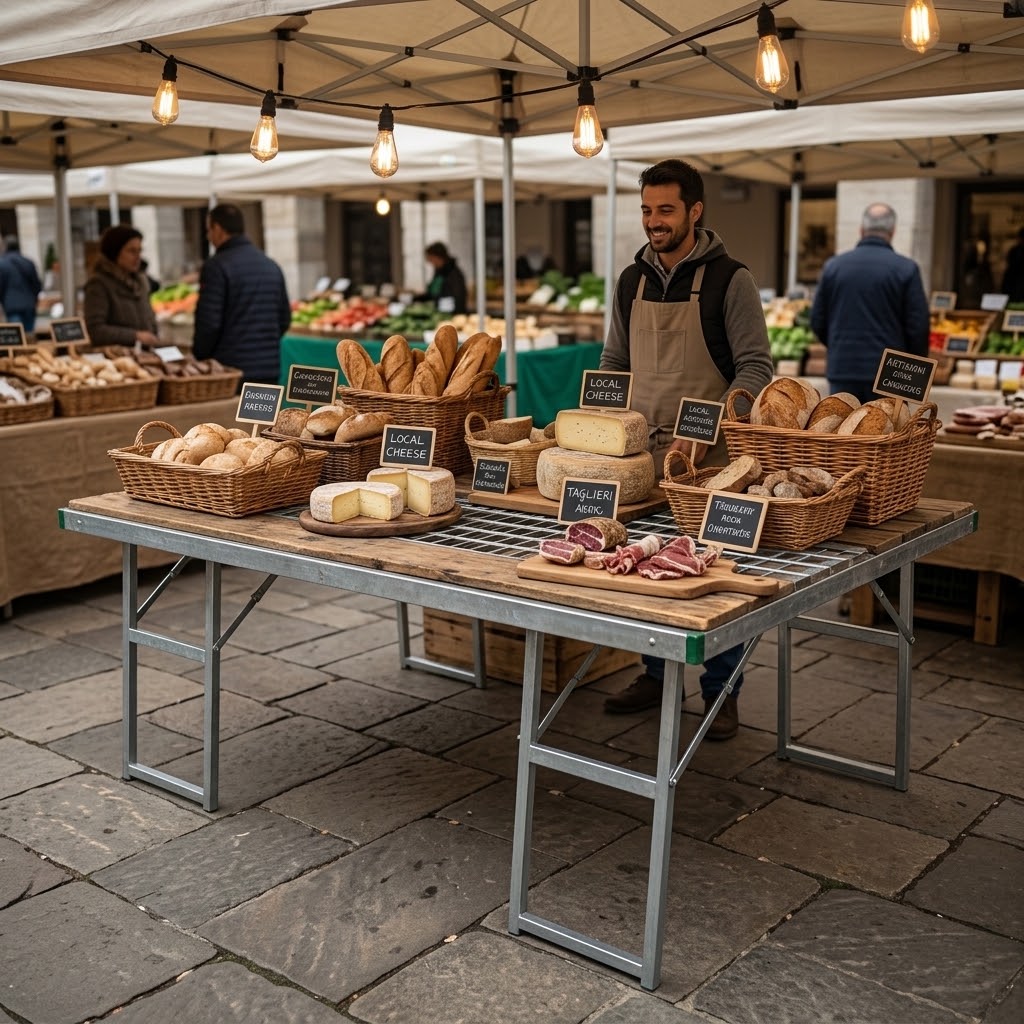
This approach also allows you to correctly interpret the quality-price ratio. Spending less on a structure that does not offer sufficient surface area or load-bearing capacity may force you to purchase a second cabinet or modify the layout. Conversely, purchasing a reinforced and very large model for just a few lightweight products may generate an unnecessary investment. The most economically convenient counter is the one sized for the goods, the space and the frequency of use.
How to read the price ranges without choosing only based on cost
The Holity catalogue shows concretely how different economic ranges can coexist within the same category. At the time of checking, the models displayed start from around €115.80 + VAT and reach over €370 + VAT, passing through numerous intermediate configurations. A counter costing €144.60 + VAT, for example, can offer a declared load capacity of 65 kg/m² despite having a different surface area compared to the models placed in the higher range. This demonstrates that there is no linear relationship between price and single feature.
To correctly compare the offers it is therefore advisable to read the dimensions, top material, profile section, load capacity and configuration together. Any shipping costs must also be considered when evaluating the overall investment, especially for multiple supplies. Online prices may also change, so the data available at the time of purchase remains the one to be used for the final economic comparison. The price range is used to orient you, while the technical data sheet allows you to understand what you are actually purchasing.
The best quality-price ratio arises from actual use
Before choosing, it is useful to define the necessary display space, goods handled, required load, frequency of movements and available space on the vehicle. These parameters allow you to quickly eliminate models that are too small, excessively heavy or oversized for the activity. Only after this selection does the price comparison become truly meaningful. Two products belonging to the same category can in fact have very different functions and capacities.
Holity, leader in professional supplies for street trading, markets and activities commercial offers display counters with different dimensions, capacities, materials and configurations. To evaluate the market counters it is therefore preferable to compare models capable of responding to the same operational need, rather than automatically choosing the least expensive one. Correctly sizing the structure and surface area helps to avoid both insufficient supply and excessive investment. The best quality-price ratio arises when the cost is consistent with what the counter will have to support, display and deal with every day.
 English
  Italian
 French
 German
 Spanish