mon-fri 9-13 / 14.30-18.30
The book exchange houses allow the creation of small book sharing points accessible to citizens, students, families, and visitors to parks or common spaces. The principle is simple: whoever uses the house can leave one book and take another, encouraging the free circulation of volumes and creating a meeting point around reading. For the service to work over time, however, the structure must be chosen in relation to the location, the weather conditions, and the type of public who will use it.
Choosing a gas or electric heater requires evaluating space, available power supply and frequency of use. Gas models allow you to set up stations independent of an electrical outlet, while electric ones require a connection to the mains and can be configured as a freestanding or wall-mounted heater. Power, mobility and installation methods also vary from product to product. The comparison must therefore start from the real outdoor area or terrace, not from an abstract preference for a particular technology.
Work harnesses must be chosen by taking into account the activity performed, attachment points, fall arrest system and operator characteristics. A model with a dorsal attachment responds to different needs compared to a multi-point harness also intended for rope access or positioning. Adjustments, size, materials and configuration also affect the daily management of the PPE. Evaluating these elements before purchasing allows you to narrow the comparison to devices consistent with the protection system actually envisaged.
Choose the outdoor calisthenics equipment It means designing a space in which bars, parallel bars, and multifunctional structures are consistent with the available space, number of users, and variety of exercises. A single station can meet specific needs, while a public area or sports center may require configurations capable of accommodating multiple people simultaneously. Distances, safety zones, materials, and installation methods must also be considered. The correct composition therefore stems from the overall design of the area and not simply from the sum of the equipment.
Choosing hospital trolleys requires starting from the activities carried out in the department and the materials that need to be organised or moved. A therapy trolley has different needs compared to a model for emergencies, dressings, instruments, linens or internal logistics. Materials, drawers, wheels, locking systems and accessories therefore acquire meaning only in relation to the intended function. Defining these elements before purchasing allows you to narrow the comparison to configurations that are truly consistent with the organisation of the healthcare facility.
Choosing chemical containment tanks requires evaluating the stored substance, the tank material and the required capacity. Polyethylene, steel, drums and IBCs respond to different needs and must be compared based on compatibility and the configuration of the area. Checking these elements together with the technical documentation allows you to identify a solution consistent with the storage and operating methods of the company.
Choosing reception desks for offices, hotels and professional spaces requires evaluating the size, configuration and activities carried out in the reception area. Linear, angular or modular solutions respond to different needs and affect the organisation of the workstation and the available space. Also considering materials, finishes and equipment allows you to identify a functional desk, proportionate to the environment and consistent with the image of the structure.
Choosing bollards for street furniture requires distinguishing between fixed, removable, flexible and anti-parking models based on their intended function. Materials, fixing, visibility and frequency of movement affect the management of sidewalks, accesses, pedestrian areas and reserved parking spaces. Evaluating these elements allows you to identify the configuration best suited to the space, maintaining consistent delimitation, ease of use and integration with the urban environment.
Understanding the difference between isothermal blanket and thermal blanket is useful for companies, healthcare facilities and operators who need to compare products intended for emergencies. Materials, dimensions, packaging and reusability can vary even between items with similar names. Evaluating these elements allows you to correctly distinguish between isothermal blanket, metal blanket and survival blanket, choosing the solution most consistent with the intended use.
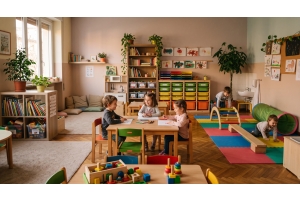
Choosing playground equipment for children for schools and nurseries requires considering age, available space and planned activities. Slides, swings, spring riders and multi-play structures provide different experiences and should be included within a coherent overall layout. Evaluating surfacing, inclusion, materials and maintenance also helps identify suitable solutions for the educational setting and create a functional, accessible space designed for everyday use.
 English
  Italian
 French
 German
 Spanish