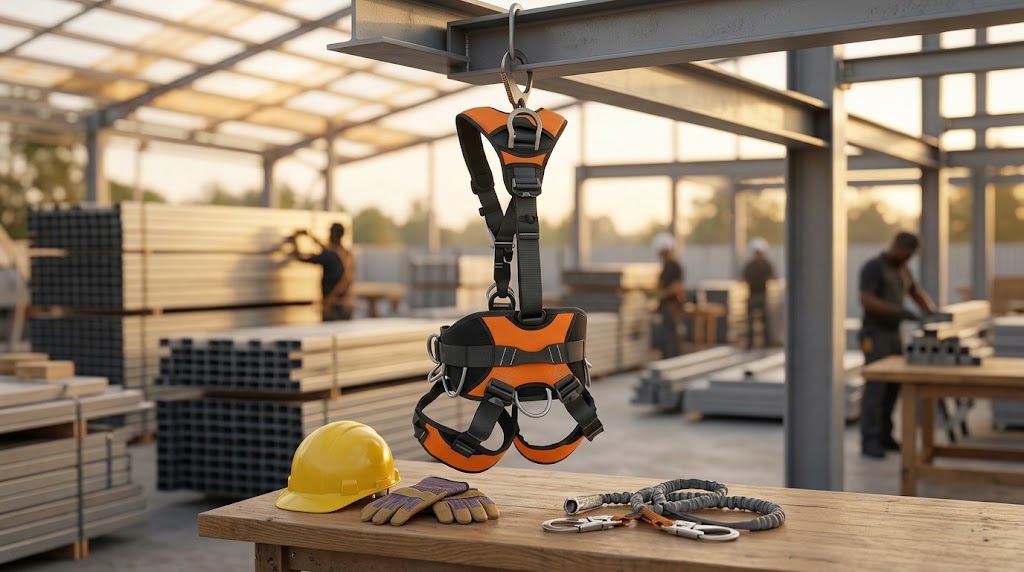
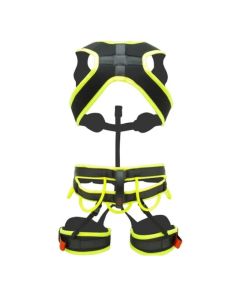
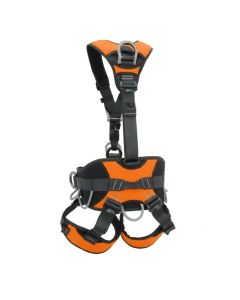
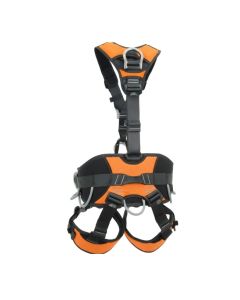
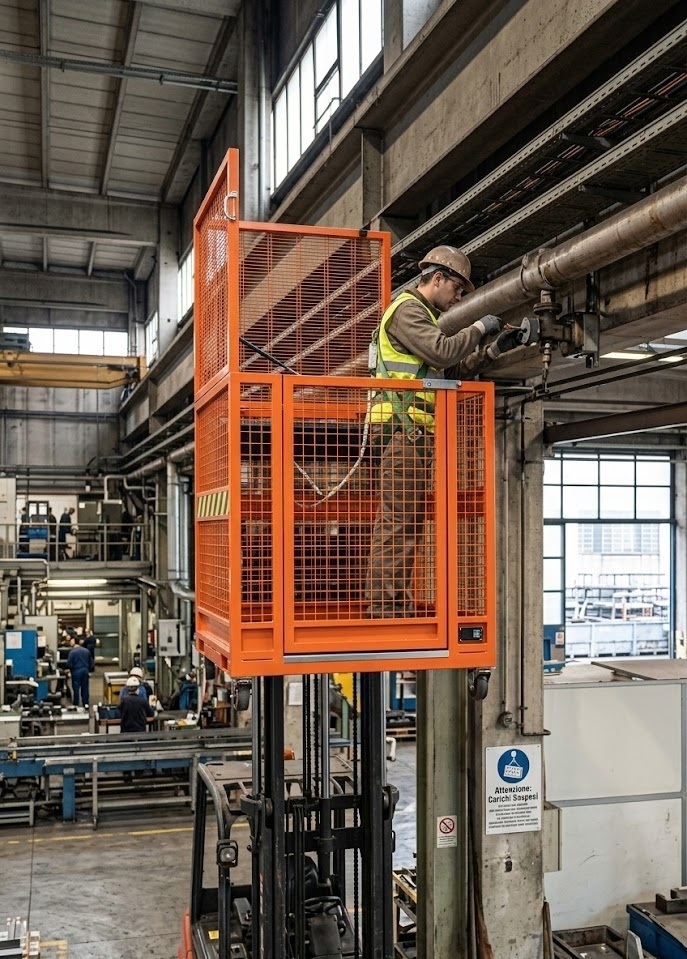
Work harnesses must be chosen by taking into account the activity performed, attachment points, fall arrest system and operator characteristics. A model with a dorsal attachment responds to different needs compared to a multi-point harness also intended for rope access or positioning. Adjustments, size, materials and configuration also affect the daily management of the PPE. Evaluating these elements before purchasing allows you to narrow the comparison to devices consistent with the protection system actually envisaged.
The choice starts from the activity and the envisaged protection system
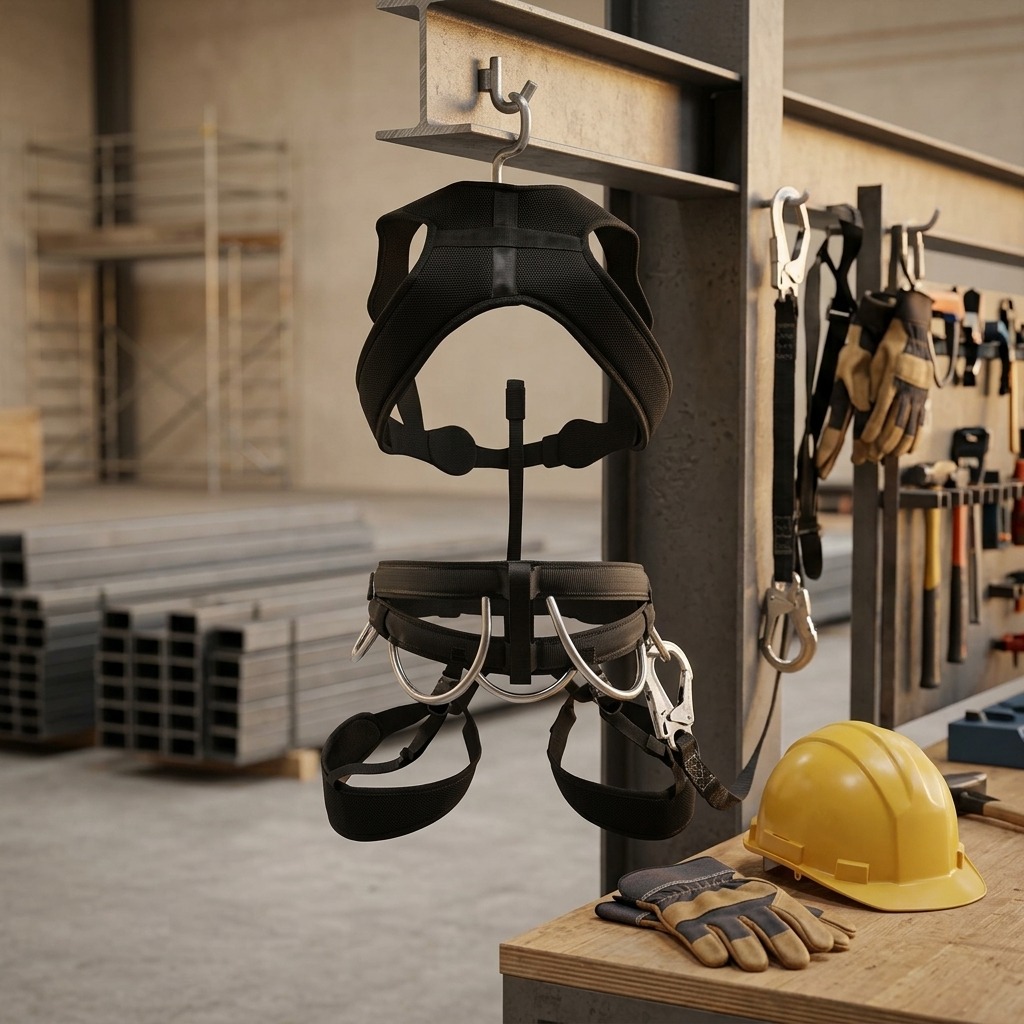 The first criterion should not be the number of attachment points, but the type of activity for which the harness is to be used. Industrial maintenance, interventions at height, rope access and rescue operations may require different configurations. In fact, the way in which the operator is connected to the system, the possibility of working in suspension and the possible need to maintain an operating position change. Before comparing the models it is therefore necessary to define which functions the PPE must actually perform .
. This approach avoids considering a more complex configuration automatically better. A multi-point harness offers more complex operational possibilities, but may be unnecessary when the activity requires a simpler and more well-defined system. Conversely, choosing a model that is essential for a job that requires suspension or positioning may make the configuration inconsistent with the intended use. The buyer should therefore start from the risk assessment and the procedures defined for the activity, and then verify which features must be present in the device.
The attachment points determine the function of the harness
Two visually similar harnesses may have attachment points placed in different positions and intended for different functions. Dorsal, sternal, ventral and lateral attachments should not be interpreted as equivalent elements. The position and purpose of the point must be verified in the documentation supplied with the device. For this reason, simply counting the rings does not allow you to establish whether a model is suitable for the intended work.
A harness with multiple points can integrate functions related to fall arrest, positioning or suspension in the same product, provided that such uses are foreseen and documented for that specific model. It is therefore essential to distinguish between the physical presence of the attachment and the certified function of the attachment . The material loops, for example, should not be confused with points intended for connecting the protection system. A careful reading of the technical data sheet and instructions allows you to avoid associations based solely on the shape of the component.
The dorsal attachment responds to specific fall arrest configurations
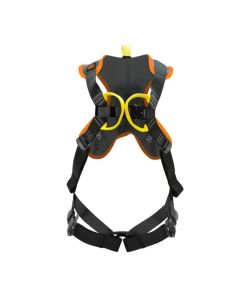
The dorsal attachment is a recurring configuration in full body fall arrest harnesses. It is placed at the rear and must be used according to the intended purpose indicated by the manufacturer and the configuration of the intended system. In professional work, it can be useful when the connection must be maintained behind the operator. The exact position and accessibility of the attachment may, however, vary from one model to another.
In the Holity catalogue, for example, there is a model in high-tenacity polyester with a **raised dorsal attachment**, developed to maintain more The rear point is accessible even when the operator carries material on their shoulders. The same product declares compliance with EN 361 and is intended for work at height and rescue. This example shows why the term “dorsal attachment” alone does not describe the entire harness. Position, structure, adjustments and purpose must be considered simultaneously.
5-point harnesses offer a more articulated configuration
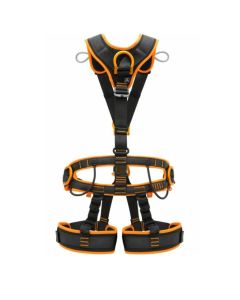
A harness with 5 attachment points is designed to allow different connection methods within the functions envisaged by the product. The presence of dorsal, sternal, ventral or lateral attachments can make the configuration suitable for scenarios in which the operator alternates between different activities. This does not mean that all five points can be used indiscriminately. Each element must be associated with the function indicated by the manufacturer.
A multi-point model present in the Holity catalogue, for example, has five points with different destinations and declares conformity with EN 361, EN 358 and EN 813. The configuration includes points intended for the functions indicated for fall arrest, positioning and suspension, as well as elements designed for the organisation of the equipment. Holity, a specialist in professional supplies for safety and work at height , therefore allows you to compare essential devices and more complex systems based on the operational context. The choice, however, remains subordinate to the work procedures and documentation of the individual PPE.
Rope work requires dedicated features
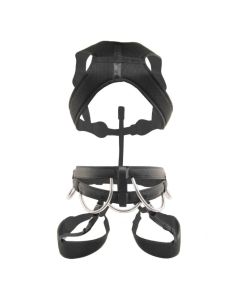
Rope work has different needs compared to a more complex activity. in which the harness is used exclusively as part of a fall arrest system. The possibility of working in suspension changes the role of the lower part of the harness, the belt and the attachments intended for the various maneuvers. The position of the accessories can also affect operational practicality. For this reason, models intended for rope access work tend to have a more complex configuration.
The Holity catalog offers complete rope access harnesses with five attachment points, dedicated adjustments and configurations certified according to multiple standards declared by the manufacturer. Some models also integrate elements for the traceability of checks and a structure designed for repeated professional use. These features do not automatically make the product suitable for any intervention at height. Instead, they are used to respond to specific operating modes of suspension, positioning and fall protection , which must be defined before purchase.
Fall arrest and positioning do not indicate the same function
When comparing professional harnesses, it is essential to distinguish the concept of fall arrest from that of work positioning. The former concerns the system intended to protect the operator from the effects of a fall from a height, while the latter concerns the possibility of maintaining an operating position according to the intended methods. The two functions can be integrated into the same device when the configuration allows for it. However, they must not be considered synonymous.
UNI EN 361:2003, currently indicated by UNI as in force, specifies requirements and tests for body harnesses intended to protect against falls from a height. UNI EN 358:2019 instead concerns belts and lanyards intended for work positioning or restraint. This makes it particularly important to check which standards are declared for the model being analysed and which elements of the configuration they refer to. A lateral point intended for positioning should therefore not be automatically interpreted as a fall arrest point.
Size, adjustments and comfort affect professional use
The operational effectiveness of the harness also depends on the correct fit. The waist, leg loops, chest area and adjustment systems must allow the device to be adapted to the expected body size and the clothing used during work. For this reason, it is not sufficient to choose a size based on general indications. The manufacturer's dimensional tables must be part of the comparison between models. 
Comfort becomes more important when the harness is worn for prolonged periods or in activities that involve suspension and numerous changes of position. Padding, waistband width, buckle arrangement and the presence of rigid components modify the perception of the device during work. The overall weight can also have an impact, but should not be evaluated separately from the configuration. The choice must therefore find a balance between fit, freedom of movement, required functions and structure of the PPE .
The harness must be assessed as part of a system
A harness does not operate in isolation. Regulation (EU) 2016/425 establishes that PPE intended to prevent falls from a height or their effects must comprise a safety harness and a connection system that can be connected to a safe external anchor point. This means that the selection of the body device must be coordinated with the other planned components. Compatibility and connection methods therefore become central parts of the evaluation.
The buyer should avoid building the system by assembling components simply because they can be physically connected to each other. The manufacturers' instructions must provide useful guidance on correct integration and the intended conditions of use. The attachment point chosen on the harness must also correspond to the function required by the system used. Compatibility between harness , connection and anchoring is therefore a more significant criterion than the simple presence of numerous accessories.
Standards, marking and documentation guide the comparison
Professional harnesses against falls from a height fall within the European framework of personal protective equipment. Regulation (EU) 2016/425 defines the requirements for the design and manufacture of PPE placed on the market and dedicates specific requirements to protection against falls from a height. For the buyer, this means that marking, instructions and documentation are not secondary elements of the supply. They must be verified together with the technical configuration of the device.
Technical standards also help to understand the function for which the product has been designed and verified. EN 361 concerns full body harnesses, while other standards may concern positioning, rope access, or individual system components. A multipoint model may therefore have multiple references when it integrates different documented functions. Before ordering, it is advisable to check the declared standards, size, limits indicated by the manufacturer, and available instructions , avoiding automatically transferring the characteristics of one model to the entire category.
Inspections and maintenance accompany the entire use cycle
The purchase does not exhaust the management of work harnesses. Webbing, seams, buckles, attachment points, and other components must maintain conditions consistent with those specified by the manufacturer. Cleaning, storage, and inspections should not be managed using generic procedures valid for any textile PPE. Products, materials, and methods of use may in fact require different indications.
EN 365:2005, indicated by UNI as in force, deals with general requirements relating to instructions for use, maintenance, periodic inspection, repair, marking and packaging of devices used in personal fall protection systems. Some professional harnesses in the Holity catalogue also integrate NFC systems designed to facilitate identification and traceability of checks. The technology can facilitate management, but does not replace the procedures provided for the device. The criterion remains that of maintaining documentation and history of the PPE clearly associated with the individual harness .
The comparison between models must start from the work actually carried out
To correctly compare two harnesses it is useful to start from the activities that the operator will have to perform and only then observe the number of attachments, materials and equipment. A model with a dorsal attachment can be consistent with a specific fall arrest system, while a multi-point configuration may be necessary when suspension and positioning are also foreseen. The fit must be verified on the body size and the clothing used. Accessories should also be considered only when compatible with the overall system.
Holity, a leader in the selection of professional equipment and PPE for working at height , offers harnesses with dorsal attachment, multi-point configurations and models intended for rope access, allowing you to compare solutions with different operational characteristics. The choice of Work harnesses should therefore avoid generic classifications and focus on the correspondence between activity, attachment points, declared standards and the system used. A complete technical data sheet allows you to narrow the comparison before purchasing and to identify the model consistent with the procedures defined by the organization. In this way, the supply is built starting from the real work and not just from the apparent complexity of the harness.
 English
  Italian
 French
 German
 Spanish