Choosing a gas or electric heater requires evaluating space, available power supply and frequency of use. Gas models allow you to set up stations independent of an electrical outlet, while electric ones require a connection to the mains and can be configured as a freestanding or wall-mounted heater. Power, mobility and installation methods also vary from product to product. The comparison must therefore start from the real outdoor area or terrace, not from an abstract preference for a particular technology.
The choice depends first of all on the space to be heated
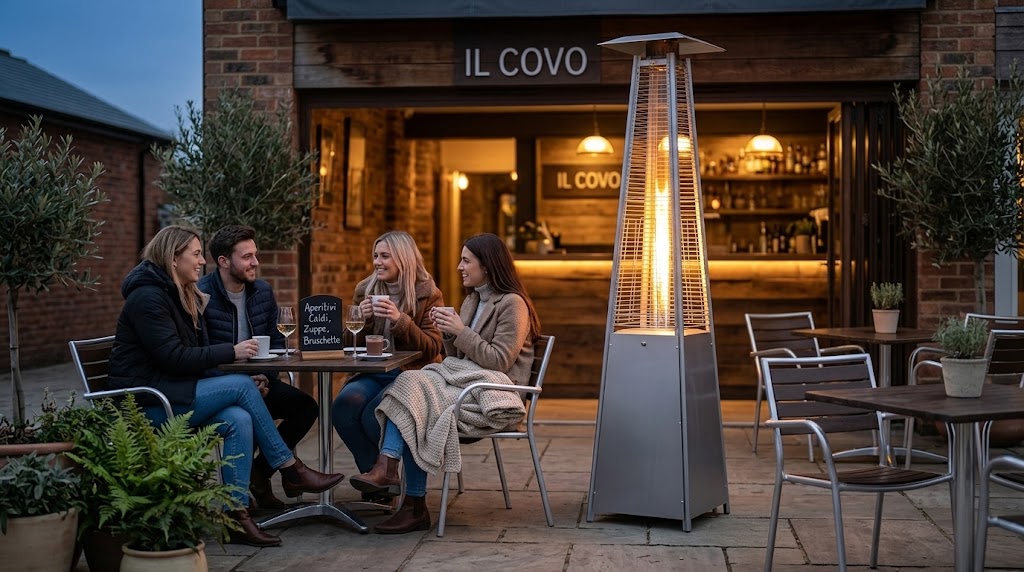
 The first element to observe is the physical configuration of the area. A completely open terrace presents different conditions than an outdoor area protected on the sides or a covered space but open to the outside. Wind, position of the tables and passageways affect the way the heat is perceived and the position the appliance can assume. The choice should therefore start from the surface area actually used by guests and not from the entire available space.
The number of stations also changes the project. A single heater may be sufficient for a limited area, while a large outdoor area may require multiple devices distributed in a coherent manner. The surfaces declared by the manufacturers must be interpreted also considering the external temperature, exposure and characteristics of the environment. In the Holity range, for example, some gas patio heaters declare surfaces in the order of 20-30 m², but the manufacturer itself specifies that performance may vary depending on temperature and protection from the wind.
The gas patio heater offers autonomy from the electricity grid
The main operating element of the gas patio heater is the power supply via a cylinder, generally propane or butane in models intended for outdoor use. This allows the appliance to be positioned without depending on the immediate presence of an electrical outlet. This configuration can be useful when tables are moved frequently or when the layout of the area changes between one service and the next. However, it is necessary to provide space for the gas cylinder and its management according to the manufacturer's instructions.
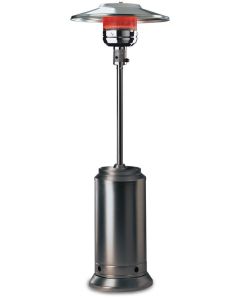
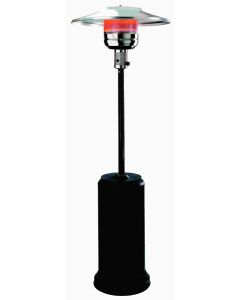
Professional gas models can develop significantly higher power than many electric lamps . The Holity catalogue includes, for example, 10, 12.5 and 13 kW gas grills, powered by propane or butane and versions equipped with wheels to facilitate movement. However, these values should not be used to argue that gas is always the best choice. Nominal power, declared surface area and conditions of use must be compared on the individual appliance.
Electric heating requires a socket but offers different configurations
The electric solution eliminates the management of the cylinder, but introduces the need for a power supply available in the intended location. Before purchasing, it is necessary to check the required power, voltage, cable length and characteristics of the line to which the heater will be connected. In outdoor areas with a stable layout, this constraint can be easily planned. In frequently reconfigured spaces, however, cable management must be considered together with the passages of staff and guests.
The electric category also includes configurations other than the traditional mushroom. Holity offers 2 kW floor-standing models with multiple power levels, outdoor electric heaters and 2.4 kW wall-mounted infrared lamps. The latter type uses radiant heating and can be installed without taking up floor space. Holity, a specialist in professional supplies for bars, hotels and restaurants, therefore allows you to compare mobile electric solutions and more stable installations within the same product area.
Mobility and space change daily management
Gas and electric do not automatically correspond to mobile and fixed. There are gas mushroom heaters with wheels, electric floor heaters and electric lamps designed for wall installation. The buyer must therefore check how the layout of the space will be modified during the day. The possibility of moving the heater becomes particularly useful in outdoor areas where tables and seats are reconfigured based on reservations.
Floor space takes on greater importance when the passageways are narrow. A lamp installed on the wall can free up surface area, but requires a suitable position and a pre-set power supply. A column heater occupies a dedicated area and must be positioned in a stable manner, respecting the distances required by the instructions. The comparison should therefore consider the space occupied, the route of the cables, the presence of the cylinder and the frequency of movements.
. Bars and restaurants must start from the configuration of the outdoor area
. For a restaurant, the heater is part of the service organization. The arrangement of the devices should not obstruct waiters, customers or passageways and must be compatible with tables, seats, umbrellas and other existing structures. The possibility of quickly changing the layout can also lead to mobile devices. If, however, the arrangement remains stable throughout the season, a fixed or wall-mounted solution may become easier to integrate.
Aesthetic continuity plays a secondary role compared to function, but it is not irrelevant in hospitality spaces. The height, finish, and visual presence of the heater affect the overall perception of the outdoor area, especially when multiple units are installed. The Holity catalog includes steel gas heaters, flame-effect models, and electric lamps with more discreet configurations. This allows you to correlate heating needs, layout, and image of the room without treating the appliance as an element independent of the furnishings.
Consumption and power should be compared for each individual appliance
The question of which system consumes less has no useful answer if it is separated from the model and operating hours. For gas products, consumption data can be expressed in kilograms per hour, while for electric appliances, power is indicated in watts or kilowatts. To estimate operating costs, it is therefore necessary to know the declared consumption and apply it to the actual duration of service. Power adjustment can also change requirements throughout the day.
An example helps to understand the method. Some Holity 10-12.5 kW gas patio heaters declare consumption levels of approximately 0.45 to 0.8 kg/h depending on the model and setting, while an electric floor lamp can offer levels of 800, 1,200, and 2,000 W. These are not directly comparable values as if they represented the same performance. The buyer should consider energy costs, hours of use, area served, and actual outdoor configuration..
Gas and electric require different safety precautions.
A gas patio heater designed for outdoors must be used in the context intended by the manufacturer. The technical data sheets for various Holity propane or butane models expressly specify that the appliance is intended exclusively for outdoor spaces. Combustion makes it particularly important to respect this indication. The Consumer Product Safety Commission also reiterated in February 2026 that fuel-fired outdoor heaters must not be used indoors, due to the risk of carbon monoxide accumulation.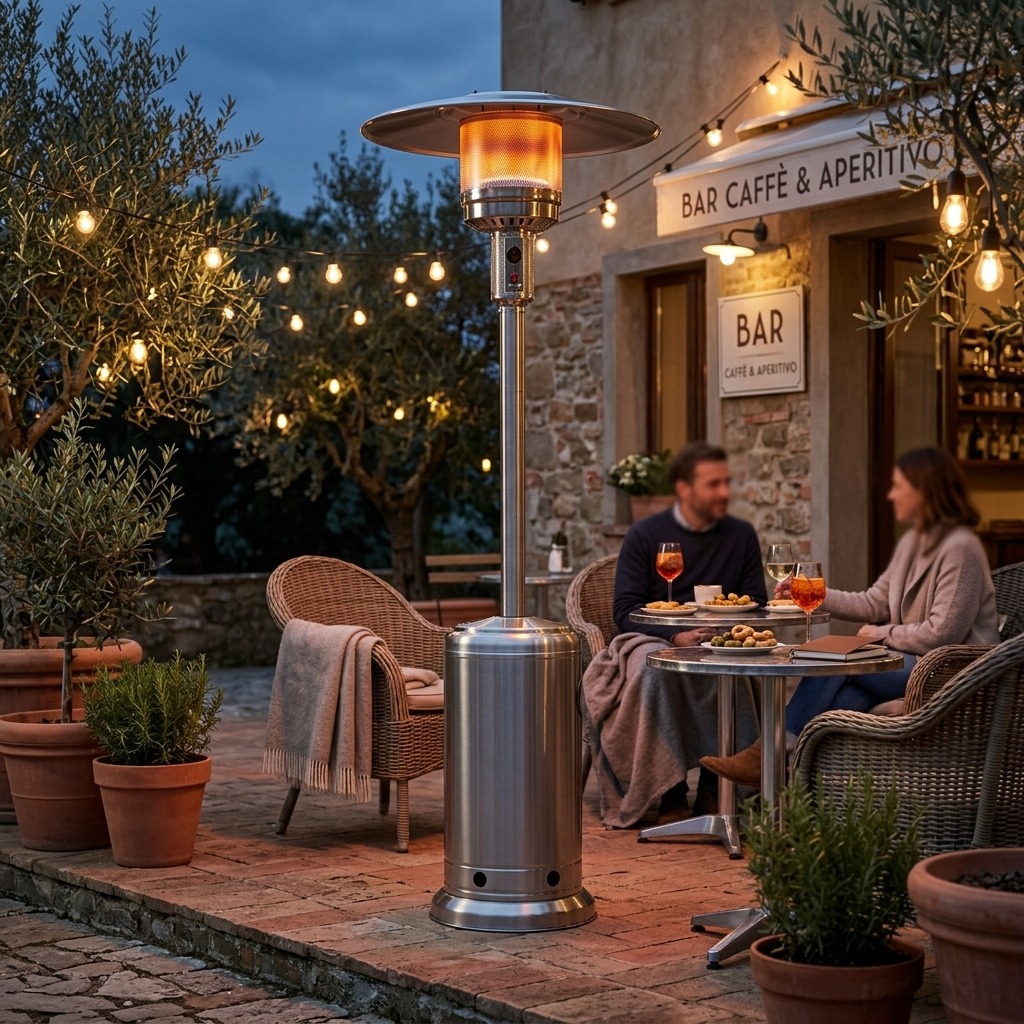
For electric models, the points to check change. Connection, cable, stability, installation method and declared degree of protection must be compatible with the environment. In the Holity range, for example, a floor lamp model reports IPX4 protection, while a wall lamp reports IP64: the data always refers to the individual product and cannot be extended to all electric heaters. The manufacturer's instructions remain the operational reference for placement, connection and distances to be respected.
Installation and environmental conditions influence the choice
A fixed electrical appliance requires a position in which the power supply can be managed without creating interference with the service. The installation height and orientation must also comply with what is indicated for the model. A pedestal heater, on the other hand, requires a stable surface and sufficient surrounding space. Deciding between these configurations therefore means evaluating the environment even before the power.
For gas mushroom heaters, the availability of the cylinder makes the appliance less dependent on the electrical infrastructure, but introduces other elements to organize. Connections, regulator, gas compatibility and included accessories must be checked in the technical data sheet. Some Holity products are supplied without a flexible hose and regulator, so these components must be considered in the overall configuration of the station. Available power supply and installation method therefore affect both the purchase and subsequent management.
The technical data sheet allows for a truly useful comparison
Compare only “gas” and “electric” risks oversimplifying the choice. Two models powered in the same way may differ in power, height, declared surface area, adjustment options and safety systems. For electric models, the protection class, assembly method, voltage and cable length also come into play. For gas models, the permitted fuel, consumption, cylinder housing and necessary accessories become relevant.
It is therefore useful to construct the comparison using the same parameters for all the candidate models. The technical data sheet allows you to exclude products incompatible with the space before arriving at the price. Holity, a reference point for professional patio heaters and heat lamps, brings together gas appliances, electric heaters and infrared lamps with very different characteristics in the same category. This variety makes it possible to select the product starting from the outdoor area design rather than the power source alone.
Gas or electric: the best choice is the one consistent with the use
Gas can be particularly interesting when a mobile station is needed and it is not practical to depend on sockets placed near the tables. Electric, on the other hand, can be well suited when the infrastructure is already available and you want to use floor-standing, wall-mounted, or infrared configurations. Neither solution can be considered universally superior. Space, exposure, service hours, and frequency of movements change the result of the comparison.
To choose a gas or electric heater it is therefore advisable to first define the surface area actually involved, identify the possible positions of the appliances, and verify which power supply is actually available. Only then does it make sense to compare the power, consumption, size, and price of the individual models. In professional contexts, this sequence reduces the risk of purchasing appliances that are difficult to integrate into daily service. Heating the outdoor area thus becomes part of the organization of the space, together with tables, paths and ways in which the room is used during the cold season.
 English
  Italian
 French
 German
 Spanish