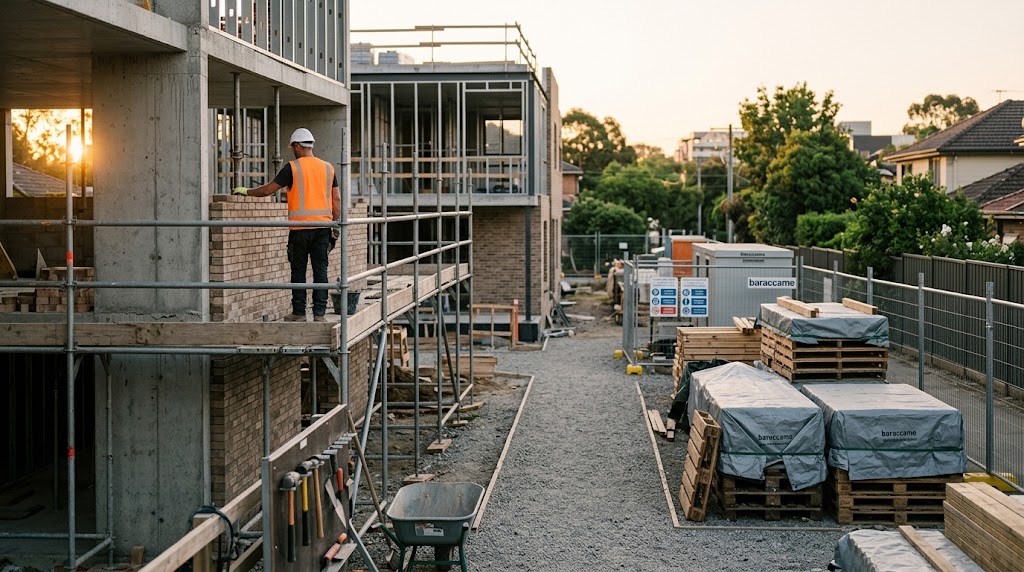
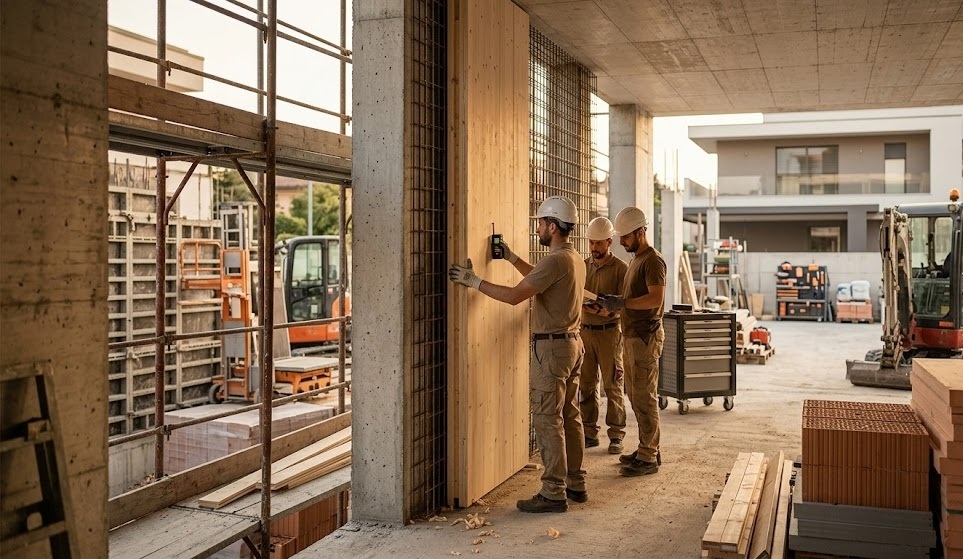
The construction site equipment They impact the organization of access, routes, and work areas. Scaffolding, walkways, barriers, and signaling systems must be chosen based on the project, space, and duration of the work. Chemical toilets and debris pipes are also part of the equipment to be planned. A joint assessment of function, size, mobility, and conditions of use allows for a consistent supply of equipment for the construction site and reduces the need for unforeseen subsequent additions.
The choice starts from the actual configuration of the construction site
The first step is to define which areas must be operational, which must remain off-limits, and which routes will be used by workers, vehicles, and outsiders. The plan helps identify access points, elevation changes, storage areas, excavations, and points where traffic must be regulated. This analysis determines the equipment actually needed and the quantities required. Equipment built without this analysis risks being incomplete or oversized.
Even the duration of the worksite Change your choice. A short intervention may require lightweight, mobile, and quick-to-reconfigure elements, while extended jobs make robustness, weather resistance, and ease of maintenance more important. Spaces available for storage and handling when the equipment is not in use must also be considered. The correct approach is therefore to link each purchase to a precise function in the operating cycle.
Scaffolding and walkways must be chosen based on access
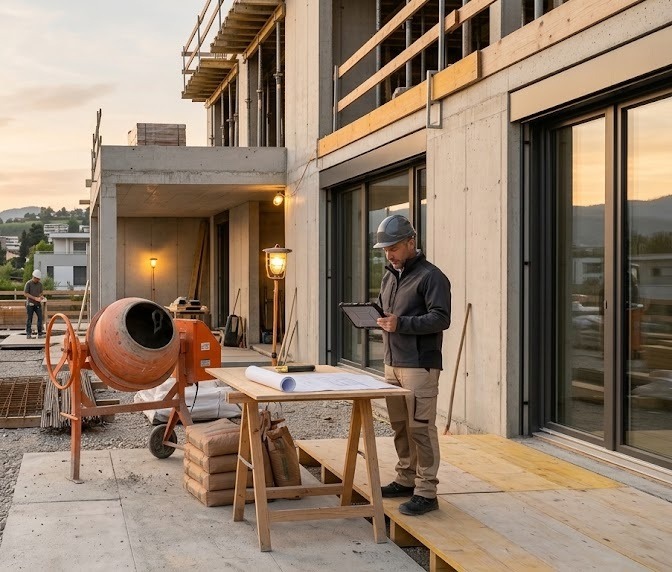 Scaffolding is used when a mobile workstation is needed for work at height and frequent movement within the area. Before purchasing, it's important to compare the expected height, base dimensions, structure features, wheels, stabilization, and the manufacturer's documentation. A taller model isn't automatically more suitable, as its size and maneuverability must remain compatible with the environment. Doors, flooring, and maneuvering areas also influence the choice.
Construction site walkways, on the other hand, meet the need to create temporary crossings in the presence of excavations, obstacles, or differences in level. The effective width, structure, walking surface, and lateral protection must be evaluated with respect to the route that will actually be used. It is important to verify that the declared dimensions and characteristics are consistent with the intended use and the procedures adopted on the site. In this way, access and continuity of routes are considered together with the productivity of the processes.
Barriers, New Jersey barriers, and bollards organize operational borders.
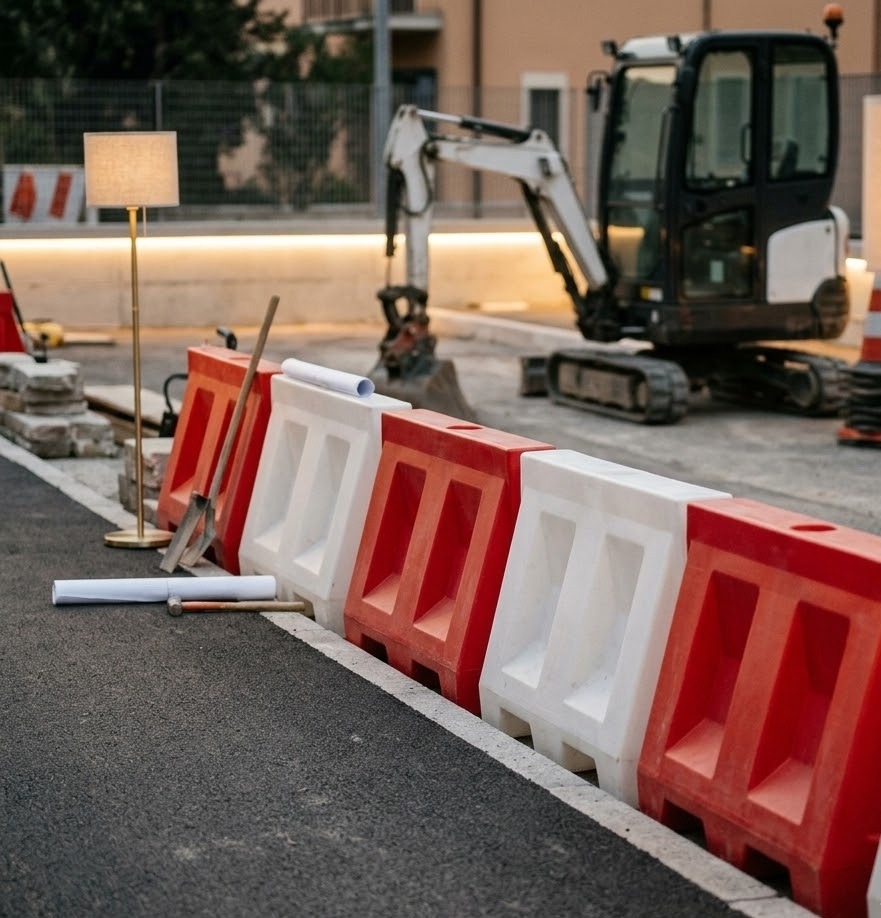
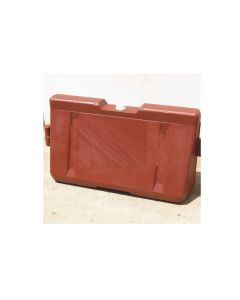
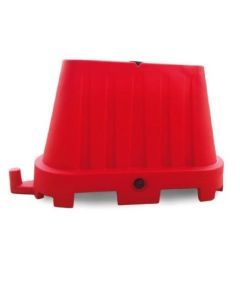
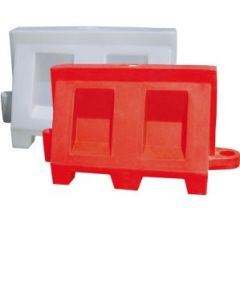
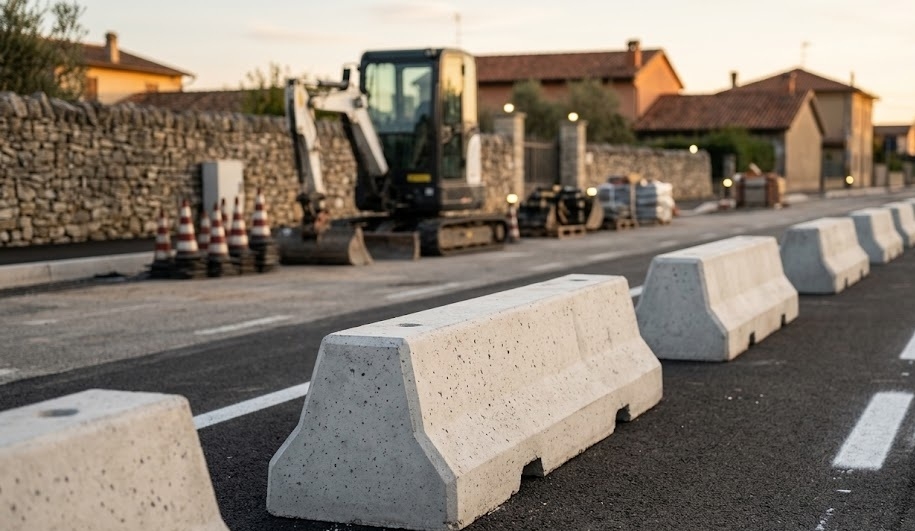
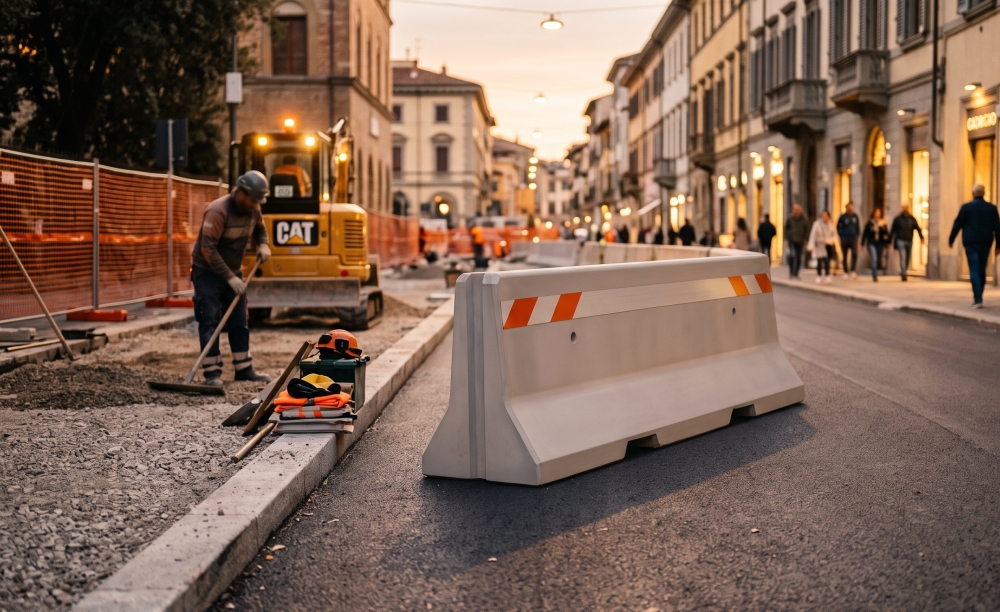
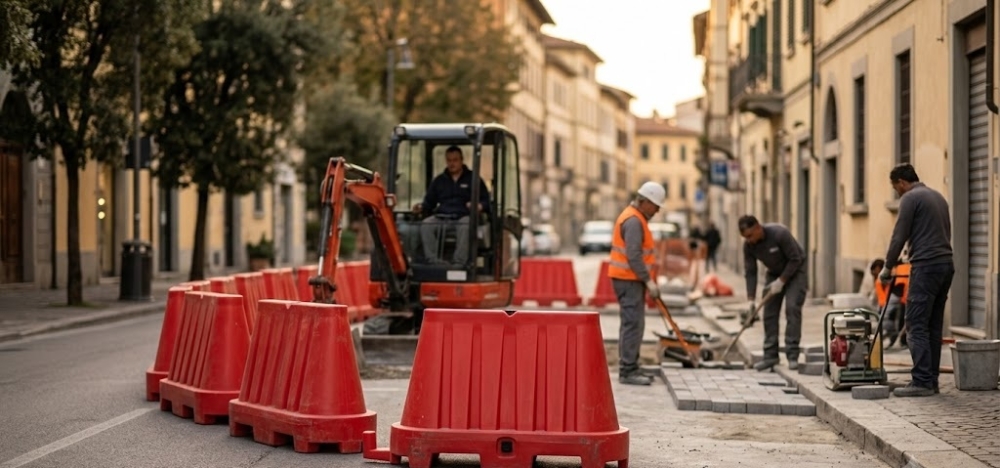
Construction site boundaries don't depend on just one type of product. Mobile barriers can separate operational areas and passageways, while New Jersey barriers are used when more marked separation and a modular configuration along defined sections are required. Demarcation posts, on the other hand, are suitable for marking paths and temporary areas when a continuous barrier isn't necessary. The choice therefore depends on the level of separation required and the frequency with which the layout needs to change.
Materials, weight, base, and connection systems impact daily management. Extremely lightweight elements may require more careful inspection in exposed environments, while very heavy solutions increase the effort required for moving and reconfiguring. On construction sites with variable access, it's helpful to consider where openings and perimeter interruptions will be required during the purchasing phase. Holity, Specialist in professional supplies for construction, businesses and institutions, offers delimitation solutions designed for different operational contexts.
Cones, chains, markers and traffic lights make the signalling readable
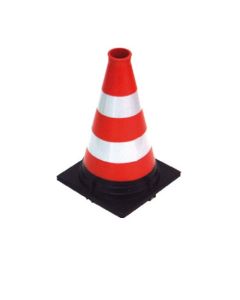
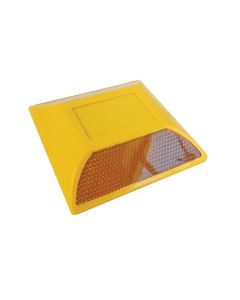
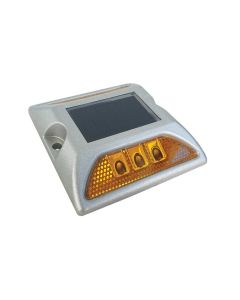
Temporary markings must allow for quick identification of route changes, restricted areas, and points requiring extra caution. Traffic cones are useful for quick and reconfigurable setups, while chains and posts can create visual demarcation lines. Markers increase the recognition of specific edges or sections, especially when visibility changes throughout the day. Each element must be positioned according to the project and the regulations applicable to the construction site.
Construction site traffic lights meet a different need, as they intervene in the temporary management of traffic flows. Before choosing a model, it's necessary to compare power supply, battery life, control systems, and manufacturer-specific features. Therefore, simply purchasing individual visible devices isn't enough, as the outcome depends on the consistency of position, function, and signaling continuity. A coordinated system reduces ambiguous areas and makes the system more understandable. circulation around the work area.
Chemical toilets and logistics services are part of the operational equipment
Chemical toilets are not a separate element of the overall construction site organization. Their quantity and configuration must be evaluated based on the number of users, the duration of the work, and the ability to perform the planned maintenance operations. Location also affects convenience, as the toilet must be accessible without interfering with vehicles, storage areas, and work areas. Therefore, the choice should be made in conjunction with the design of the service areas.
For more complex construction sites, it's also useful to consider frequency of use, accessibility, and the need to move the units during the various phases. A compact model may be suitable for a project with limited space, while a larger configuration requires consistent distribution across the areas. Holity, reference point for professional equipment intended for construction sites and operational structures, allows logistics services to be integrated into the same supply logic. This approach prevents additional equipment from being addressed only after the work has already begun.
Rubble pipes must follow the discharge path
In demolition and renovation projects, debris ducts allow for the organized transfer of materials to a designated collection point. Before choosing, it's important to consider the route layout, number of modular elements, entry points, and fastening systems provided by the manufacturer. The arrival area must also be planned consistently with materials management. A system purchased without considering the entire system may require subsequent additions or modifications that are difficult to manage.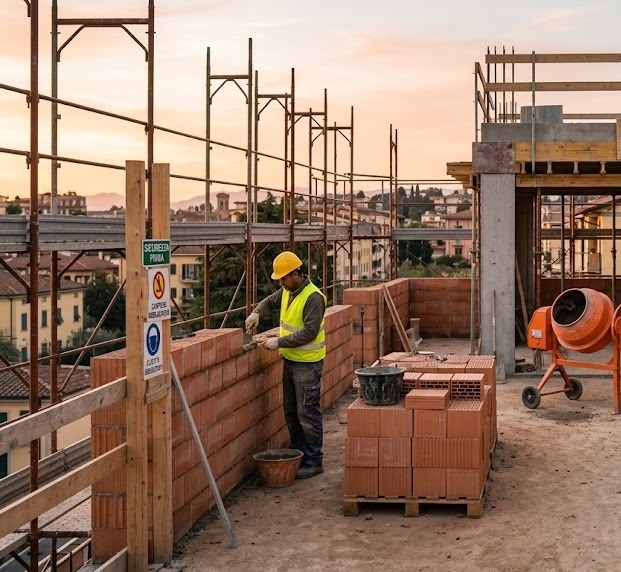
Modularity allows the configuration to be adapted to the height and geometry of the building, but each component must be compatible with the rest of the system. Hoppers, intermediate elements, and terminals must therefore be verified as part of the same equipment. It is also useful to consider disassembly, cleaning, and the space required to store components between work phases. Debris management thus becomes part of the construction site logistics project, not a separate activity.
Materials, mobility and maintenance affect the lifespan of the supply
Outdoor equipment is exposed to impacts, movement, dirt, and variable environmental conditions. Therefore, materials and construction must be evaluated based on the intensity of expected use, not just aesthetics. Galvanized steel, aluminum, plastic, and rubber meet different requirements in terms of weight, strength, and handling. The technical data sheet helps determine the actual specifications for the model in question.
Maintenance must be planned for at the time of purchase. Wheels, joints, bases, reflective elements, fastening systems, and moving components may require different checks depending on the product. Ease of cleaning and the availability of spare parts also impact long-term management costs. A professional supply should therefore be evaluated considering: intended use, controls and operational continuity, not just the initial price.
A professional supply comes from well-defined quantities and specifications
Before requesting a quote, it's helpful to gather measurements of the area, expected quantities, route characteristics, and the duration of the construction site. For barriers, cones, and posts, it's important to estimate the meters to be demarcated and distinguish between continuous sections and access points. For scaffolding, walkways, and debris pipes, more specific dimensional data related to their use is required. Accurate information reduces the risk of purchasing incompatible components or having to supplement the supply during construction.
The buyer should also compare technical documentation, component availability, and the possibility of coordinating multiple categories in the same supply. Holity, leader in the selection of professional equipment for construction sites, companies and institutions, allows you to evaluate products for demarcation, signaling, access, and services within a structured catalog. This continuity facilitates comparison between solutions and simplifies the creation of a coherent equipment package. This advantage is especially evident when the construction site requires multiple types of equipment simultaneously.
A coordinated equipment avoids adjustments during work
The quality of the installation depends on the relationship between the various pieces of equipment. A well-designed passageway loses its effectiveness if it ends in an undefined area, just as an inconsistent signaling system can obscure a properly positioned barrier. The same applies to services and debris management, which must fit into the flow without interfering with access and movement. Thinking in terms of systems allows you to identify the most obvious incompatibilities before purchasing.
A final review should compare the floor plan, planned activities, quantities, and technical specifications of the selected products. This step allows us to verify that each element has a defined function and that the equipment can support the various phases of the work construction site equipment. They thus become part of a more organized, understandable, and manageable operational plan over time. A context-based choice reduces fragmented purchases and makes it easier to organize any future additions.
 English
  Italian
 French
 German
 Spanish