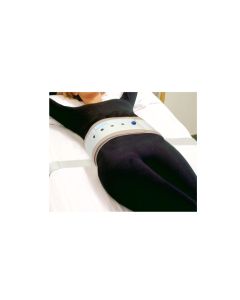
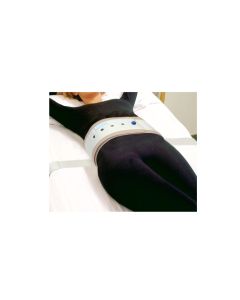
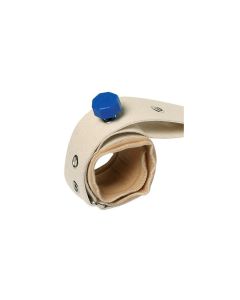
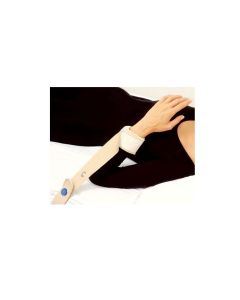
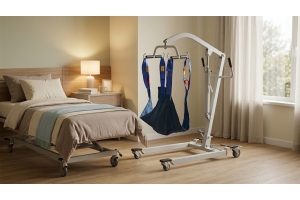
Bed restraint bands must be chosen considering the structure, dimensions, adjustment systems and compatibility with the bed. Materials, closures and accessories affect daily management and must be verified in the specific documentation. Evaluating these elements before purchasing allows you to correctly compare the models and identify a solution suited to the needs of the facility, keeping the technical choice separate from the care assessment.
The choice starts from the bed and the care context
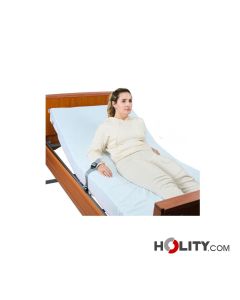
A band should not be selected considering only the user's build or the apparent width of the product. The system in fact includes a part intended for the person and a fastening component that must be compatible with the bed and with the configuration described by the manufacturer. Length of the straps, anchoring method and structure of the corset can vary significantly between models belonging to the same category. For this reason, the first check should relate the characteristics of the band, the available bed and the technical documentation .
The environment in which the device is managed also affects the choice. A nursing home with numerous beds may favour uniformity of models and simplicity in managing spare parts, while a structure with more diversified needs may require different configurations. The Holity catalogue includes belts and straps intended for healthcare and assistance facilities with different adjustment and fastening systems. Holity, a specialist in professional supplies for healthcare and assistance , therefore allows you to compare multiple solutions starting from the declared characteristics of each product.
Dimensions and adjustment determine the compatibility of the device
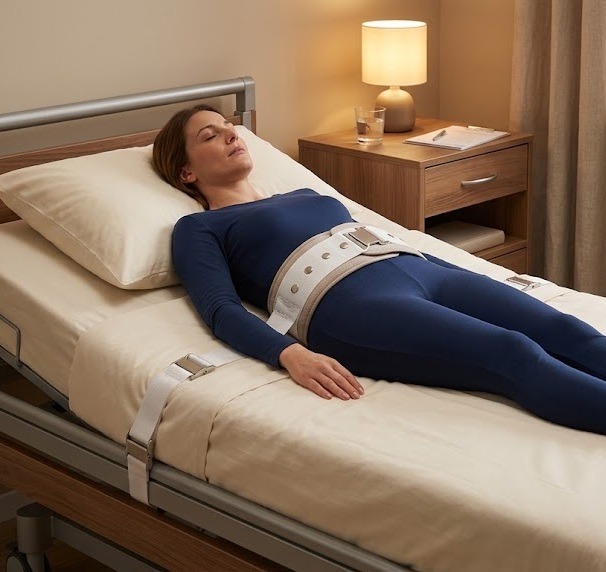 Dimensions are one of the most important data to check before ordering. An adjustable band can provide a defined range for the circumference and a specific length of the components used for fastening. These values must not be considered interchangeable between different products, because each model has its own construction configuration. The technical data sheet allows you to check whether the range provided by the manufacturer corresponds to the needs identified by the structure.
The adjustment must also be evaluated together with the system with which it is achieved. The professional catalog may include eyelets, buckles, tie rods and other components that allow you to adapt the configuration according to the methods provided for the model. Greater adjustment possibilities do not automatically mean that the product is suitable for any situation. The buyer should therefore focus on the correspondence between dimensional range, device structure and declared destination , avoiding using the wording "adjustable" alone as a comparison criterion.
The structure of the belt must be evaluated as a whole
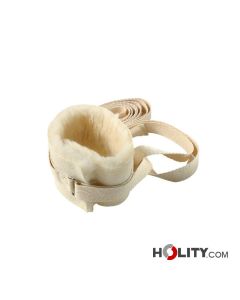
The corset is one of the immediately visible parts of the belt, but it is not the only element that defines its characteristics. The width of the band, material, edges, straps and connecting components contribute to the overall configuration. Some products in the Holity catalogue use soft cotton corsets and adjustable systems, while other configurations can be built with different characteristics. The comparison should therefore concern the entire device and not be limited to the size of the central part.
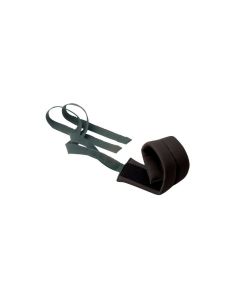
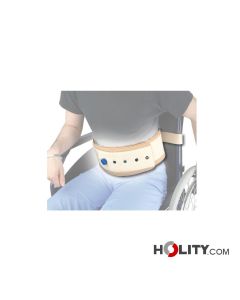
It is also important to distinguish generic belts from configurations designed for specific body areas or functions. The presence of a pelvic band, elements intended for the limbs or additional components modifies the construction logic and requires a careful reading of the product instructions. Not all elements marketed within the same macro category therefore perform the same function. This distinction allows the purchasing manager to avoid improper equivalences between trunk bands , pelvic systems and dedicated belts .
Closure and fastening systems vary between the different models
The closing methods are another useful element for comparing bed restraint bands. Some models use traditional buckles or trident systems, while others may include eyelets and specific safety accessories. The system must be considered together with the manufacturer's instructions and any components required to complete the configuration. An accessory shown with the belt should not be considered automatically included in the scope of delivery if the data sheet does not specify it.
There are also systems in which the opening is associated with a key or a dedicated magnetic component. Holity markets, for certain compatible belts, safety buttons designed to be removed using a specific key, which can be sold separately. This example shows why The buyer must check not only the belt but also the compatibility of the accessories and the actual composition of the supply . A preliminary reading of the product sheet reduces the risk of receiving an incomplete system compared to the expected configuration.
Materials and padding affect daily management
The material influences the surface characteristics, weight, flexibility and maintenance methods of the product. In the Holity catalogue, for example, there are configurations with a soft cotton corset and metal components for adjustment, but the materials and composition must be checked for each individual model. It is not correct to automatically extend the characteristics of a belt to the entire category. For this reason, the declared composition should be one of the data compared during the professional selection.
Padding and anti-chafing protections may also appear in some configurations, especially when the system includes components intended for specific parts of the body. These elements must be considered on the basis of technical indications and not as universal characteristics of any belt. Holity, a reference point for professional aids and supplies intended for healthcare facilities , offers a range in which materials and configurations can be directly compared starting from the information on the individual products. This approach allows the belt to be selected on the basis of documented characteristics and not just the commercial name.
Cleaning and wear control must be planned
A device used within a healthcare facility must be able to be included in the management procedures envisaged by the organisation. Cleaning methods should not be deduced exclusively from the visible material, because seams, closures, eyelets and components may require specific indications. It is therefore necessary to consult the manufacturer's declarations for the selected model. Compatibility with the facility's procedures should be verified before purchase, especially when the supply concerns more than one device. unit. 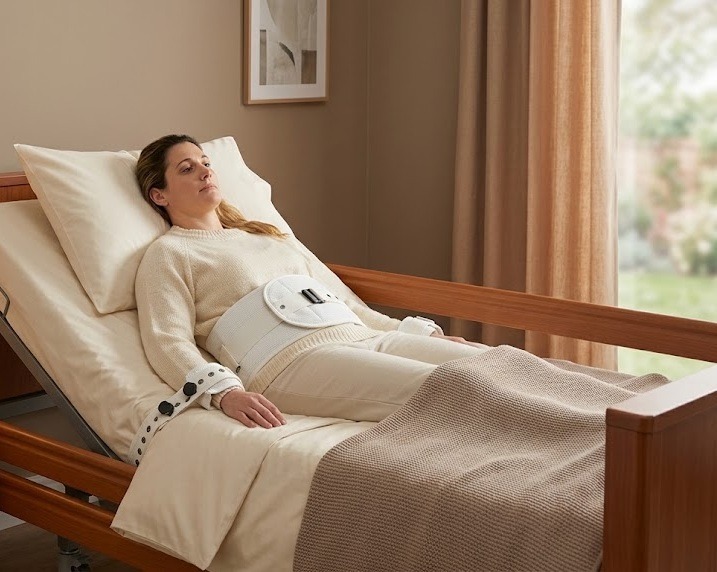
Periodic inspection also includes the physical integrity of the band and its components. Deteriorated seams, damaged closure systems, deformed eyelets, or missing parts alter the original condition of the device and require evaluation according to the applicable procedures. The same principle applies to keys, buttons, and other dedicated accessories that are part of the configuration used. Planning cleaning, checking the integrity and availability of components allows the facility to manage the equipment more orderly over time.
The technical data sheet allows for correct comparison of the bands
Photographs can help understand the general shape of the product, but do not replace the data reported in the technical data sheet. Length, adjustment range, materials, height of the corset, and closure methods are elements that can change even between aesthetically similar products. For a purchasing manager, it is essential to ensure that the product is in good condition. It is useful to prepare a uniform comparison in which the same parameters are verified for each model. In this way, it becomes easier to identify differences that do not emerge from the summary description alone.
The reading must also include the included equipment and any optional accessories. A safety button, a dedicated key, or other components may be necessary for a certain configuration but sold separately, as is the case for some solutions in the Holity catalog. Before ordering, it is therefore advisable to verify that all the required elements have actually been considered. This attention is particularly important in multiple supplies, where a repeated error on numerous units can make subsequent management more complex.
A coordinated supply simplifies management in healthcare facilities
RSA, hospitals, clinics, and nursing homes may have different needs for departments, rooms, and bed types. Before preparing a large order, it is advisable to check that all the required elements have actually been considered. It is therefore useful to collect quantities, bed models, required size ranges and characteristics of the expected closures. A uniform supply can simplify management, but only when it truly meets the needs identified by the facility. In other cases, it may be necessary to combine different configurations while maintaining a consistent logic in the accessories and documentation.
Holity, a specialist in professional supplies for healthcare facilities, nursing homes and assistance , offers belts and straps with different configurations, useful for comparing adjustment systems, materials and closures based on the individual product data sheets. The commercial choice should always start from the specific requests of the facility and remain separate from the clinical-assistance decision on the use of the restraint. A well-planned supply reduces incompatible purchases, simplifies the management of accessories and makes the availability of devices more orderly. In this way the Bed restraint bands are evaluated as technical devices inserted into defined professional procedures, not as standard solutions applicable indiscriminately.
 English
  Italian
 French
 German
 Spanish