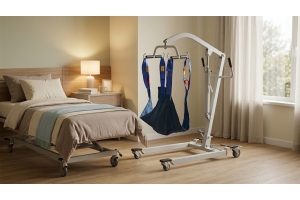
Understanding the difference between a walker and a rollator is useful for nursing homes, clinics, and healthcare facilities that need to compare aids with different operating characteristics. Wheels, supports, brakes, seat, dimensions, and adjustments affect the management of the device within the facility's spaces. Evaluating these elements allows you to identify the configurations best suited to different environments, keeping the technical choice separate from the professional evaluation of the person's actual needs.
The difference between a walker and a rollator starts with the structure
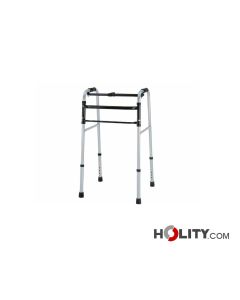
In commercial comparisons, the term traditional walker often refers to structures that can rest on the ground via tips or combine rear tips and front wheels. The rollator belongs to the same family of walking aids, but normally uses a fully rotated configuration that allows you to move forward without lifting the entire structure with each step. However, within the two families, there are numerous variations. Holity presents articulated walkers, two-wheeled models, four-wheeled devices, and professional rollators in the same catalog, highlighting how the name must always be read together with the technical characteristics.
This distinction affects the way the aid interacts with the user and the environment. A structure that must be lifted or partially lightened during advancement has a different dynamic than a device that continuously slides on wheels. A rollator also requires that the speed control and stopping modes provided by the model be considered. The choice for the individual must therefore remain entrusted to the evaluation of their mobility needs and the indications of competent professionals, while the buyer can focus on the technical and organizational compatibility of the aid.
Wheels and modes The number and arrangement of wheels change the behavior of the aid
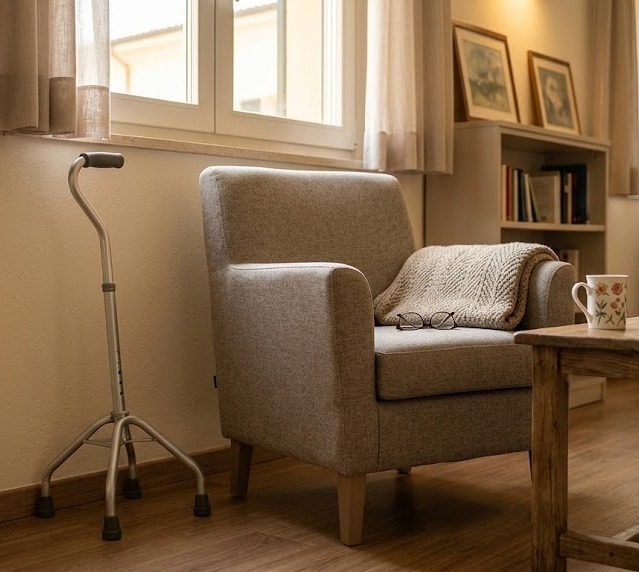 The number and arrangement of wheels are one of the most immediate elements to compare. The Holity catalog includes walkers with two wheels and two tips, three-wheel models and devices with four wheels, as well as rollators intended for indoor or outdoor use. Each configuration modifies the size, smoothness and way in which the aid handles curves and changes of direction. The number of wheels alone is therefore not sufficient to establish which model best meets the needs of the structure.
The diameter, orientation and characteristics of the wheels declared for the individual model must also be observed. Larger wheels can be associated with devices designed to tackle different routes, while compact solutions may be easier to manage in environments with limited space. Some professional walkers also have swivel wheels or directional locking systems. For the buyer it is It is useful to relate these characteristics to corridors, doors, elevators and maneuvering areas actually present in the structure.
The support systems respond to different operational needs
Traditional handles are not the only configuration available. Some walkers use elbow rests or forearm supports, while others have adjustable support surfaces and handles placed in different positions. The Holity catalog includes professional models with forearm supports intended for indoor use and devices with padded elbow rests. These differences must be verified in the technical data sheet because they modify the dimensions, useful height and way in which the structure is used.
Holity, a specialist in professional supplies for nursing homes, clinics and healthcare facilities, offers walkers with different support systems within the same category. For a purchasing manager, this variety is essential. This allows you to avoid the mistake of standardizing the supply based on a single type of grip. The height of the supports, the adjustment range and the width of the structure must be carefully compared. The decision on the appropriate aid for the individual person remains separate from the procurement process and requires a professional assessment of the mobility needs.
Brakes and stopping systems are central to rollators
The presence of wheels makes the braking system one of the most important parameters when reading the data sheet of a rollator. There may be levers operated by the handles, stationary brakes or automatic configurations, depending on the model. A professional four-wheeled aid may therefore have a very different stopping logic from that of a walker equipped with rear tips. Operation must be verified in the specific documentation and not deduced from the shape of the device alone.
Even during stops, the provided stopping system takes on an operational role. The NHS Lanarkshire guidelines for a four-wheeled aid call for the use of brakes to stabilize the device during certain maneuvers. This element shows why the presence of brakes should not be treated as a simple accessory. For facilities that purchase multiple rollators, it is also advisable to check the uniformity of the controls and the simplicity of the periodic inspection procedures required by the manufacturer.
The seat distinguishes many rollators intended for longer journeys
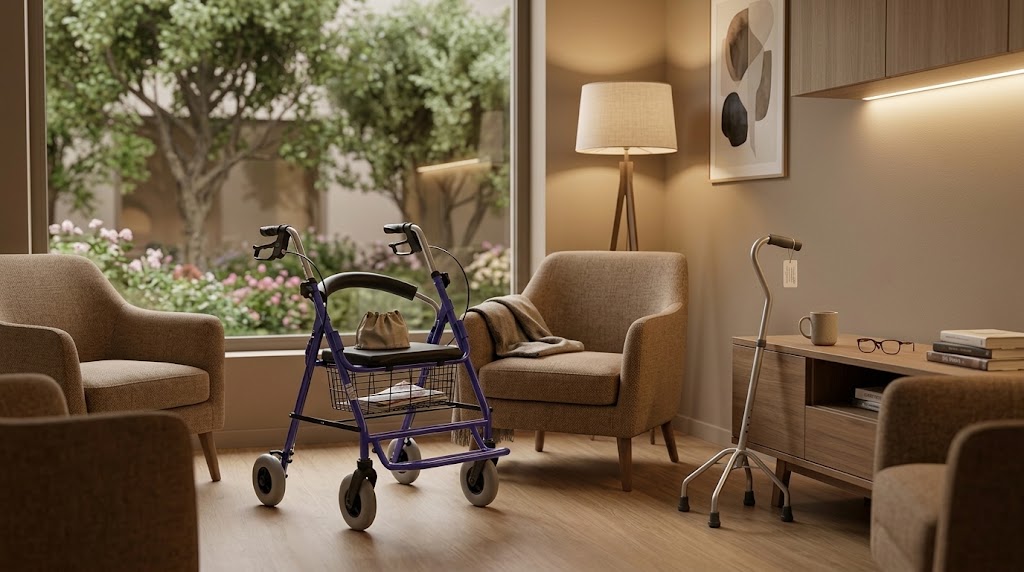
One of the recurring features of many rollators is the presence of an integrated seat, sometimes accompanied by a backrest or storage bag. In the Holity catalog, for example, foldable rollators are available complete with seat, backrest, and systems for transporting small objects. The presence of the seat changes the size, weight, and general organization of the aid. Before purchasing, it must therefore be verified together with the declared load capacity and the methods envisaged by the manufacturer.
Not all walkers without the rollator designation do not have a seat, just as it is not appropriate to take the same configuration for granted on all rollators. The technical data sheet remains the reference for establishing which elements are actually present. When a seat is provided, the brakes and stability during parking also take on particular importance and must be managed according to the model's instructions. The buyer should therefore consider the seat, braking system, dimensions and weight as connected characteristics, not as independent options.
In internal spaces, bulk and manoeuvrability are especially important
In a nursing home or healthcare department, the daily route may include rooms, corridors, doors, elevators and common areas. Width and depth The specifications of the aid must therefore be compared with these steps before finalizing a supply. A highly accessorized model may offer useful features but be more challenging to manage in a limited space. Similarly, a compact configuration must still meet the needs identified for the user.
Some models in the Holity catalog are specifically intended for indoor use and can integrate anti-arm supports or specific braking systems. This allows the buyer to build a comparison starting from the environment and not just the commercial name. Holity, a point of reference for professional aids intended for care and healthcare facilities, includes models with very different dimensions and configurations. Measuring the critical steps beforehand therefore helps to narrow the comparison to solutions compatible with the structure.
For outdoors, wheels, structure and characteristics of the path change
An outdoor path can present conditions different from a regular ward floor. Wheel size, structure sturdiness, adjustment systems, and materials therefore become parameters to be observed in the product documentation. Holity also distinguishes models declared for outdoor use in its catalog, with specific structures and dimensions. This distinction confirms that the intended use by the manufacturer must be verified before using the device as an alternative to an indoor model.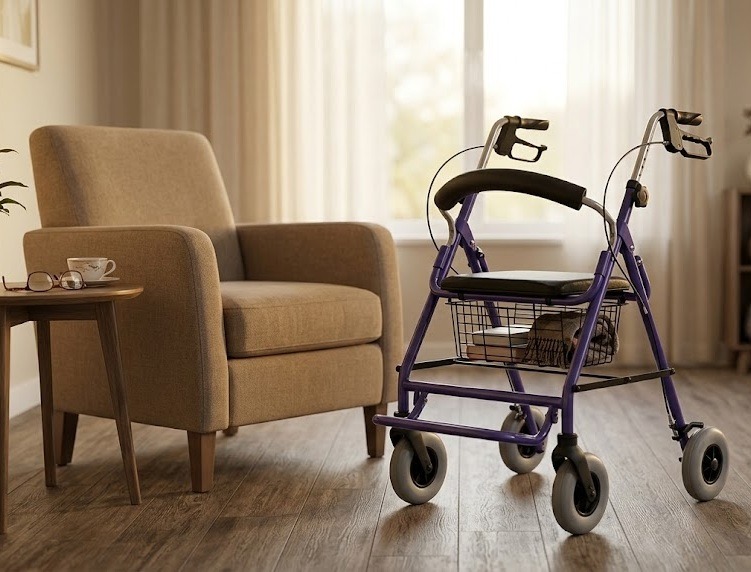
Even within the same healthcare facility, there may be mixed routes between the building, garden, courtyard, and connecting areas. In these cases, the manager must identify which aids will actually be used for these routes and which will remain in the wards. The choice should not be based solely on the presence of large wheels or the perception of sturdiness. It is more correct to compare the model's specifications with the intended environment and keep this verification separate from the clinical evaluation relating to the person who will use the aid.
The technical data sheet helps the buyer compare the models.
A professional comparison should use the same parameters for all the products examined. Width, depth, height adjustment range, weight, load capacity, number of wheels, braking system, and folding options are particularly useful data. The supports, seat, accessories, and declared intended use for indoor or outdoor use should also be checked. Photographs help identify the product, but do not replace the measurements and characteristics reported in the technical documentation.
The load capacity deserves a separate check because it varies even between models belonging to the same family. The Holity catalog features rollators and walkers with different values, along with configurations dedicated to more specific needs. The frame material can also vary between steel, aluminum, and other lightweight solutions. Reading this data uniformly makes the comparison more useful and reduces the risk of choosing a model based on the commercial name alone.
A healthcare facility may need more than one model.
configurations The difference between walker and rollator becomes particularly important when the purchase involves multiple users or multiple departments. A facility may require compact models for certain routes, aids with forearm supports for specific activities, and rollators with seats or accessories for other contexts. Completely standardizing the supply can simplify management and maintenance, but does not always respond to the variety of existing needs. Procurement should therefore start from a mapping of the configurations actually required.
Holity, a leader in the selection of walkers, rollators, and professional mobility aids, allows you to compare models with different tips, wheels, brakes, seats, and support systems in the same catalog. For nursing homes, clinics, and rehabilitation centers, this assortment allows for the creation of a comprehensive supply based on the required technical specifications. The final choice for each user must always be consistent with the assessment carried out by competent professionals. For the facility manager, however, the task is to ensure that the dimensions, characteristics, and management methods of the various aids are compatible with the environments and daily organization.
 English
  Italian
 French
 German
 Spanish