The choice starts from the substance that must be contained
The first piece of information to define is not the size of the tank, but the type of liquid present in the containers. Acids, bases, oils, solvents, and other substances may require different checks depending on the materials they may come into contact with. For this reason, a generic term such as "chemical tank" should not be considered sufficient for every application. Compatibility must be checked for the specific product and the characteristics declared for the selected model.
This check becomes even more important when different substances are present in the same warehouse. A single material may be suitable for some products and require further checks for others, while any incompatibilities between substances also affect the overall organization of the storage. Before purchasing, it is therefore useful to identify what will be placed in the tank. The result should be a clear correspondence between substance, primary vessel and secondary containment system.
Polyethylene and steel respond to different conditions of use
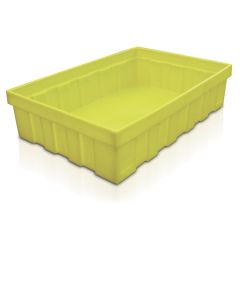
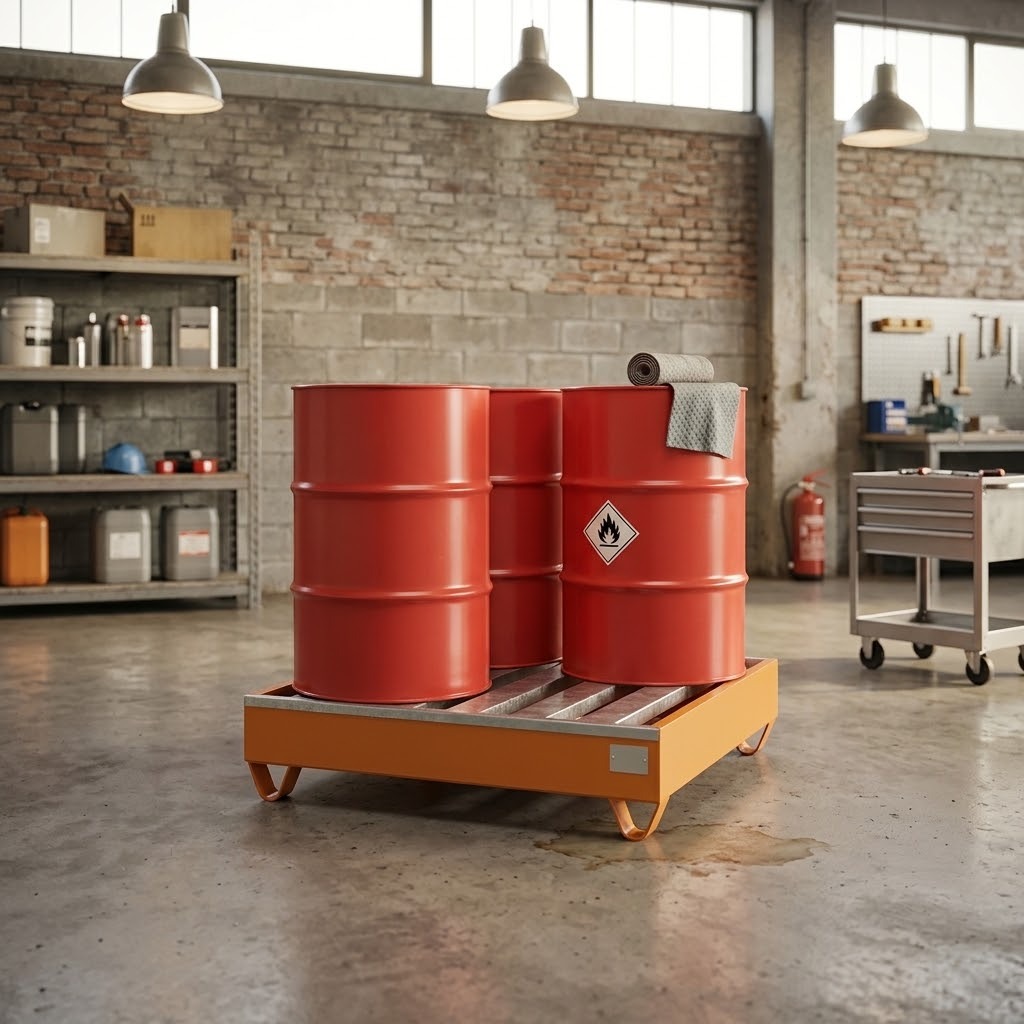 Polyethylene tanks are popular in professional environments because the material does not exhibit the corrosion behavior typical of metals and can be used in numerous configurations dedicated to chemical products. However, compatibility should not be assumed based on the material alone. Composition and concentration of the substance, conditions of use and manufacturer specifications remain elements to be verified. Construction, load capacity and stability of the tank also contribute to the choice.
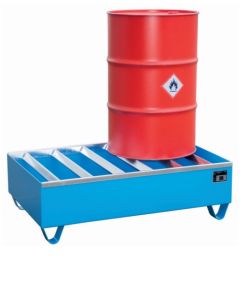
Steel tanks offer a rigid structure and are available in professional configurations intended for drums and other industrial applications. Their use must be evaluated considering both the expected loads and the compatibility with the liquid that could reach the tank in the event of a leak. Holity, a specialist in professional supplies for industry and storage, offers solutions in different materials precisely because the operating conditions are not uniform. The comparison must therefore be technical, not based on a general preference between plastic and metal.
The capacity must be evaluated together with the stored containers
The capacity expressed in litres indicates how much liquid the tank can collect according to the declared characteristics, but this value must be related to the containers that will actually be positioned on the structure. An area with small drums has different needs compared to a location intended for an IBC tank. The number of containers also changes the picture. For this reason, the volume of the tank should be defined after having identified the quantity, format and arrangement of the containers.
The sizing should not be done by copying a value used in another production area. Substances, containers, and applicable regulations may change, as may the company's internal procedures. It is best to check the requirements relevant to your case and compare them with the actual capacity shown on the tank data sheet. This method reduces the risk of purchasing a model that appears to be capacious but is inconsistent with the intended configuration.
Drums and IBCs require different configurations
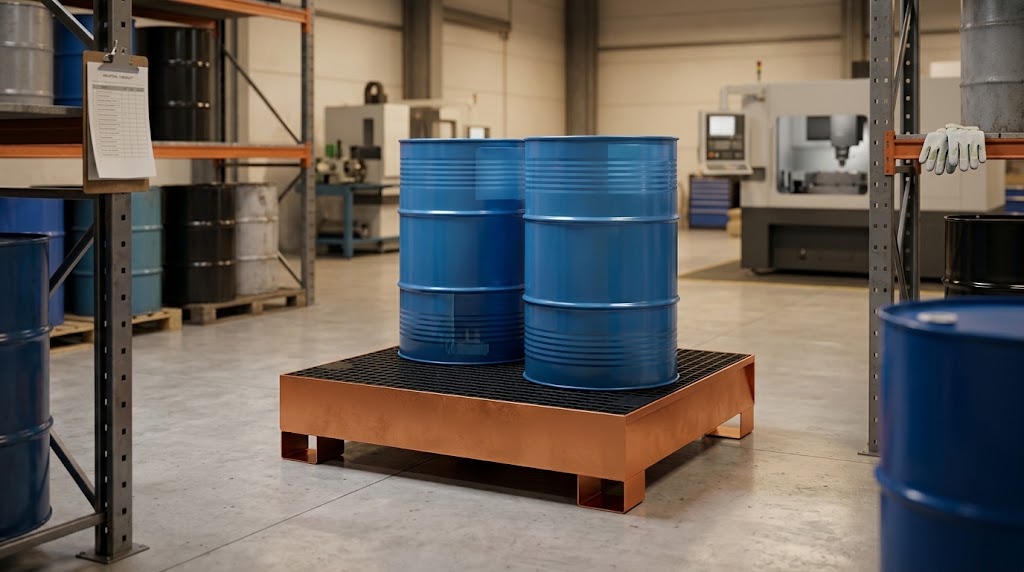
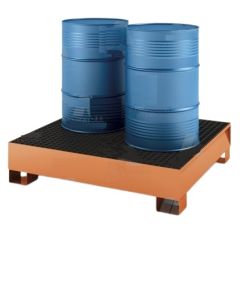
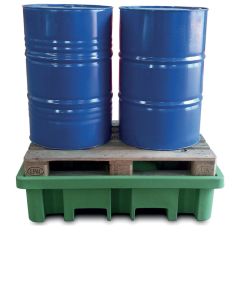
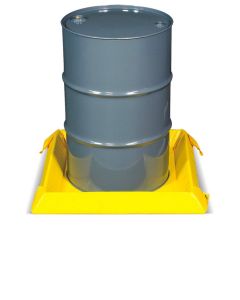
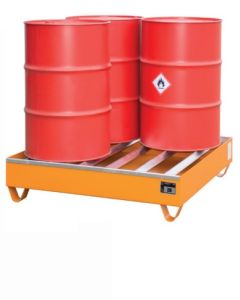
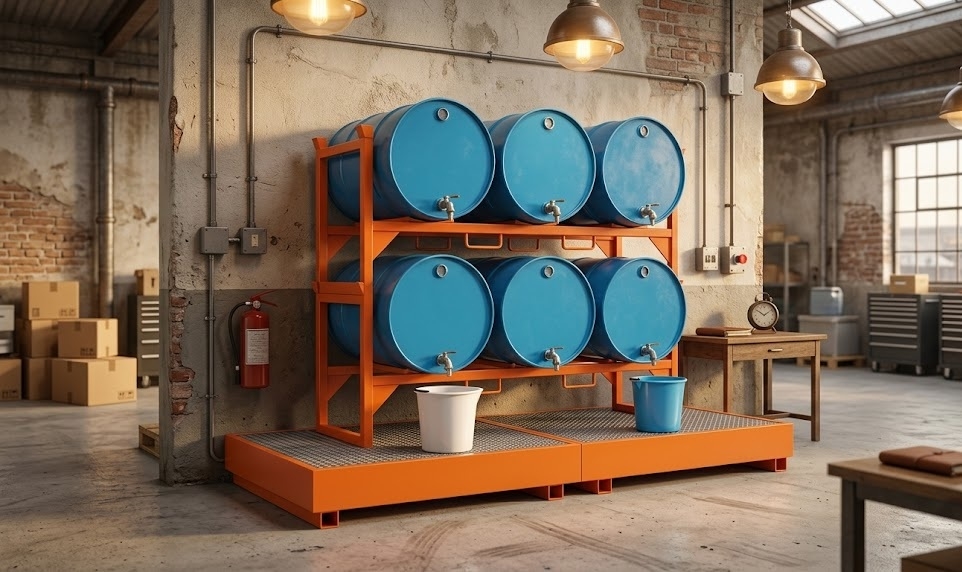
Drum sumps are designed to accommodate one or more containers of specific dimensions and may differ in width, depth, capacity, and load-bearing capacity. When choosing, it is useful to establish how many drums will be present at the same time and whether the configuration will remain stable over time. The space required to load or remove containers must also be considered. A tank that is correctly sized on paper may be impractical if the area does not allow for easy handling.
IBC tanks require surfaces and capacities consistent with those of significantly bulkier containers. Some systems are designed for a single IBC, while others allow for the organization of multiple IBCs on the same structure. In these cases, external dimensions, containment capacity, accessibility and methods for handling the empty tank become particularly relevant. Holity, a reference point for professional tanks intended for drums and IBCs, allows you to compare configurations built around containers of different sizes.
Grating and structure affect daily management
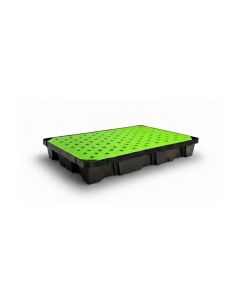
Many professional tanks use an upper grating on which the containers are placed. This element separates the container from the bottom of the tank and allows any spilled liquid to reach the collection volume below. However, the grate and tank must be properly constructed. be considered as a single system, verifying the capacity and configuration indicated by the manufacturer. The possibility of removing the grating can also affect inspection and cleaning activities.
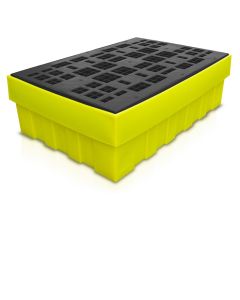
Not all tanks use the same construction solution. There are models without a grating, compact platforms, modular systems and configurations dedicated to specific containers. The buyer should therefore avoid considering the grating as a purely accessory or aesthetic element. Capacity, usable surface area and collection volume must be read together to understand how the station can be used in practice.
Dimensions and movement must be compatible with the area
Width and depth of the tank directly affect the layout of the warehouse. Before ordering, it is useful to measure the available space, considering corridors, doors, shelving and areas used for moving the containers. The distance required to use pallet trucks or forklifts when the configuration requires it must also be verified. The design of the area prevents a tank adequate in capacity from becoming difficult to reach or manage.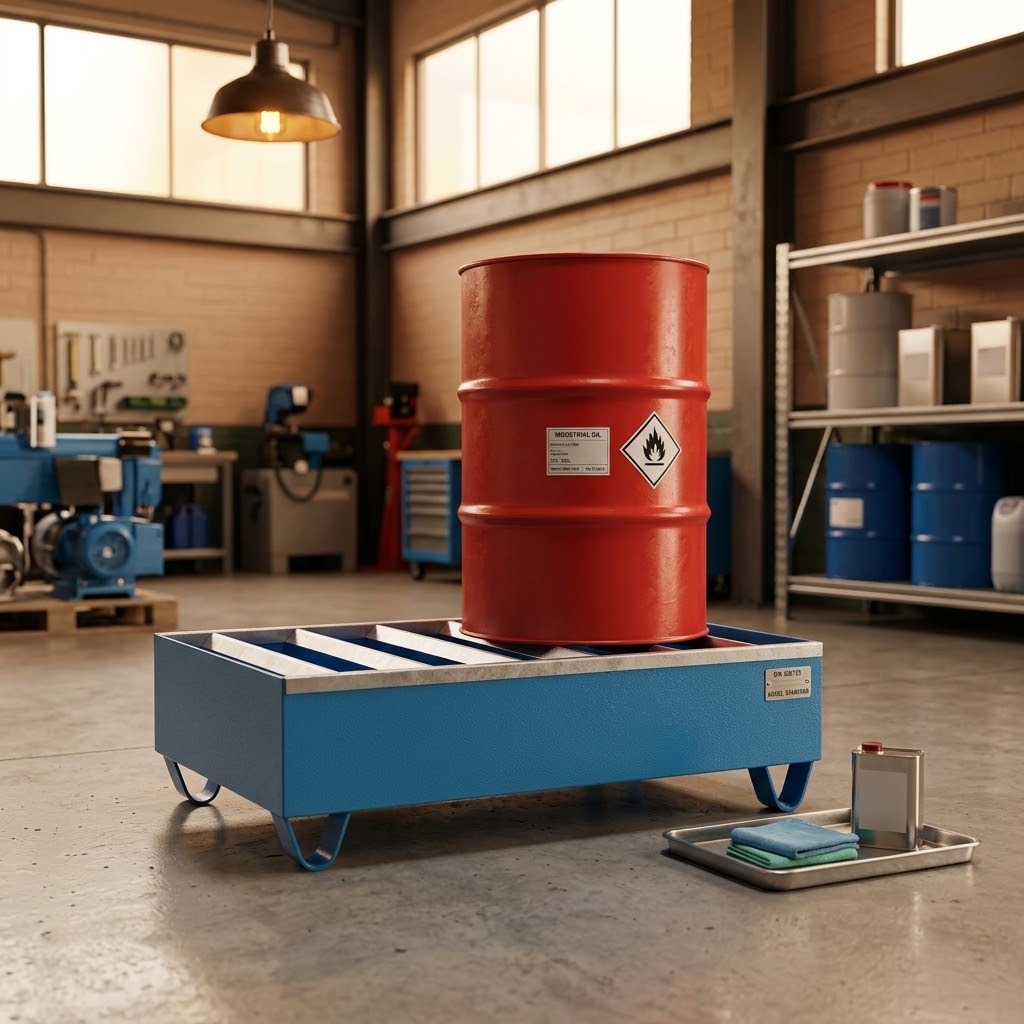
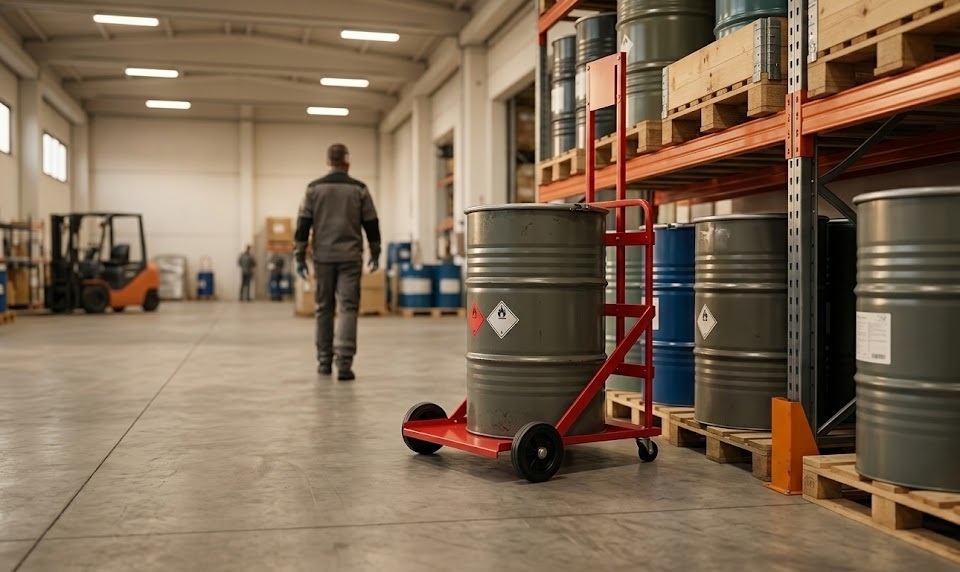
The handling methods indicated by the manufacturer also deserve attention. A structure designed to be moved empty must not automatically be considered transportable under the same conditions when loaded with drums or IBCs. Weight, capacity, and forklift systems must be verified on the individual model data sheet. This step is particularly useful in companies where layouts and storage locations are modified over time.
The technical documentation guides the compatibility verification
For chemical products, the assessment should not be based exclusively on the commercial description of the substance. The relevant safety data sheet contains information on the properties and hazards of the product, together with indications regarding handling and storage. This data helps the company identify the aspects to check when selecting containers, tanks and other containment equipment. The documentation must be read together with the technical specifications provided for the tank.
The manufacturer's compatibility table or indications can also be decisive when the material is intended for aggressive substances. A generic definition such as "chemical resistant" should not be interpreted as a universal guarantee for every concentration and condition of use. In case of doubt, it is necessary to check the specific compatibility with the manufacturer or supplier. The correct criterion remains that of the documented characteristics for the combination actually envisaged.
A professional supply must also consider management over time
The purchase of the tank represents only one part of the organization of the storage area. The system must be able to be controlled, kept clean and managed if it accidentally collects a liquid. Grids, surfaces and components must be checked according to the indications applicable to the product, while the presence of residues requires procedures consistent with the substance involved. Ease of access to the tank therefore also affects daily work.
When a company uses numerous stations, it may be useful to standardize some configurations without ignoring the differences between the substances stored. Using tanks from the same family can simplify identification and management, but does not eliminate the need to check compatibility and capacity for each use. A professional supply should therefore arise from a mapping of the stations. This allows you to organize materials, capacities and container formats with a consistent logic.
Material and capacity must be chosen as parts of the same system
A very large tank is not automatically adequate if the material is not consistent with the substance, just as a chemically compatible solution may be insufficient if it does not meet the expected volume and loads. The selection must proceed by correlating these parameters right from the start. Drums, IBCs, available space and handling methods also complete the picture. Separating the evaluations easily leads to comparing products that meet different needs.
Holity, a leader in the selection of containment tanks and professional equipment for industrial storage, offers configurations intended for drums, IBCs and different operating contexts. To choose the chemical containment tanks it is useful to start from the substance, verify the compatibility of the material and then define the required capacity, size and flow rate. The technical documentation allows you to refine the comparison between the available alternatives. In this way, the secondary containment is designed as part of the storage area and not as a simple additional container.
 English
  Italian
 French
 German
 Spanish