Understanding the difference between isothermal blanket and thermal blanket is useful for companies, healthcare facilities and operators who need to compare products intended for emergencies. Materials, dimensions, packaging and reusability can vary even between items with similar names. Evaluating these elements allows you to correctly distinguish between isothermal blanket, metal blanket and survival blanket, choosing the solution most consistent with the intended use.
Isothermal blanket and thermal blanket often indicate the same product area
The term isothermal blanket is commonly associated with the sheets used in emergency and first aid equipment to limit heat exchange with the environment. The term thermal blanket is also used in the same sector and can refer to products with very similar characteristics. It is therefore not correct to establish a universal difference based exclusively on the two expressions. The technical description of the model remains more significant than the name chosen in the commercial denomination.
This overlap is also evident in professional catalogues, where items defined as “ emergency thermal blankets ” may be described in the individual data sheets as isothermal blankets. Holity collects in the same category products called thermal blanket, isothermal blanket, thermal sheet and survival blanket. This shows why the buyer should not interpret each lexical variant as a different technology. It is more useful to check material, dimensions, packaging and declared method of use .
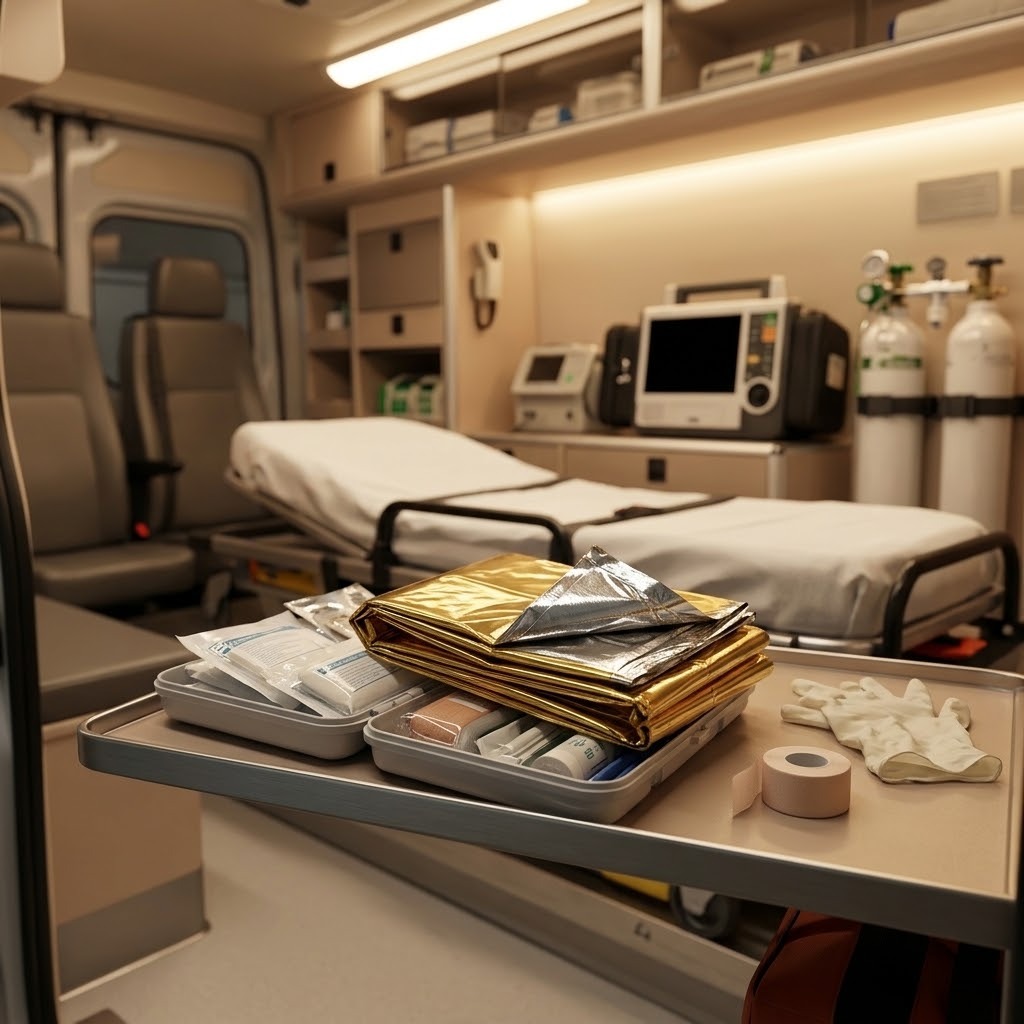 Isothermal sheet is a term frequently used when the product has a thin structure and can be folded into a compact package. The term metalline, on the other hand, primarily recalls the metallic and reflective appearance typical of many emergency blankets. Rescue blanket and emergency sheet emphasize the context in which the product is used. However, none of these expressions, taken in isolation, allows us to deduce all the technical characteristics of the item.
Two products both described as metalline may have different dimensions or materials, just as a thermal sheet may belong to a more complex construction than traditional metallized film. In the Holity catalog, for example, there are both compact isothermal blankets and thermal sheets with different construction characteristics. The terminology must therefore be interpreted as a general indication of the function and not as a rigid technical classification. This approach avoids creating improper equivalences between visually similar but differently constructed products .
The structure of the product matters more of the commercial name
To truly understand the difference between two blankets, you must first observe how they are constructed. Some models use thin synthetic films with a metallized surface, while other solutions may use more robust materials or multi-layer structures. This difference affects the weight, the volume of the package and the ways in which the product is handled. The word “isothermal” therefore does not automatically establish which construction has been used.
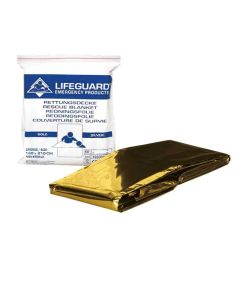
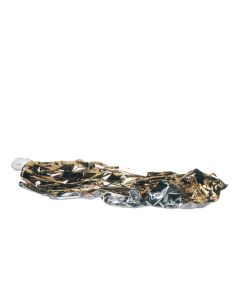
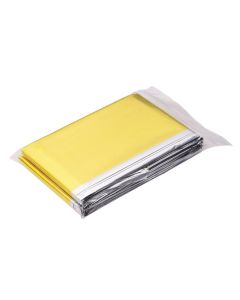
The color and finish of the surfaces can also vary from one model to another. In the professional catalog, for example, there are gold and silver products and other blankets made up of layers of different colors, according to the specifications of the individual item. Holity, a specialist in professional supplies for first aid and healthcare facilities , offers different configurations within the same macro category. The comparison should always start from the characteristics actually declared and not from the sole association between a color and a function.
Disposable and reusable are differences to be checked in the technical data sheet
A more concrete distinction than the simple name concerns the possibility of reusing the product. Some thermal blankets are explicitly presented as disposable and are supplied in multiple packs intended for facilities that require frequent replacement. Other models are instead indicated as washable or reusable by the manufacturer. This characteristic cannot be deduced from the term isothermal blanket, because it can vary even between products belonging to the same category.
For a professional buyer, the difference affects inventory management and the quantity to be ordered. A facility with numerous first aid points may have different needs than a facility in which the equipment is rarely used. Internal material management procedures must also be compatible with what is declared for the individual product. Before purchasing, it is important to check the product's specifications. It is therefore important to check whether the blanket is disposable, reusable, or requires specific maintenance .
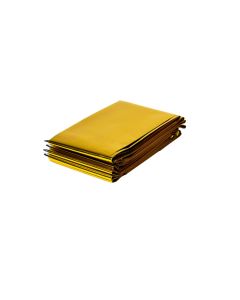
. Emergency blankets do not necessarily have the same dimensions. The professional catalog offers large-format models and other smaller-sized blankets intended for different operational configurations. The open size must be evaluated together with the overall dimensions of the packaging when the product must be placed in boxes, bags, or other equipment. For this reason, the buyer should check both data and not limit himself to the photograph of the folded product.
The format becomes particularly important when numerous workstations or mobile equipment must be set up. A very compact blanket may be easy to store, but the actual size once opened must still correspond to the intended use. Multiple packs and quantities per package also affect the professional management of supplies. The evaluation should therefore take into account operating dimensions, storage space and the number of units required .
In first aid, the actual configuration of the blanket is important
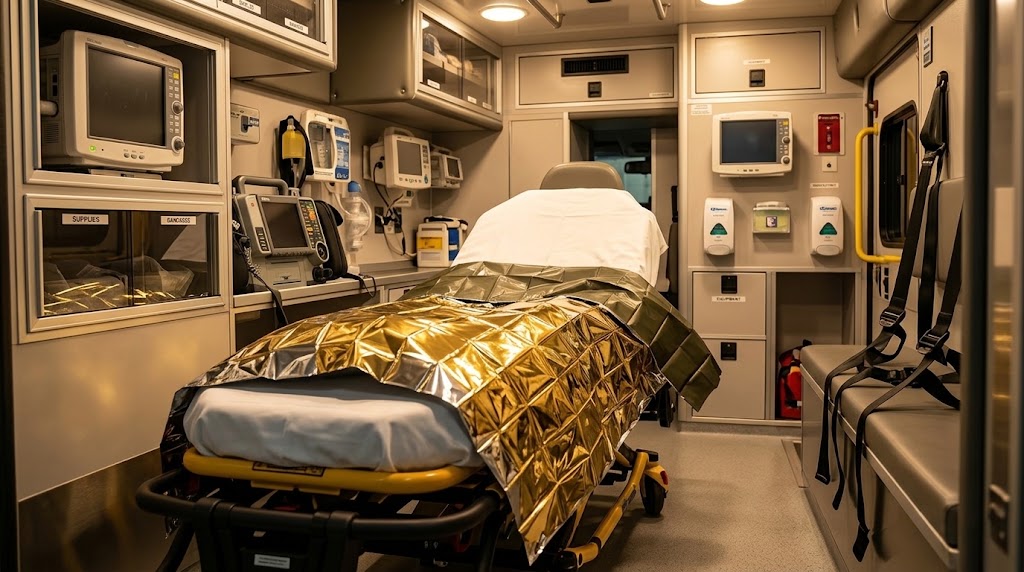
In the context of first aid, terms such as thermal blanket , isothermal or emergency are often used to indicate products included in the equipment intended for interventions. However, the presence in the same product family does not mean that each model has the same purpose or characteristics. Some items are explicitly described for first aid operations, while others have more specific configurations. The choice must therefore be made on the basis of the product documentation and the needs defined by the organisation.
For companies, associations and healthcare facilities it is also useful to compare packaging methods and ease of integration into existing equipment. A product intended for an emergency vehicle can be evaluated using different logistical criteria than a centralised stock. Holity, a point of reference in the selection of professional items for emergencies and first aid , offers models with different formats and configurations. The commercial name therefore remains only the first level of a broader evaluation.
The survival blanket does not identify a single technical category
The expression survival blanket is used above all when the product is associated with emergencies, outdoor activities and portable kits. In many cases it can indicate the same type of thin, metallised sheet commonly defined as an isothermal blanket. However, there are also more structured, waterproof or reusable models that use the same general name. Also in this case, the name describes the context of use more than a standardised technical construction. 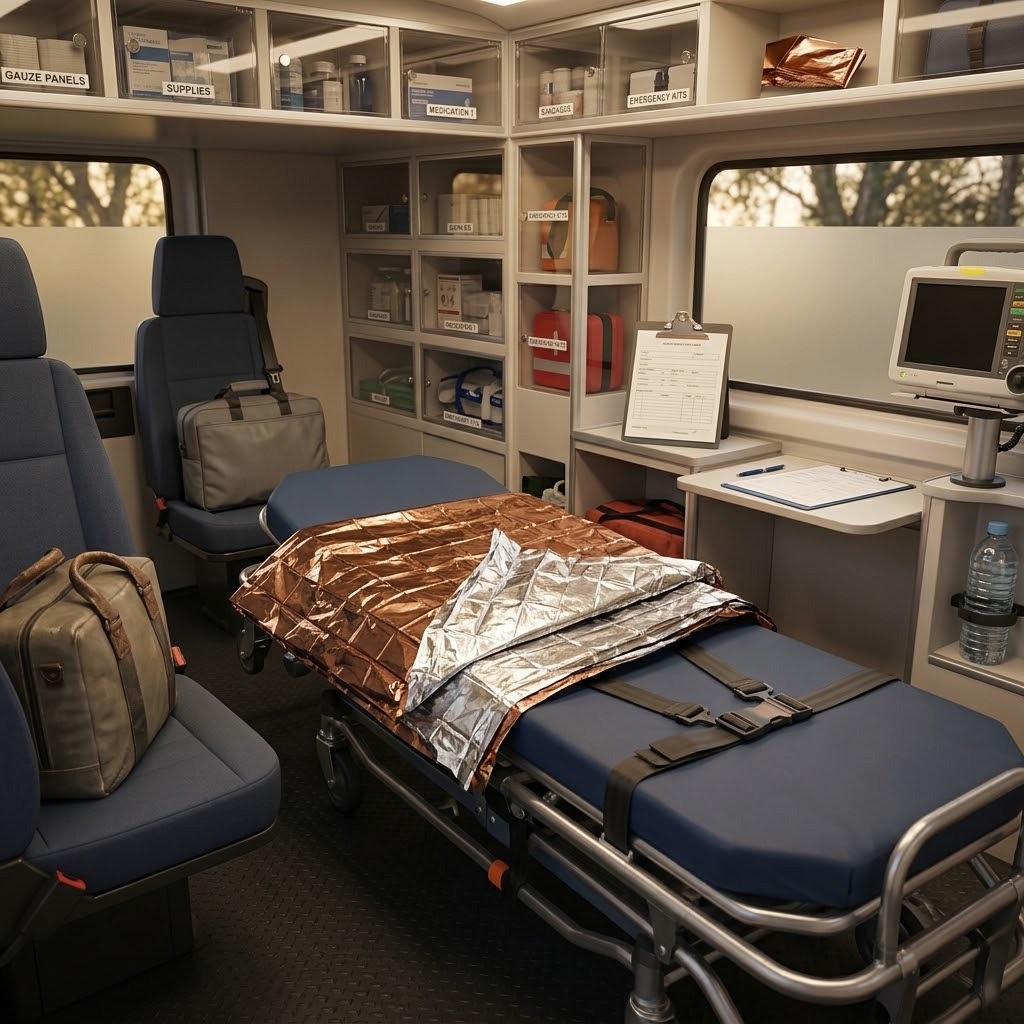
The same principle applies to “rescue blanket” and “life-saving sheet”, expressions that emphasise the emergency function without necessarily defining the material and structure. For a professional purchase, it is therefore of little use to base the comparison solely on the words used in the product title. It is preferable to observe the characteristics that can be verified and compared directly. Materials, measurements, packaging, and manufacturer's instructions offer more concrete information than simple product names.
The technical data sheet allows you to correctly compare alternatives
When two products appear equivalent, the technical data sheet allows you to identify the differences that the name does not highlight. Dimensions, materials, possible reusability, and packaging characteristics are useful data for building a uniform comparison. The intended use indicated by the manufacturer must also be verified, especially when the purchase is intended for professional use. In this way, terms such as isothermal and thermal cease to be the main decision-making criteria.
It is also important to check whether any specific characteristics actually pertain to the model being examined. Not all blankets on the market have the same structure, the same surfaces, or the same management methods. Extending a characteristic observed on a single product to the entire category can therefore lead to an imprecise comparison. The technical data sheet, on the other hand, allows you to base your choice on documented information directly relevant to the supply .
. The professional choice starts from the intended use
. The most useful difference between one blanket and another emerges when defining where and how the product will be included in the supply. An organization that needs to equip many workstations may favor multiple packs and simple inventory management, while other contexts may require different formats or constructions. Before ordering, it is therefore advisable to establish quantities, available space, and required characteristics. Only then does it become useful to compare the individual items available in the category.
Holity, a leader in the selection of emergency thermal blankets and professional first aid supplies , brings together in the same catalogue isothermal blankets, thermal blankets and survival models with different characteristics. This assortment shows why the question "isothermal blanket or thermal blanket?" cannot be answered based on the name alone. The correct choice arises from a comparison between construction, format, management method and declared purpose. The isothermal blanket must therefore be selected as a specific technical product, not as a simple synonym to be interpreted without consulting the relevant documentation.
 English
  Italian
 French
 German
 Spanish