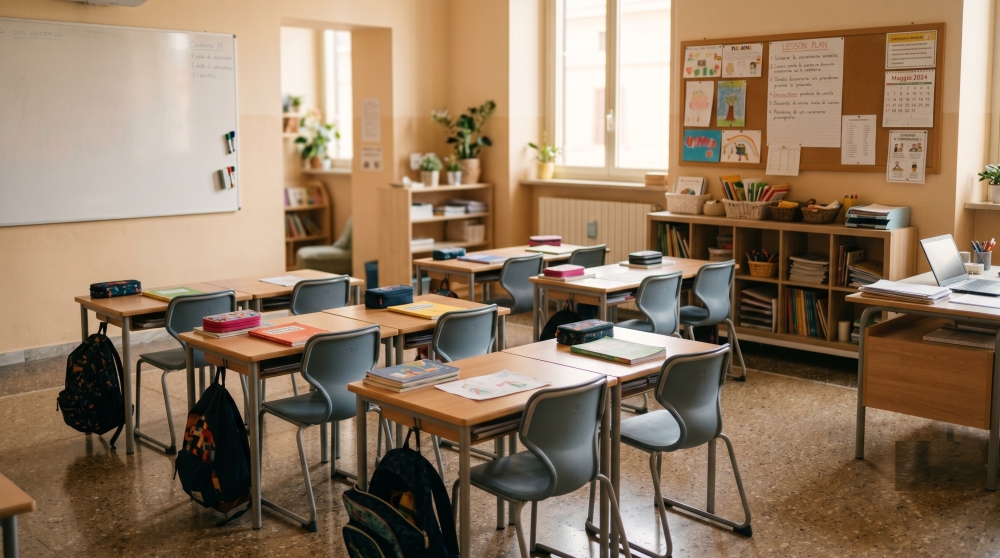
Modular school desks and tables make it possible to adapt the classroom quickly for teacher-led lessons, individual activities and group work. Shape, dimensions, height and configuration options determine how the furniture can be arranged. Mobility and overall footprint should also be assessed in relation to the available space. A coordinated choice therefore helps create more flexible and functional learning environments.
Modularity Change the way you organize the classroom
The term modular school furniture refers to a system made up of elements that can be used individually or grouped together in different configurations. This feature allows you to change the layout without replacing the furniture every time the activity changes. A desk can be used as an individual workstation and then be part of a larger composition. The advantage therefore arises from the possibility of transforming the environment without changing the basic equipment.
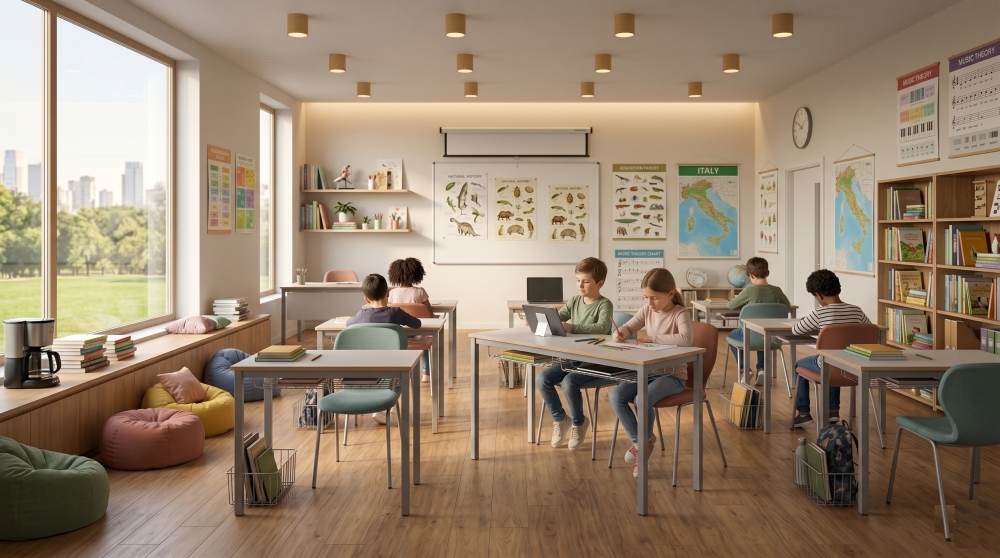
Modularity is particularly useful when the same classroom is used for explanations, discussions, exercises and collaborative work. The furniture must be able to follow these steps without creating excessive movement times. The position of chairs, blackboards and devices must also be considered together with the tables. An effective project integrates flexibility teaching and space organization avoiding treating the desk as an isolated element.
The shape of the desk determines the possible configurations
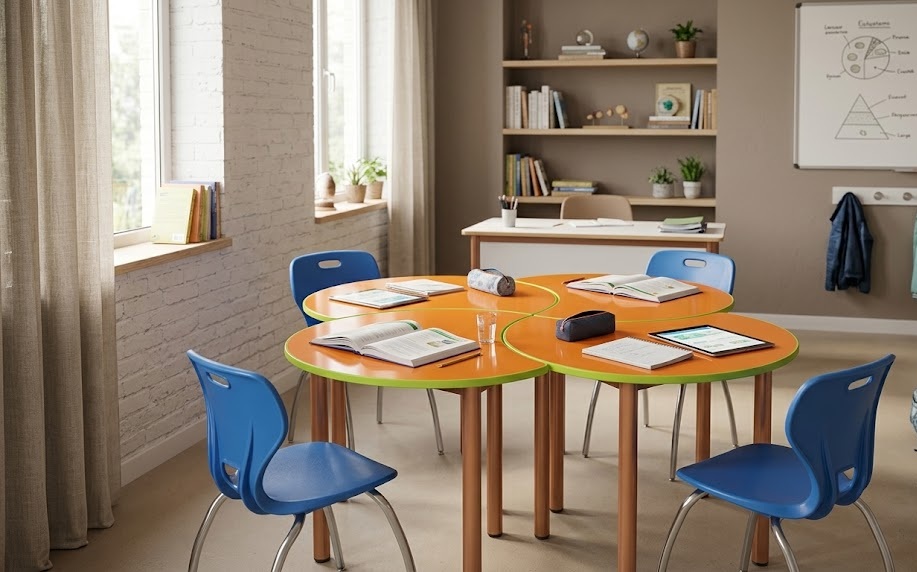
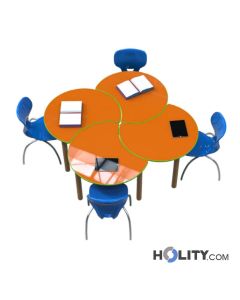
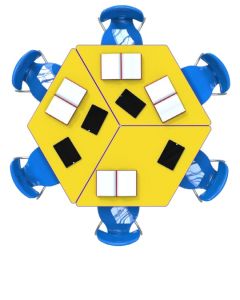
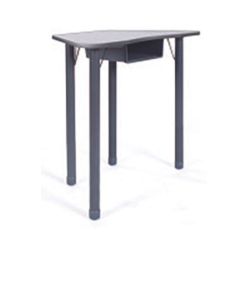
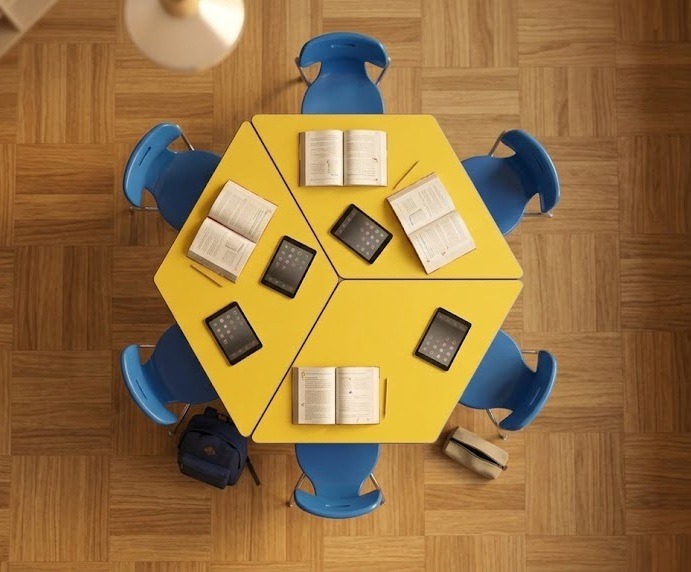 The geometry of the table top affects the combinations that can be created. Rectangular tables allow for simple alignments and linear compositions, while trapezoidal, triangular, or crescent shapes can be used to create groups and circular configurations. Hexagonal elements facilitate the construction of compact islands. Each shape must be evaluated based on the planned activities and not just on its appearance.
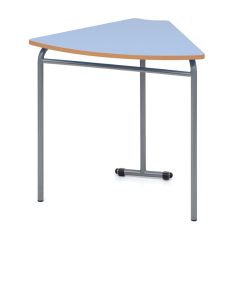
A trapezoidal desk can be useful when you want to build variable groups, but requires proper planning of the space. Triangular tables offer other possibilities for aggregation and can be combined to create larger surfaces. Curved shapes facilitate configurations oriented towards comparison between students. Holity, a specialist in professional supplies for schools and institutions , offers modular desks and tables with different geometries, useful for designing environments with different levels of reconfigurability.
Dimensions and heights must be consistent with the students
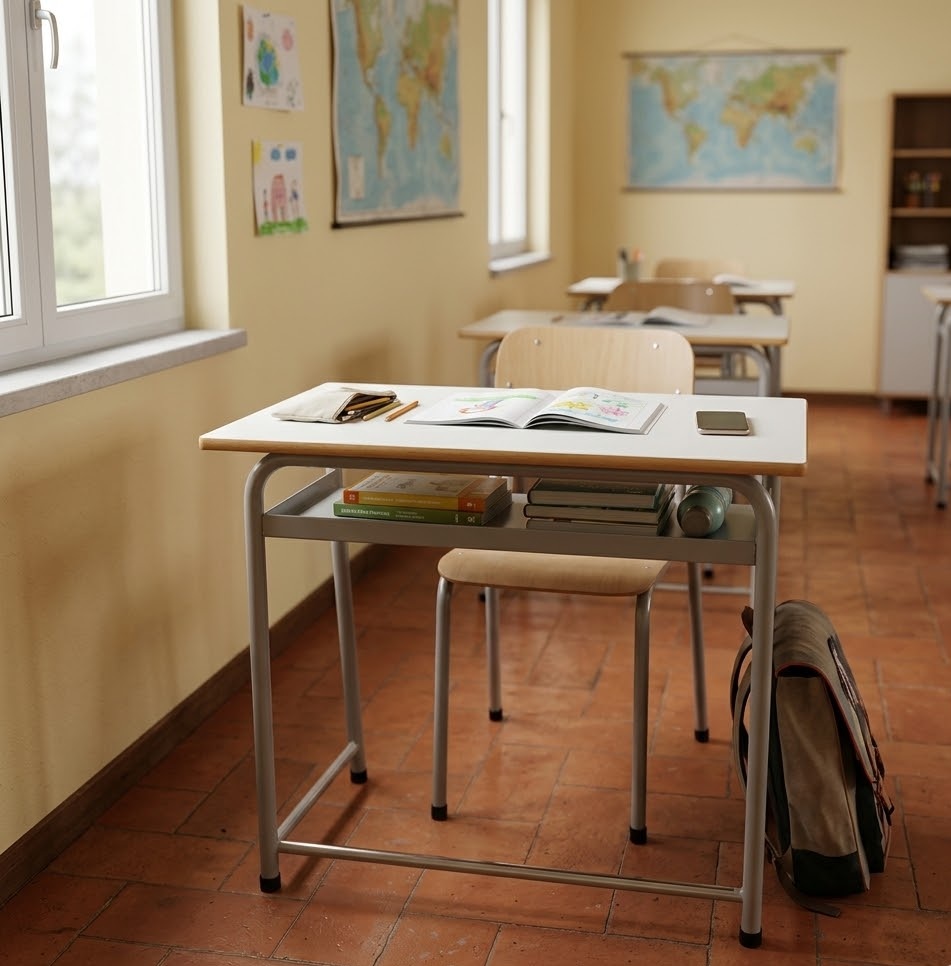
The shape cannot be evaluated separately from the dimensions. The width and depth of the top must offer sufficient surface for notebooks, books and devices used during activities. At the same time, a desk that is too large reduces the number of possible configurations and limits the space for passageways. The size must therefore be proportionate both to the student and to the overall surface area of the classroom.
The height of the top must be compared with that of the seats and with the expected user group. In a primary school the proportions may differ from those required in a secondary school. Adjustable models expand the possibility of reconfiguration. adaptability, but must be managed correctly and maintain stability during use. Checking the measurements of the school desk is therefore one of the essential steps before defining the supply.
Collaborative configurations require space and correct proportions
Island compositions are used to encourage group work and sharing of space. To function correctly, they must leave sufficient space between one composition and another. Students must be able to reach their workstation without crossing overly narrow passages. The teacher must also maintain the ability to move between groups and quickly reach the different areas of the classroom.
The number of students per island depends on the size of the tables and the planned activities. A very large composition can increase the shared surface area, but make dialogue between participants less easy. Smaller groups facilitate some activities, but require a greater number of modules. The design must find a balance between collaboration, visibility and freedom of movement , also considering the whiteboard and power points present in the room.
Mobility and wheels facilitate the reconfiguration of the environment
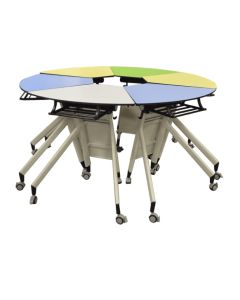
The ability to quickly move a desk can reduce the time needed to change the layout. This aspect becomes relevant in classrooms where the layout is changed several times during the day. However, wheels must be considered together with the stability of the station and the quality of the locking system. A piece of furniture that is easy to move must remain stationary when in use.
The floor of the classroom influences the choice of movement system. Wheels, feet and structure must be compatible with the surface and the overall weight of the desk. The frequency of movements also affects the suitability of a mobile solution. Holity, the reference point for modular and professional school furniture , allows you to compare models with different configurations, including solutions designed to facilitate the transformation of teaching spaces.
Materials and structure affect the duration of the supply
A modular desk is often moved and combined more frequently than a traditional workstation. For this reason, the top, frame and edges must withstand repeated stresses. Resistance depends not only on the declared material, but also on the quality of the joints and the overall construction. A product intended for heavy use must maintain stability even after numerous configuration changes.
The surfaces must also be compatible with the cleaning procedures adopted by the school. Edges and corners influence both maintenance and the perception of sturdiness of the top. Different materials can meet different needs in terms of weight, durability and maintenance. When purchasing for multiple classrooms, it is therefore useful to compare the technical specifications and not limit oneself to an aesthetic or chromatic evaluation.
The composition must adapt to the teaching activities
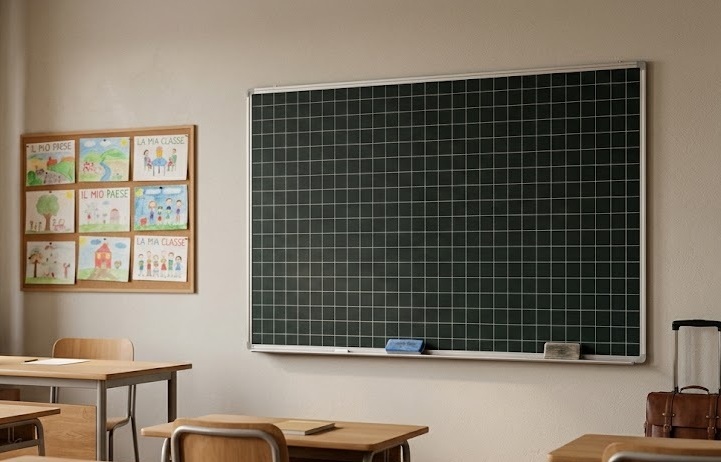
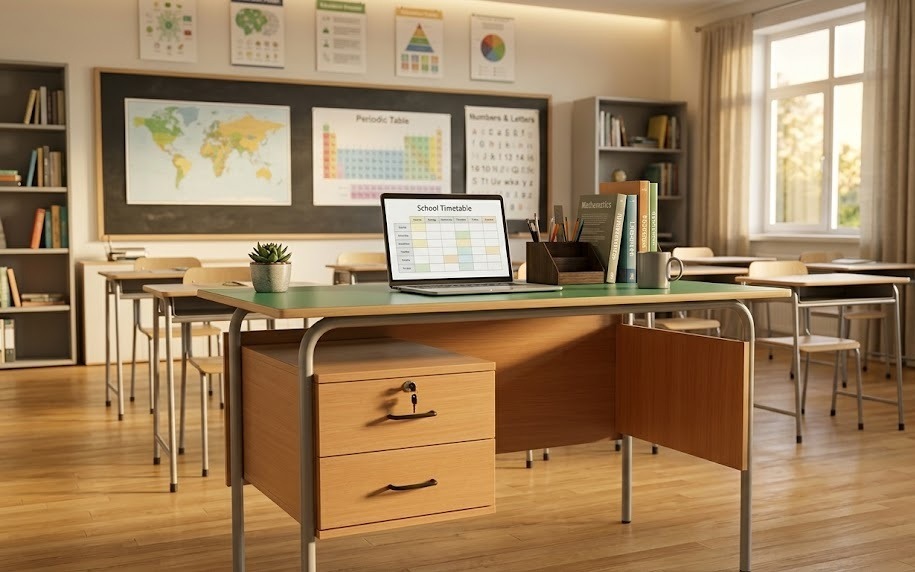
The frontal layout remains useful when the activity requires attention to a single point in the classroom. Modular tables, however, allow you to quickly switch to a different configuration when the work requires discussion or cooperation. Islands are suitable for group activities, while a horseshoe layout can facilitate discussions and presentations. Modularity becomes meaningful when the layout is chosen based on the task.
Not all configurations need to be used in the same environment. Some classrooms may have a more stable function, while others are intended for workshops or transversal projects. The project should therefore define in advance which transformations will actually be necessary. This analysis allows you to choose modular desks with coherent shapes and dimensions, avoiding a level of flexibility higher than that actually used. 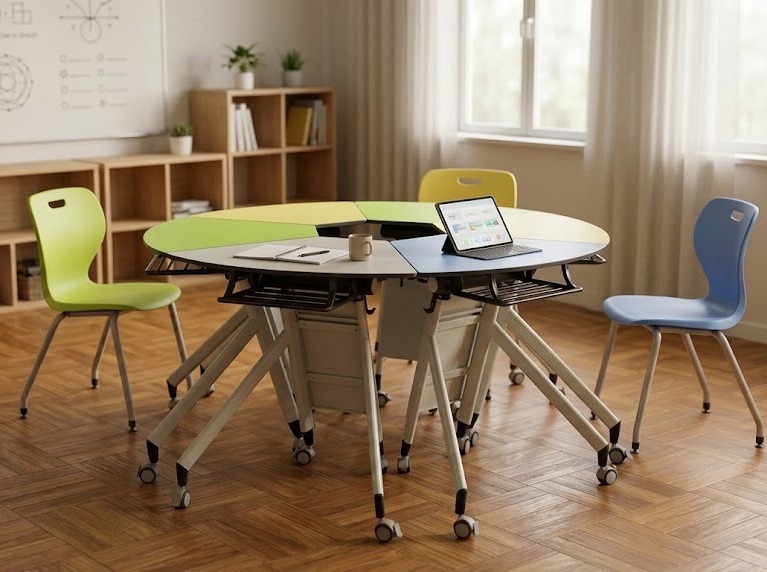
Primary and secondary schools require different assessments
In primary schools, size, ease of movement and the possibility of creating small groups are particularly important. The furnishings must be proportionate to the students and easy to understand in their organization. Color can also be used to distinguish areas or compositions, as long as it remains consistent with the environment. The workstations must leave sufficient space for movement and for activities that involve different teaching materials.
In secondary schools, the use of devices, books and tools related to different subjects often increases. The usable surface area of the desk must therefore be carefully evaluated. The availability of configurations suitable for laboratories, group work and presentations can also become important. The choice should not be based exclusively on the school grade, but on the planned activities and the actual characteristics of the classrooms.
The technical data sheet helps compare the models
The technical data sheet allows you to verify the measurements, height, materials and configuration of the structure. This data must be compared with the floor plan and the number of planned workstations. It is also useful to check any adjustment systems, wheels, accessories and aggregation possibilities. The photographs show the appearance of the product, but are not sufficient to define its compatibility with a school project.
For supplies intended for multiple environments, it is advisable to maintain a uniform logic when reading the data sheets. Models with different shapes can belong to the same modular system, but must maintain consistency in heights and work surfaces. The availability of colour variants can also affect the coordination of the classroom. An orderly technical comparison reduces the risk of purchasing elements that cannot be combined as planned.
A coordinated supply makes the classroom truly flexible
Before ordering, it is useful to define how many workstations are needed, which configurations will be used and which spaces must be left free. The quantity of desks should not be calculated solely on the number of students. It is necessary to consider the planned compositions, any support tables and the need to reconfigure the environment. A floor plan helps to verify dimensions and routes in advance.
Holity, a leader in the selection of professional furniture for schools, institutions and communities , offers modular solutions designed for different teaching configurations. A coordinated supply allows you to maintain uniformity between heights, shapes and finishes, also simplifying any future additions. The value of modular desks emerges above all when each element is part of a coherent project. In this way, the classroom can adapt to activities without losing order, functionality, and continuity over time.
 English
  Italian
 French
 German
 Spanish