
mon-fri 9-13 / 14.30-18.30
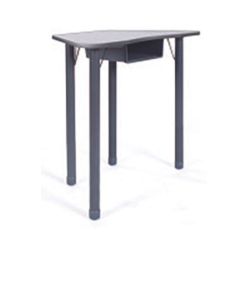
Triangular table for schools, resistant and safe. Size: 6.
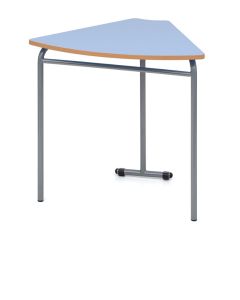
Connectable wedge desk h908_122 for School 4.0. Steel structure and recycled wood top (87.5x70 cm). Ideal for modular teaching.
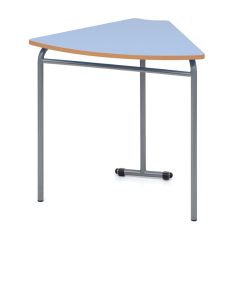
Aggregatable wedge-shaped desk for high schools in steel and recycled wood. Dimensions 87.5x70x76 cm, ideal for collaborative 4.0 classrooms.
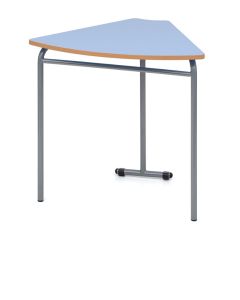
Modular wedge desk for 4.0 classrooms in steel and 100% recycled wood. Dimensions 87.5x70x71 cm, ideal for modular teaching configurations.
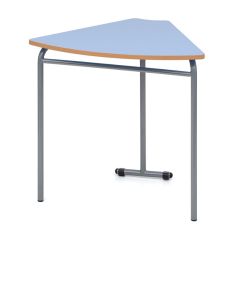
Modular wedge desk h908_119 in recycled wood and steel. Dimensions 87.5x70x64 cm (size 4). Modular for School 4.0 and primary classrooms.

Ergonomic square table with melamine top, adjustable in height. Dimensions: 115 x 60 x 48-56 cm.
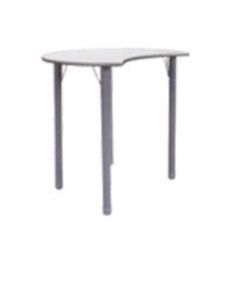
Modular school table for 5 students in melamine chipboard and steel, compliant with UNE-EN 1729-1 standard for children over 12 years old.
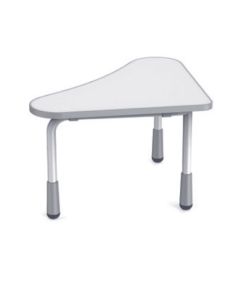
Modular triangular school table in 25 mm melamine chipboard. Adjustable height 480-560 mm, safety edges for collaborative classrooms.

Flower-shaped table, suitable for 5 students. Great stability and resistance. Dimensions: W 120 x D 120 x h 76 cm.
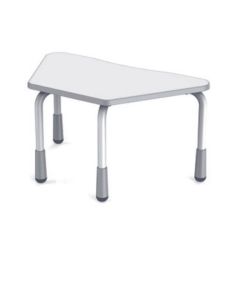
Modular trapezoidal table in 25 mm melamine, 950x530 mm. Adjustable height 480-560 mm and PVC edges for flexible educational configurations.
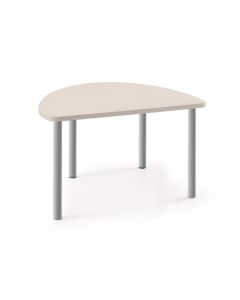
Semi-circular table h848_28 in 25 mm thick melamine and Ø 40 mm tubular frame. Combinable, for kindergarten classrooms. Dimensions: 100 x 50 x H 53 cm.

Ergonomic rectangular table with melamine top, adjustable in height. Dimensions: 60 x 60 x 48-56 cm.
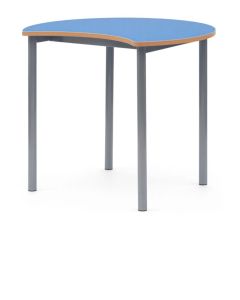
Modular half-moon desk Ø90 cm for high schools. Top in CAM certified recycled wood and Ø40 mm steel frame for 4.0 classrooms.
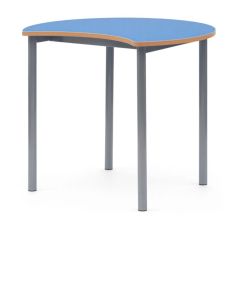
Connectable half-moon school desk in steel and recycled wood. Dimensions Ø90x71cm, ideal for modular classrooms and School 4.0 projects.
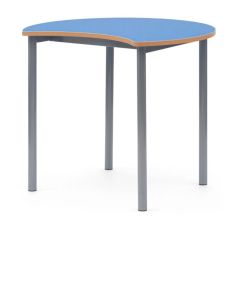
Modular half-moon desk in steel and recycled wood (Ø90x64 cm), ideal for collaborative teaching and School 4.0 modular classrooms.
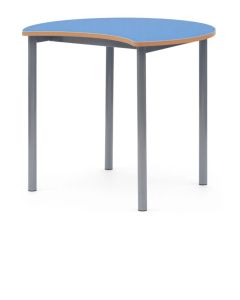
Modular half-moon desk in steel and recycled wood, Ø 90 x h 59 cm. Designed for collaborative teaching and School 4.0 environments.
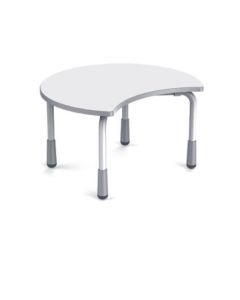
Half-moon modular table in 25 mm white melamine, height-adjustable up to 80 mm. Ideal for collaborative teaching and school safety. Dimensions: W. 90 x D. 75 x h. from 48 to 56 cm
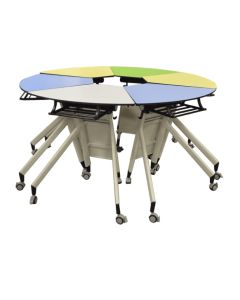
Space-saving folding and stackable table for schools. Dimensions: W 25 x D 50 x h 78 cm.
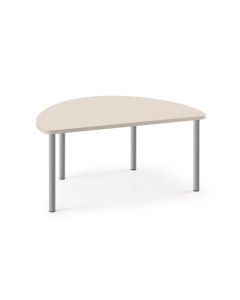
Semi-circular table h848_29 (130x65x53h cm) in 25 mm thick melamine and Ø 40 mm tubular. Combinable, for nursery school classrooms.
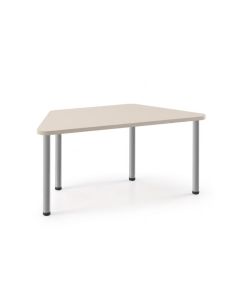
Trapezoidal table h848_31 (120x60x53h cm) in melamine thick. 25 mm and tubular Ø 40 mm. Joinable, for nursery school classrooms.
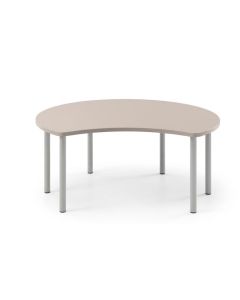
Half-moon table h848_27 in 25 mm thick melamine and Ø 40 mm tubular frame. Side-by-side compatible, for preschool classrooms. Dimensions: 120 x 105 x H 53 cm.
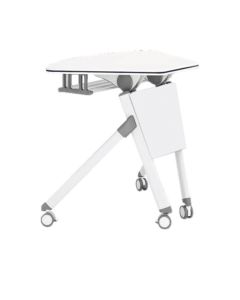
Folding trapezoidal table in steel and MDF with wheels. Modular, space-saving and ideal for circular configurations in schools and offices.

Semicircular table h848_30 (160x80x53h cm) in melamine 25 mm thick and tubular Ø 40 mm. Joinable, for early childhood school classrooms.
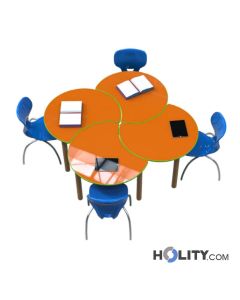
Modular half-moon school table, diameter 90 cm and height 64 cm, with steel legs and red top. Ideal for School 4.0 dynamic classrooms.
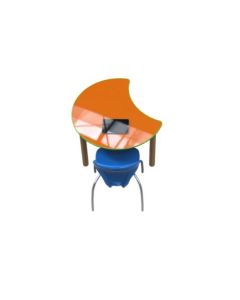
Single half-moon table h172_258 in red bilaminated plywood Ø90 cm with Ø40 mm steel structure. H 710 mm, natural edging.
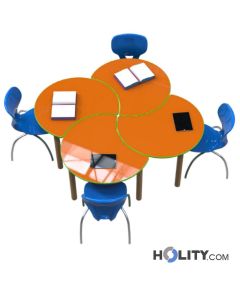
Modular half-moon table for School 4.0, diameter Ø90 cm. Steel structure and red top, ideal for creating collaborative work islands.
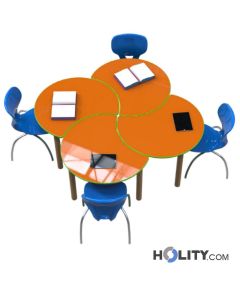
Modular half-moon school desk for School 4.0, steel structure, Ø90x76h cm. Ideal for dynamic and flexible group configurations.
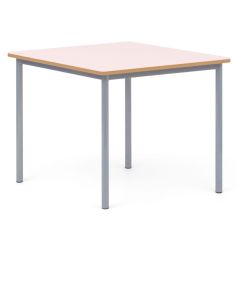
Modular rhombus school desk in steel and recycled wood. Dim. 134x80x76 cm (G6). Ideal for School 4.0 classrooms and modular configurations.
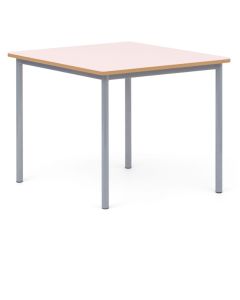
Rhombus modular school desk for School 4.0 in steel and recycled wood. Dimensions 80x134x71 cm, ideal for secondary modular classrooms.
Connectable rhombus school desk in steel and recycled wood. Height 64 cm (size 4), ideal for modular classrooms and School 4.0 projects.
Diamond-shaped school desk h908_127 in steel and recycled wood. Modular design for collaborative learning, height 59 cm, compliant with CAM requirements.
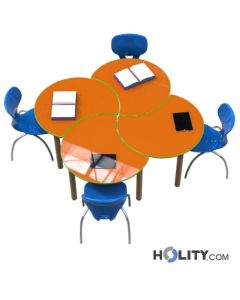
Half-moon modular table for School 4.0 with steel legs, diameter 90 cm. Ideal for creating flower-shaped configurations and group work.
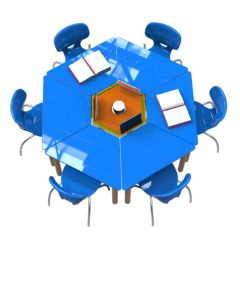
Modular trapezoidal desk for School 4.0 in steel, height 64 cm. Designed for aggregated configurations and flexible learning environments.
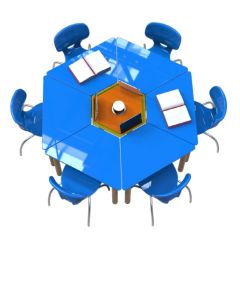
Modular trapezoidal desk for school 4.0. Height: 71 cm. Dimensions: L. 900 x s. 320 mm.
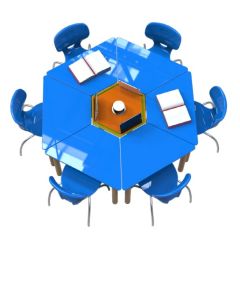
Modular 4.0 trapezoid table. Height: 76 cm. Dimensions: B. 900 x b. 320 mm.
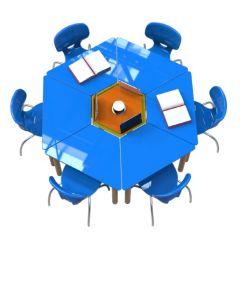
Modular table 4.0 trapezoidal. Height: 82 cm. Dimensions: B. 900 x b. 320 mm.
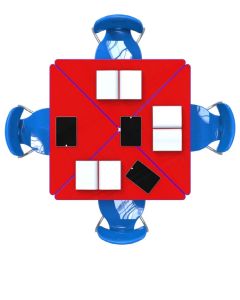
Modular 4.0 table triangular shape. Height: 64 cm. Base dimensions: 1200 mm.
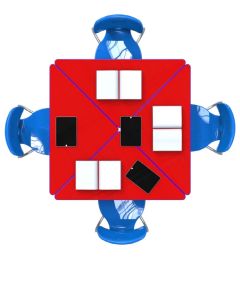
Modular triangular desk for school 4.0. Height: 71 cm. Base dimensions: 1200 mm.
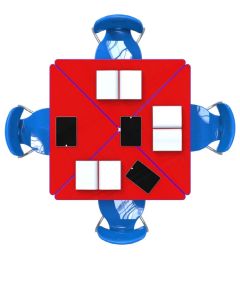
Modular triangular table for school 4.0. Height: 76 cm. Base dimensions: 1200 mm.
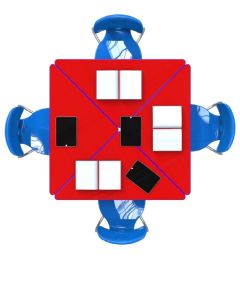
Aggregatable triangle desk for 4.0 classrooms. Height: 82 cm. Base dimensions: 1200 mm.
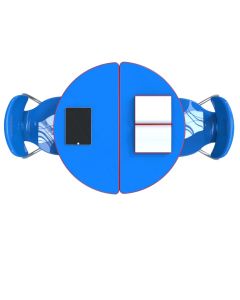
Modular semi-circle desk for 4.0 classrooms. Height: 64 cm. Ø: 900 mm.
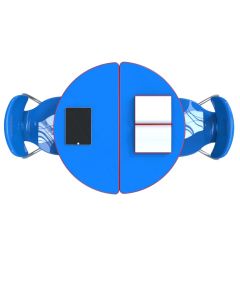
Semi-circular modular table for schools 4.0. Height: 71 cm. Ø: 900 mm.
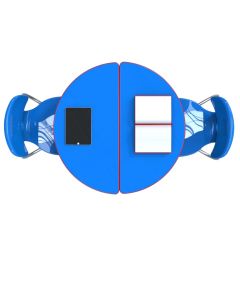
Semi-circle modular desk school 4.0. Height: 76 cm. Ø: 900 mm.
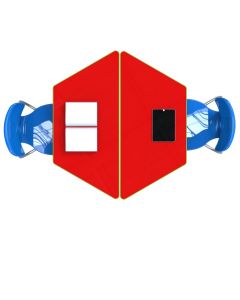
Modular desk for school 4.0. Shape: trapezoid. Height: 64 cm. Dimensions: B. 1200 x b. 600 mm.
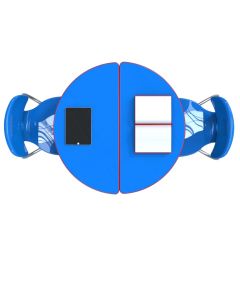
Modular desk for 4.0 classrooms. Shape: semi-circle. Height: 82 cm. Ø: 900 mm.
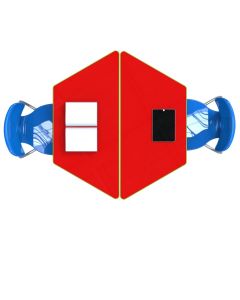
Modular connectable table for 4.0 classrooms. Shape: trapezoid. Height: 71 cm. Dimensions: B. 1200 x b. 600 mm.
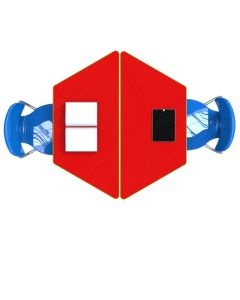
Modular table for school 4.0. Shape: trapezium. Height: 76 cm. Dimensions: B. 1200 x b. 600 mm.
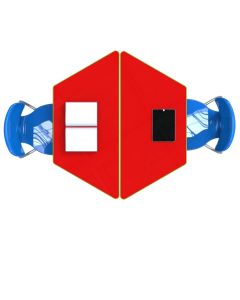
Modular school 4.0 desk in a trapezoidal shape. Height: 82 cm. Dimensions: B. 1200 x b. 600 mm.
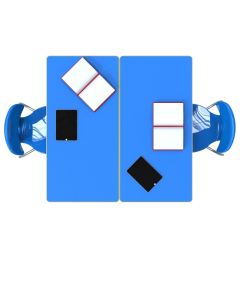
Rectangular modular desk for school 4.0. Height: 64 cm. Dimensions: L1. 1200 x L2. 600 mm.
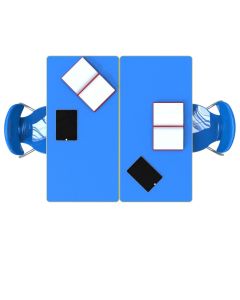
Connectable table to set up 4.0 classrooms. Height: 71 cm. Dimensions: L1. 1200 x L2. 600 mm.
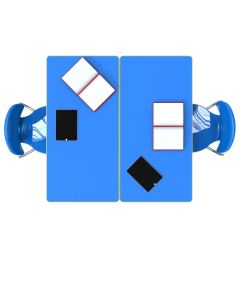
Modular desk for 4.0 classrooms. Shape: rectangular. Height: 76 cm. Dimensions: L1. 1200 x L2. 600 mm.
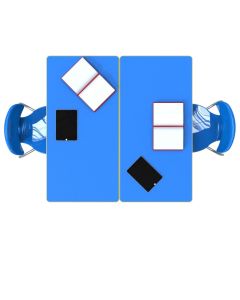
Rectangular modular table for setting up 4.0 classrooms. Height: 82 cm. Dimensions: L1. 1200 x L2. 600 mm.
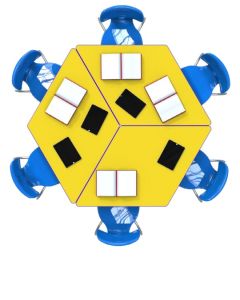
Modular rhombus-shaped desk for school 4.0. Height from the ground: 64 cm. DM 1560 x Dm 900 x h. 900 mm.
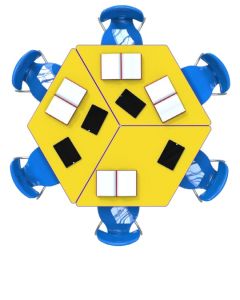
Modular diamond-shaped table for school 4.0. Height from the ground: 71 cm. MD 1560 x md 900 x h. 900 mm.
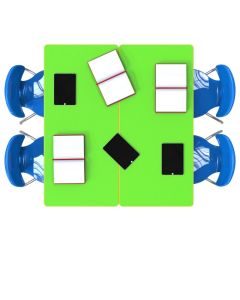
Rectangular modular desk for school 4.0. Height: 71 cm. Dimensions: L1. 1300 x L2. 600 mm.
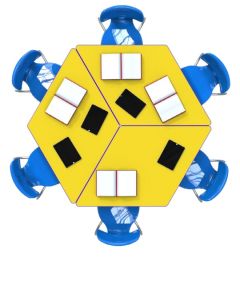
School 4.0 modular table. Shape: rhombus. Height from the ground: 76 cm. DM 1560 x Dm 900 x h. 900 mm.
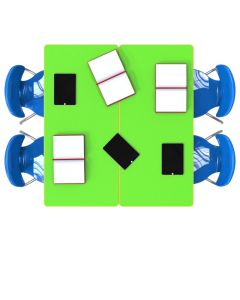
School 4.0 modular table. Shape: rectangular. Height: 76 cm. Dimensions: L1. 1300 x L2. 600 mm.
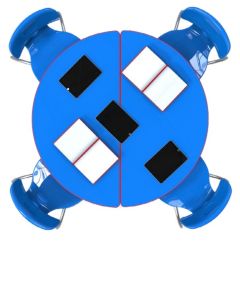
Modular desk for school 4.0 in a semi-circle shape. Height: 64 cm. Ø: 1200 mm.
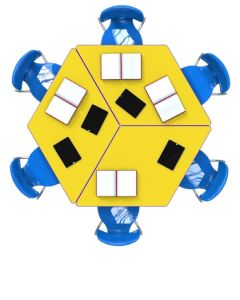
Modular diamond desk for school 4.0. Height from the ground: 82 cm. DM 1560 x Dm 900 x h. 900 mm.
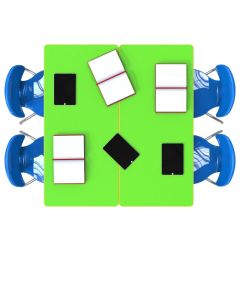
Modular rectangular desk for school 4.0. Height: 82 cm. Dimensions: L1. 1300 x L2. 600 mm
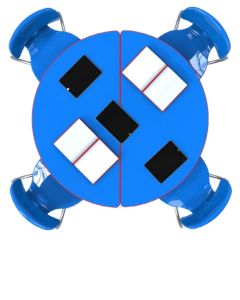
Modular table for school 4.0. Shape: semicircle. Height: 71 cm. Ø: 1200 mm.
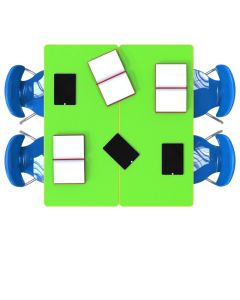
Modular rectangular desk for 4.0 classrooms. Height: 64 cm. Dimensions: L1. 1300 x L2. 600 mm.
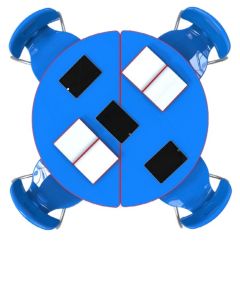
Modular semi-circle table for school 4.0. Height: 76 cm. Ø: 1200 mm.
Semicircular modular desk for school 4.0. Height: 82 cm. Ø: 1200 mm.
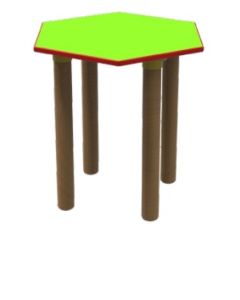
Hexagonal table for school 4.0. Height: 64 cm. Side length: 320 mm.
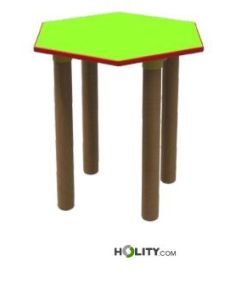
Modular desk for school 4.0. Shape: hexagon. Height: 71 cm. Side length: 320 mm.
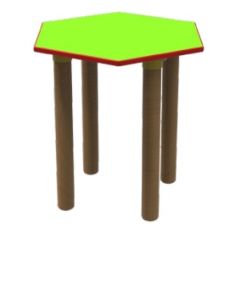
Hexagonal desk for school 4.0. Height: 76 cm. Side length: 320 mm.
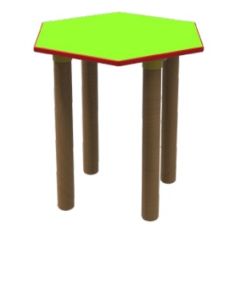
Modular hexagonal desk for school 4.0. Height: 82 cm. Side length: 320 mm.
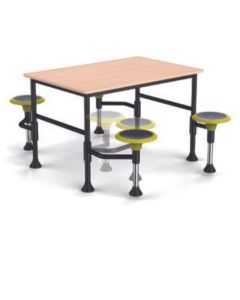
Rectangular table with 4 integrated chairs for preschools. 18 mm melamine top, 1200x800x750 mm, PVC edges and adjustable feet.

Hexagonal table with power strip tower. Tower dimensions: W.320 x H.820 mm.
Modular desks and tables represent the modern design solution for contemporary educational environments, where organizational flexibility and space transformation capabilities are structural requirements. These school furnishings respond to the principles of the School 4.0 methodology, promoting dynamic configurations that adapt to different educational needs: from frontal lessons to collaborative small-group work, from laboratory activities to interdisciplinary projects. Modularity allows educational institutions to maximize space efficiency, reducing renovation costs and allowing rapid reconfigurations according to emerging pedagogical needs. Available in multiple geometries (wedges, half-moons, diamonds, trapezoids, triangles), these furnishings combine structural robustness, safety of use, and environmental sustainability, thanks to the use of recycled wood and certified steel.
Choosing modular furniture for school contexts entails significant operational and pedagogical advantages. First and foremost, configuration versatility allows teachers to organize different layouts during the same day: from traditional setups in parallel rows to collaborative islands, without the need for structural interventions. This transformative capacity supports innovative teaching methodologies, from communities of practice to peer-to-peer learning, creating environments that reflect the transversal skills required by the contemporary labor market. Furthermore, modular furniture significantly reduces space preparation times between different activities, allowing fluid transitions that maximize effective teaching time.
From an economic point of view, modularity represents a smart investment: instead of completely replacing furniture when educational needs change, institutions can progressively integrate new compatible elements, spreading expenditures over time. Space management becomes more rational as combinable and stackable desks reduce storage space, freeing up areas for other functions. In terms of safety, certified products comply with rigorous standards, with structured steel legs that guarantee stability even during frequent movements, and rounded edges that minimize the risk of accidental trauma in high-density environments for young users.
The range of School 4.0 modular desks and tables includes geometrically diverse solutions, each optimized for specific collaborative and educational configurations. Wedge desks, available in heights between 59 and 82 centimeters, feature a trapezoidal shape that facilitates concentric aggregation, creating natural group dynamics where every student maintains mutual visibility. Half-moon desks, with a diameter of 90 centimeters, further expand assembly possibilities, allowing horseshoe configurations particularly suitable for facilitated discussions and group presentations. Diamond desks, available in four height sizes, offer an elongated quadrangular profile that allows for both linear aggregations and complex geometric compositions.
In parallel, the line of modular tables offers trapezoidal, triangular, square, and rectangular formats, many of which are height-adjustable between 48 and 56 centimeters, suitable for both primary students and adolescents in secondary schools. Folding tables represent a solution for institutions with particularly constrained spaces, reducible to minimum thicknesses for vertical storage. All furnishings feature tops made of ecological panels from recycled wood, available in differentiated colors (light blue, red, orange), allowing visual coding for educational areas or age groups. Tubed steel structures, with diameters ranging from 28 to 40 millimeters according to the expected load, guarantee durability even in high-frequency use contexts.
The selection between different types of modular desks and tables must first consider the architecture of the available classroom and the linear dimensions compatible with internal movement flows. For compact classrooms, wedge desks in reduced heights (59-64 cm) offer the best volumetric ratio, while for large spaces, half-moons or diamonds allow for visually more generous and communicatively effective compositions. The height of the furniture represents a critical factor: 59 cm desks are suitable for primary classes up to the third grade, while progressive heights (64, 71, 76, 82 cm) accompany student growth up to upper secondary schools. A frequent error consists in undersizing the height thinking of keeping the same furniture over time; ergonomically, the incorrect proportion between desk height and user posture generates chronic fatigue and compromises the quality of attention.
A second aspect concerns the compatibility between selected geometric shapes within the same classroom: coherent combinations of shapes facilitate intuitive rearrangements, while random mixes create physical resistance to reconfigurations. For institutions planning progressive implementations, it is advisable to standardize a reference modular type (for example, combinable wedges as a base) and integrate complementary shapes (half-moons, trapezoids) in contained proportions, no more than 25-30% of the total. The choice between solid combinable desks and adjustable tables depends on the frequency of reconfiguration: environments with daily resets favor stackable combinable desks for operational ease, while classrooms with more stable layouts benefit from adjustable tables that offer altimetric versatility without the need for physical movement.
Modular school furniture must comply with a complex regulatory framework that integrates European safety standards, environmental sustainability directives, and national technical specifications. The EN 1729-1 standard establishes dimensional and safety requirements for school desks and chairs, including structural stability parameters, verified through tipping and static load tests, as well as specifications on materials to avoid the release of harmful substances. Fire resistance is regulated by EN 13823 and EN ISO 9239-1, which classify materials according to controlled flame reactions, a binding requirement in public environments such as schools. Regarding sustainability, PEFC or FSC marking on ecological panels guarantees the responsible origin of raw materials and traceability of the production chain.
At a constructive level, items must feature rounded corners and edges with minimum radii of 2-3 millimeters to prevent accidental contact trauma, a relevant detail considering the young users. Steel legs must have anti-corrosion treatments (hot-dip galvanization or epoxy painting) for durability in humid environments and to guarantee a minimum useful life of 10 years. Aggregation systems between modules (interlocks, nylon connectors, galvanized steel fixings) must allow manual assembly without specialized tools and be tested according to EN 12221 to verify resistance to repeated assembly-disassembly cycles. Certifications issued by accredited bodies (e.g., TÜV, IMR) represent guarantees of conformity; in public tenders, these are often binding in the tender specifications.
Explore all the products in the category and compare the available solutions to find the one best suited to your operational context. Each model has been designed according to principles of safety, sustainability, and educational flexibility, guaranteeing durable investments consistent with the orientations of contemporary pedagogy.
A School 4.0 modular desk is school furniture designed to easily join with other modules of the same or complementary shapes, creating variable collaborative configurations. Unlike fixed traditional desks, modular units are stackable, lightweight for movement, and designed for educational environments that frequently change layout according to the pedagogical methodologies in use.
For a third-grade primary class, a desk with a height between 64 and 71 centimeters is recommended. The choice depends on the average height of the students: if the class has particularly tall children, you can opt for 71 cm; for average growth, 64 cm is ideal. Ergonomics requires that feet rest firmly on the ground with hips and knees forming an angle of approximately 90 degrees.
Yes, wedges and half-moons can coexist in the same classroom to create greater configuration versatility. However, it is recommended to keep them in balanced proportions (e.g., 70% wedges and 30% half-moons) to facilitate teachers during rapid rearrangements. Too many fragmented combinations create operational confusion and slow down transitions between activities.
The 100% recycled wood ecological panel used in our desks is subjected to structural resistance tests, does not release toxic substances, and holds PEFC/FSC certifications. Durability is comparable to solid wood if subjected to ordinary maintenance (regular cleaning, protection from constant humidity); with standard school use, it exceeds 10 years of useful life.
Rule of thumb: calculate the number of students, then add 20-30% of free surface area for aisles and circulation. A wedge desk occupies about 6.1 square meters with a height of 64 cm. For a class of 24 students, provide 25-26 modules considering transit spaces. Consult the classroom floor plan to verify compatibility with doors and windows.
Traditional combinable desks are not height-adjustable; however, several fixed heights are available in the range (59, 64, 71, 76, 82 cm). If the institution plans to keep the same modules for different years, it is advisable to opt for modular tables with adjustment up to 80 mm of height variation, which are more versatile over time.
Stackability allows desks to be stored in vertical columns, drastically reducing storage space: 12-15 modules occupy less than 1 square meter. This allows schools to free up areas for laboratories, multifunctional spaces, or simply to rationalize the warehouse. During daily reconfigurations, rapid storage facilitates transitions between lessons.
Verify compliance with EN 1729-1 for dimensions and stability, EN 13823 for fire reaction, the presence of PEFC/FSC marking on the wood, and certifications issued by accredited bodies (TÜV, IMR). In public procurement, request CE declarations of conformity and, where required, independent laboratory tests on samples.
 English
  Italian
 French
 German
 Spanish