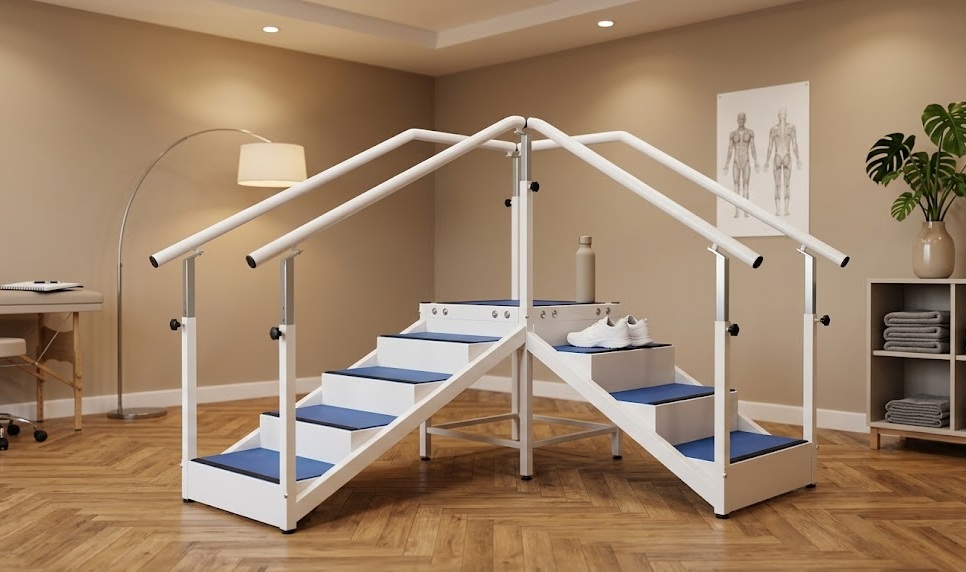
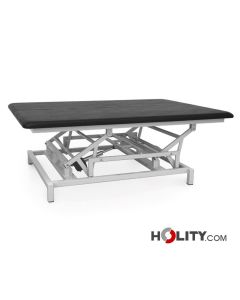
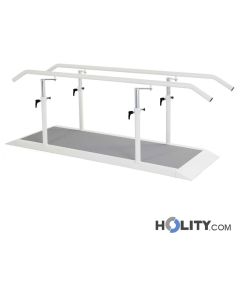
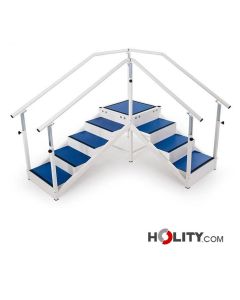
Furnishing a physiotherapy clinic requires careful planning of the available space and the equipment that is actually needed. Treatment tables, professional seating, trolleys and storage solutions should be arranged to support daily work while keeping circulation areas clear. The choice depends on the services provided, the size of the clinic and the number of treatment stations required. A well-planned layout creates a more organised, functional and easier-to-manage professional environment.
The office is designed starting from the professional activities
Before choosing furniture and equipment, it is useful to define which activities will actually be carried out in the office. A practice that focuses mainly on manual treatments will have different needs than a center that dedicates a significant portion of its space to therapeutic exercise or motor rehabilitation. The free surfaces to be maintained, the number of workstations, and the quantity of material to be stored change. The simultaneous presence of multiple professionals also modifies the necessary organization.
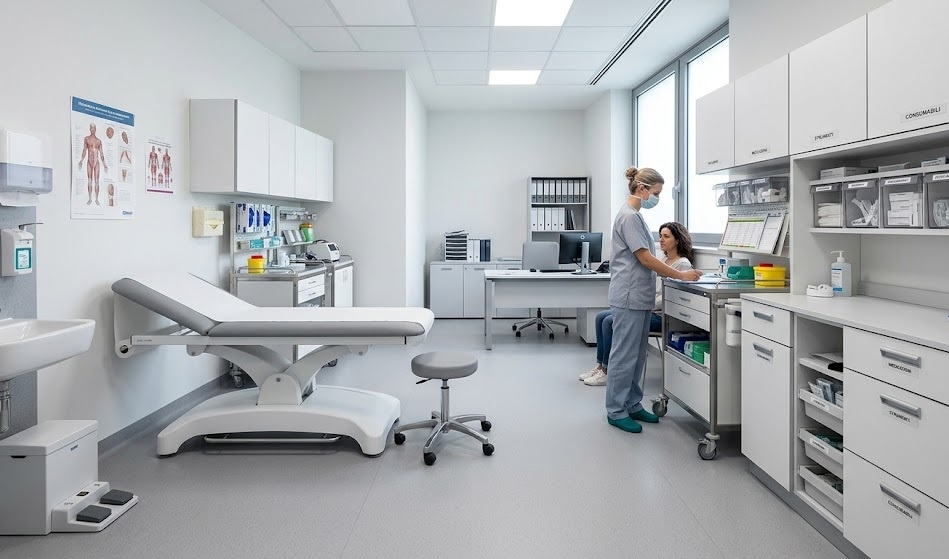
The floor plan should be read considering not only the square meters, but also the routes. The professional must be able to easily reach the bed, instruments, and materials without continually moving furniture. Doors, windows, and passageways should not be penalized by oversized furniture. A good furnishing project for a physiotherapy studio therefore arises from the relationship between planned activities, people present and actually usable space.
The table is the centre of the treatment area
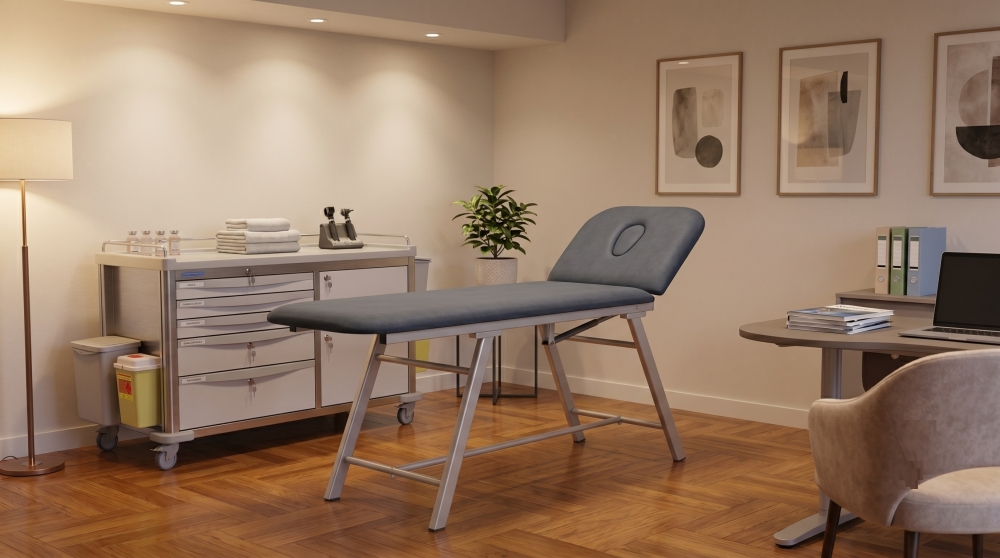
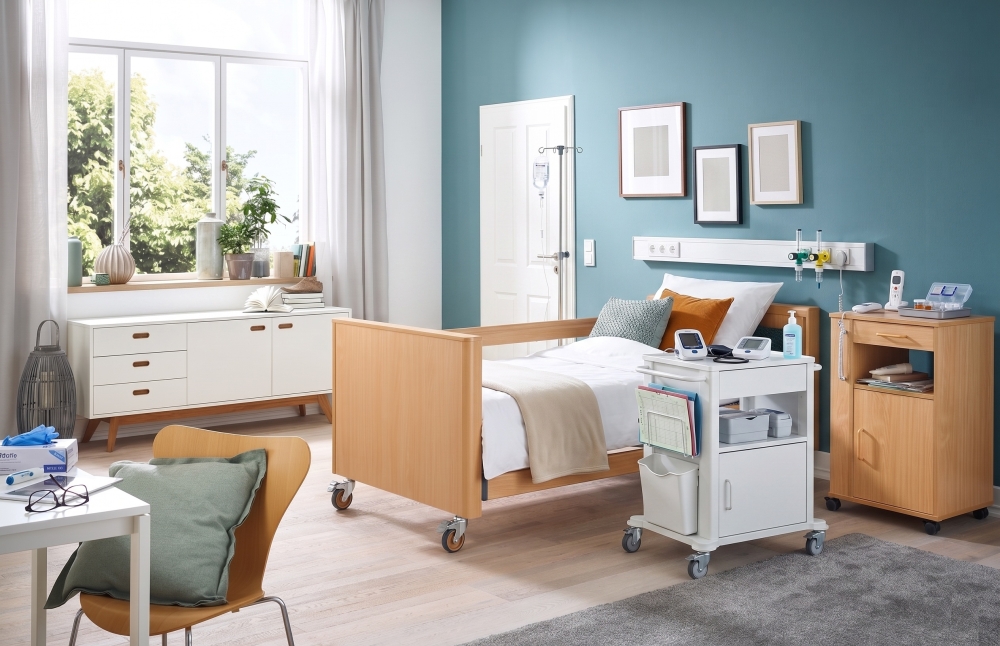
 The table represents one of the main elements of the treatment room and its dimensions influence the entire layout. It is necessary to consider not only the surface area occupied by the product, but also the space required around the structure. The physiotherapist must be able to change position and reach the different sides without being hindered by walls, furniture or other equipment. The location must therefore be established before filling the room with secondary elements.
Professional tables can differ in structure, number of sections and adjustment possibilities. These characteristics must be evaluated in relation to the activities actually carried out and the frequency of use of the station. Even the covering, stability and durability are important factors. and adjustment methods affect daily management. The most coherent choice does not necessarily coincide with the model with the greatest number of functions, but with the one that responds to the operational needs defined by the professional.
The operational seat is often considered a secondary element, even if it can be used for many hours during the day. An adjustable professional stool allows you to change the position in relation to the table and to the different activities. The size of the base, the presence of wheels and the adjustment system influence the practicality of the station. The size must also be proportionate to the free space around the patient.
Holity, specialist in professional supplies for physiotherapy studios and healthcare facilities, allows you to consider tables, stools and other furnishings as components of the same operational environment. This approach avoids purchasing individual products without considering how they will be used together. A very large table, for example, reduces the space available for moving the stool. Coordinated design, however, allows you to keep the workstation tidy and easily accessible.
Carts and containers keep the workstation tidy
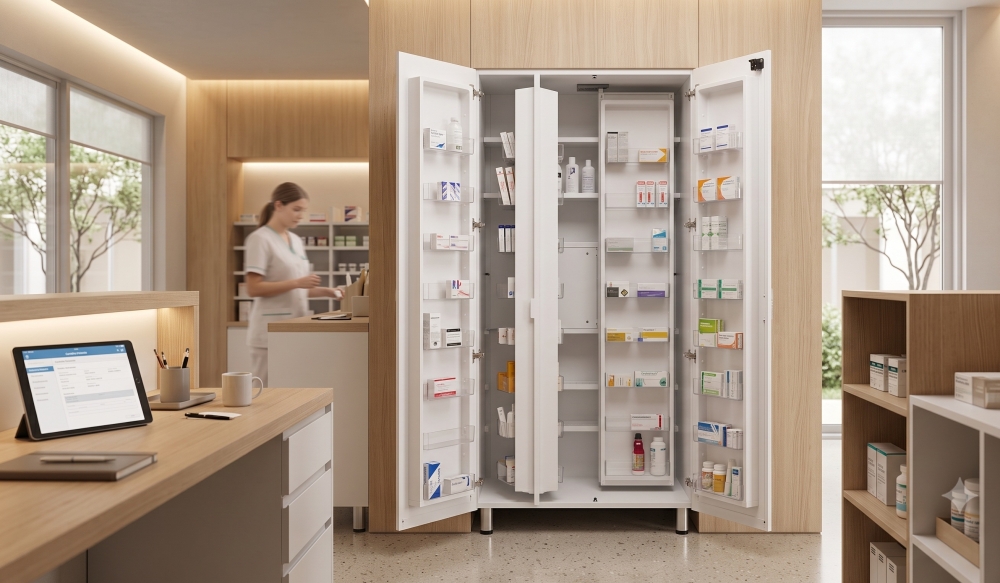
During daily activities, it may be necessary to have frequently used materials, small instruments, and products available. A professional cart allows you to keep them close to the workstation and move them when the treatment organization changes. Shelves, drawers, and support surfaces must be chosen based on the material actually used. A cart that is too small tends to create clutter, while an oversized structure can take up useful space in the room.
Fixed furniture and containers also play an important role in managing the office. Less frequently used items can be stored away from the operating area, leaving only what is needed during the day near the table. This distinction reduces the accumulation of materials on work surfaces. A well-organized containment system also makes it easier to identify equipment and simplifies the restoration of the workstation between one activity and the next.
Rehabilitation equipment should be chosen based on the services offered
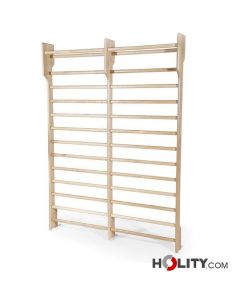
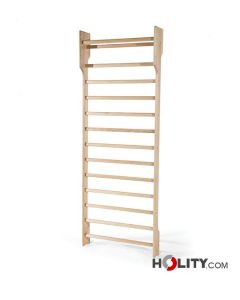
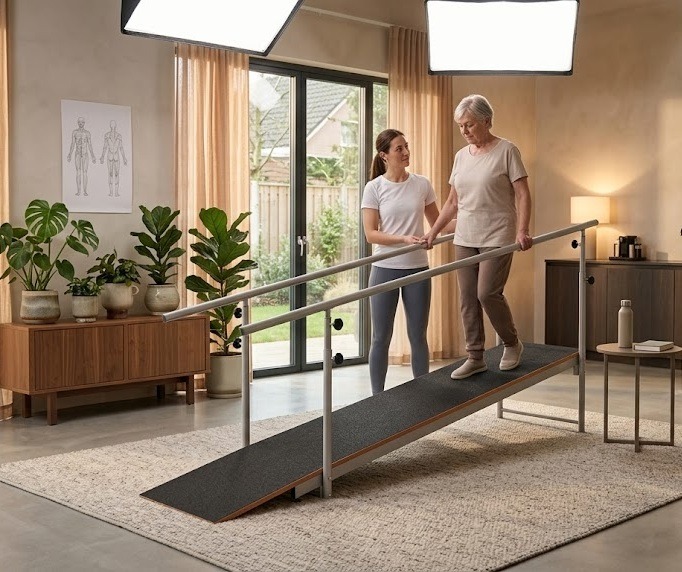
There is no universal rehabilitation equipment valid for every studio. The purchase must be linked to the services offered, the skills present and the available space. Equipment for mobility, strengthening, balance or functional recovery exercises may require free areas and different methods of use. Before ordering, it is therefore useful to establish which instruments will be used most frequently and which can be introduced later.
When the studio includes an area dedicated to exercise, the layout must prevent the equipment from transforming the space into a simple storage area. Each element should have a precise position and leave the necessary paths free for carrying out the activities. Holity, a reference point for professional equipment intended for physiotherapy and rehabilitation, offers a supply approach that allows different needs to be considered within the same project. The choice of individual equipment must, however, remain consistent with the professional activity actually planned in the office.
Privacy and comfort are part of the functionality of the office
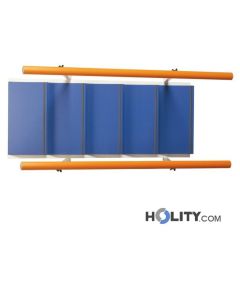
A well-organized office must also consider the management of privacy, especially when the same environment includes multiple workstations or when there are passageways. Screens and separation systems can help temporarily delimit certain areas without permanently modifying the room. Their placement, however, must leave access free and not interfere with the professional's movements. Also in this case, the dimensions must be evaluated on the actual floor plan.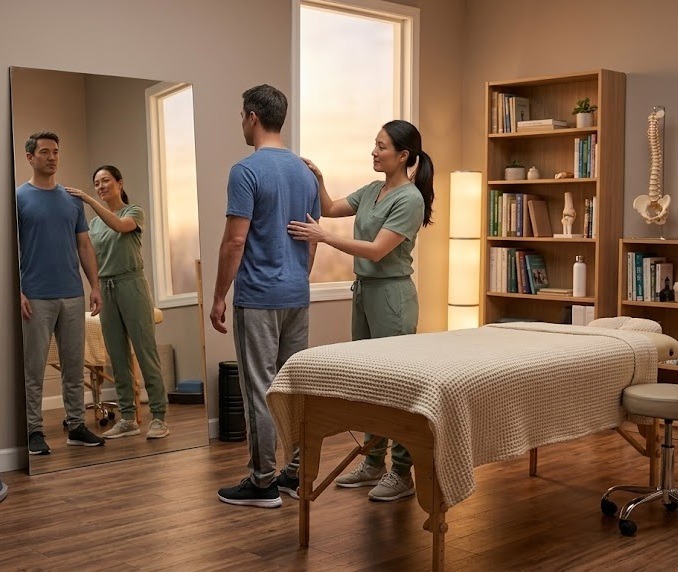
Comfort does not depend solely on the aesthetic aspect of the environment. Order, lighting, ease of movement, and the availability of support surfaces contribute to the overall perception of the office. Furnishings should create visual continuity without sacrificing practicality. A professional environment can be welcoming even through simple choices, as long as each element has a clear function and a coherent position.
Materials and cleaning affect daily management
The surfaces of beds, trolleys, stools, and furniture are used and cleaned frequently. For this reason, the material must also be evaluated in relation to the product's maintenance instructions. Coverings, joints, edges, and movable components can affect the ease with which normal management of the workstation is carried out. A surface that is aesthetically pleasing but complex to maintain may prove impractical in daily work.
Robustness must also be considered in relation to frequency of use. Wheels, adjustment mechanisms, hinges, and mobile structures are subjected to repeated stress and deserve attention when choosing. Keeping technical documentation for the equipment makes it easier to follow the instructions for cleaning and maintenance. The goal is to create a practice where furnishings can be managed with clear procedures and without improvised interventions.
A coordinated supply simplifies opening and renovating the practice.
When starting from an empty space, it is useful to prioritize the supply, starting with the equipment essential for the activities that will actually be carried out. Beds, operating chairs, and support systems form the basis, while trolleys, furniture, and rehabilitation equipment progressively complete the space. Purchasing everything without a plan risks creating overlaps and clutter that are difficult to correct. A preliminary design allows you to verify measurements and quantities before ordering.
Holity, specialist in professional equipment and furnishings for physiotherapy and the healthcare sector represents a reference for those who need to organize a supply for the opening or renovation of the practice. Evaluating multiple categories within the same project facilitates coordination between beds, seats, trolleys and other operational elements. Furnishing a physiotherapy studio in a functional way means above all selecting what is really needed and assigning a specific space to each piece of equipment. The result is a more orderly professional environment, practical to manage and capable of accompanying daily work without unnecessary clutter.
 English
  Italian
 French
 German
 Spanish