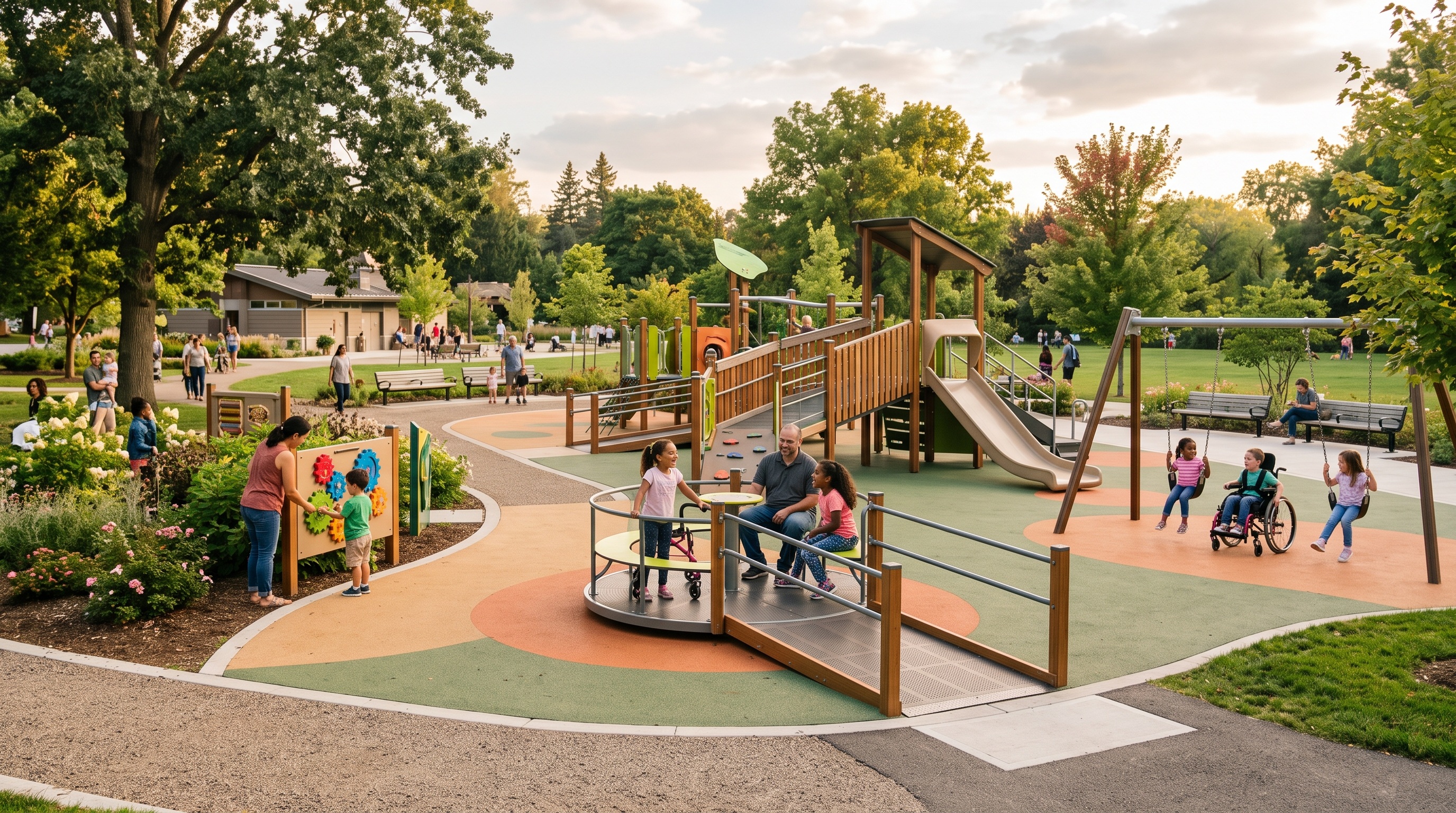
THE inclusive games for parks They help create areas where children with varying motor, sensory, and cognitive abilities can meet, explore, and participate in play activities. Inclusion doesn't mean adding a single piece of equipment specifically for children with disabilities and placing it at the edge of the park. It requires comprehensive planning that considers access, pathways, surfaces, variety of stimuli, and opportunities for play together.
For municipalities, schools, designers and managers of public spacesThe quality of the design depends on the ability to observe the area from the perspective of different users. A child in a wheelchair, a user with visual impairments, a child sensitive to noise, or a person with limited coordination can experience the same park in very different ways. The selection of equipment must therefore be accompanied by a spatial organization that minimizes obstacles and offers activities of varying intensity.
What makes a playground truly inclusive?
A park It's inclusive when it allows multiple children to participate without being separated into rigidly distinct areas. This doesn't mean that every single game must be usable in the same way by everyone. It means offering a combination of accessible, shareable, and adaptable experiences, distributed evenly throughout the entire area. Floor-based activities, sensory panels, movement games, and quiet spaces can coexist and meet different needs.
Participation also involves the ability to choose. A child should be able to decide whether to engage in a dynamic activity, stay in a quieter area, or play with others through manipulative and musical elements. inclusive games for public parks They work best when they don't impose a single usage pattern. Variety allows each user to find an experience consistent with their abilities, without reducing the park to a standardized path.
Design accessible routes before choosing equipment
Accessibility begins at the entrance. Accessible equipment loses much of its usefulness when children can't reach it due to steps, unstable gravel, narrow passages, or sudden changes in level. Before choosing play equipment, it's therefore necessary to define continuous, recognizable paths that are compatible with wheelchairs, strollers, and mobility aids. The connection must include the entrance, play areas, rest areas, and any restrooms.
The internal layout must also be legible. Paths that are too winding or crisscrossed by moving toys can create difficulties for children with vision, motor skills, or orientation issues. An orderly layout helps distinguish dynamic areas from quieter spaces. The design should also prevent users with limited mobility from having to follow significantly longer routes than others to reach the same area.
Ground-level games and multi-sensory activities
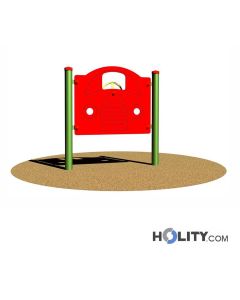
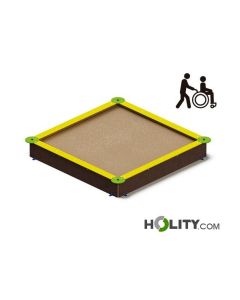
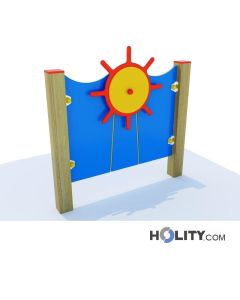
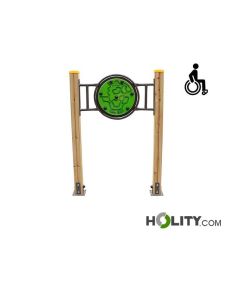
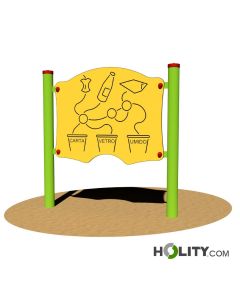
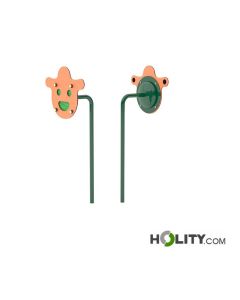
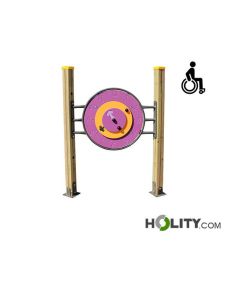
 THE games Located at ground level, these play areas are an important component of inclusive areas because they can be reached without ramps or transfers. Gear panels, tactile elements, mazes, mirrors, sound games, and coordination activities allow even children who don't use elevated structures to participate. These elements can be installed individually or integrated into the exterior walls of more complex structures.
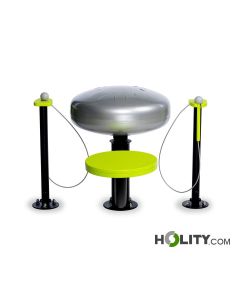
The multisensory activities They involve sight, hearing, touch, and movement in different combinations. They shouldn't be considered secondary play compared to slides and swings, as they can stimulate curiosity, communication, and collaboration. A musical panel, for example, can be used by multiple children simultaneously, encouraging a shared experience. It's important to arrange these elements at different heights and leave enough space in front for them to approach.
Swings, rides and structures suitable for children of different abilities
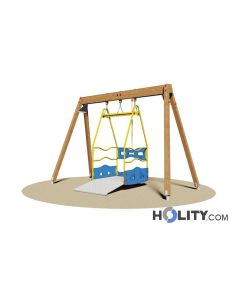
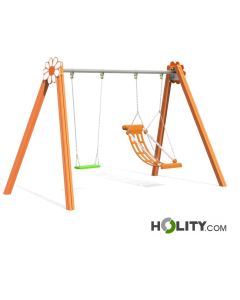
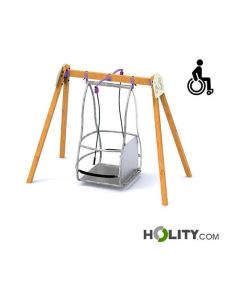
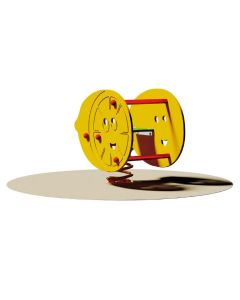
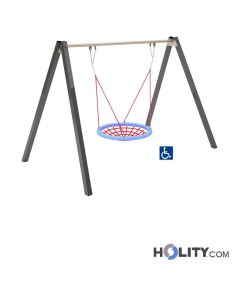
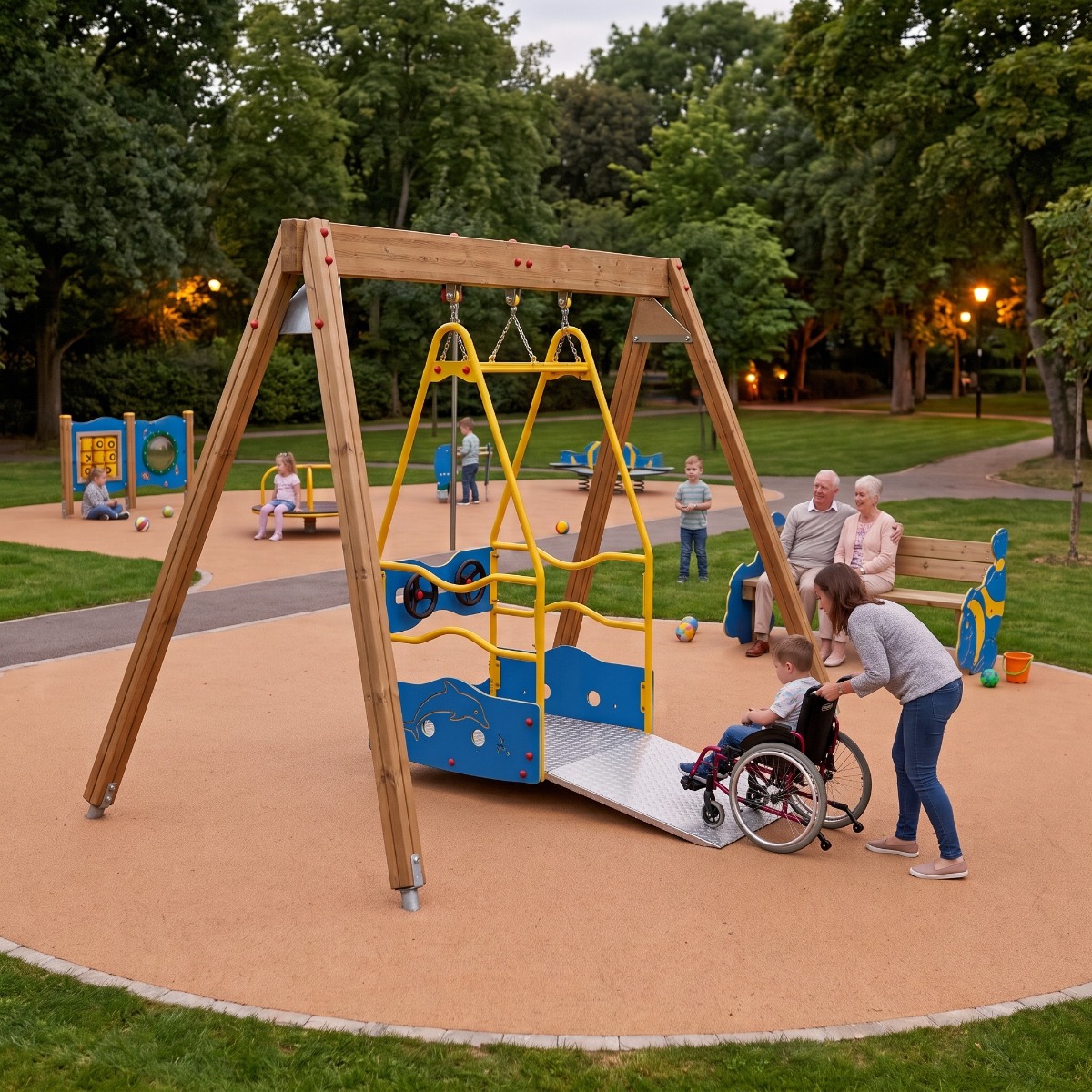
The swings They can be configured with different seats, designed to offer varying levels of support. Traditional, wraparound, or assisted-use seats can coexist within the same area. The layout must allow caregivers to approach and assist the child without interfering with the movement of other equipment. It is also important that the surrounding surface maintains continuity and adequate impact absorption.
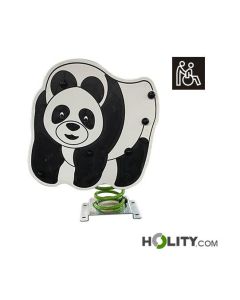
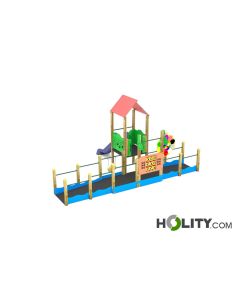
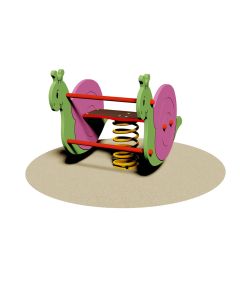
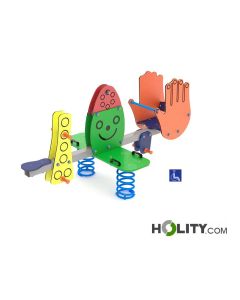
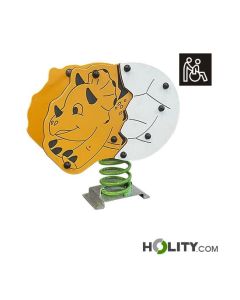
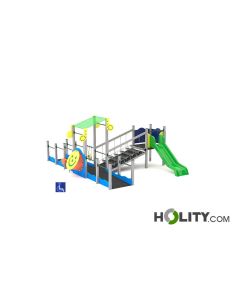
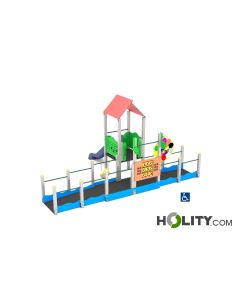
The accessible rides They can include ground-level entrances and spaces suitable for wheelchair users, alongside seating or support for other children. In composite structures, ramps and wider platforms can allow access to some elevated activities. The goal should not be merely to provide physical access, but to offer a true play experience. Holity, a specialist in professional supplies for parks and public spaces, offers solutions designed to integrate inclusive activities into structured play areas.
Paving, maneuvering spaces and continuity of routes
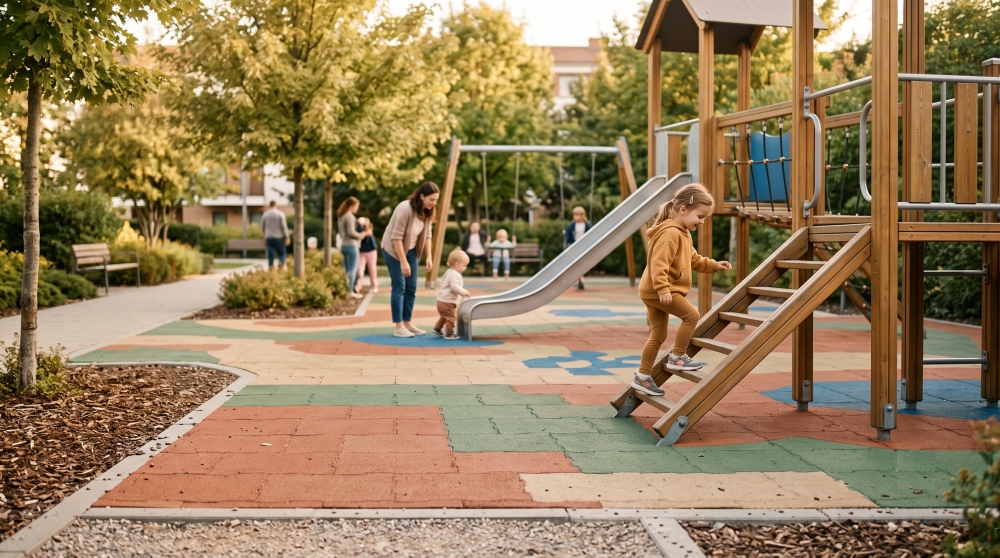
There flooring It affects both safety and accessibility. A surface that is too soft or uneven can make it difficult to move a wheelchair, while joints, edges, and unevenness can create obstacles for wheelchair users. In impact zones, the surface must also be consistent with the characteristics of the equipment. Accessibility and fall mitigation must therefore be evaluated together, without prioritizing one requirement alone.
Maneuvering space must be provided in front of the play equipment and at change-of-direction points. A ramp leading to a platform that is too narrow makes it difficult to use, just as an accessible panel surrounded by other elements can be difficult to reach. It's also helpful to consider the presence of caregivers, who may need to accompany the child. The continuity of the path must be verified under actual conditions of use, not just on the floor plan.
Comfort, sociability and presence of companions
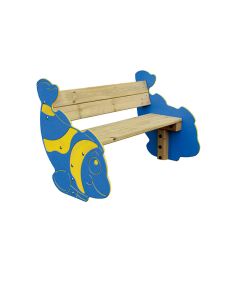
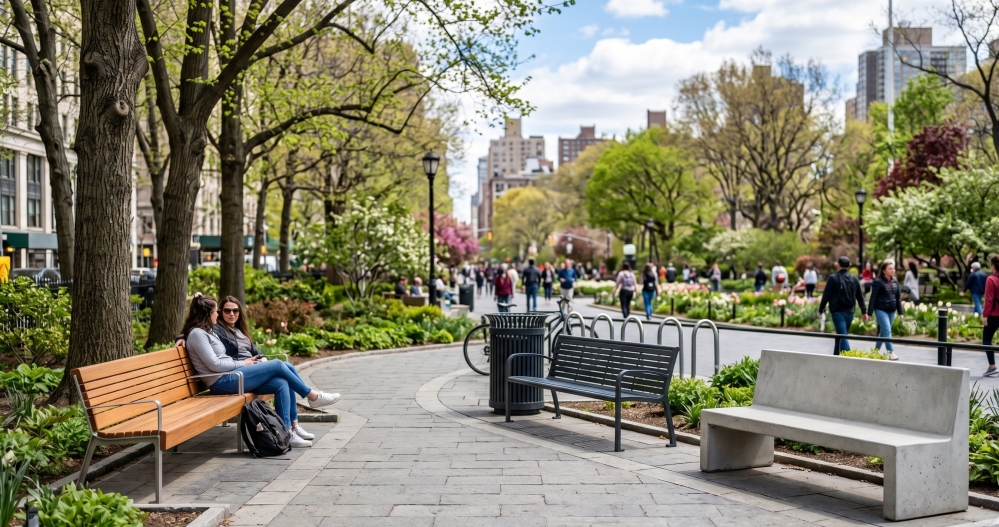
A inclusive park It must also welcome parents, educators and companions. Benches, Shaded areas and rest areas allow children to be supervised without interfering with their play. Seating should be distributed near the various areas, avoiding having them concentrated just at the entrance. Proximity is especially important when children require supervision or assistance when transitioning from one activity to another.
Social interaction can be fostered through games that require collaboration, communication, or simultaneous use. Play tables, double panels, musical games, and structures with multiple access points allow children with different abilities to participate in the same experience. Quiet spaces are also valuable, as some users may need to temporarily escape from intense stimuli without leaving the area.
How to create a balanced play area without creating separate spaces
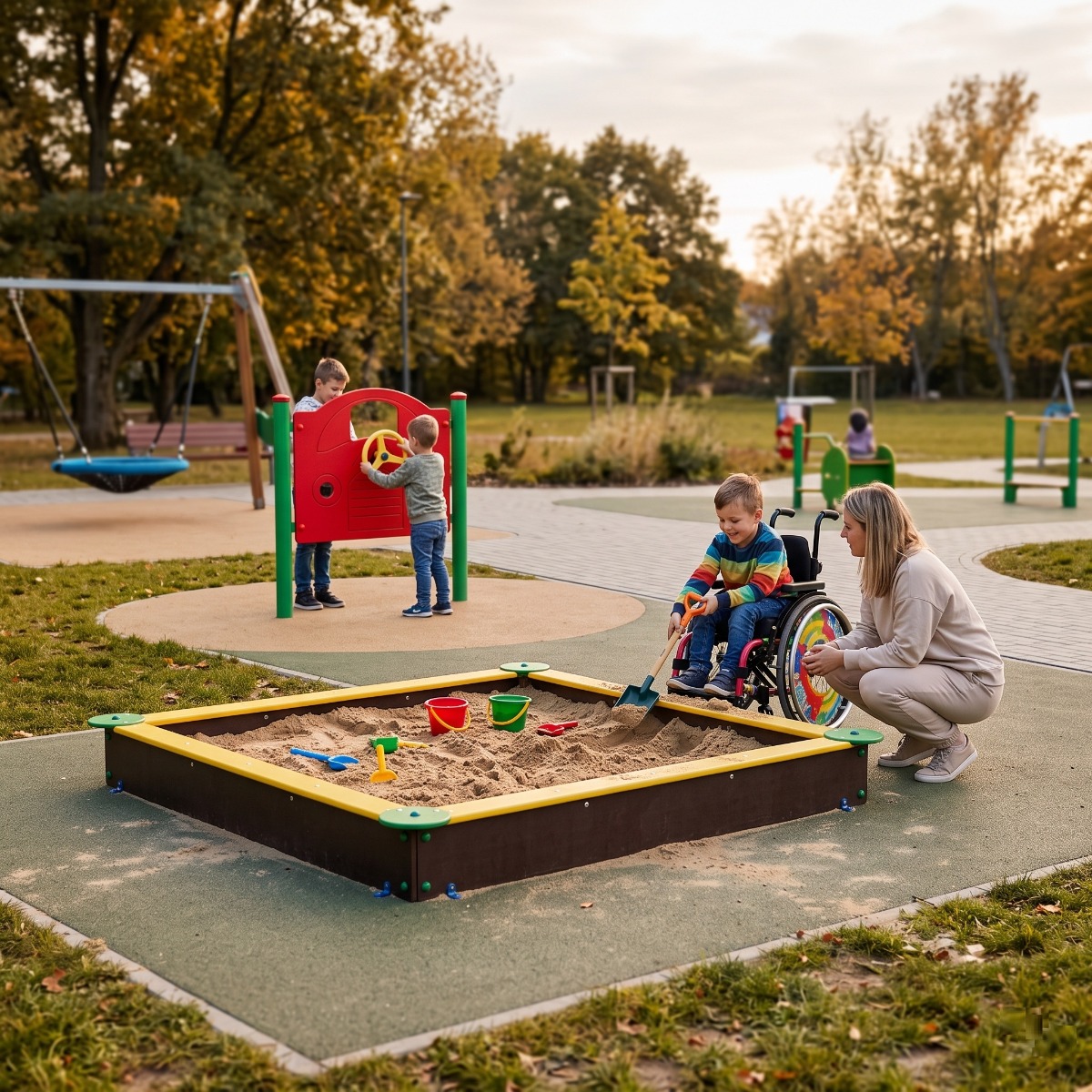 One of the most common mistakes is to concentrate all inclusive equipment in a peripheral area. This solution emphasizes separation and limits opportunities for interaction. It's better to distribute accessible activities throughout the entire path, alternating them with traditional games. This way, children can choose and move from one experience to another alongside other users, without being directed to a separate area.
The design should include dynamic, manipulative, sensorial, and social activities. A park consisting solely of wheelchair-accessible play equipment but lacking variety can be technically unreachable and unengaging. Likewise, installing a single inclusive panel in a large, mostly inaccessible area does not create a complete project. Balance comes from the distribution of stimuli and the ability to use the space with varying intensities.
Materials, maintenance and management over time
THE materials They must withstand weather conditions, frequent use, and regular cleaning. Touch surfaces, moving parts, sound panels, and rotation systems require regular checks to maintain their functionality. A blocked or damaged element reduces the quality of play and can make the entire facility less accessible. The availability of spare parts must therefore be considered when selecting supplies.
There maintenance It should also include paths and paving. Roots, subsidence, raised edges, or loose materials can create obstacles that weren't present when the facility opened. It's helpful to schedule periodic inspections and collect user reports, especially when they involve access difficulties. An inclusive project maintains its value only if its initial features are maintained over time.
How to prepare a supply request for inclusive games
The request It should describe the available area, age range, expected number of users, and context characteristics. It's helpful to indicate existing paths, pavement, slopes, and the presence of services or furnishings. For equipment, the municipality or designer should specify the experiences they wish to offer, avoiding generic requests based solely on the number of games. Sensory, motor, collaborative, and balance activities can be distributed more effectively when they are defined from the outset.
The quote should include equipment, transportation, installation, subfloor work, flooring, and ancillary services. It's also important to request technical data sheets, maintenance instructions, and information on product configuration. The financial assessment must take into account the overall project and its duration, not just the unit price of the individual game. This makes it easier to compare truly equivalent proposals.
Professional solutions for accessible public parks
Holity, leader in professional equipment for municipalities, schools and play areas, proposes inclusive games, furnishings and solutions for designing public spaces for users with diverse needs. The availability of sensory, dynamic, and accessible features allows for the creation of more diverse and coherent areas. For designers and purchasing managers, this approach facilitates the selection of elements compatible with pathways, pavements, and the urban context.
An inclusive park is born from the relationship between play, access, comfort, and future management. Holity specializes in supplies for professional play areas and supports the selection of products intended for continuous public use. Distributing accessible play opportunities throughout the park, rather than concentrating them in a separate area, helps create a more welcoming space. The result is a park where children of varying abilities can meet, participate, and build shared experiences.
 English
  Italian
 French
 German
 Spanish