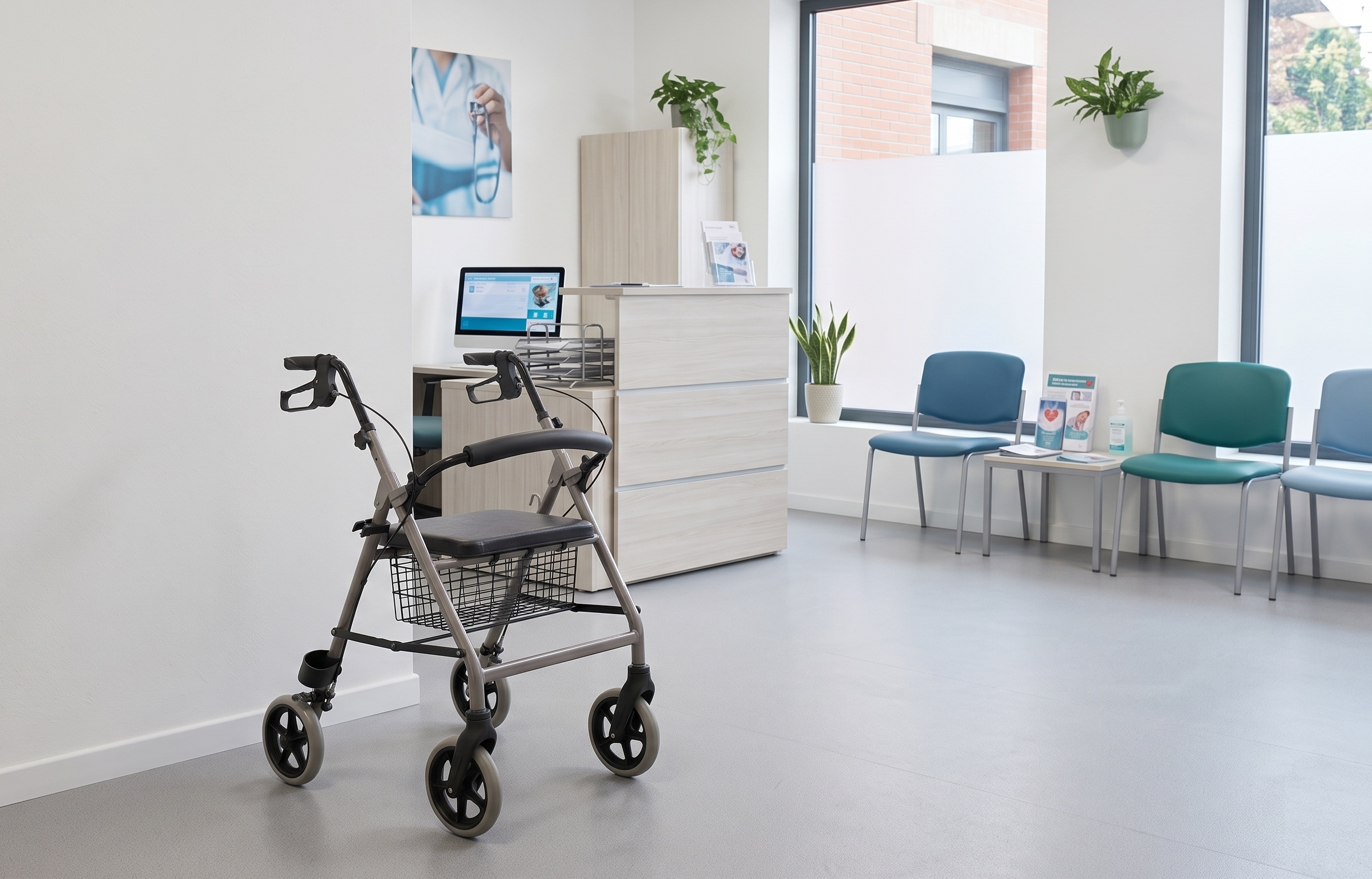
THE walkers for the elderly These aids are designed to provide support during daily movements. They can be used at home, in the corridors of a care facility, during short walks, or on more regular outdoor routes. Their function is not simply to support the person's weight, but to promote more controlled movement and greater safety when balance, strength, or endurance are reduced.
The choice shouldn't be based solely on the product's appearance or the number of accessories available. An effective walker must be compatible with the user's motor abilities, the environments they frequent, and the level of assistance available. Handle height, wheel type, braking system, frame width, and weight can significantly impact the user experience. Therefore, it's helpful to involve healthcare or rehabilitation professionals who are familiar with the individual's condition.
Why the walker must be chosen according to the person
Two people of the same age may have very different needs. One may require stable support for short trips around the house, while another may maintain a good level of independence and especially need safety when going out. Balance, upper limb strength, ability to use the brakes, and walking speed all influence the choice. The presence of pain, fatigue, or cognitive difficulties should also be considered before purchasing.
An aid that is too light or too smooth can be difficult to control for those with unstable balance. Conversely, a very rigid and heavy model may require excessive effort when moving forward. The choice of walkers for the elderly It must therefore begin with a concrete assessment of residual mobility and daily activities. The best product is not the most complete one, but the one the person can use correctly and consistently.
Fixed, wheeled, and rollator walkers: the main differences
THE fixed walkers They offer a stable structure that must be lifted and repositioned as the user steps forward. They may be suitable when controlled support is required and the user has sufficient upper limb strength. Models with two front wheels reduce the need to fully lift the frame, maintaining more resilient rear supports. This configuration can facilitate indoor movement.
THE rollator They generally have three or four wheels and move forward without being lifted. They may include manual brakes, a seat, a bag, and a backrest. They offer greater fluidity, especially outdoors, but require good control of speed and controls. They shouldn't automatically be considered simpler: the presence of wheels makes the device more mobile and may require a period of supervised learning.
Internal use: size, maneuverability and domestic spaces
In the internal environments What matters most are width, swivel range, and the ability to pass through doors and passageways. A walker that's too wide can be difficult to maneuver around furniture, tables, and narrow hallways. Before choosing, it's helpful to measure the main entrances, check for thresholds, and observe the usual route between the bedroom, bathroom, kitchen, and living area. Carpets and uneven floors can also affect stability.
For home use, compact, foldable, and easy-to-store models are often preferred. However, folding must be simple and secure, especially when the caregiver must prepare the wheelchair several times a day. Small wheels can improve maneuverability, but must easily overcome small thresholds or bumps. The choice must strike a balance between agility and stability.
Outdoor use: wheels, brakes and stability on trails
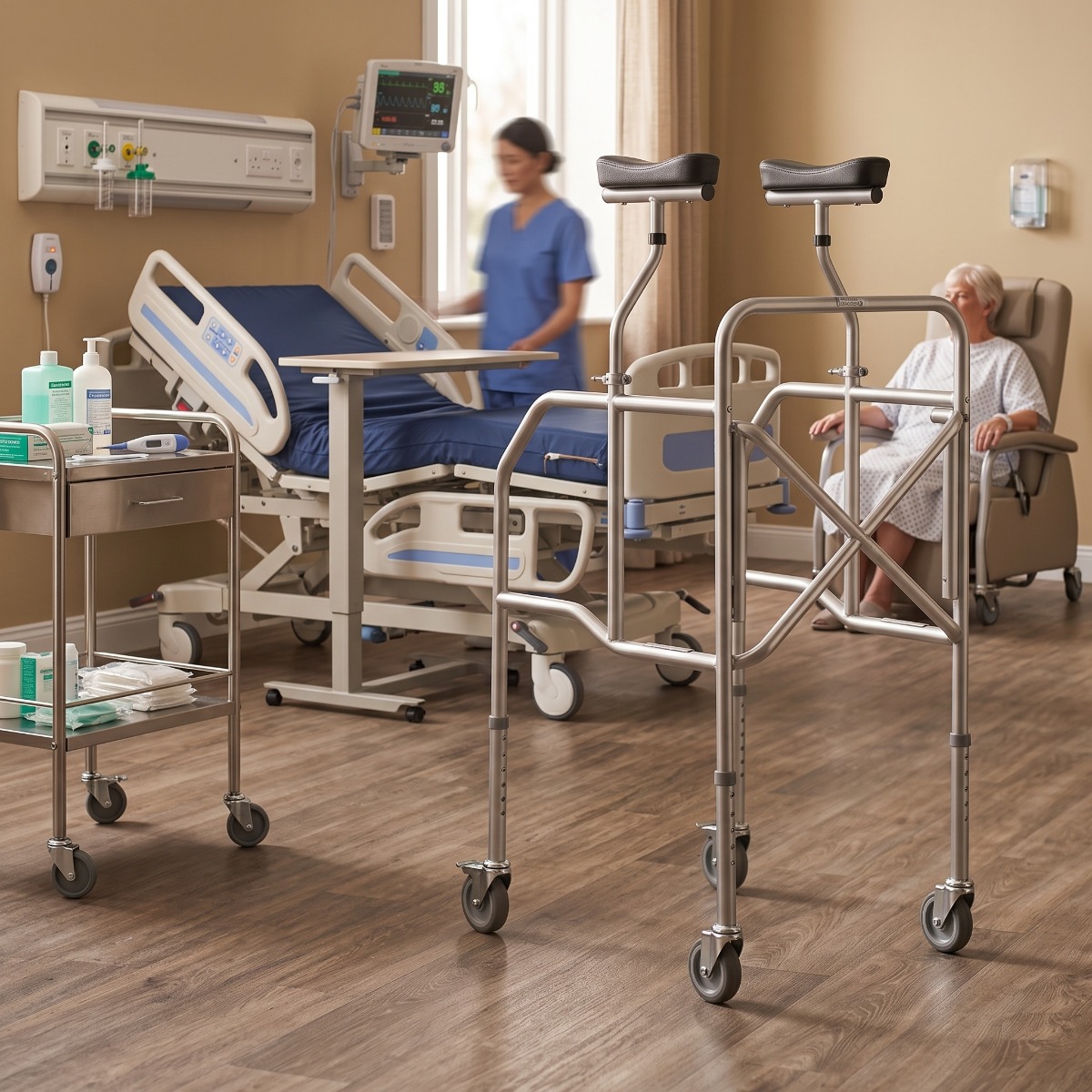 For the external movements, The type of wheel becomes more important. Larger wheels can more easily handle uneven surfaces, small changes in height, and pedestrian areas. The structure must remain stable even during changes of direction or slight inclines. It's important to consider the actual route, distinguishing between smooth sidewalks, courtyards, gardens, and more challenging surfaces.
Brakes must be reachable and operable without requiring excessive force. In rollators, levers can both slow the rollator during movement and lock it when the user stops or uses the seat. The user must clearly understand the difference between the two functions. An effective system listed on the technical specifications is insufficient if the user cannot control it consistently.
Handle height, posture and ease of control
There height adjustment Allows the handles to be adjusted to the user's height. An aid that is too low can encourage an excessively slouched posture, while one that is too high can make it difficult to transfer weight to the arms. The handles should allow for a natural grip and a position that does not constrict the shoulders and wrists. Adjustment must be performed carefully and kept symmetrical on both sides.
Even the shape of the handles This affects comfort, especially when the walker is used for extended periods. Non-slip materials and easily cleanable surfaces improve daily handling. The user should be able to reach the brakes without excessively altering their grip. It's helpful to perform a guided test, observing posture, gait, and maneuverability before finalizing the configuration.
Seat, basket and accessories: when they are really useful
There sitting It can be useful for those who tire while walking and need to stop before continuing their journey. It should only be used with the walker properly braked and according to the manufacturer's instructions. Width, height, and the presence of a backrest affect comfort. A seat that is too narrow or difficult to reach may offer limited benefit compared to the added bulk.
Baskets and bags They allow you to carry small objects without engaging your hands, which must remain available for controlling the device. The load should not alter stability or exceed the indicated limits. Cane holders, trays, and other accessories can be useful in specific contexts, but should be chosen based on the person's actual habits. Adding unnecessary equipment increases weight and bulk without automatically improving independence.
Weight, folding and transport of the walker
The weight It affects both maneuverability and caregiver management. A lightweight frame is easier to load into a car or move between floors, but it must maintain adequate stability. Sturdier models can offer greater load capacity, but are less practical to transport. The assessment must include not only the person using the walker, but also the person storing, lifting, or moving it.
There closure It should actually reduce space and not require complex procedures. It's helpful to check whether the product remains stable when opened and whether it has a system that prevents accidental closure during use. The folded dimensions should be compared with the trunk, closet, or storage space of the structure. A model that works well while walking can cause difficulties if it can't be easily transported or stored.
How to assess the safety and condition of the aid over time
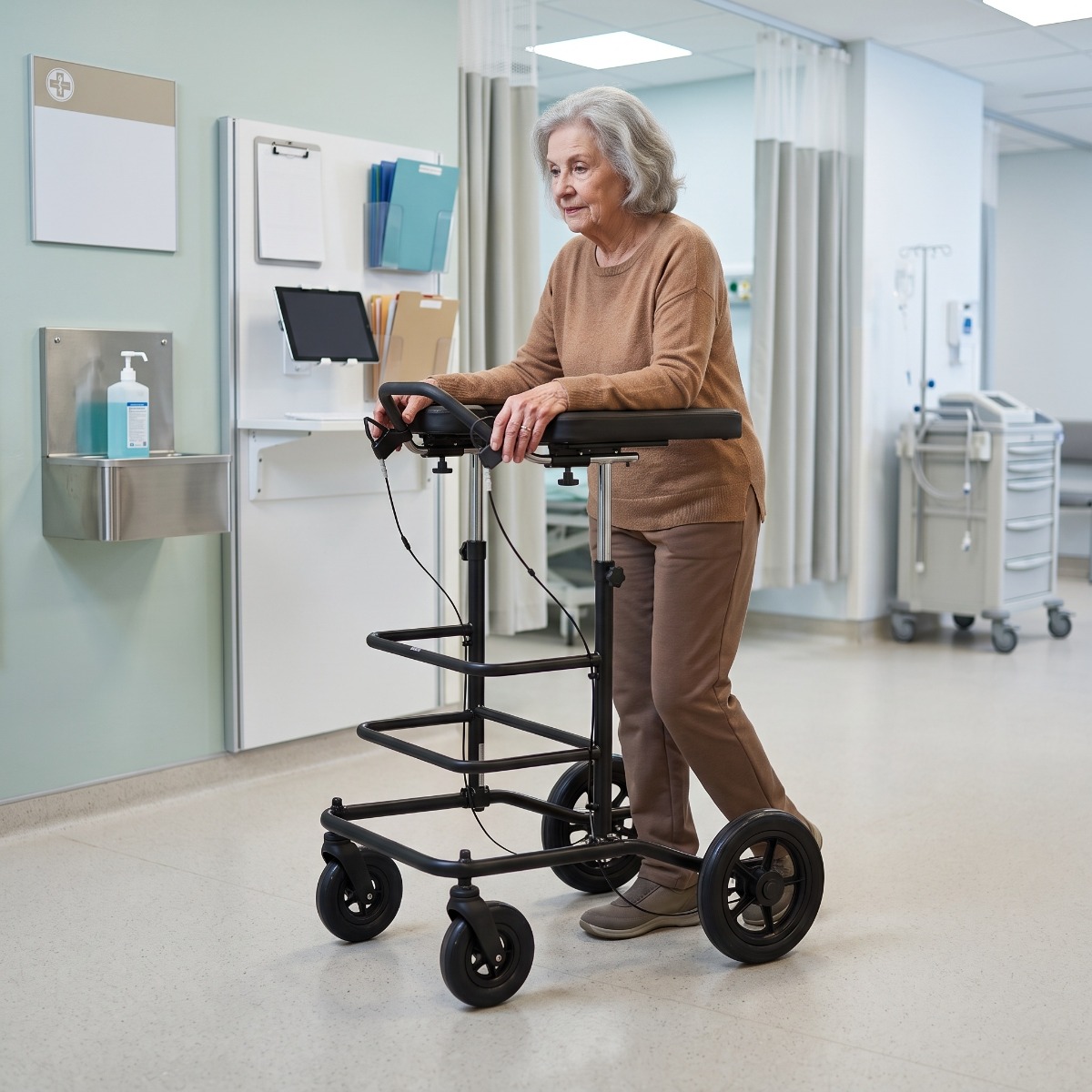 Wheels, brakes, handles, and adjustment systems should be checked periodically. Wear can reduce grip, affect braking, or create play in the frame. Loose screws, worn terminals, and damaged brake cables require attention before use. Cleaning should also include the handles, seat, basket, and most frequent contact points.
In the event of a fall, impact, or change in the person's motor skills, it is advisable to reevaluate the appropriateness of the aid. A model chosen initially may no longer meet the needs after a period of rehabilitation or a deterioration in balance. Safety depends on a combination of product integrity, proper adjustment, and the user's ability. No accessory replaces a professional assessment when conditions change.
The choice in nursing homes and care facilities
In nursing homes and care facilities, selection must consider a diverse user population. It can be helpful to have different models, avoiding using the same walker for individuals with incompatible characteristics. The load capacity, width, and braking system must be clearly identifiable, while adjustments must be checked before assignment. Traceability of the aid facilitates maintenance and equipment management.
Standardization can simplify spare parts, training, and inspections, but it shouldn't eliminate necessary customization. Operators must be familiar with the opening, adjustments, and braking systems of existing models. Sanitization between users must also be part of the facility's procedures. For purchasing managers, component durability, support, and availability are just as important as the initial price.
Professional supplies for daily mobility
Holity, specialist in medical supplies and professional mobility aids, proposes walkers intended for the elderly, care facilities, nursing homes and healthcare settings. The availability of fixed, folding and wheeled models It allows you to evaluate the aid in relation to the environment, frequency of use, and the person's abilities. This approach helps families and buyers navigate different configurations.
Holity represents a point of reference for professional equipment dedicated to assistance and daily mobilityThe choice of walkers for the elderly However, it should be shared with the appropriate healthcare or rehabilitation professionals, especially in the presence of complex medical conditions or a risk of falling. A properly selected aid can improve independence and peace of mind, making movement more orderly and manageable for both the individual and their caregiver.
 English
  Italian
 French
 German
 Spanish