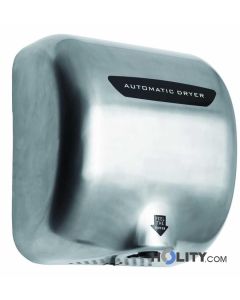
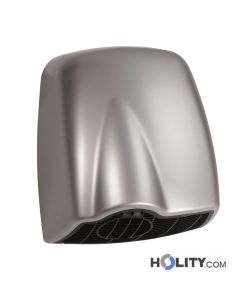
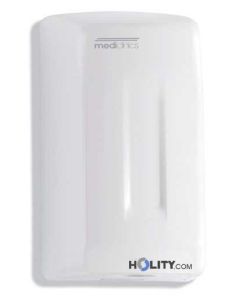
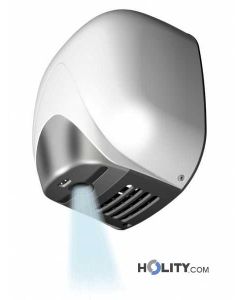
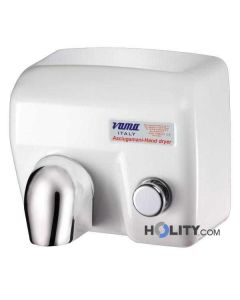
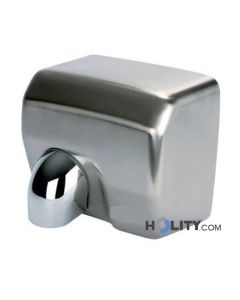
The consumption of a electric hand Kdryer does not only depend on the power indicated on the technical data sheet. To evaluate the energy cost, it is also necessary to consider how long each cycle lasts and how many times the appliance is used during the day. A model with greater power but capable of completing drying quickly can therefore have a different consumption profile from a less powerful appliance that remains active for longer. The truly useful data arises from the relationship between power, operating time and frequency of use.
. Consumption depends on power and cycle duration
 . Electrical power is normally expressed in watts and indicates the absorption of the appliance during operation. To transform this data into energy consumption, it is necessary to consider the time during which the device remains active. The basic calculation consists of converting the power into kilowatts and multiplying it by the duration of the cycle expressed in hours. In practical terms, the consumption of a single use can be be obtained with the formula power in kW × seconds of operation ÷ 3600.
This step helps us understand why comparing only watts can be misleading. A 900 W appliance used for 10 seconds absorbs 0.0025 kWh per cycle, while an 1800 W appliance used for the same time absorbs 0.005 kWh. However, if the second one completes the drying process in a significantly shorter time, the gap between the actual consumptions is reduced. The actual time needed to dry your hands must therefore be analyzed together with the nominal power.
The nominal power is not enough to understand which model consumes less
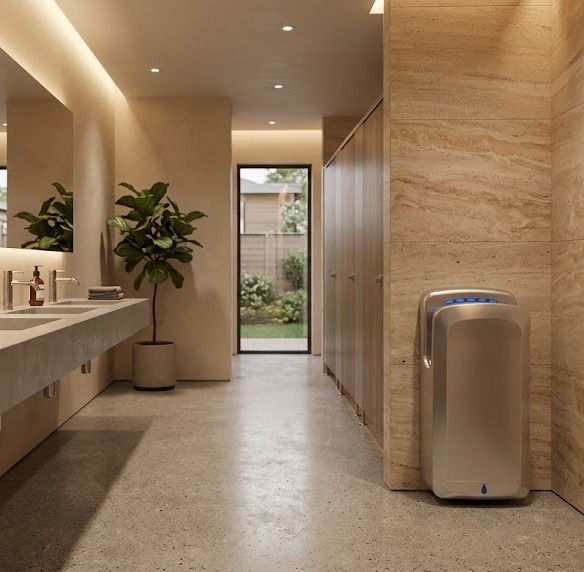
Electric hand dryers available for professional environments can have very different power ratings. In this category, you will find low-absorption solutions in the range of 550-900 W, intermediate models and appliances that can reach around 1800-2100 W. These values describe the instantaneous absorption, but do not by themselves establish the overall consumption of the structure. The buyer must simultaneously verify installed power, drying time and expected frequency of cycles.
. A model with limited power can be particularly interesting when it still manages to guarantee times adequate for the context of use. On the contrary, in a bathroom with very intense flows, it may become important to reduce the time needed for each person and make the next station available quickly. Holity, specialist in professional supplies for public bathrooms, accommodation facilities and institutions, offers hand dryers with different powers and technologies specifically to respond to different levels of influx. The efficient solution does not therefore automatically coincide with the lowest wattage value in the catalogue.
Hot air and high speed produce different consumption profiles
Traditional hot air models use an electrical resistance to increase the temperature of the flow. In this configuration, part of the energy is used by the motor that moves the air and part is used for heating. Drying times may be longer than with high-speed solutions, depending on the specific characteristics of the product. To evaluate consumption, it is therefore important to check both the overall power and the declared or expected duration of the cycle.
High-speed appliances, on the other hand, use a more intense jet to quickly remove water from the hands and can reduce the need for air heating. Some models are thus able to complete drying in a few seconds, limiting the period during which the motor remains active. The actual energy benefit must however be verified on the basis of the specifications of the individual product, because power and technology vary between models. The most useful distinction for the buyer is therefore between energy absorbed during each cycle and the result obtained in the available time.
. The number of daily uses determines the real cost
. The same machine can have a very different energy impact in two different structures. In a small office with few users, the number of daily cycles remains limited, while in a station, a shopping centre or a large public building the appliance can be activated hundreds of times. The frequency of use directly multiplies the consumption of each single cycle. For this reason, estimating the attendance is one of the most important data to collect before purchasing.
It is also useful to consider peak times. A restaurant can have a very high energy consumption. concentrate numerous uses in certain time slots, while an office generally has a more regular distribution throughout the day. In high-traffic environments, drying time therefore affects not only consumption, but also the workstation's capacity to absorb consecutive uses. The choice should find a balance between speed, power and expected volume of use.
Annual consumption can be calculated before purchasing
An energy estimate can be constructed starting from the data reported in the technical data sheet and a realistic forecast of uses. After calculating the kWh required for a single cycle, the value can be multiplied by the average number of daily uses and by the days the facility is open. The result provides a forecast of the appliance's annual consumption. To transform this into an economic cost, simply apply the price of energy actually sustained by the organization.
This method is more economical. A comparison based on generic estimates is more reliable because it takes into account real operating conditions. A facility open five days a week will have a different profile than one accessible every day, just as a secondary bathroom cannot be directly compared with one located in the busiest area of the building. Holity, a reference point for professional electric hand dryers and public bathroom equipment, offers models with different characteristics that can be compared precisely through power, times and intended use. The preliminary calculation therefore helps to choose the device based on data closer to the reality of the facility.
Sensors and activation times affect efficiency
The activation system influences the way energy is used. Models with a photocell or infrared sensor activate when they detect the presence of hands and stop operation when they are removed, according to the logic provided by the individual appliance. This automatic function limits the need to manually set the cycle duration. Actual behavior must, however, be verified in the technical data sheet, as sensitivity and shutdown times may vary.
In push-button models, the cycle is physically started by the user and can follow a pre-set duration. If the programmed time is longer than necessary, part of the energy can be used after drying has already been completed. Conversely, a well-configured sensor allows operation to be more directly linked to the permanence of hands in the drying area. For environments with many users, even differences of a few seconds per cycle can become significant when multiplied by thousands of activations.
Maintenance and cleaning help maintain performance
Efficiency does not depend exclusively on the features possessed by the product at the time of purchase. Filters, intake grilles and sensors must be maintained according to the manufacturer's instructions, especially in environments where dust and dirt can accumulate more easily. A reduction in air flow can affect performance and lengthen the perceived time required to complete drying. Sensors must also remain functioning regularly to avoid inefficient activations.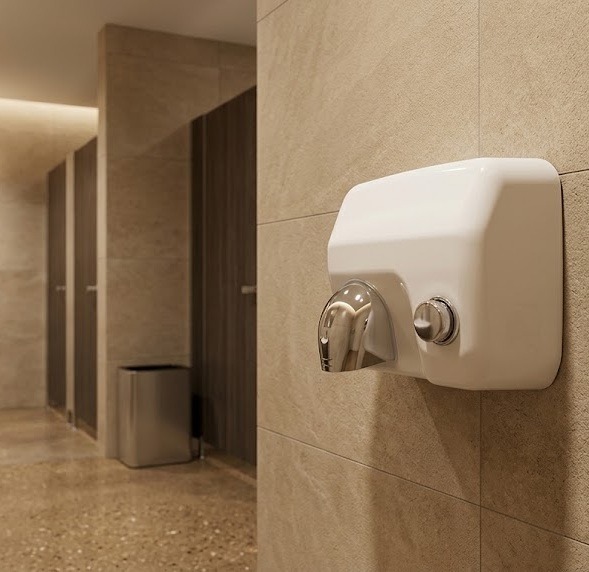
Maintenance should therefore be included in the calculation of the overall cost and in the organization of cleaning activities. Models with accessible filters can facilitate periodic operations when the structure provides for internal management of the equipment. It is important to check the technical documentation to see which components require cleaning or replacement and how. Consistent maintenance helps maintain airflow, drying times, and the operation of automatic systems over time.
Savings must consider the entire cost of ownership
Evaluating how much an electric hand dryer consumes is important, but energy is only one aspect of washroom management. When comparing with paper-based systems, the purchase of consumables, storage space, frequency of refills, and the amount of waste produced must also be considered. Air dryers eliminate ongoing paper consumption, while introducing an electricity cost that can be precisely estimated based on cycles. The economic comparison must therefore consider the entire system and not just one aspect.
The result varies with the number of people using the device and the organization of the facility. In busy washrooms, the consumption of disposable materials can be significantly higher. generate a recurring need for supplies and additional activities for staff, while the electric hand dryer concentrates the cost mainly on energy and maintenance of the appliance. In low-traffic contexts, the relative weight of the various items may be different. For this reason, the savings should be calculated starting from actual use, energy tariff, consumables and management activities.
. Choosing the efficient model means starting from the environment
. Before ordering, it is useful to collect the estimated number of users, opening days, level of attendance and available space in the bathroom. This data must be accompanied by the power, indicative drying time, activation system and maintenance characteristics of the models under consideration. Noise, body material and resistance required by the environment can also affect the final choice. Energy efficiency must therefore be included in a broader evaluation of the necessary performance.
Holity, leader in the selection of electric hand dryers and professional supplies for public bathrooms, companies and institutions, offers solutions with different power and technologies for environments with different levels of use. Comparing models based on watts is not enough: the data must be linked to the duration of the cycle and the number of expected activations. In this way, the electric hand dryer and its consumption become measurable parameters within the operating budget of the facility. A choice based on real data allows you to contain the energy used without neglecting the speed of drying, practicality and continuity of service.
 English
  Italian
 French
 German
 Spanish