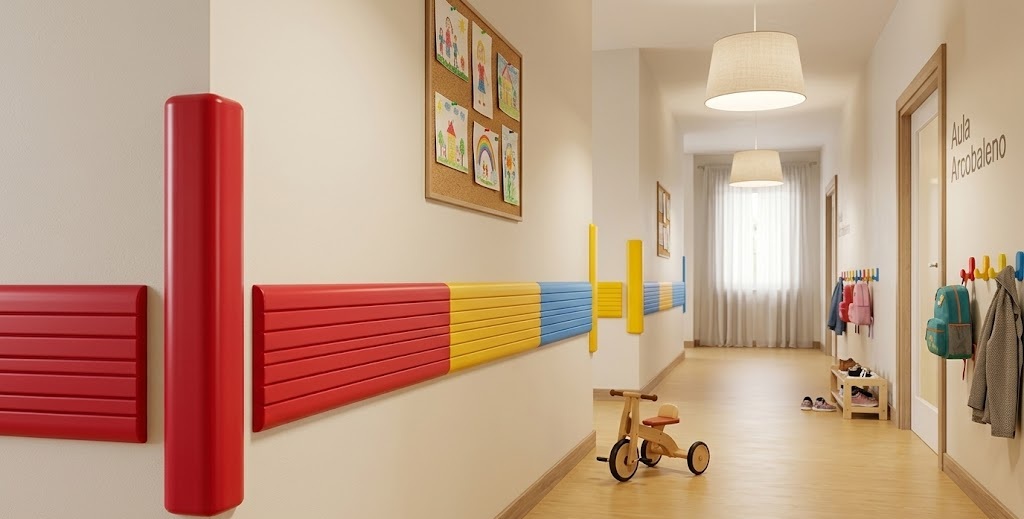
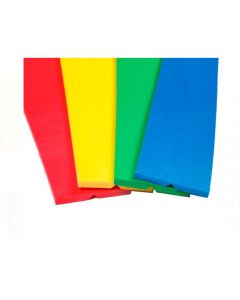
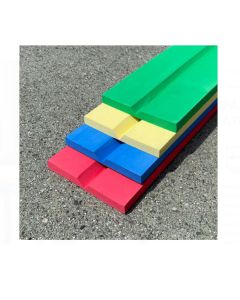
The corner protectors for schools help protect corners, columns, walls and furniture in spaces used by children every day. The choice depends on the area to be protected, the size of the space and the type of activity carried out. Materials, thickness and fixing system should be assessed according to the intended use. A careful analysis of the environment makes it possible to identify suitable protections for classrooms, corridors, play areas and other school spaces.
The choice starts from mapping the spaces to be protected
Before choosing a corner protector it is important to carefully consider the type of protection. It is useful to carry out a complete survey of the spaces. The analysis should include classrooms, corridors, entrances, common rooms, rest areas, and areas intended for movement. It is necessary to identify the rigid elements located along the children's usual routes. This check allows us to distinguish occasional critical points from those present in areas crossed many times during the day.
The mapping must also consider the height at which the exposed parts are located. A vertical edge may require protection developed for a certain length, while the corner of a piece of furniture affects a more limited surface. Photographing and measuring the critical points can facilitate the subsequent definition of the supply. The project thus becomes based on concrete elements and not simply on the total number of rooms.
Corner protectors and bumpers meet different needs
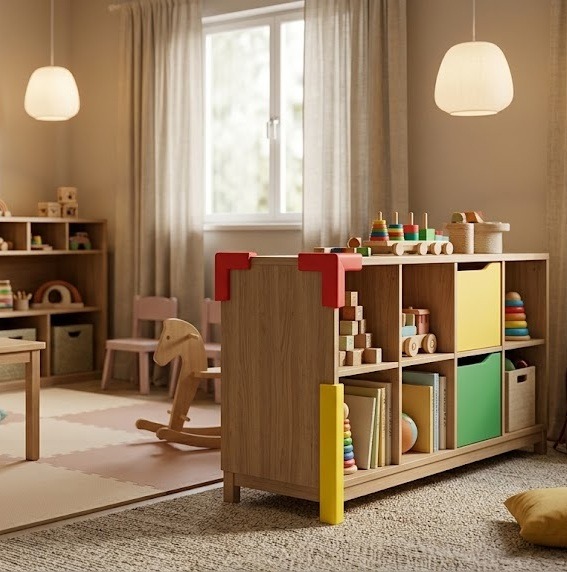 The term corner protector generally indicates a protection designed to cover an exposed corner or edge. The bumper, on the other hand, is used on surfaces that may be affected by impacts along a wider portion. The two solutions can be used in the same building, but do not automatically perform the same function. A correct choice therefore starts from the type of surface and the area actually exposed to contact.
A corner of a wall may require a vertical profile, while a corridor or a motor area can benefit from protection distributed along the wall. Holity, specialist in professional supplies for schools, nurseries and institutions , offers solutions dedicated to the protection of different elements of the environment. The comparison must focus on dimensions, materials and declared intended use. Using a protection designed for a different application may reduce its practicality.
Walls and columns require protection proportionate to the exposure.
Structural edges remain fixed and may be located along routes used daily. Columns, recesses and wall corners must be analyzed considering the distance from doors, furniture and passageways. The protection should cover the part actually affected by the risk of contact. Applying a small element on a very developed edge may not meet the same needs as a continuous profile.
The geometry of the corner also affects compatibility with the product. Not all walls have edges with the same measurements or the same surface finish. Before ordering, it is useful to note the width of the faces, the required height and the characteristics of the support. These data help to distinguish a wall corner guard from solutions designed for tables, furniture or other structures.
Furnishings must be assessed together with the structural elements
Tables, desks, cupboards and low furniture may have corners located in areas frequented by children. The control of the environments should therefore not be limited to walls and columns. Even the arrangement of the furniture can create contact points along the paths or in the areas intended for play. Moving a piece of furniture can sometimes change the level of exposure without requiring additional interventions.
When the furniture cannot be relocated, it is necessary to check which protection is compatible with the shape and material of the surface. Small corner guards may meet different needs compared to the continuous profiles used on the structural elements. Holity, a reference point for furniture and professional equipment intended for educational environments , allows the choice of protections to be integrated into the overall design of the spaces. The result must keep furniture, drawers and work surfaces usable.
Material and thickness affect the characteristics of the protection
Rubber and foam materials are used in many protections intended to attenuate contact with hard surfaces. However, simply specifying the material is not sufficient to compare two products. Density, thickness, geometry and development of the protection change the overall characteristics. The ability of the material to maintain its shape during use must also be considered.
A particularly soft product may respond to a specific environment, while in an area subject to frequent contact, wear resistance may need to be considered more. The characteristics declared by the manufacturer must therefore be read in conjunction with the intended use. Any specific properties must be supported by available documentation. A technical comparison is more reliable than an assessment based solely on external appearance.
Classrooms, corridors and play areas require different solutions
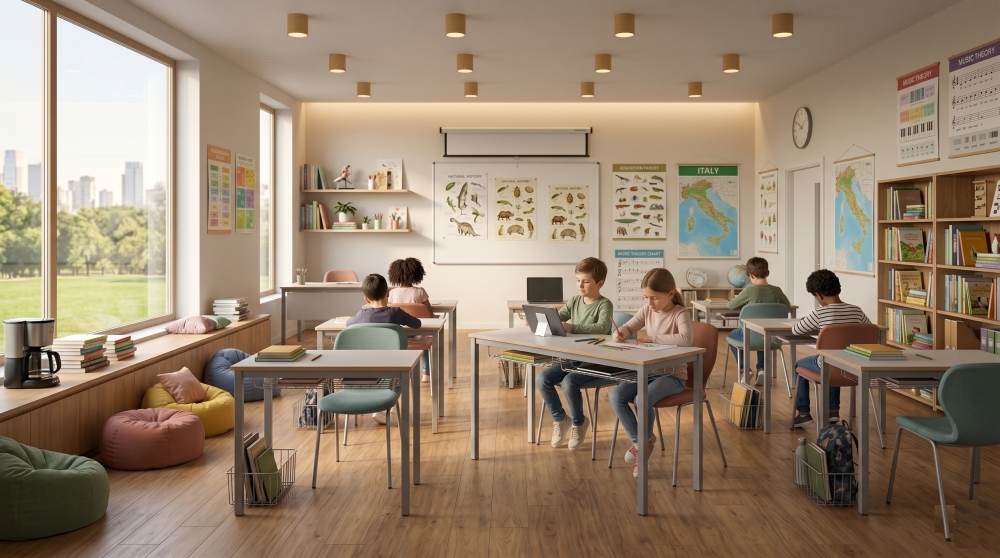
In classrooms, critical points may coincide with furniture, columns or corners placed near the workstations. Corridors, on the other hand, have more linear paths and a greater passage of people during certain moments of the day. In play areas, movement is less predictable and may affect multiple parts of the environment. The same protection must therefore not be automatically replicated in all spaces of the school. 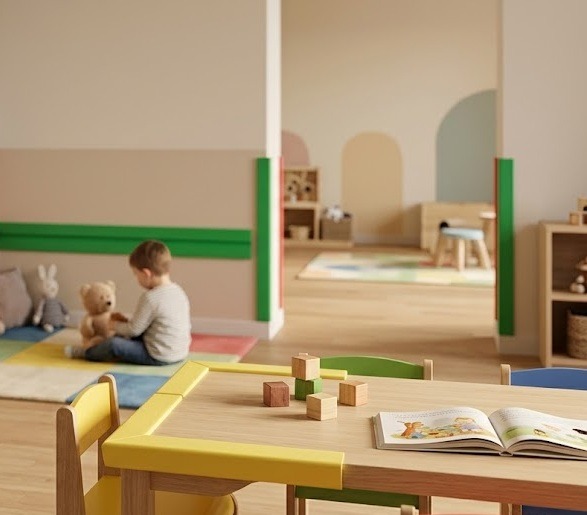
In nurseries and preschools, the position of the elements in relation to the height of the children is particularly important. Correctly placed protection must cover the area actually exposed, without obstructing doors, furniture or other components. Colour can also contribute to visual integration into the environment. The priority, however, remains consistency between the type of protection, surface and method of installation. Space utilization .
Gyms and physical activity spaces require a dedicated assessment
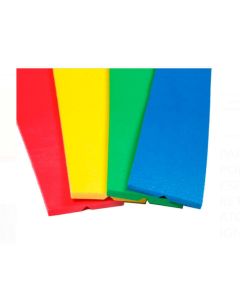
School gyms and physical activity environments have different dynamics compared to normal classrooms. Faster movements, games and collective activities increase the possibility of contact with walls, pillars and other perimeter elements. In these cases, it may be necessary to consider protections that cover larger surfaces. Bumper panels and strips meet different needs than small corner guards applied to furniture.
The assessment should start from the layout of the equipment and the activities usually carried out. Not all walls in a gym have the same level of exposure. Isolated pillars and edges close to movement areas deserve a specific analysis. Accurate measurements allow us to define the quantity and size of the protections before requesting their supply.
Cleaning and maintenance must be considered before purchasing
A protection installed in a school is touched, bumped and cleaned over time. The surface must therefore also be evaluated in relation to the manufacturer's maintenance instructions. Profiles, joints and edges can influence the ease with which cleaning is carried out. The choice of material should take into account the frequency with which the environment is used.
The condition of the fixing must also be checked periodically. A partially detached or deformed protection requires checking before continuing to be used. The interventions must comply with the instructions provided for the product and the support on which it is applied. Considering maintenance and the possibility of replacement already at the purchasing stage facilitates future management of the supply.
The fixing must be consistent with the surface and product
Correct installation depends on the system provided by the manufacturer and the characteristics of the support. Painted walls, smooth surfaces, wooden elements and other materials may require different assessments. It is therefore advisable to avoid independently choosing an adhesive or fastening system without checking its compatibility with the product. A stable fastening must keep the protection in the intended position during normal use.
Before installation, it is useful to check that the surface and measurements correspond to those detected in the design phase. The installation height should also derive from the area to be protected, not from a standard measurement applied indiscriminately. In larger projects, it may be advisable to rely on the supplier's technical instructions or on competent personnel for installation. A final check allows you to identify any non-adherent parts or elements that interfere with the use of the environment.
A coordinated supply facilitates the protection of the entire structure.
When the intervention involves several classrooms or an entire building, it is advisable to coordinate the installation. It is useful to organize data uniformly. For each room, the number of corners, length of walls to be protected, presence of columns, and type of furniture involved can be recorded. This setup makes it easier to calculate quantities and lengths. It also allows you to distinguish products intended for different areas, avoiding incomplete orders.
Holity, a specialist in the selection of corner guards, bumpers, and professional supplies for schools and educational facilities , represents a reference for those who must compare solutions intended for multiple environments. A coordinated supply allows you to maintain continuity between sizes, materials, and finishes, also simplifying any future replacements. The value of the project does not depend on the quantity of protections installed, but on their correct placement in the actual exposed points. Mapping the spaces, reading the technical data sheets, and planning the quantities make the purchase more consistent with the needs of the structure.
 English
  Italian
 French
 German
 Spanish