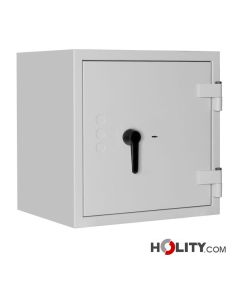
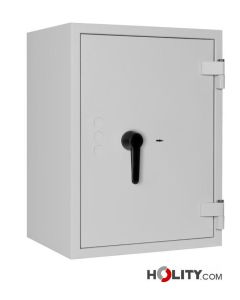
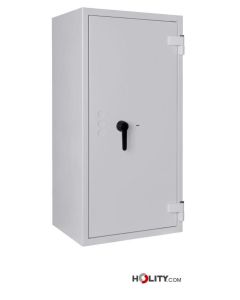
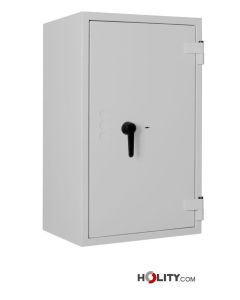
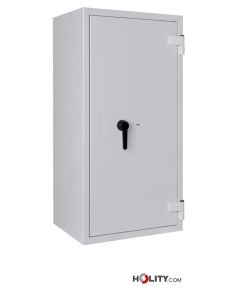
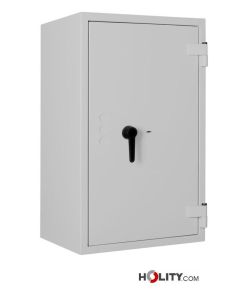
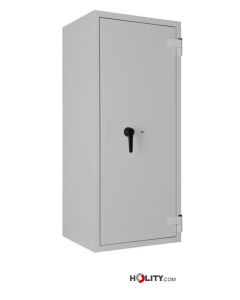
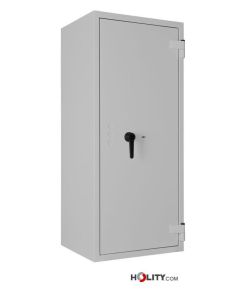
There custody of controlled drugs requires more than a closed cabinet or a medicine safe Resistant. Physical protection is an essential component, but it is only effective when incorporated into a procedure that establishes who can access, how, and for what purposes. Hospitals, clinics, nursing homes, outpatient clinics, and other healthcare facilities must also consider the types of medications they manage, the organization of shifts, and the responsibilities assigned to different professionals.
An unclear procedure can leave even a technically valid container vulnerable. Keys left in accessible locations, shared credentials, late registrations, and informal handovers reduce the traceability of operations. Conversely, documented management allows each access to be linked to an authorized operator and verifies that the physical inventory matches the recorded inventory. The specific procedures must be defined by the organization based on applicable regulations and its own internal protocols.
Why physical protection is not enough
A safe It prevents or makes it more difficult for unauthorized access, but it doesn't independently determine who must have the key or know the code. Nor does it determine how to document a withdrawal, how to manage a shift change, or what to do when a discrepancy in stock levels arises. These aspects must be governed by shared operating instructions that are understandable and easily accessible to the relevant personnel.
The procedure should connect physical protection to the entire drug management process, from procurement and administration to return, expiration, or disposal. Each step can affect the quantity present and must be traceable. The safe therefore represents the physical point of custody, while authorizations, registrations, and audits constitute the organizational system that allows for effective control of its contents.
Define which medicines require dedicated storage
 Before choosing a container, it's important to clearly identify which medications will be stored there. The term "controlled drugs" can encompass categories subject to different regulations and therefore should not be used as a generic operational definition. The hospital pharmacy, healthcare management, and responsible individuals must verify which products require separation, registration, or specific storage conditions.
This classification helps avoid two opposing errors. The first is storing drugs subject to different procedures together without adequate separation. The second is using a complex safe for products that don't require that level of protection, unnecessarily reducing available space. The configuration must reflect the actual composition of the inventory, the frequency of withdrawals, and the regulations applicable to the facility.
Identify operators authorized to access
There procedure It must indicate which professional roles are authorized to access medications and under what circumstances. It is not sufficient to use generic terms such as "healthcare personnel," because the facility must be able to reconstruct who was authorized to work in a specific department and shift. The authorization list should be updated whenever roles, duties, operational locations, or employment relationships change.
It's helpful to distinguish between who can open the container, who can perform movements, who verifies records, and who manages any anomalies. In some organizations, these roles may overlap, while in others they are separated to increase control. The distribution of responsibilities must be sustainable even during night shifts, holidays, and unexpected absences, preventing access from being dependent on a single person who is not always present.
Manage keys, codes and personal credentials
In the cabinets with mechanical locksKey storage must be regulated with the same care as medication. The procedure should specify who holds the key, where it is stored during the shift, and how it is handed over. Copies must be recorded and limited to those actually needed. A key left in an accessible drawer or hidden near the cabinet negates much of the protection provided by the lock.
In the electronic systems It's preferable to use individual credentials rather than shared codes. This way, each access can be associated with an authorized person, and credentials can be revoked without affecting the access of all other operators. Passwords, codes, or badges should not be shared between colleagues. The facility must also have procedures for forgotten credentials, lost badges, terminations of service, and system maintenance.
Record withdrawals, replenishments and other movements
There registration It must allow for understanding how the inventory has changed and the transaction that caused the change. Inflows, withdrawals, returns, corrections, and other expected transactions must be recorded according to the applicable methods and timeframes. The required data may vary based on the drug category and the system adopted by the facility, but must remain legible, organized, and traceable to the operator.
Recording should not be postponed until the end of the shift when this increases the risk of forgetfulness or inconsistencies. Recording close to the time of the operation shortens the gap between physical movement and document updating. In digital systems, personal authentication and automatic access recording can enhance traceability, but they are no substitute for the proper documentation of pharmaceutical movements required by the procedure.
Check the correspondence between the register and the physical stock
There amount The amount of medication present in the container must be periodically compared with that recorded in the records. This reconciliation allows for the identification of recording errors, packages placed in the wrong compartment, or incorrectly documented movements. The check should follow a frequency established by the facility, proportionate to the type of medication, the number of operations, and the level of risk.
When a discrepancy emerges, it's not appropriate to simply correct the data to make the values match. The anomaly must be verified, documented, and managed according to internal procedures. This may require checking previous records, verifying administrations, and involving the responsible figures. Traceability is effective when it allows the origin of the discrepancy to be reconstructed and the actions taken to resolve it.
Organize periodic checks and transfers of responsibility
 Checks should not only concern the quantity of drugs. It is useful to check the integrity of the safe, Lock operation, authorized personnel list, presence of key copies, credential status, and proper separation of packages. Order, label readability, and log accessibility also contribute to more reliable daily management.
The handover of responsibility between shifts must be defined in a manner consistent with the organization. It may include key verification, reporting of recent transactions, and communicating any outstanding anomalies. The goal is not to increase empty signatures, but to ensure continuity of custody. Each handover should clarify who assumes operational responsibility and which elements have been checked.
Manage deadlines, returns, anomalies and emergency access
THE expired drugs, deteriorated, or returned items should not be confused with usable stock. The procedure must include clear identification and, when required, physical separation while maintaining the applicable security level. These packages also remain subject to inspection until they complete their intended route. Simply affixing a label may not be sufficient if the product remains easily removed along with other items.
The facility must also regulate emergency access. It is necessary to establish who can intervene when the regular manager is not present, how a spare key is retrieved, and how the operation is documented. Emergency procedures must not become routine shortcuts. They must be limited to defined circumstances and subject to subsequent review by the responsible personnel.
Choose a safe that is consistent with your internal procedure
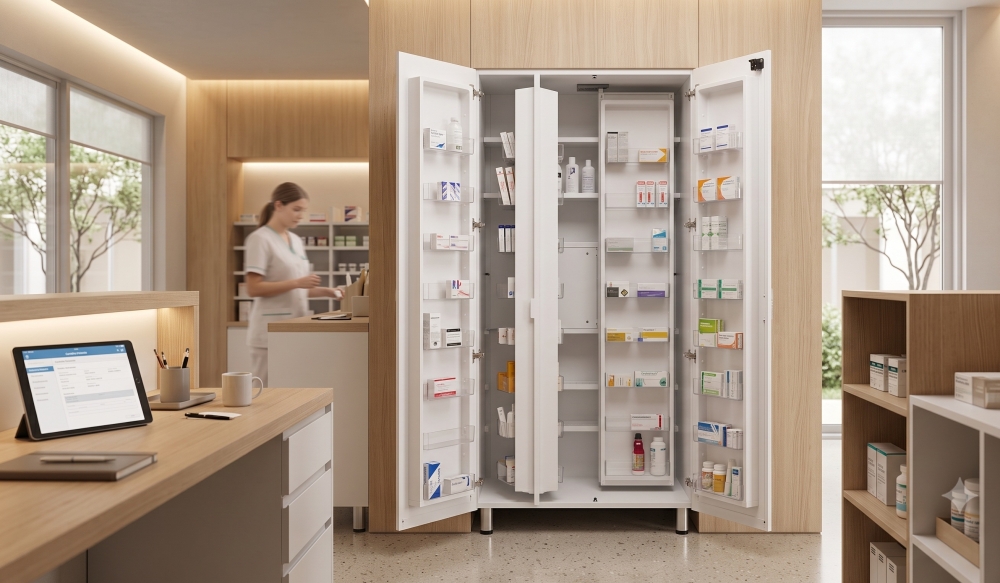
There capacity It must be calculated taking into account current inventory, packaging in use, and any internal separation requirements. A container that is too small encourages overlap and makes control difficult, while an oversized one can take up space without improving management. Adjustable shelves and separate compartments can help organize categories, as long as they don't complicate cleaning or inventory checks.
The locking system It must be chosen based on the number of authorized users and the required level of traceability. A mechanical lock may be appropriate when key management is simple and well-controlled. An electronic system may be useful in facilities with numerous operators, continuous shifts, and the need to record access. The choice must also consider power supply, emergencies, maintenance, and the availability of technical support.
Professional supplies for drug storage
Holity, specialist in professional medical and healthcare supplies, proposes medication safes, cabinets, display cabinets and security solutions for hospitals, clinics, nursing homes, clinics, and healthcare facilities. The availability of configurations with different locking systems and capacities allows container selection to be tailored to the quantity of medications, space, and access requirements. This approach helps buyers and healthcare managers integrate the equipment into their internal procedures.
 English
  Italian
 French
 German
 Spanish