
mon-fri 9-13 / 14.30-18.30
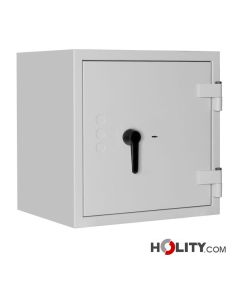
Double-walled medical safe, 3 aluminum drawers, 103 l, EN 1143-1 Level I, floor anchoring included. For hospitals and pharmacies.
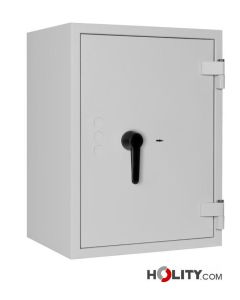
Double-walled steel safe for medicines and narcotics. 4 removable aluminum drawers, EN 1300 lock, 60x50x80 cm, 250 kg. EN 1143-1 certification.
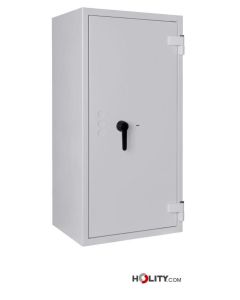
Double-walled safe for medicines and narcotics. 4 removable aluminum drawers, 2 shelves, 345 kg. EN 1143-1 certification.
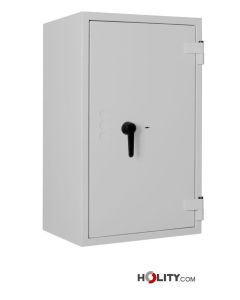
Double-walled safe for medicines, 4 aluminum drawers, 180 lt, floor anchoring, EN 1143-1.
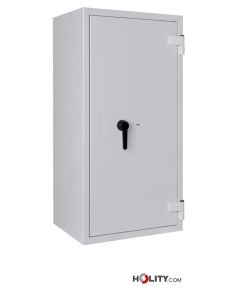
Medical safe with 7 pull-out drawers, EN 1300 certified lock, double-walled structure. W.60×D.50×h.120 cm, 360 kg. For hospitals, clinics, pharmacies.
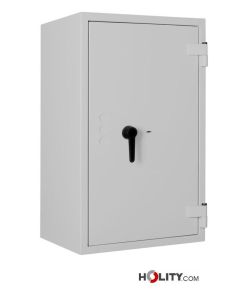
Double-walled pharmaceutical safe, 6 pull-out aluminum drawers, EN 1300 lock, 180 l, floor-fixable.
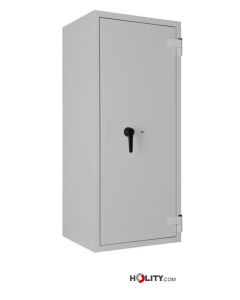
Medication safe with double wall, 5 aluminum drawers and 2 shelves. Dimensions W.60×D.50×h.140 cm. Certified EN 1143-1 Grade I. Floor anchoring included.
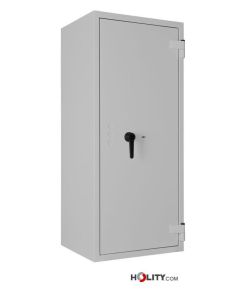
Double-walled hospital safe with 8 aluminum drawers for medicines and narcotics. Dimensions 60×55×140 cm, EN 1143-1 certified, EN 1300 key lock.
Medication safes constitute a fundamental element in the security infrastructure of hospitals, pharmacies, clinics, and healthcare facilities. These specialized storage systems combine physical protection, regulatory compliance, and operational functionality, ensuring that medicines maintain their chemical-physical integrity and that controlled substances remain under surveillance according to legislative requirements. The choice of an appropriate safe directly affects patient safety, compliance with legal provisions, and the daily management of pharmaceutical inventory, representing a non-negotiable investment for medical facilities of any size.
A safe dedicated to medications is not simply an armored container: it is a technical device that must meet specific standards for resistance to burglary, maintain controlled microclimatic conditions, and facilitate the rapid retrieval of medicines during critical operations. The variables that determine the suitability of a model include external dimensions, the number and configuration of internal drawers, the type of locking mechanism, the security certifications achieved, and compatibility with the facility’s operational workflows.
The adoption of a specialized medication safe addresses a multitude of critical issues that healthcare facilities face daily in terms of risk management. Protection against theft represents only one of the benefits: equally relevant is the shielding from climatic variations that could compromise the efficacy of active ingredients, the systematic organization that allows for complete traceability of medicines, and the administrative segregation of controlled substances in compliance with narcotics regulations. A certified safe completely eliminates the possibility of unauthorized access, reduces the risk of oxidation and deterioration due to exposure to humidity and light, and significantly simplifies auditing procedures and internal control over pharmaceutical movement. From a civil liability perspective, facilities that install security systems compliant with international standards generally benefit from more advantageous insurance premiums, as medical professional liability policies recognize this investment as risk mitigation.
In daily operational practice, a well-sized and organized safe allows pharmacists and healthcare personnel to quickly locate medicines during emergency situations, systematically manage expiring drugs, and maintain a clear segregation between different therapeutic categories. Facilities that implement dedicated safes record a measurable decrease in retrieval times, a reduction in administration errors related to confusion between medicines, and more solid documentation for regulatory assessments. For local pharmacies, the added value extends to building a perception of reliability among patients, as the visibility of a professional security system communicates attention to the quality of medicine custody.
The landscape of medication safe models spans a wide range of configurations, each calibrated to specific usage scenarios and storage volumes. Compact models, with external dimensions around 60×50×60 centimeters and a volumetric capacity of about 100 liters, are ideal for small medical offices, single-desk specialist clinics, and rural pharmacies where the pharmaceutical catalog is limited to essential therapeutic lines. These models, usually equipped with three pull-out aluminum drawers, balance physical discretion with sufficient functionality to operate without critical constraints. Medium-capacity models, ranging between 100 and 120 centimeters in height with capacities between 180 and 250 liters, represent the most versatile solution for neighborhood pharmacies, private clinics, and local healthcare facilities with various therapeutic specialties; these models usually have four, five, or six drawers, allowing for an articulated subdivision of medicines by category or risk profile.
Large-capacity models, exceeding 140 centimeters in height and reaching volumes of up to 350-400 liters, are specifically designed for hospitals, hospital pharmacy units, critical departments (cardiology, oncology, intensive care), and multidisciplinary centers where the variety of medicines is notable and the frequency of access is high. These models incorporate eight independent drawers or hybrid configurations that combine drawers and fixed shelves, facilitating a sophisticated segmentation of goods. The internal structures are made of anodized aluminum or steel to ensure durability over time and ease of sanitization according to hospital protocols. Technical equipment varies considerably: some models maintain traditional key locks (EN 1300), while others integrate multiple locking systems or double walls with thermal insulation, a decisive aspect when medications require specific storage conditions relative to room temperature.
Choosing an appropriate safe requires a preliminary analysis of the actual pharmaceutical volume in custody at the facility, with a projection for the following three to five years to avoid premature saturation. An underestimation of the necessary capacity quickly leads to situations of disorder, difficulty in rapid identification of medicines, physical deterioration of the drawers due to overweight, and a concrete risk of administration errors during retrieval procedures. It is fundamental to map the composition of the pharmaceutical inventory, distinguishing between medicines under ordinary custody (the vast majority of the range), drugs subject to a reinforced registration regime (opioids, benzodiazepines), and narcotic substances subject to very strict regulatory constraints that sometimes require physical separation within the same safe. Access frequency is another critical variable: a pharmacy open to the public with high flows needs drawers with rapid opening and an optimal ergonomic factor, while a medical office with occasional access can tolerate more compact configurations.
In evaluating the most suitable solution, security certification represents an essential criterion: models compliant with the EN 1143-1 standard (level I is the minimum standard for healthcare facilities) guarantee protection against theft with simple tools, while higher-level certifications increase resistance to burglary with more sophisticated equipment, a relevant aspect for large hospitals or high-risk contexts. The physical dimensions of the safe must integrate into the available spaces and consider the ease of movement during installation: a large safe reaching 350-400 kg may require floor anchoring infrastructure and involve logistical difficulties. Common errors that the buyer should avoid include underestimating lateral clearance (safes need clearance space for the full opening of drawers), failing to verify compatibility with existing locking systems at the facility, and choosing models with insufficient certifications for the local regulatory context, which could expose the facility to administrative sanctions.
Medication safes operate within a complex regulatory framework that combines physical security requirements, environmental compliance, and administrative traceability. Italian and European regulations require that medicines and controlled substances be stored in certified armored containers according to the EN 1143-1 standard, which defines resistance classes against burglary based on standardized tests of load, penetration, and cutting resistance. Level I (minimum protection for healthcare environments) corresponds to protection against common manual tools; subsequent levels increase resistance against increasingly sophisticated instruments. In addition to structural compliance, the EN 1300 standard defines the requirements for locking mechanisms, requiring that closing systems maintain precise tolerances and resist tampering attempts. These certifications are not optional: healthcare facilities and pharmacies that do not have compliant safes can face administrative sanctions from local health authorities and significant failures in pharmacovigilance inspections.
In addition to mechanical security requirements, national legislation on the custody of narcotics requires that drugs such as opioids, benzodiazepines, and other psychoactive substances be stored in separate safes or dedicated compartments within the same safe, with access limited to authorized personnel and with an accurate movement register. Regional health authorities conduct periodic checks during which they verify not only the technical compliance of the device, but also the consistency of the inventory, the traceability of movements, and the integrity of the related documentation. For hospital contexts, additional requirements derive from regulations on pharmaceutical waste management: many hospitals maintain dedicated safes even for expired or revoked medicines awaiting compliant disposal. The choice of an EN 1143-1 certified safe with an EN 1300 lock therefore represents not only a technical decision but a critical element for the legal compliance of the healthcare facility.
Explore all the products in the category and compare the available solutions to find the one best suited to your operational context. Each model has been selected based on current technical and regulatory requirements, guaranteeing protection, practicality of use, and compliance with current legal provisions.
A medication safe is EN 1143-1 certified with a double-wall structure and resistance to burglary, while a standard medical cabinet is a simple piece of furniture with a containment lock. The safe protects against theft and ensures regulatory compliance for narcotics, which an ordinary cabinet does not allow. For pharmacies and hospitals, a safe is mandatory.
For a neighborhood pharmacy with a limited catalog, three or four pull-out drawers are sufficient if the pharmaceutical volume does not exceed 100-150 different items. If the inventory is more varied (specialties, generics, multiple dosages), five or six drawers offer better organization by therapeutic category. Evaluate current composition and estimated growth over the next 3 years.
Technically yes, but it is not recommended. Large-capacity safes (over 300 kg) require floor anchoring for stability reasons and to counter tipping attempts during a theft. Consult the product specifications and the installation manual; many models include fixing kits with screws and armored plates.
All narcotics (opioids, benzodiazepines, barbiturates, amphetamines) and drugs subject to limited repeatable prescription (RRL) are bound to custody in a certified safe. Furthermore, drugs of high economic value and foreign-controlled substances must be protected. Common medicines can remain in ordinary cabinets, but a unified safe simplifies management.
The physical installation, including floor anchoring and functional tests, generally takes 2-4 hours depending on the complexity and available space. It is advisable to entrust the interval to specialized technicians to ensure correct positioning, leveling, and the integrity of post-installation seals.
 English
  Italian
 French
 German
 Spanish