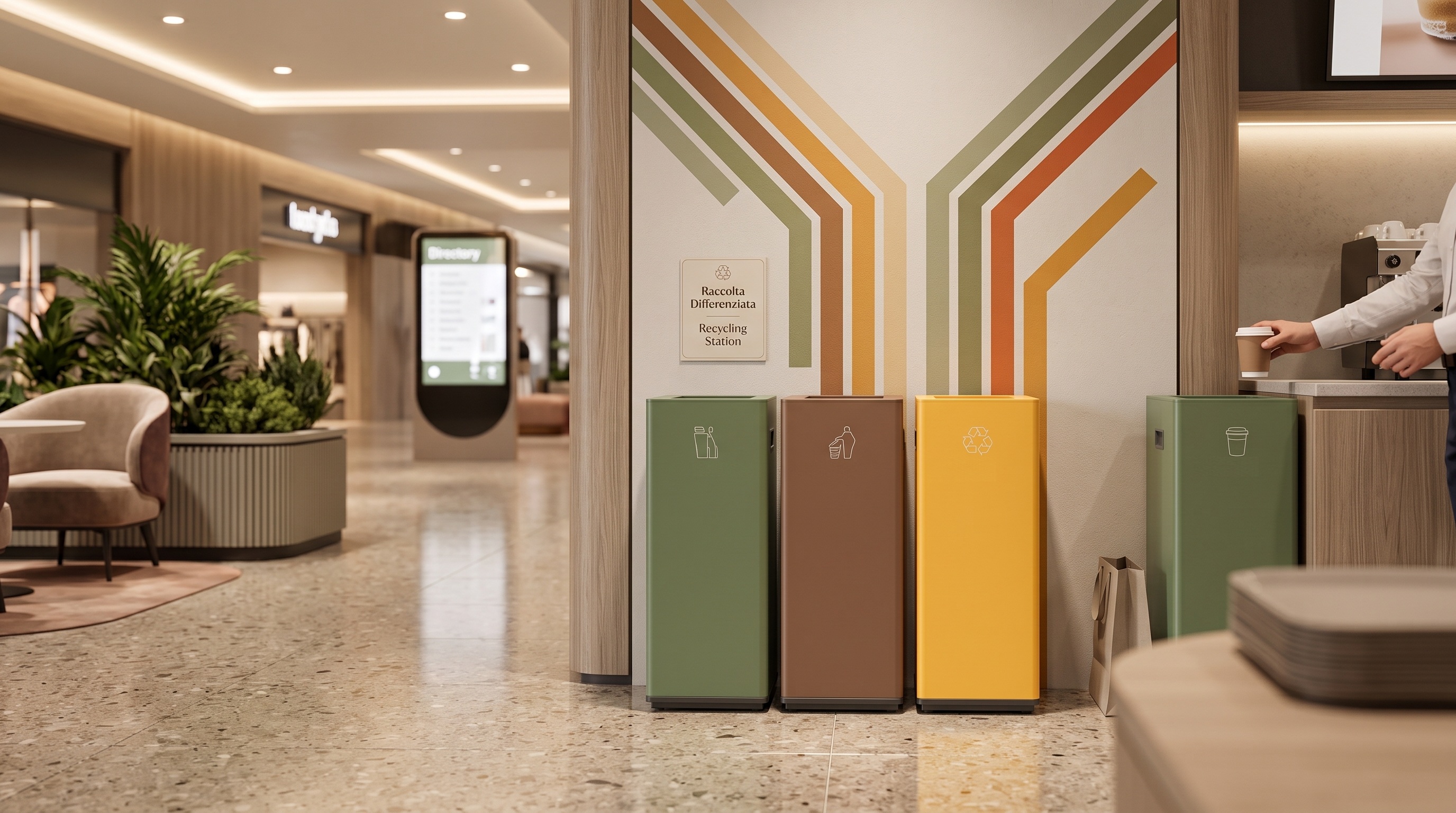
Choose the best containers for indoor waste separation It means finding a balance between capacity, durability, ease of use, and spatial organization. A system intended for an office, school, hotel, or public facility must be easy to recognize and practical to manage, even when used by many people. Design plays an important role, but it shouldn't be the primary selection criterion. The quality of the solution depends primarily on how well it responds to the actual waste streams produced in the environment.
Before you buy single baskets or a complete island It's therefore important to analyze the context. The number of users, type of waste, frequency of emptying, bin location, and cleaning methods significantly alter requirements. A product that's adequate for a small meeting room may be undersized in a busy break area. The most effective choice starts with this data and only then considers available materials, shapes, and configurations.
Starting from the environment and the waste actually produced
Each environment generates different flows. In a office paper, light packaging and residual waste may prevail, while in a break area The weight of packaging, bottles and other materials related to the consumption of food and beverages increases. In a school or in a public building The number of users and the speed at which the containers fill up also change. The first evaluation should therefore concern which fractions are produced and at which points.
Deploying the same system in every room without considering these differences can lead to unused bins in some areas and quickly becoming full in others. It's best to identify the areas where waste is collected most frequently and size the collection accordingly. This also helps avoid an excessive number of scattered bins without a clear logic. A well-organized design streamlines collection and simplifies the work of management staff.
Choose the capacity based on the flows and the emptying frequency
There capacity It's one of the most important parameters, but a large volume isn't automatically the best solution. An oversized container takes up more space and can make the system less efficient when waste production is limited. Conversely, insufficient capacity requires frequent emptying and can create untidy situations during peak use. Sizing should therefore be proportionate to the actual volume of each fraction.
We must also consider the frequency with which staff can empty the bins. In a facility with daily collection procedures, relatively compact containers may work, while in high-traffic areas, larger capacities may be useful. The choice may also differ between different waste types. Paper and lightweight packaging, for example, may take up different volumes than other types of waste, making it impractical to use identical containers for every situation.
Materials: How to evaluate resistance, weight and maintenance
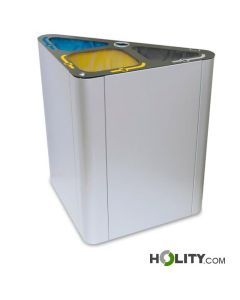
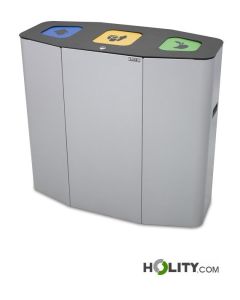
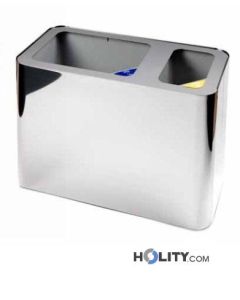
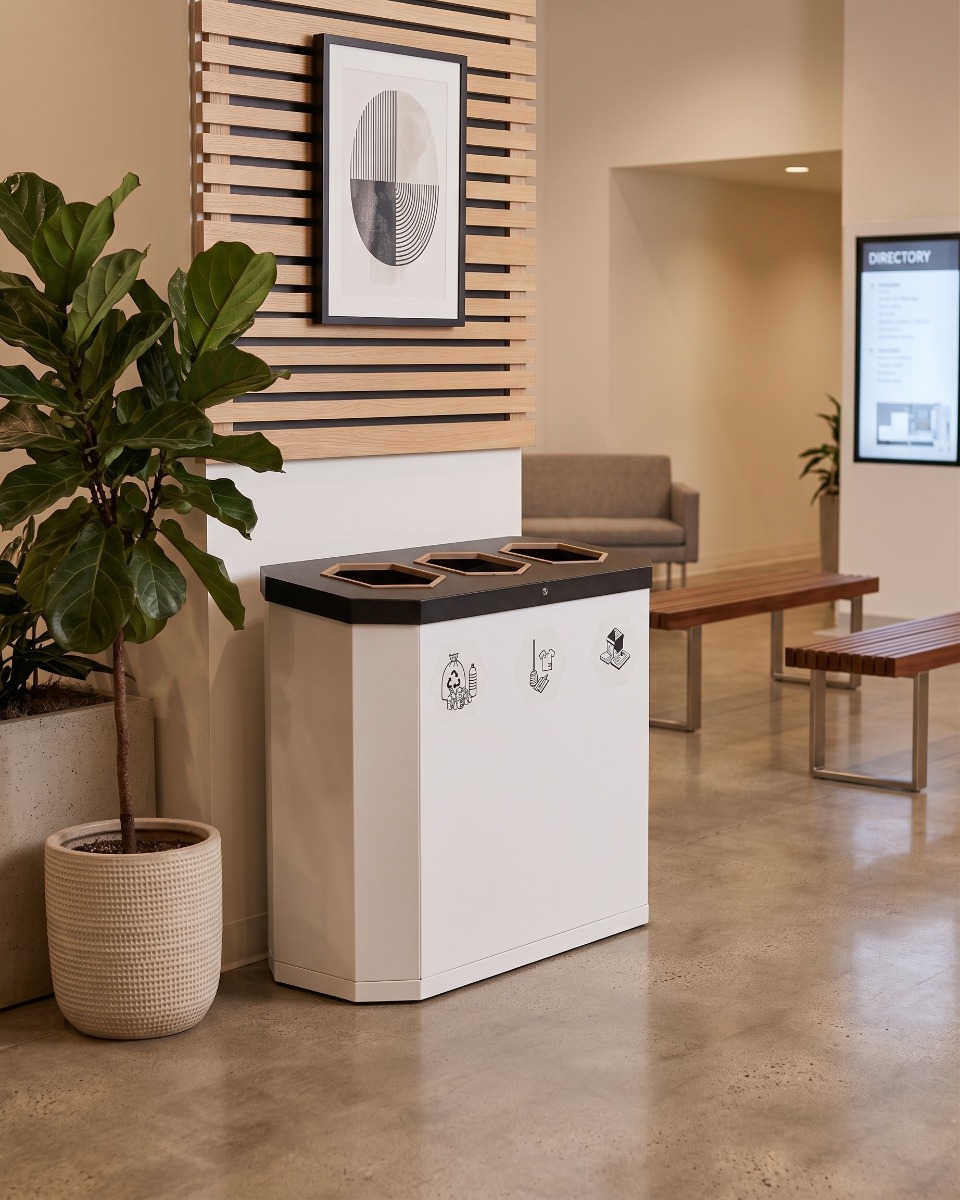 The material It affects the lifespan, weight, appearance and cleaning methods of the container. metal models can offer a more structured presence and be suitable for professional or public environments, while the solutions in plastic material They can be lightweight and easy to handle. There is no universally best material. The choice must take into account the frequency of use, potential impacts, and the type of environment in which the system will be installed.
It's also important to consider the overall construction. Thicknesses, joints, lids, and moving parts must be consistent with repeated use. A bin used daily by many people is subjected to different stresses than a bin placed in a single office.. Holity, Specialist in professional supplies for companies, institutions and collective structures, proposes systems for separate waste collection made in different materials and configurations, allowing you to compare solutions based on the operating context.
Modularity and number of fractions to be collected
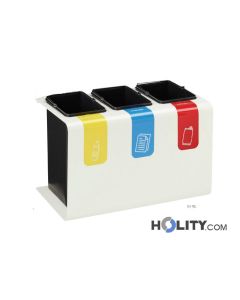
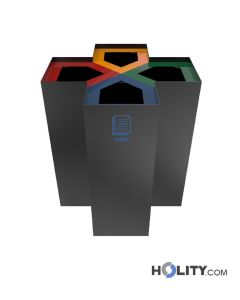
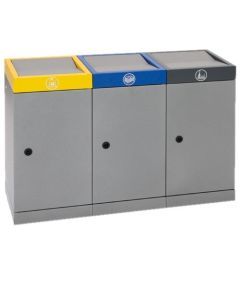
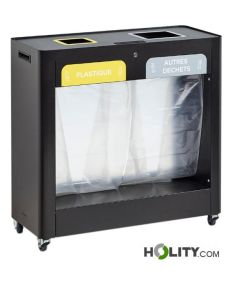
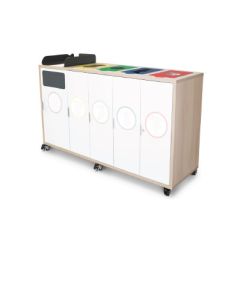
There modularity It allows you to build a workstation composed of multiple containers placed side by side and adapt it to the actual fractions planned. This feature is particularly useful when the same structure has different needs from one floor to another or when the system needs to be expandable at a later date. The independent modules allow you to add or remove a fraction without having to replace the entire workstation.
Before purchasing, however, it's important to determine how many fractions need to be collected at each location. Adding more containers than necessary can make the system cumbersome and confusing for users. Conversely, an incomplete station can encourage incorrect waste disposal. Modularity is truly useful when used to build a system consistent with the organization of the facility, not when considered merely as an additional feature of the product.
Openings, lids and delivery methods
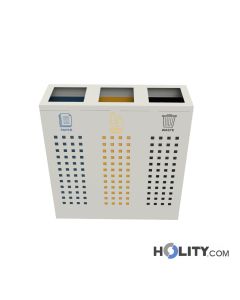
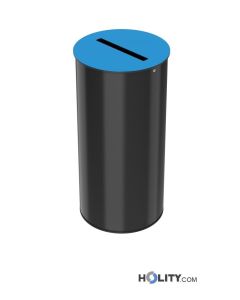
There shape of the opening It can facilitate waste identification and improve ease of use. Wide openings are convenient for bulky materials, while more specific configurations can be used to guide the disposal of certain types of objects. The presence of a lid must also be evaluated based on the fraction collected and the location where the container is installed.
In a professional system it is also important to observe how the container is opened during the emptying. Difficult-to-remove lids or complex mechanisms can increase handling times when the operation is repeated several times a day. The most suitable solution therefore combines simplicity for the user and convenience for the staffThese two aspects must be considered together already in the comparison phase between the models.
Colors, symbols and recognizability of the different fractions
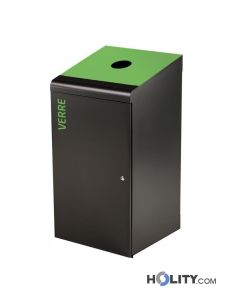
A container for separate waste collection must clearly communicate what material it accepts. Colors, writings, pictograms and shapes of the openings They can help make the different fractions immediately recognizable. Signage should be visible from the position where the user approaches the system and not be obscured by other furnishings. Clear communication reduces uncertainty and makes waste disposal more intuitive.
There graphics It must also be consistent across all collection points within the facility. Frequently changing colors or symbols from one floor to another can make it difficult to use, especially in buildings frequented by visitors. It's therefore helpful to establish a uniform system and replicate it across different areas. This way, even containers with different capacities can be recognized as part of the same collection organization.
Dimensions and overall dimensions: how to integrate containers into spaces
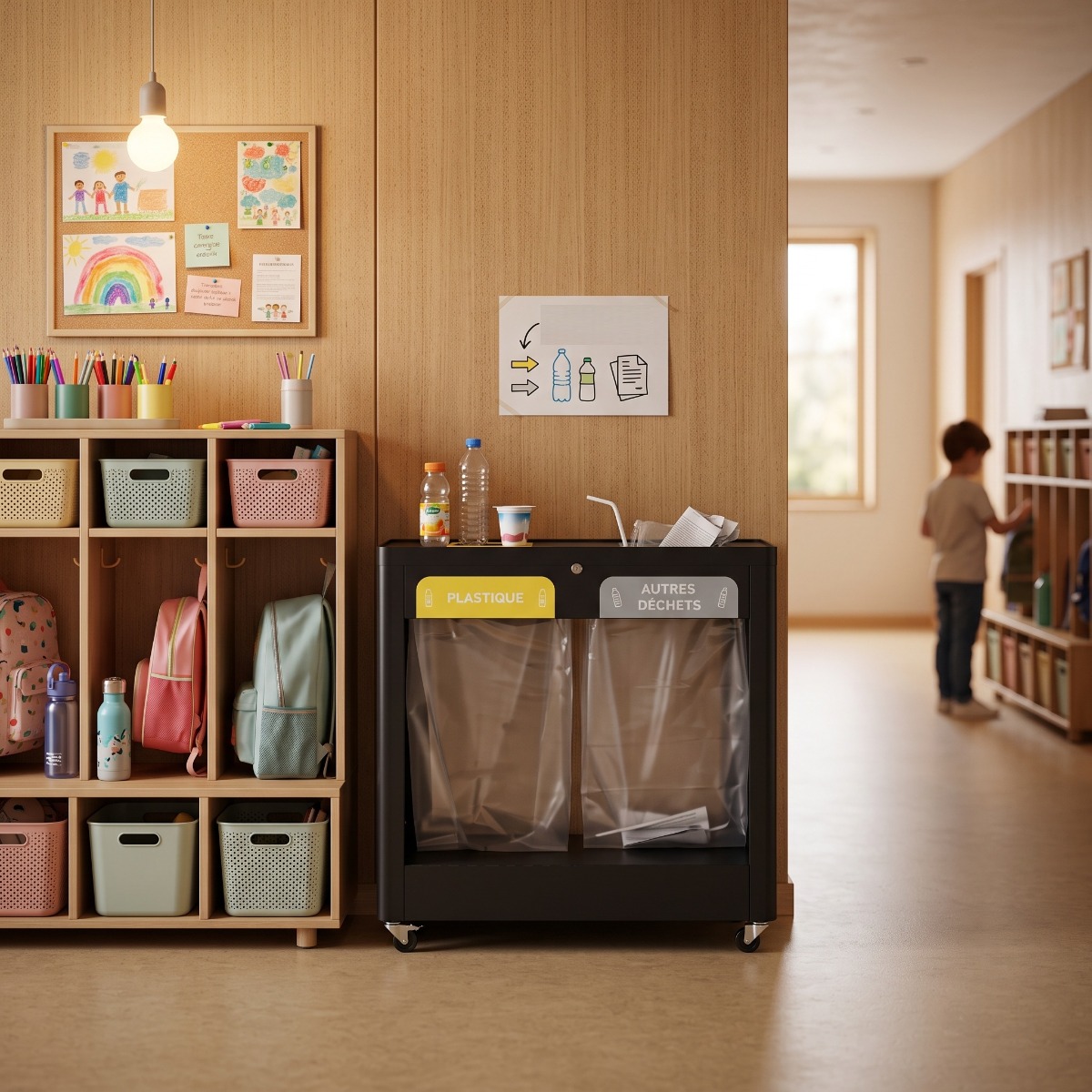 There position It's just as important as capacity. A bulky station placed in a corridor or near a passageway can interfere with the organization of the space, while a system hidden or far from the main flow of traffic risks being used less. Before purchasing, it's therefore advisable to determine the available width, depth, and height of the designated collection point. The dimensions of individual modules must also be considered when stacked side by side.
In compact areas, it may be preferable to distribute capacity across taller containers or adopt more compact configurations. In public spaces, however, a clearly visible and organized station can also contribute to the clarity of the space. The key principle is to avoid the container being perceived as an afterthought. Sizing and location should be part of the space design.
Daily system cleaning and management
There ease of cleaning This directly impacts long-term management. Accessible surfaces, designs free of hard-to-reach areas, and easy-to-remove components can simplify daily operations. Bag changes must also be easy and unnecessarily complex. When many containers are handled by the same staff, a few minutes saved on each operation can add up to significant savings over the course of a day.
Before choosing it is useful to observe how the bag is fixed and what is visible from the outside. A good system should allow it to be kept stable without compromising the aesthetic order of the workstation.
It's also important to consider the frequency with which containers need to be sanitized and the type of waste collected. In high-traffic environments, the simplicity of operations can significantly impact the efficiency of the service. Materials, surfaces, and components must therefore also be evaluated from the perspective of those performing emptying and cleaning. A well-designed system facilitates not only disposal, but the entire internal waste management cycle.
Design and consistency with offices, hotels and spaces open to the public
In professional environments the container It often remains visible throughout the day and becomes part of the decor. Finishes, shapes, and proportions should therefore be consistent with the context in which the system is installed. A management office, a hotel lobby, a school, and a corporate common area all have different aesthetic requirements. Functionality remains a priority, but can be integrated with a design that maintains order and visual continuity.
There aesthetic choice However, it should not compromise the recognizability of the fractions. A very discreet but difficult to interpret system can make the disposal process less immediate. It is preferable to find a balance between environmental integration and clarity of waste separation, using easily identifiable graphic and color elements. This way, the container maintains a professional look without losing its communicative function.
Mistakes to avoid before purchasing
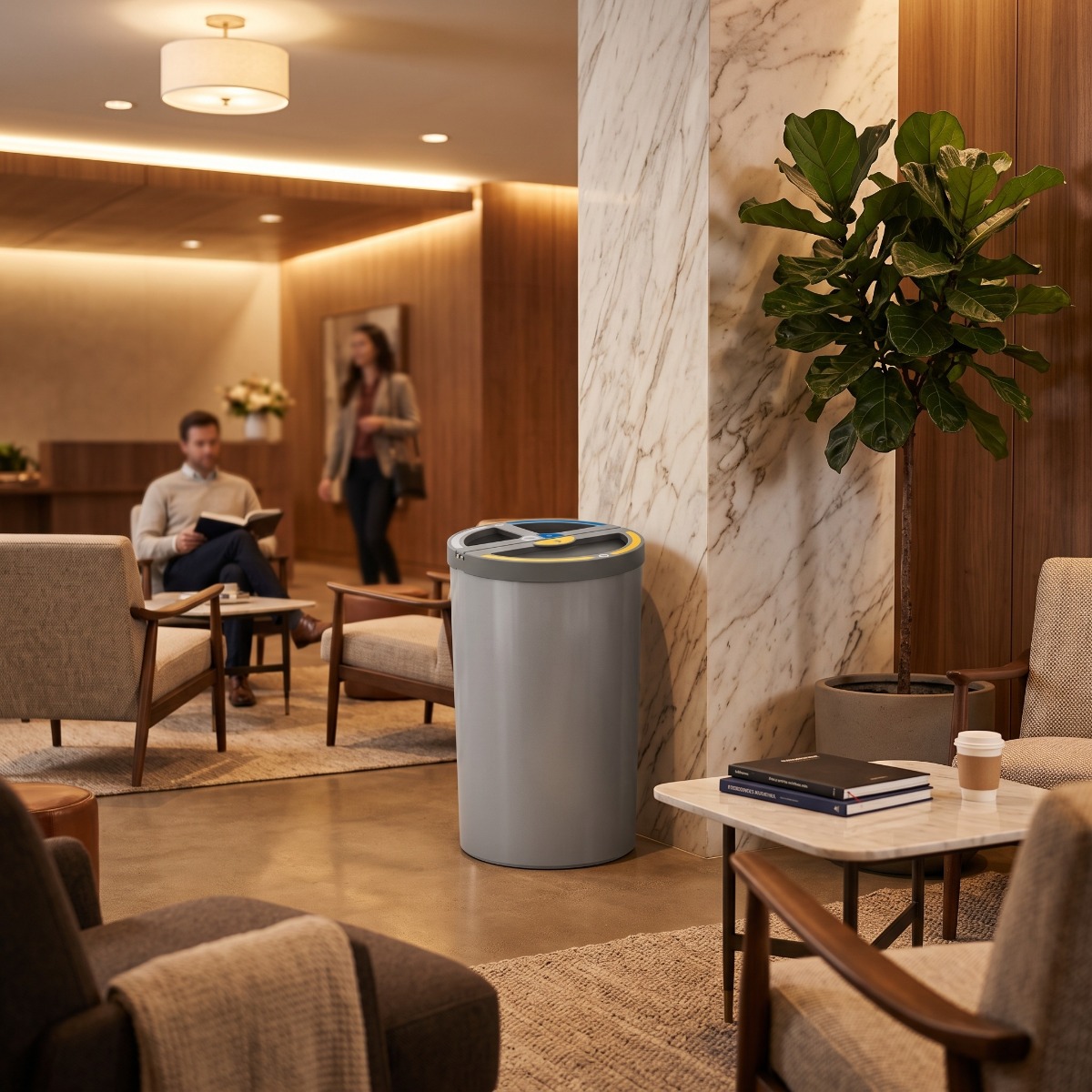 One of the most common mistakes is choosing all containers based solely on their nominal capacity. Two systems with the same volume can behave differently depending on their shape, opening, size, and emptying method. Even purchasing a standard configuration without analyzing the waste produced can create imbalances between the different fractions. Some modules may fill up quickly while others remain almost constantly unused.
Another mistake is neglecting post-purchase management. It's important to consider where the containers will be placed, who will empty them, how much space will be needed for operations, and how any relocations will be handled. The ability to expand or modify the composition can also be important in structures subject to change. Holity, specialist in professional supplies for the management and organization of spaces, offers different solutions to configure the collection in relation to operational needs.
How to compare the best indoor recycling bins
To effectively compare products, it's helpful to start with a series of common parameters: fractions to be collected, required capacity, available dimensions, material, opening type, emptying method, and the possibility of combining multiple elements. Design and finishes can then be evaluated. This approach prevents you from choosing a product that's aesthetically pleasing but lacks functionality, or a spacious solution that doesn't fit properly in the available space.
THE best containers for indoor waste sorting They are therefore consistent with the actual flows of the structure and the procedures used to manage them. There is no identical configuration for every office, school, hotel, or public building. Holity represents a point of reference for professional supplies dedicated to separate waste collection and allows you to compare containers with different capacities, materials, and configurations. A choice based on usage, modularity, maintenance, and sizing allows you to build a tidy, durable system suitable for daily management.
 English
  Italian
 French
 German
 Spanish