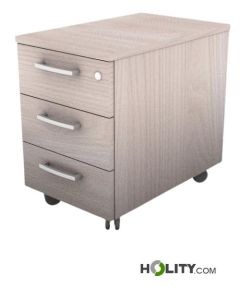
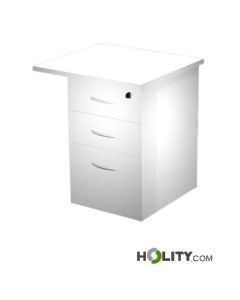
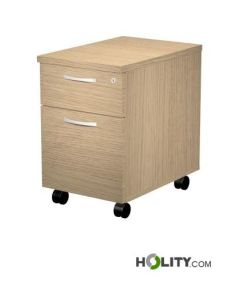
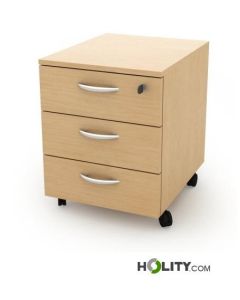
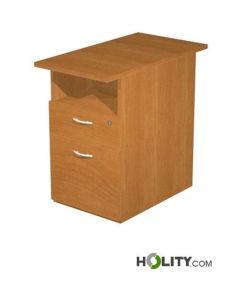
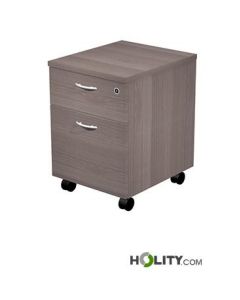
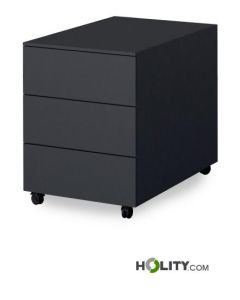
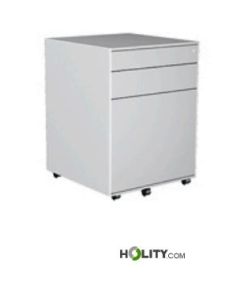
Office drawer units allow you to keep documents, stationery, and frequently used materials close to your workstation, preventing each activity from requiring constant movement to cabinets or central archives. Their usefulness, however, depends on a choice that is consistent with the work performed. The number of drawers, internal dimensions, mobility, presence of a lock, and compatibility with the desk directly impact the functionality of the workstation.
A drawer unit that is too small can quickly become insufficient, while an oversized model takes up space without offering any real operational advantage. Before purchasing, it is therefore useful to distinguish what needs to remain within reach from what can be stored in a shared archive. In this way, the drawer unit becomes a tool for daily organization and not simply a container added under or next to the desk.
Why? A chest of drawers improves workstation organization
Over time, the workstation tends to accumulate small objects, documents, and materials needed for daily activities. If everything remains on the desk surface, the operating space is reduced and it becomes more difficult to maintain order. A chest of drawers, on the other hand, allows you to divide what you need into separate and easily accessible compartments. Its proximity to the desk also allows you to quickly retrieve materials without constantly interrupting your work.
The advantage is greater when the internal organization follows a stable logic. One drawer can be used for stationery, another for documents in use, and a further compartment for personal objects or job-specific tools. Reducing clutter on the work surface also makes tidying up the workstation easier. The chest of drawers thus takes on a specific operational function within the office furniture.
Mobile or fixed drawer unit: which configuration to choose
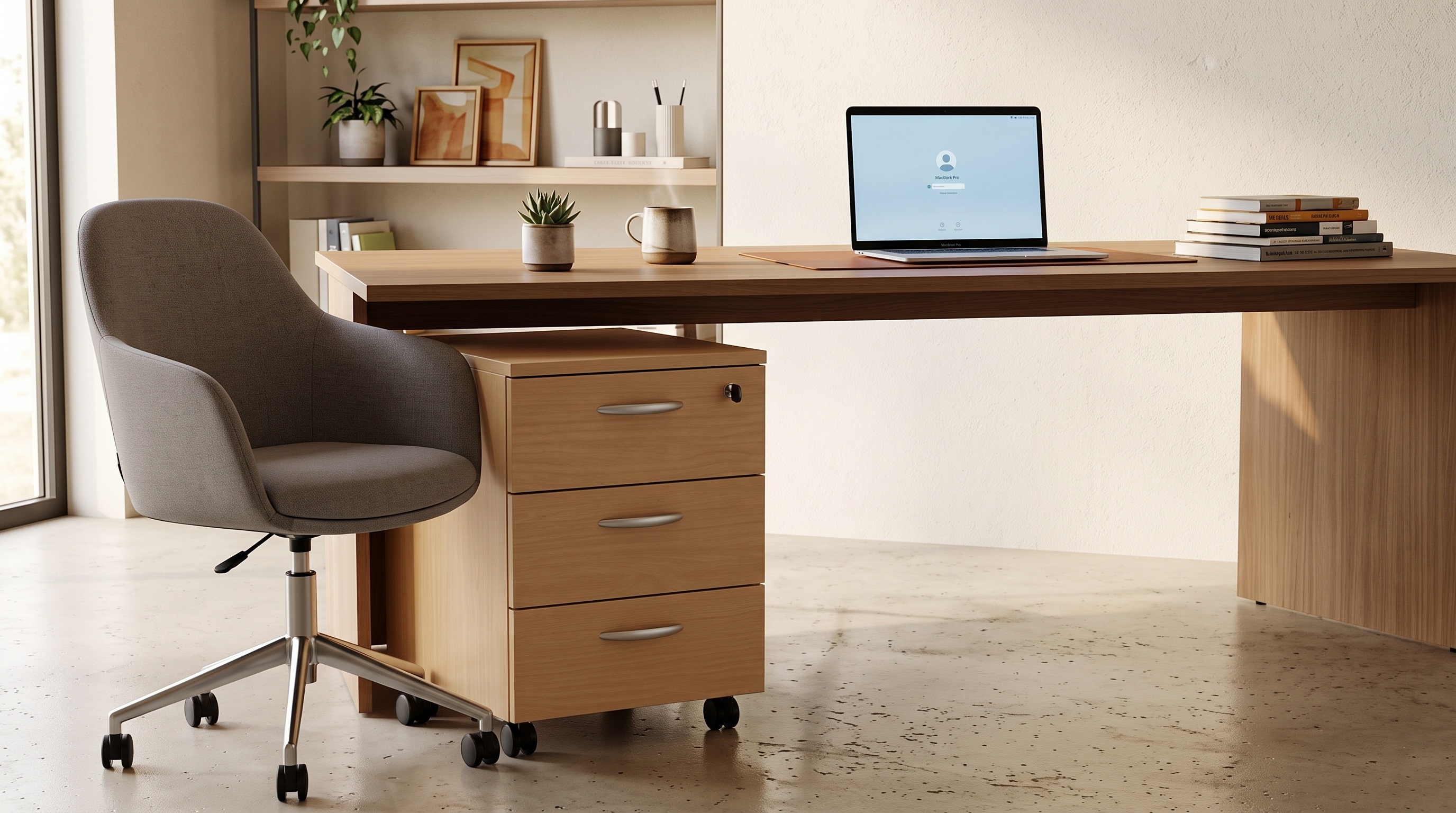
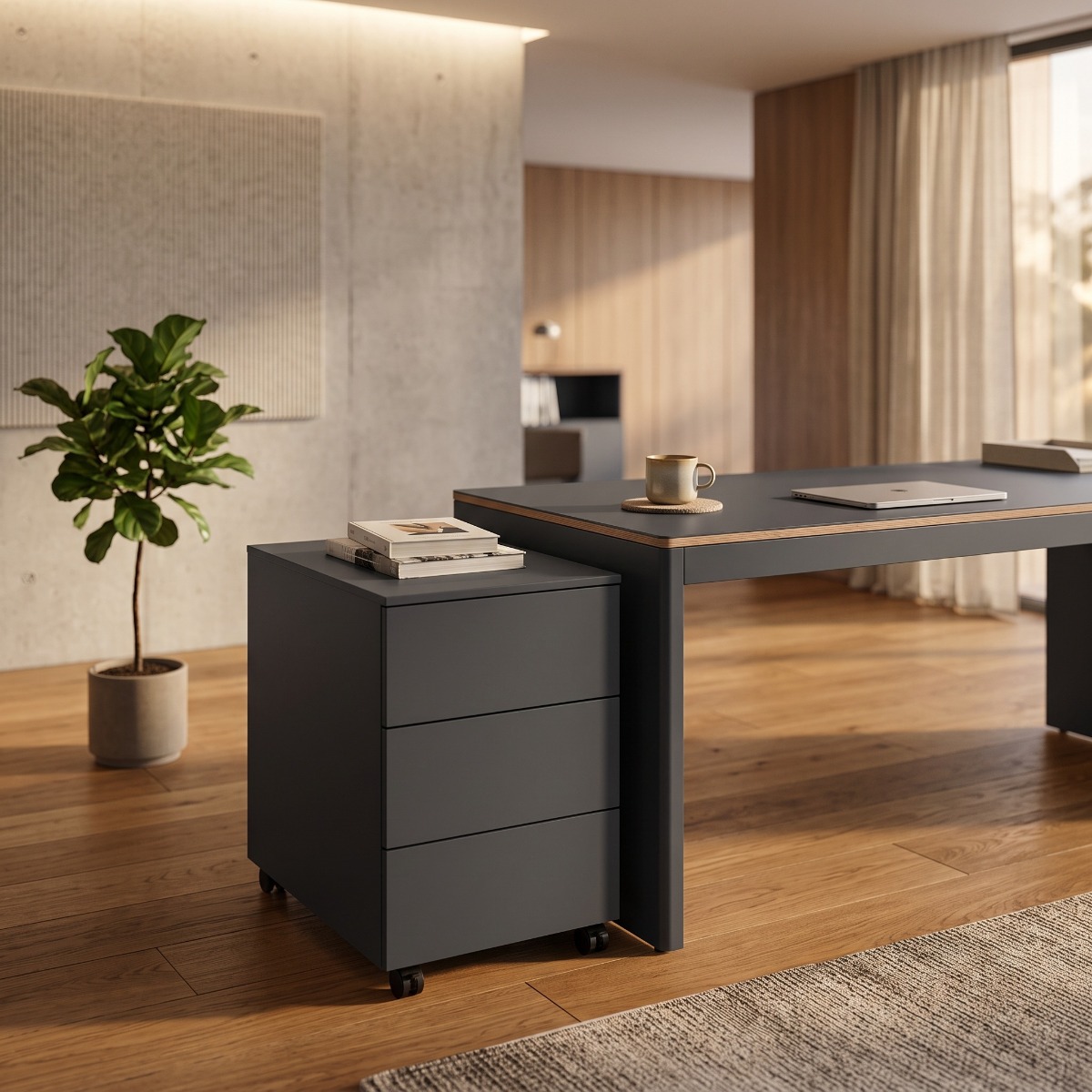 Mobile drawer units can be moved according to the needs of the workstation and are particularly useful in offices where the layout changes over time. The presence of wheels facilitates movement and allows the unit to be placed under the desk or laterally. This configuration can also be interesting in shared workstations, as long as the dimensions and weight remain compatible with the planned movements.
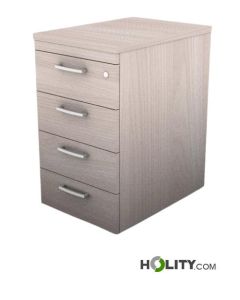
A fixed drawer unit instead favours a stable placement and can be integrated directly with the desk composition. It is a suitable solution when the workstation is not reconfigured frequently and when the available space has already been defined in the design phase. The choice between a mobile and a fixed model should therefore depend above all on the frequency with which the office organization changes , not just on aesthetic preference.
Number of drawers: start from what needs to be archived
The number of drawers must be evaluated based on the categories of materials to be stored. A professional who mainly uses paper documents will have different needs than someone who needs to organize stationery, devices, accessories and small tools. More drawers allow for detailed subdivision, but generally reduce the height available in each compartment. For this reason, it is not always convenient to choose the model with the greatest number of compartments.
It is preferable to first define which objects need to remain close to the workstation and how much space they require. A chest of drawers with a few drawers can offer more compartments. capacious, while a configuration with multiple elements favors the precise classification of small-sized materials. The goal is to prevent the drawers from being filled haphazardly. Correct distribution makes it easier to identify what is needed and maintain order over time.
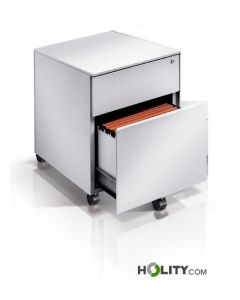
When the chest of drawers is used to store documents, the internal dimensions play a decisive role. It is not sufficient to check the external dimensions of the cabinet, because guides, structure and thicknesses can reduce the actual available space. A4 documents, folders, thin binders and other supports require different compartments. Before purchasing, it is therefore advisable to compare the useful dimensions of the drawers with the materials actually used.
The storage method must also be considered. Frequently consulted documents can be stored in an easily accessible location, while less used materials can occupy the lower drawers. If thicker files or folders need to be inserted, it is important to check the height of the compartment. Format and volume of documents are therefore more useful parameters than the simple total number of drawers.
Capacity and distribution of work materials
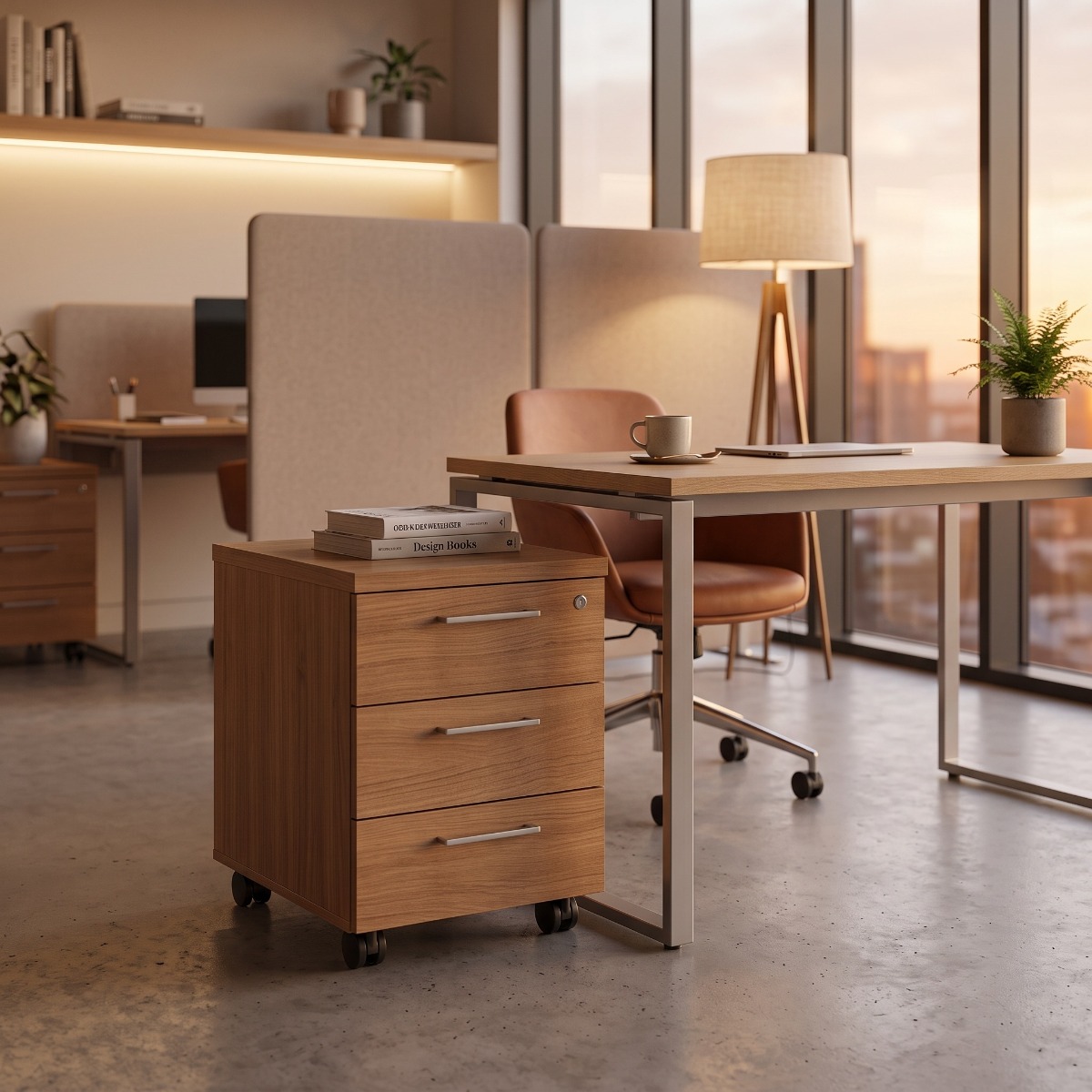 A An efficient drawer unit does not necessarily have to contain everything that belongs to the user. Its main function is to keep what is used continuously close to the workstation. Bulky materials, historical documentation or stationery supplies may find a more suitable location in cabinets and filing cabinets. This distinction prevents the drawers from quickly saturating and preserves the practicality of the furniture in daily work.
The capacity must be distributed coherently between the different compartments. The upper drawers are generally more convenient for small objects and frequently used materials, while the deeper ones can be used for bulky files or equipment. Holity, a specialist in professional supplies for offices and work environments , offers drawer units and storage systems with different configurations, useful for organizing workstations and administrative spaces.
Lockable drawer units for documents and confidential objects
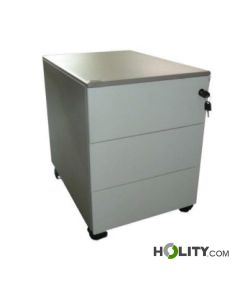
The presence of a lock can be useful when documents, devices or objects that must not remain freely accessible are stored in the drawers. This need is particularly evident in shared offices, open spaces and areas frequented by multiple people. Locking does not replace any organizational procedures for managing confidential information, but adds a level of physical control over the workstation.
Before choosing, it is necessary to check which drawers are actually locked by the system and how the keys are managed. Some models have central locking, while other configurations can be organized differently. It is also advisable to consider the procedures to be adopted in the event of key loss or change of user. The lock must therefore be evaluated as part of the management of the workstation and not as a simple accessory.
Wheels and mobility in the daily management of the office
Wheels make the drawer unit easier to move during cleaning, reconfiguring the spaces or transferring to another workstation. This feature is This is particularly useful in flexible offices, where desks and users can change positions. However, mobility must be accompanied by a sufficiently stable structure during use. It is therefore important to consider the behavior of the furniture both when moving and when it remains in the operating position.
The quality of movement also depends on the floor and the overall weight of the drawer unit once filled. A piece of furniture that is easy to move when empty may behave differently when it contains documents and materials. Before choosing a mobile model, it is also worth checking that the path around the desk actually allows for movement. In very narrow spaces, the presence of wheels may be less important than size and capacity.
Compatibility with desk and available space
The The drawer unit must be sized according to the desk and the position of the user. Models intended to be placed under the top must leave sufficient legroom and not interfere with the seat, metal structures, or any ducting systems. Height, width, and depth must therefore be checked before purchasing. A few centimeters of difference can determine whether the piece of furniture is actually usable in the intended position.
When the chest of drawers is placed laterally, it can also become an additional support surface, as long as its height and stability are consistent with this function. However, it is necessary to avoid the piece of furniture excessively restricting the passageways or obstructing the opening of the drawers. Compatibility between chest of drawers and desk therefore means evaluating the entire workstation and not just checking whether the piece of furniture physically fits into the available space.
Personal archive and shared archive: different needs
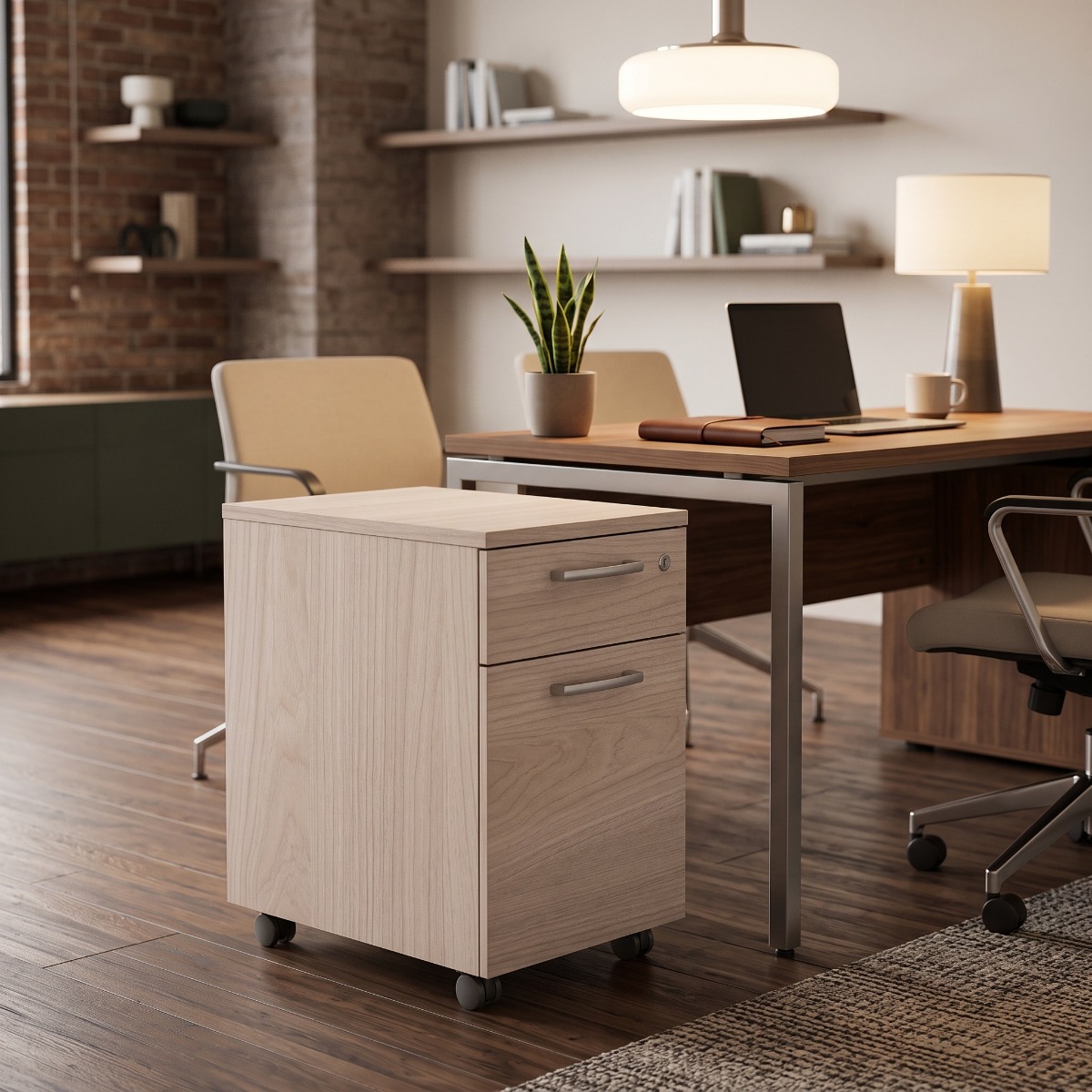 The chest of drawers near the desk is particularly suitable for personal operational documentation. These are the files, notes, and materials that the user must consult frequently during work. Storing them in a central archive would increase travel without offering any concrete advantage. For this function, accessibility, internal subdivision, and capacity proportionate to daily activities are especially important.
The shared archive, on the other hand, responds to different needs. Documents used by multiple people or stored for longer periods often require furniture with greater capacity and organization based on common criteria. Transferring everything to individual drawers can fragment information and make consultation less easy. Office design should therefore clearly distinguish between personal, local storage and collective storage .
Materials, resistance, and ease of use. maintenance
Drawer units for professional use can be made with different materials and finishes. The choice must take into account the frequency of use, the need for movement and consistency with the rest of the furniture. A drawer unit intended for an operational station used every day is subjected to numerous openings and closings. Guides, handles, wheels and structure must therefore be evaluated together with the external finish.
Ease of cleaning also contributes to management over time. Accessible surfaces and simple-to-maintain components allow the drawer unit to be inserted into normal office procedures without particular complications. In contexts with numerous workstations, it may be useful to adopt uniform models, so as to simplify any replacements and maintain visual continuity. Holity offers professional solutions also dedicated to the organization and archiving of work environments.
Mistakes to avoid when choosing a chest of drawers
One of the most common mistakes is choosing a piece of furniture based solely on its external dimensions or the number of drawers. This assessment does not indicate whether the compartments will actually be compatible with the documents and materials used. Even neglecting the height available under the desk can cause problems after the purchase. Before comparing models, it is therefore useful to measure the space and define what will need to be stored inside.
A second mistake is using the chest of drawers as an indiscriminate archive. Accumulating documents that are rarely consulted progressively reduces the space allocated to operational materials and makes it more difficult to maintain order. It is preferable to establish which items should remain in the station and which can be transferred to the common archive. In this way, the chest of drawers maintains the function for which it was chosen over time and does not become a container that is difficult to manage.
How to choose office drawer units for a professional workstation
To compare Office drawer units it is useful to start from five interconnected elements: materials to be stored, document format, number and height of drawers, available space and required security level. You can then evaluate whether wheels, a fixed location or a locking system are needed. This approach allows you to avoid purchases based exclusively on design and to select a piece of furniture that is truly consistent with the workstation.
Holity, a point of reference in professional supplies for offices , offers drawer units, desks and storage solutions designed for the organisation of work environments. A correctly sized drawer unit allows you to keep what is needed most frequently close to the user, limiting clutter and unnecessary movements. The choice thus becomes part of a more detailed design. large workstation, in which personal storage, security and compatibility with other furnishings are evaluated in a coordinated manner.
 English
  Italian
 French
 German
 Spanish