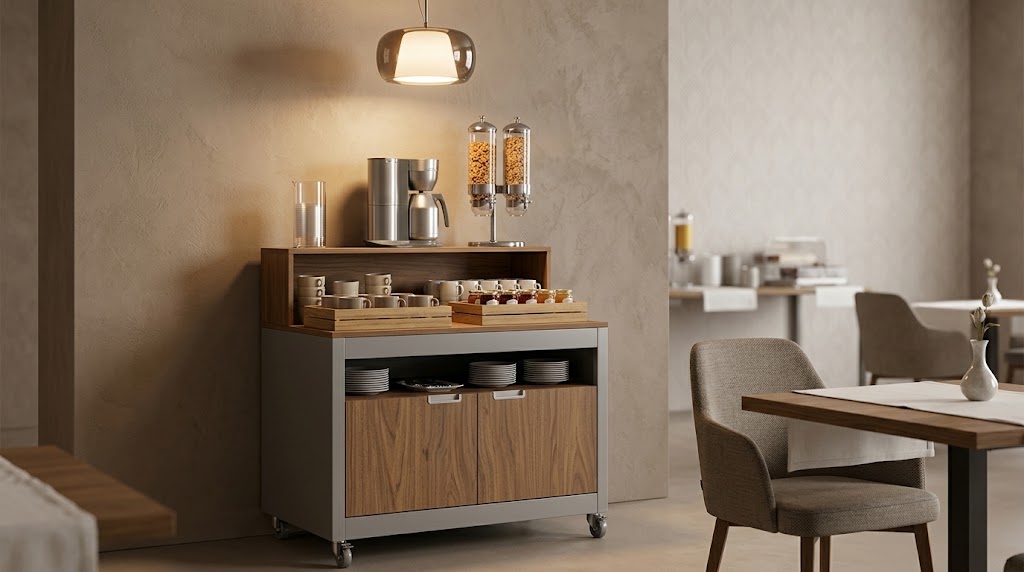
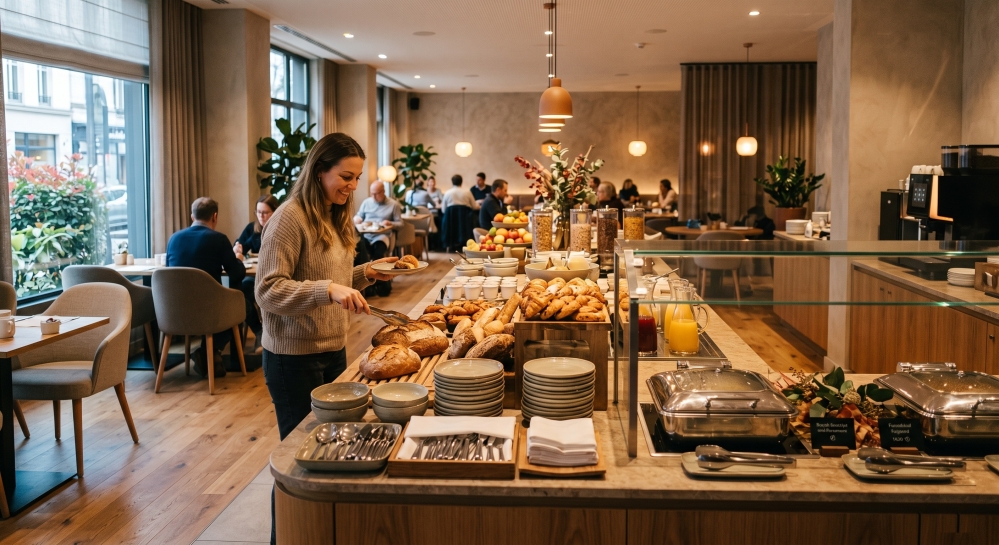
Organizing a hotel breakfast buffet means coordinating food, equipment, spaces, and supplies based on the number of guests and the service methods. The layout must make the flow intuitive, avoiding concentrating all operations in the same spot. Storage, cleanliness, and ease of tidying must also be considered from the design stage. The result therefore depends on the overall organization of the room rather than the quantity of products displayed.
The project starts from the number of guests and the type of service
The first factor to consider is the expected volume of service during the breakfast time slot. A small hotel with distributed guests can work with compact equipment and frequent refills, while a structure with numerous guests concentrated in the same time slots must manage different capacities and flows. The duration of the service also changes the operational needs. The number of seats, peak attendance, and duration of breakfast must therefore be defined before choosing the counter and equipment.
It is also useful to consider the type of gastronomic offering. A predominantly continental breakfast requires a different configuration than a buffet that includes hot dishes, refrigerated products, and numerous drinks. The greater the variety, the more necessary it becomes to distinguish the stations to make the offering legible. The design should also consider how much of the service will actually be self-service and which operations will remain entrusted to the staff.
The layout must follow the guest's natural path
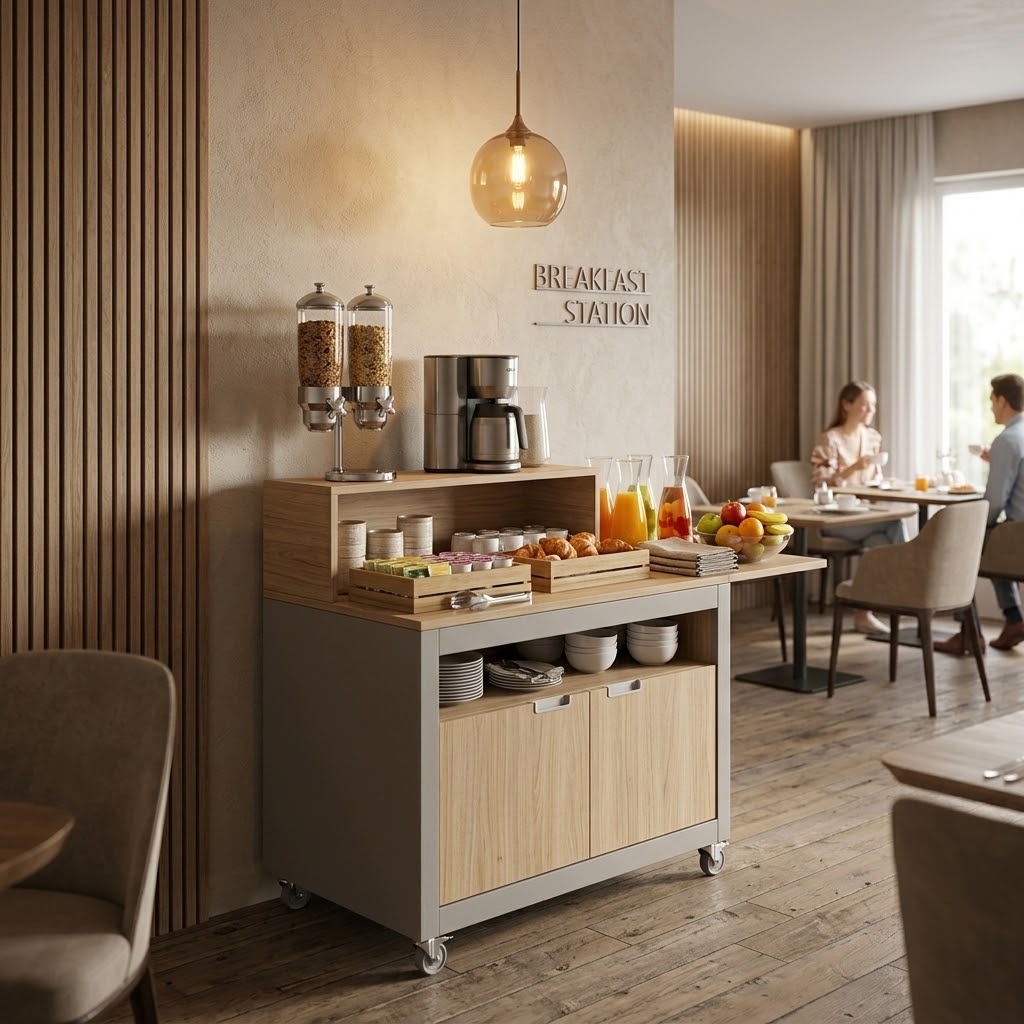 A buffet works best when the customer quickly understands where to start and how to continue. Plates, cutlery, drinks, and food should not create crisscrossing paths that force guests to continually return to the same points. The most frequently used stations can be distributed along the buffet line, leaving sufficient space in front of the equipment. The layout must reduce interference between those choosing food and those still entering the room.
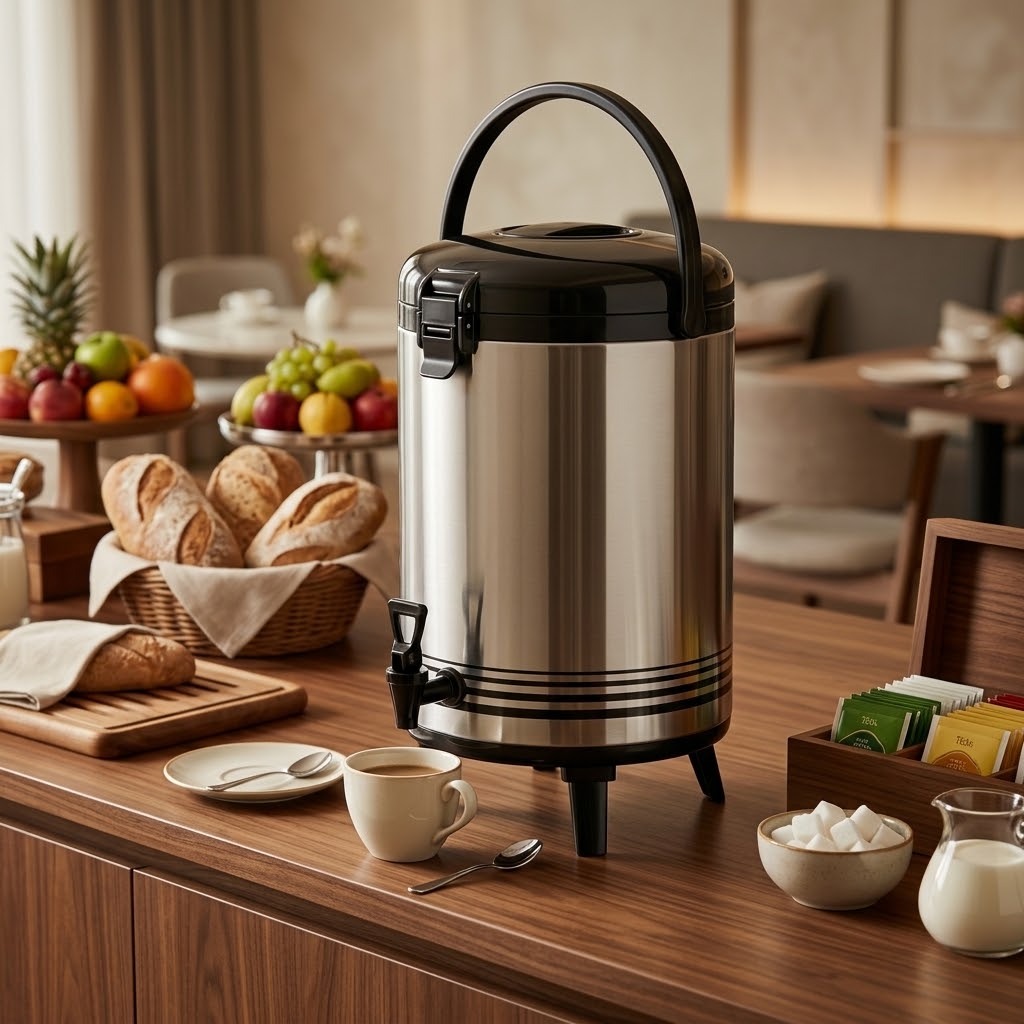
The position of coffee and drinks also deserves attention because these are areas used by almost all guests. Placing multiple functions in the same spot can generate waiting times even when the rest of the buffet is free. In larger rooms, it may be useful to separate the beverage area from the main food line. Finally, doors, passages and routes used by staff for refills must remain compatible with the circulation of guests.
Food should be organized in easily recognizable areas
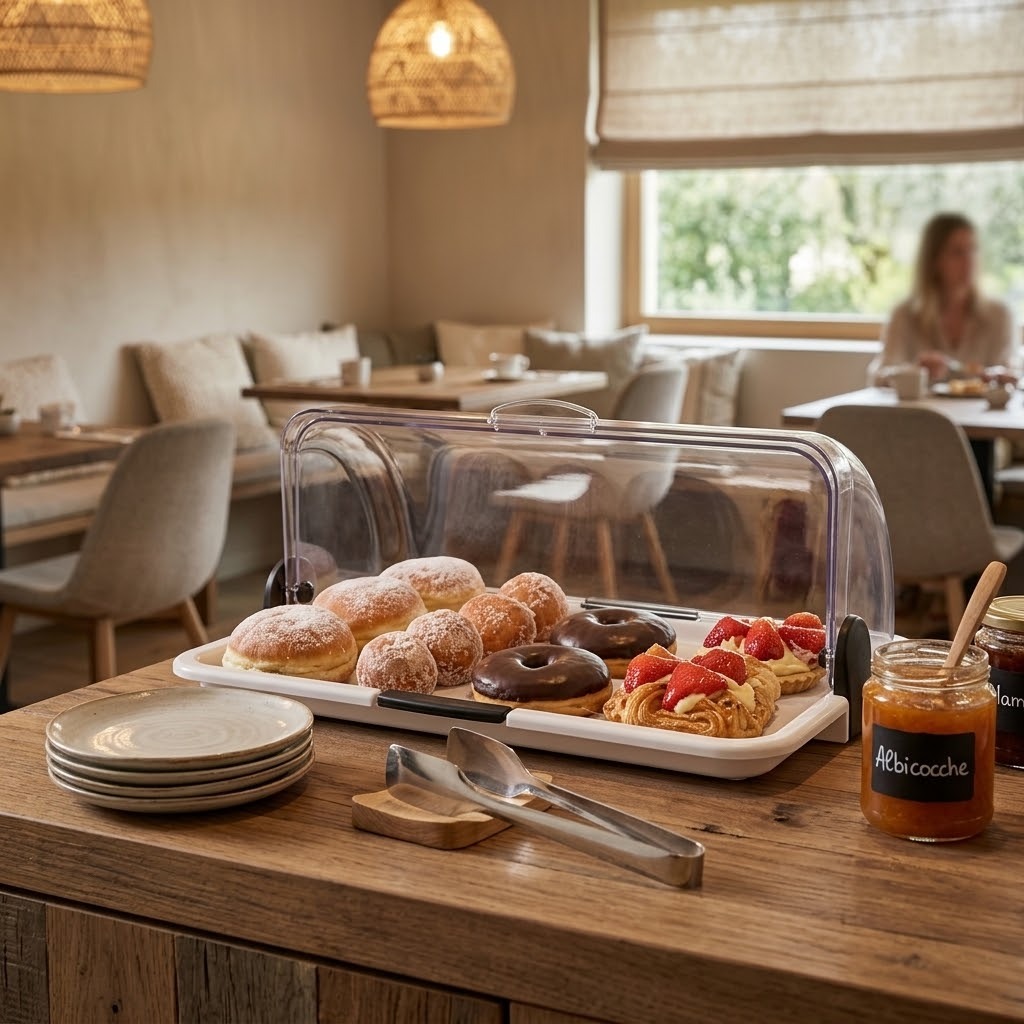
Dividing the offerings into coherent groups makes the buffet easier to read. Bread and baked goods can occupy a separate area from cereals, while yogurt, dairy products, cured meats, and other products requiring specific storage conditions must be handled with appropriate equipment. Hot preparations constitute another autonomous area. A layout by product families reduces search time and clarifies the facility's offering..
Visual order also helps staff. When each group has a defined space, it is easier to identify what needs to be replenished, replaced, or cleaned during service. It is not necessary to occupy every inch of the counter with different foods. A less congested layout can facilitate both guest access and staff interventions, and makes it easier to maintain a tidy appearance throughout the breakfast period.
Dispensers and displays make it easier to orderly self-service section
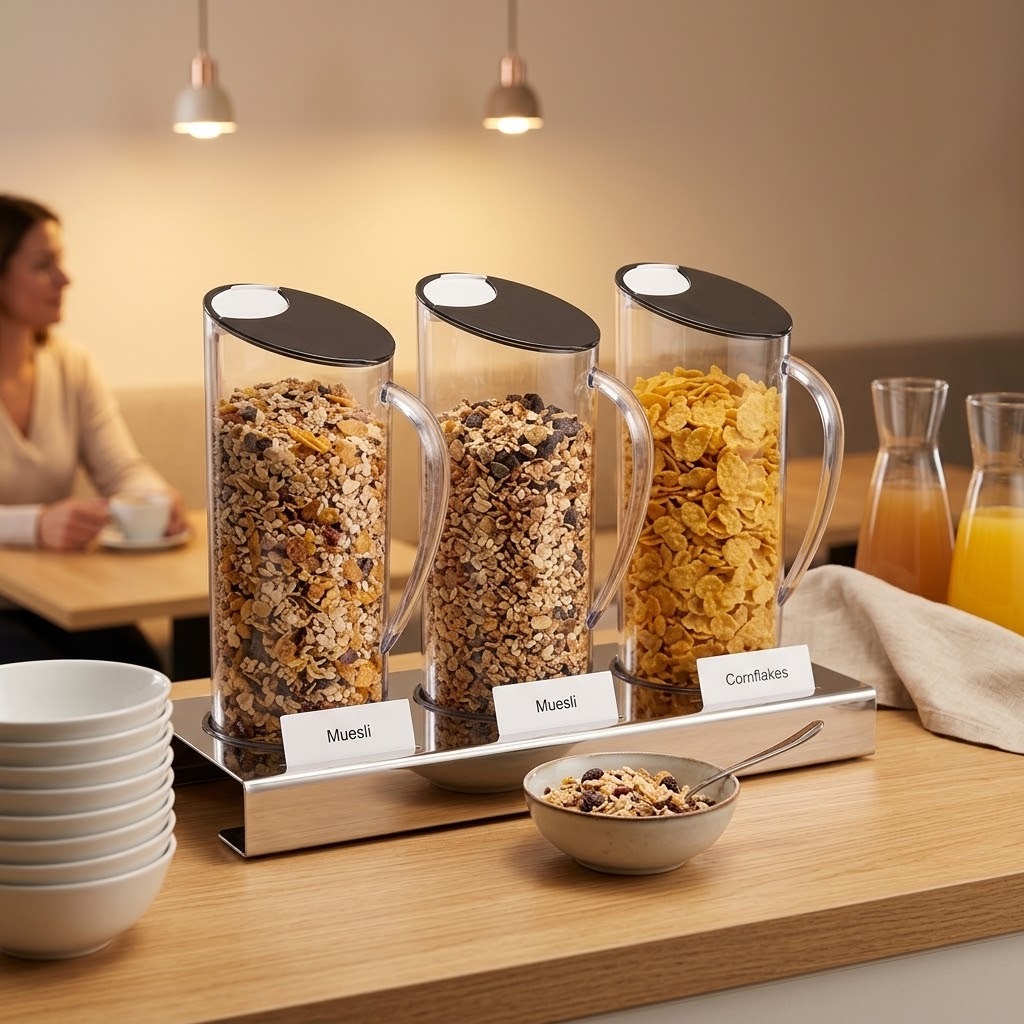
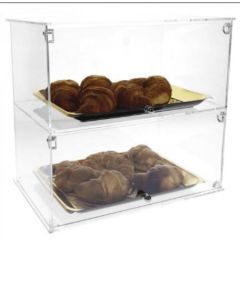
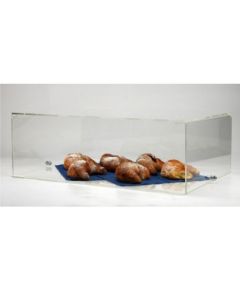
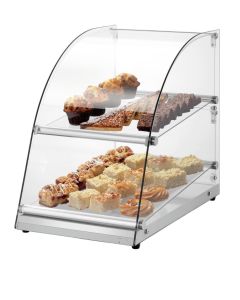
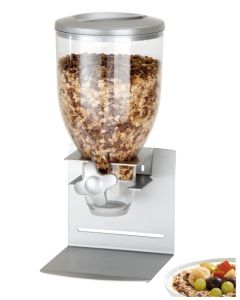
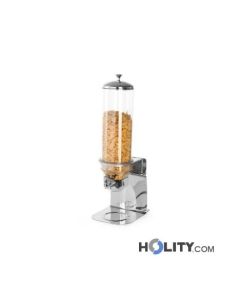
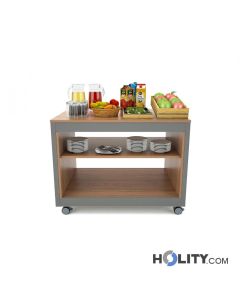
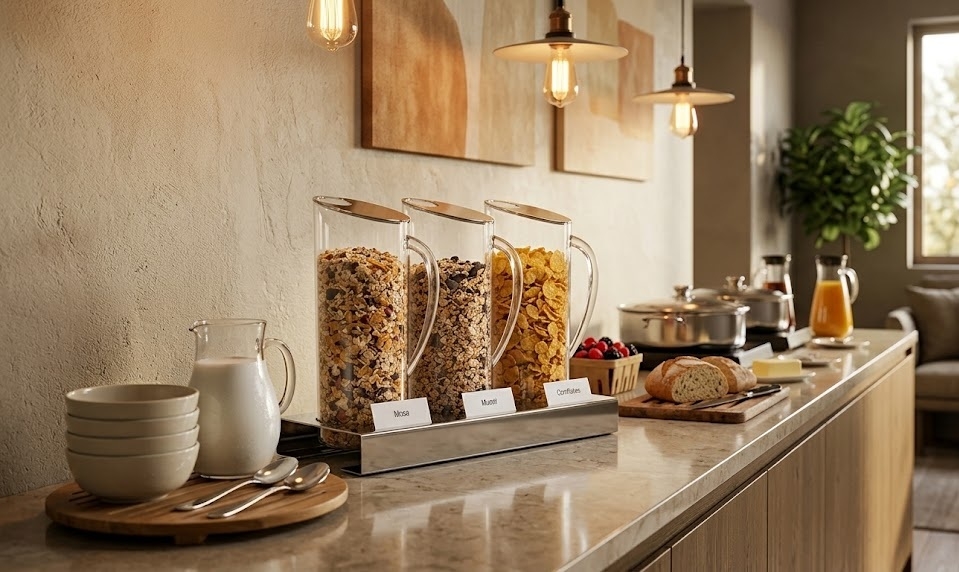
Cereals, muesli and other dry foods can be managed through single or multiple dispensers, sized in relation to the expected rotation. Separating the products makes selection easier and allows staff to check residual levels more quickly. Bread baskets, displays and dedicated supports also help to make better use of the buffet surface. However, the configuration must avoid adding equipment that takes up space without responding to a concrete operational need.
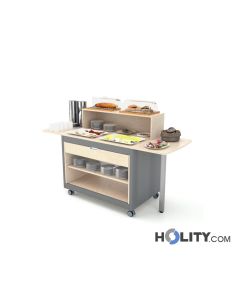
The Holity range dedicated to buffets and breakfast rooms includes cereal dispensers, displays, bread baskets and systems for the distribution of drinks, with different configurations for capacity and service methods. Holity, a specialist in professional supplies for hotels and Ho.Re.Ca. facilities, therefore allows you to build the equipment starting from the number of guests and the composition of the breakfast. Capacity, size and ease of refilling must be compared before purchasing.
Hot and cold require dedicated equipment
A buffet that includes yogurt, cheese, cured meats or other preparations to be kept refrigerated must integrate systems consistent with the storage conditions required for those foods. The same principle applies to preparations served hot, which require equipment designed for maintenance during service. The needs therefore change with the menu. The distinction between cold and hot areas must be foreseen already in the design phase of the buffet line.
The Holity catalogue includes, among other equipment, refrigerated display cases, professional food warmers and dispensers for cold or hot drinks intended for hotels and buffet services. The choice should not only be based on the nominal capacity, but also on the size, refill methods and ease of cleaning. It is It is also necessary to check the manufacturer's instructions and incorporate them into the facility's operating procedures.
Replenishment must be designed together with the buffet
A seemingly well-organized line can become inefficient if staff must continually cross the guests' path to replenish it. The location of the service points should therefore allow access to the equipment without interrupting the use of the buffet. It is also useful to consider where trays, containers and spare tableware will be temporarily placed. The back of the service is as integral to the design as the part visible to the customer.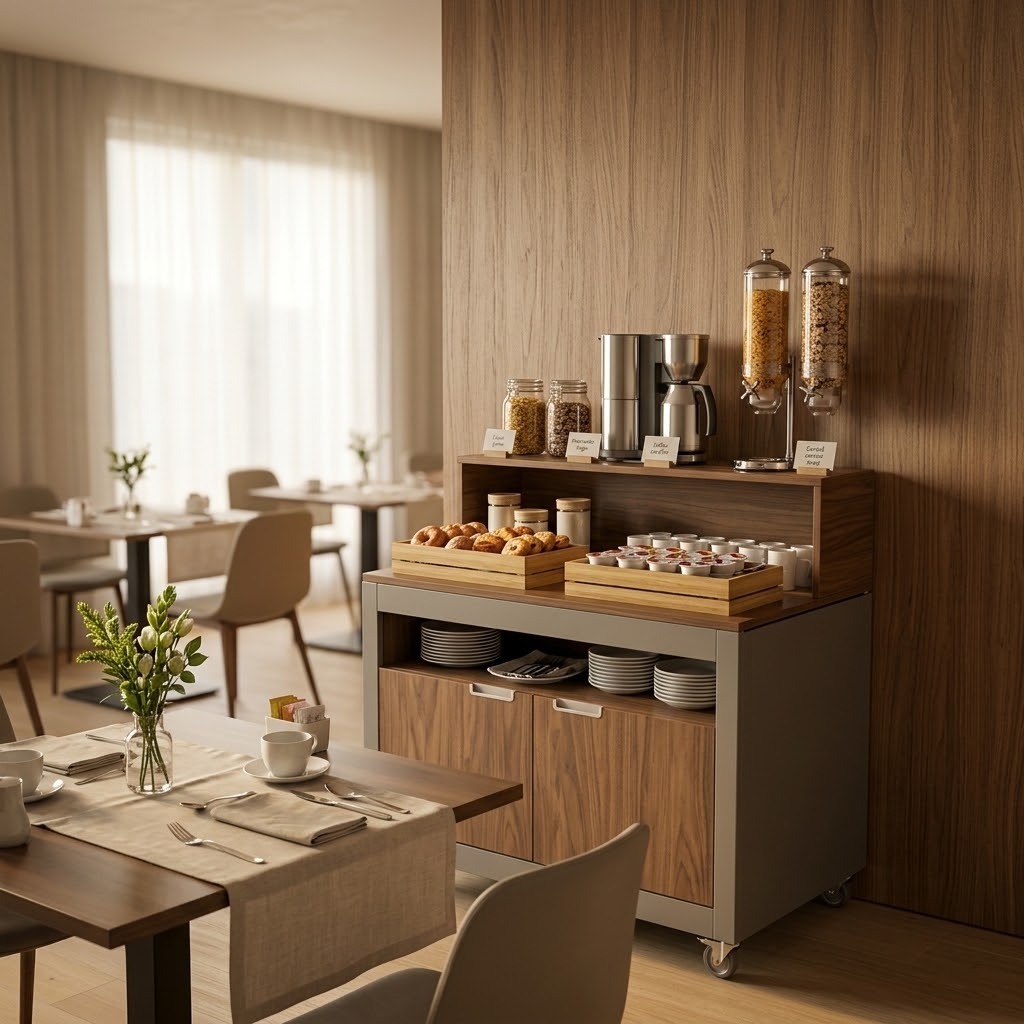
The capacity of the equipment must be related to the desired replenishment frequency. A very large dispenser may reduce interventions, but take up unjustified space in a small facility. A more compact container requires more frequent checks, but may be better suited to a buffet with few seats. Correct sizing arises from the relationship between average consumption, available space and the staff's ability to tidy up during the service slot.
Cleaning, protection and temperatures are part of the organization
Regulation (EC) 852/2004 requires food business operators to organize rooms and equipment in such a way as to allow good hygiene practices, limit the risk of contamination and, when necessary, maintain food at adequate and controllable temperatures. Equipment in contact with food must also be able to be effectively cleaned and, when necessary, disinfected. These principles also apply to the actual organization of the buffet.
The precise methods of display, control and replenishment must be integrated into the facility's self-control system. The Ministry of Health reminds us that self-control makes the food operator responsible and that HACCP represents the tool through which risks are identified and managed in an organized manner. There is therefore no single buffet configuration that is valid for any food : menus, equipment and procedures must be evaluated together.
A legible buffet does not depend only on the physical layout. Food names, information on drinks and the visual organisation of the different areas help guests to find what they are looking for without having to constantly ask the staff. Uniform signage also makes the counter tidier. The information must be placed in such a way as to be clearly associated with the product to which it refers , without creating overlaps between nearby containers.
Particular attention must be paid to information on allergens. Regulation (EU) 1169/2011 requires that the required information on ingredients or substances that cause allergies or intolerances must also be made available for non-prepackaged foods, according to the applicable provisions. The concrete way in which this information is organised must be consistent with the facility's procedures and with the relevant national regulations.
The final equipment must be sized on the basis of the actual service
Before purchasing the equipment, it is useful to reconstruct the entire service sequence: arrival of the guests, taking the dishes, access to the food, use of the dispensers, choice of drinks and return to the table. This allows you to identify the areas in which concentrations could form and to better distribute the functions. Subsequently, the capacity, number of dispensers, size of the displays and necessary systems for hot and cold can be defined. The quantity of equipment must derive from the flows and not only from the available surface area.
Holity, leader in professional supplies for hotels, bars and restaurants, offers a range dedicated to the breakfast room which includes systems for dispensing, displaying, storing and preparing during the buffet. Organizing a hotel breakfast buffet therefore means coordinating layout, food, equipment and procedures in a single operational project. When each element is sized on the actual service, the room can be managed with greater continuity and the staff has an easier configuration to maintain throughout the breakfast.
 English
  Italian
 French
 German
 Spanish