Waste sorting with suitable bins should be organised according to the spaces and the types of waste produced throughout the day. Schools and offices have different requirements in terms of volume, waste type and emptying frequency. Bin capacity, placement and signage should therefore reflect actual activities. A well-planned layout makes waste separation more intuitive for users and easier for staff to manage.
The planning starts from the waste produced in the environments
The first step consists in observing what is thrown away in the different rooms. A classroom produces mainly paper, small packaging and materials related to teaching activities. In an operational office, paper, packaging and waste generated by workstations prevail. Canteens, refreshment areas and vending machines instead concentrate containers for food, bottles and organic waste.
The mapping must also indicate the quantities and times in which the greatest deliveries occur. In schools, recess and lunch breaks generate concentrated flows, while in offices production can be distributed throughout the day. Events, meetings and laboratory activities temporarily modify the volumes. A station for separate waste collection must be sized on these behaviors, not on a generic estimate.
School workstations vary between classrooms and common areas
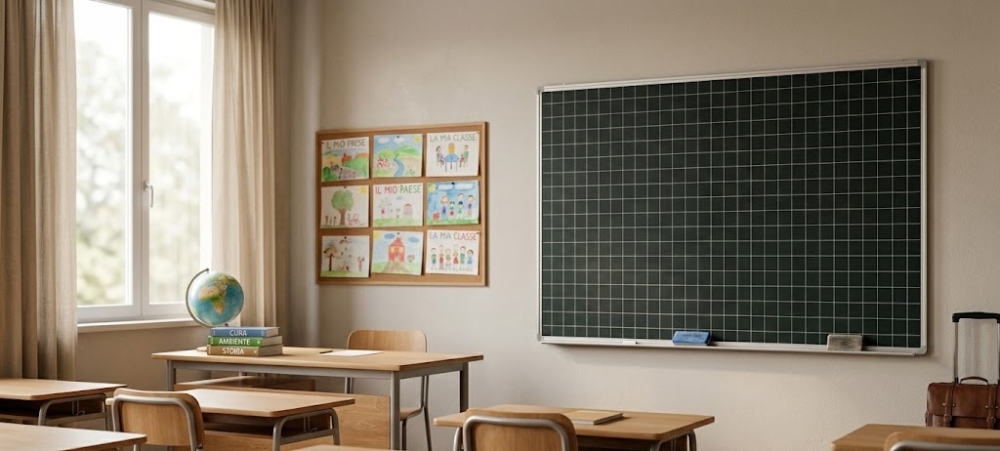
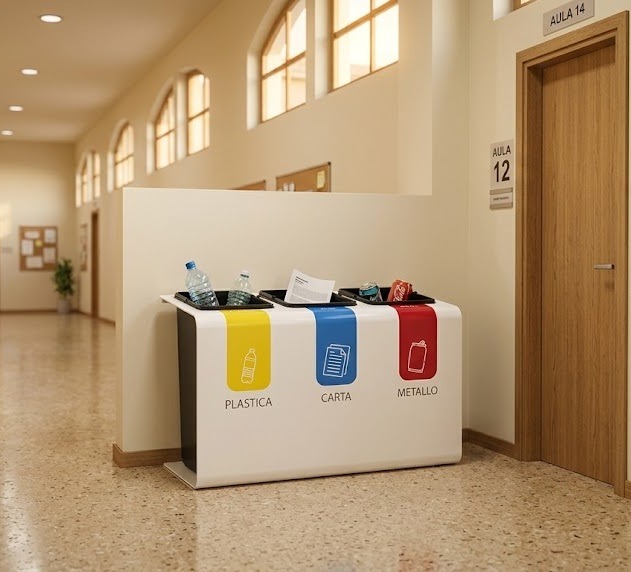 In classrooms it is useful to provide simple containers, easily recognizable and proportionate to the available space. Paper collection can be placed near workstations or the teacher's desk, where sheets and teaching materials are produced. Other waste can be concentrated in common areas when they are not generated frequently during class. This solution avoids placing too many bins in each classroom.
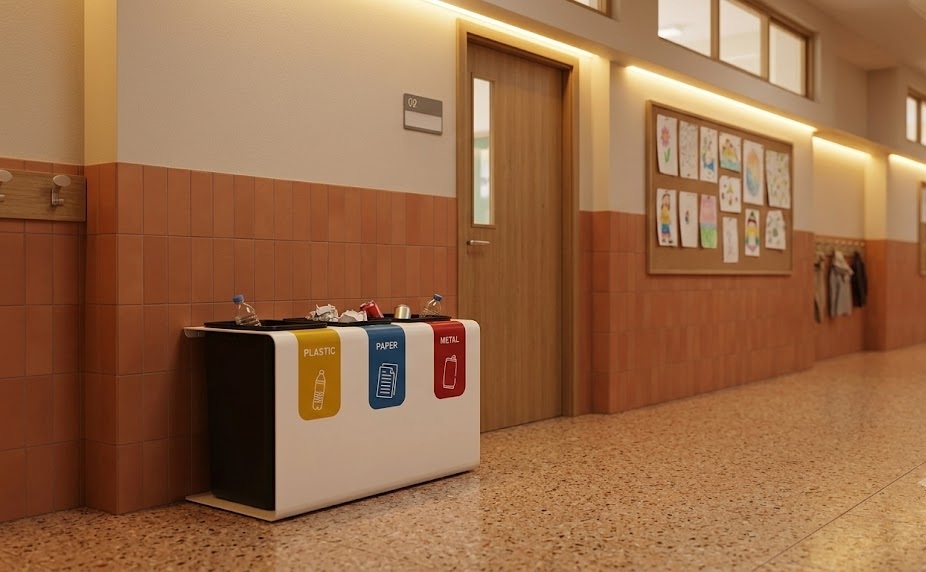
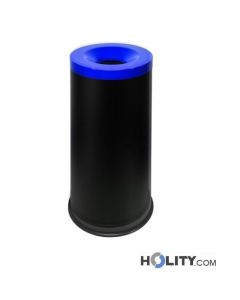
Corridors, entrances, and recreational areas require more complete stations because they are used by a greater number of people. The containers must remain visible without restricting routes or interfering with doors and exits. Holity, a specialist in professional supplies for schools, institutions, and collective structures , offers single containers and modular systems suitable for different configurations. The choice must consider the age of the students and the height at which openings and signs are placed.
In offices, the containers must follow the activities
In traditional offices, individual bins are often used for different materials, even when separate waste disposal stations are present. A reorganization can include paper bins near printers and photocopiers, where this fraction is produced most frequently. Complete stations can be placed along the routes to meeting rooms, exits, and refreshment areas. The distance must be kept short so as not to discourage correct disposal.
Open spaces require a balance between accessibility and visual order. One station for each group of desks can be more functional than numerous bins placed under the tables. In executive offices and meeting rooms, it is possible to choose bins with finishes consistent with the furnishings, while maintaining legible symbols and destinations. Aesthetic quality should not obscure the product's function.
Distributed stations and centralized islands meet different needs
Distributed stations bring the container closer to the point where the waste is produced. They are suitable for recurring materials, such as paper in classrooms and offices or packaging in areas with vending machines. Increasing the number of collection points, however, requires more checks and more emptying operations. The solution must therefore also be sustainable for the staff in charge.
Centralized islands bring together multiple fractions in a single composition and make the entire system visible. They work well in lobbies, main corridors, canteens and break areas. They must be placed along natural paths, avoiding marginal or difficult-to-reach areas. A mixed system, with specific containers near the activities and complete stations in common spaces, often responds better to the complexity of buildings.
Paper, packaging and waste require capacity proportionate
The capacity of each module should not be identical for all fractions. Paper can take up a lot of space in offices and administrative rooms, while bottles and light packages quickly fill the containers in refreshment areas. Food waste requires more frequent emptying, even when the overall quantity is lower. Sizing must therefore consider the volume, weight and permanence of the contents.
A container that is too small forces workers to continuously intervene and can cause external accumulations. An oversized model takes up space and makes handling the bag more difficult. Holity, a reference point for professional containers intended for waste management , allows you to compare different capacities and compositions. The choice must be linked to the emptying schedule and the routes to the internal storage.
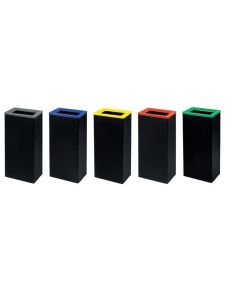
Colors and pictograms make it easier to Clear disposal
Recognizability depends on the consistency between color, text, symbol, and shape of the opening. Using a single visual element may not be sufficient, especially in buildings frequented by children, visitors, or people who speak different languages. The pictogram shows the type of material, while the text clarifies any doubts. Colors must remain uniform throughout the facility.
In schools, signage can also have an educational function, as long as the instructions remain simple and concrete. In offices, it is preferable to avoid long messages that become difficult to read when walking by. Photographs or visual examples may be useful near refreshment areas, where packaging has different shapes. The information must correspond to the collection methods actually used in the area and in the building.
Materials and openings affect daily management
Metal bins can be placed in representative environments and withstand frequent use. Plastic models are often lighter to move and can be used in classrooms, laboratories and service areas. The choice must consider resistance, cleanliness and placement, avoiding evaluations based solely on appearance. Edges and internal parts must also be easily accessible during maintenance. 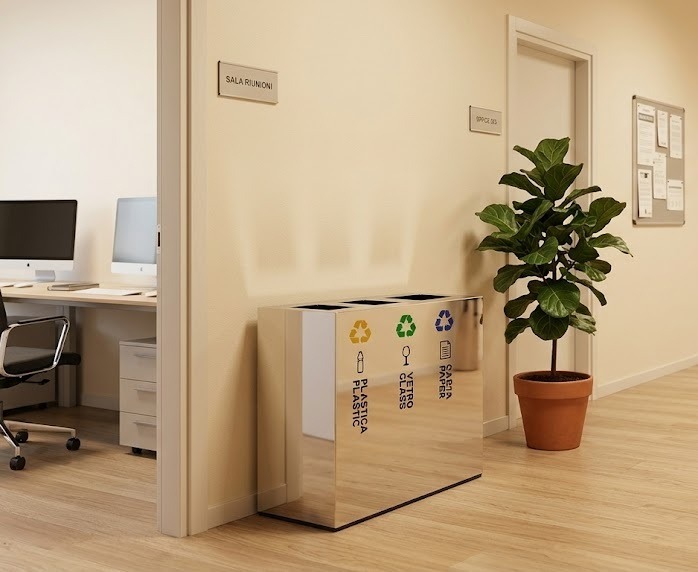
Shaped openings help identify certain fractions, while lids and doors make the contents less visible. Pedal systems can be suitable for environments where manual opening is preferred. Each mechanism must be simple to use and not slow down bag replacement. The most complex configuration is not always the most practical for schools and offices with frequent waste disposal.
Staff routes must be planned together with the containers
The collection system continues after students and employees have used the container. Workers must remove the bags, check for any errors and transfer the material to a storage point. A station located in a hard-to-reach corner can slow down any intervention. The weight and size of the bags also affect daily movement.
The fractions separated in the rooms should remain distinguishable during internal transfer. Trolleys, bags and storage rooms must therefore be organised with the same logic used for the stations. It is useful to define routes that reduce intersections and repeated passages. Discussion with the cleaning staff allows you to identify critical issues that do not emerge by simply observing the furnishings of the rooms.
Periodic checks allow you to correct the stations
An effective layout on the floor plan can behave differently during daily use. Some containers fill up too quickly, while others remain almost empty. Recurring errors in separation may indicate unclear signage or inadequate positioning. The system should therefore be checked after the first few weeks of use.
The check can be based on the frequency of emptying, the presence of foreign materials and the observations of the operators. Moving a station by a few meters can significantly change user behavior. The capacity of individual modules can also be rebalanced without replacing the entire composition. Modular structures facilitate these adjustments when needs change over time.
A coordinated supply makes the system more recognizable
Before purchasing, it is useful to prepare a map with rooms, fractions, capacity and number of stations. This document helps to avoid incompatible models or containers chosen without considering the whole. Measurements and openings must be compared with the available space and the bags used. Any fixings, wheels and accessories must also be verified in the technical data sheet.
Holity, leader in the selection of containers for separate waste collection intended for schools, offices and institutions , offers single and modular solutions for environments with different needs. A coordinated supply maintains uniform colors, symbols and opening systems. This continuity makes the stations more understandable and simplifies the management of spare parts. The result is a system integrated into the building's activities, more orderly for users and more practical for staff.
 English
  Italian
 French
 German
 Spanish