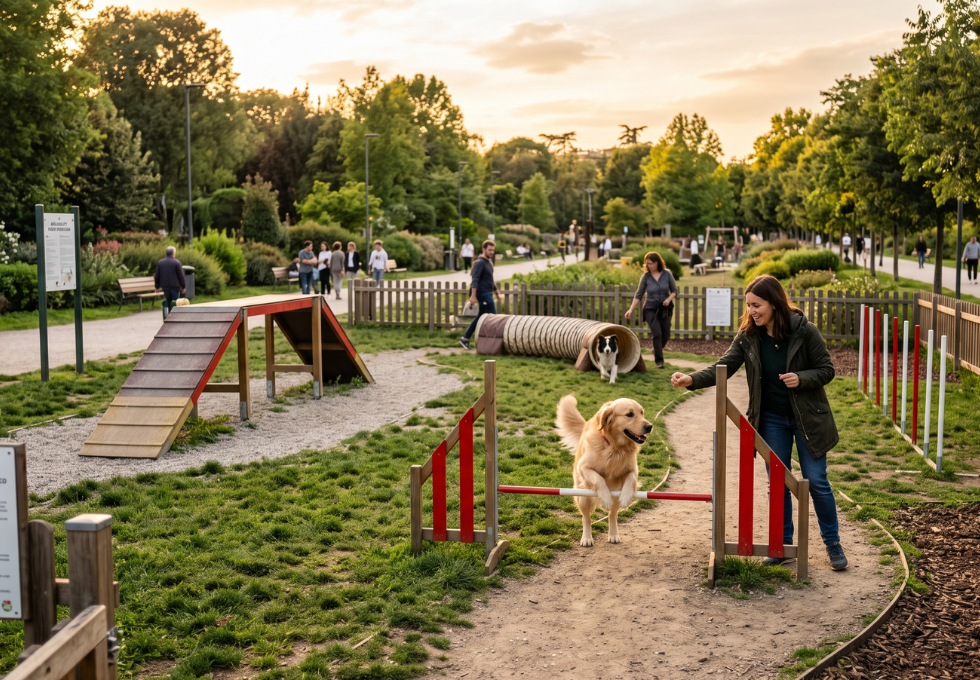
The dog agility obstacles They don't all perform the same function and shouldn't be purchased as interchangeable items. Tunnels, jumps, slaloms, and contact equipment require different skills, from trajectory management to body control, and the ability to negotiate raised surfaces or difficult-to-see passages. A well-constructed course combines different exercises and allows for the gradual development of confidence, coordination, and attention.
This choice is relevant both to owners looking to create a small training area and to managers of dog training camps, kennels, dog parks, and training centers. In both cases, the available space and the dog's level of experience should guide the selection process. Purchasing numerous similar obstacles can make the course repetitive, while incorporating overly complex equipment without adequate progression risks generating hesitation or uncontrolled movements.
How to create a balanced agility course
A balanced course alternates obstacles that require speed, precision, control, and adaptability. The tunnel invites the dog to proceed in an enclosed space, the jump works on the trajectory, the slalom requires lateral continuity, and the contact tools introduce variations in height and surface. The combination of these activities makes the course more complete than a sequence consisting solely of jumps or linear exercises.
The composition must also take into account the distances between the objects. Too little space prevents the dog from properly preparing the movement, while excessive distances can disrupt the continuity of the exercise. It's helpful to start with a few well-spaced objects and widen the course as the dog demonstrates confidence. The quality of the training depends more on the consistency of the sequence than on the total number of obstacles.
Tunnel: Trust, Speed, and Control of the Exit
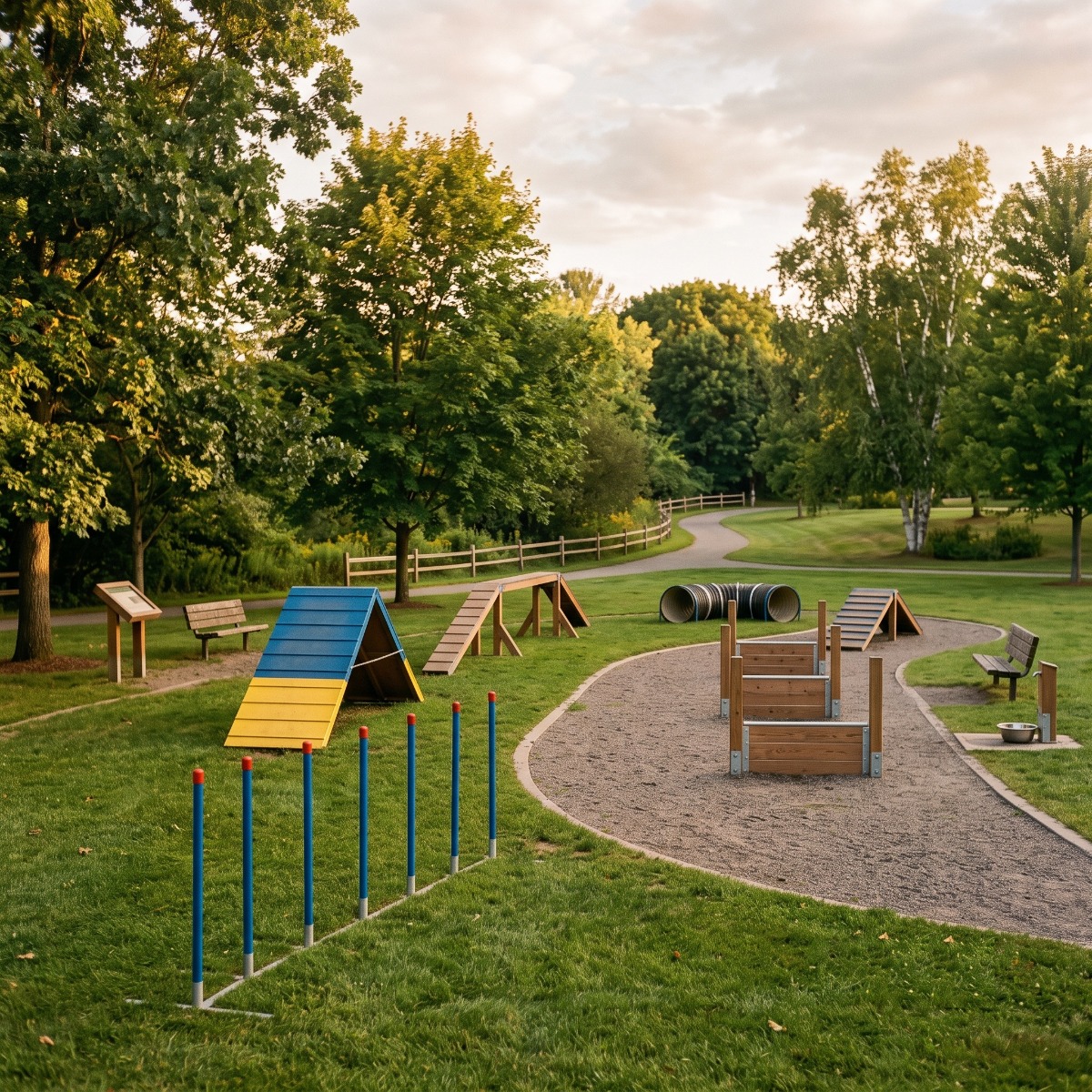 Thetunnel is one of the agility obstacles dog More recognizable and used to accustom the dog to crossing a passage where the exit may not be immediately visible. Linear models are generally easier to negotiate, while curves and longer lengths increase the difficulty level. The diameter and stability must be appropriate for the dog's size and prevent the tunnel from shifting during passage.
The progression should begin with a short, open tunnel, held firmly in place and with a clearly identifiable exit. Only then can curves or faster sequences be introduced. Control of the exit is also important, as the dog must be able to proceed to the next obstacle without encountering any nearby obstacles. A professional tunnel should retain its shape, withstand repeated use, and be properly secured to the ground.
Jumps: coordination and trajectory management
THE jumps They develop coordination, distance perception, and the ability to follow a designated trajectory. They can consist of two supports and a removable bar, or can be configured in more complex ways. The adjustable height allows the exercise to be adapted to the dog's size, age, and experience. The bar should fall or disengage upon contact, avoiding rigid structures that cannot yield.
A higher height doesn't automatically mean a better exercise. In the early stages, it's more useful to work on the fluidity of the approach and landing than to strive for high performance. The terrain must be smooth and offer adequate grip, especially in the area following the jump. To create a varied course, you can alternate single jumps, spaced sequences, and changes of direction, always maintaining a difficulty level appropriate for the dog.
Slalom: precision, rhythm and progressive learning
The slalom It requires the dog to alternate between a series of poles while maintaining a continuous motion. It's a more technical exercise than it might seem, as it requires flexibility, rhythm, concentration, and the ability to identify the correct entry point. The poles must be stable, clearly visible, and spaced evenly apart. In professional models, the structure must remain stationary even during rapid passages.
Learning should occur gradually, initially using a few elements or configurations that make the course more obvious. Immediately reducing the distance or requiring a high speed can cause the dog to skip some sections. Slalom is effective when the movement is safe and repeatable. It's therefore best to spend time developing precision before introducing it into long sequences with tunnels and jumps.
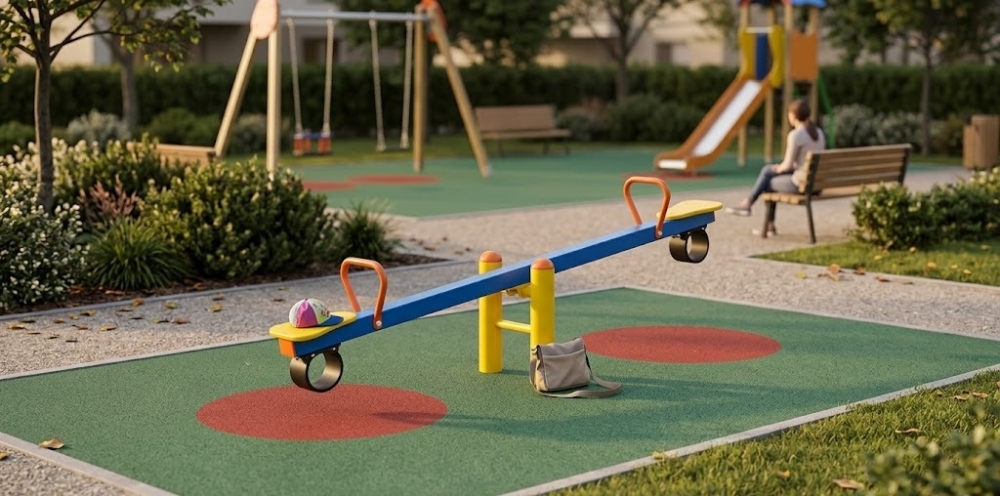
The contact tools These exercises require the dog to climb a structure, cross it, and reach specific end areas. The walkway features a raised horizontal section, the palisade introduces a more pronounced ascent and descent, while the seesaw changes inclination as it passes. These exercises work on balance, gait control, and the ability to negotiate surfaces other than dirt.
The surface must be stable and offer adequate grip, even in damp conditions. During the first few sessions, it's helpful to reduce the height and guide the dog without accelerating. The seesaw requires special caution because it combines movement, noise, and sudden changes in support. The contact areas must be clearly identifiable, and the tool should have no edges, cracks, or protruding elements that could interfere with the passage.
Dimensions, materials and stability of obstacles
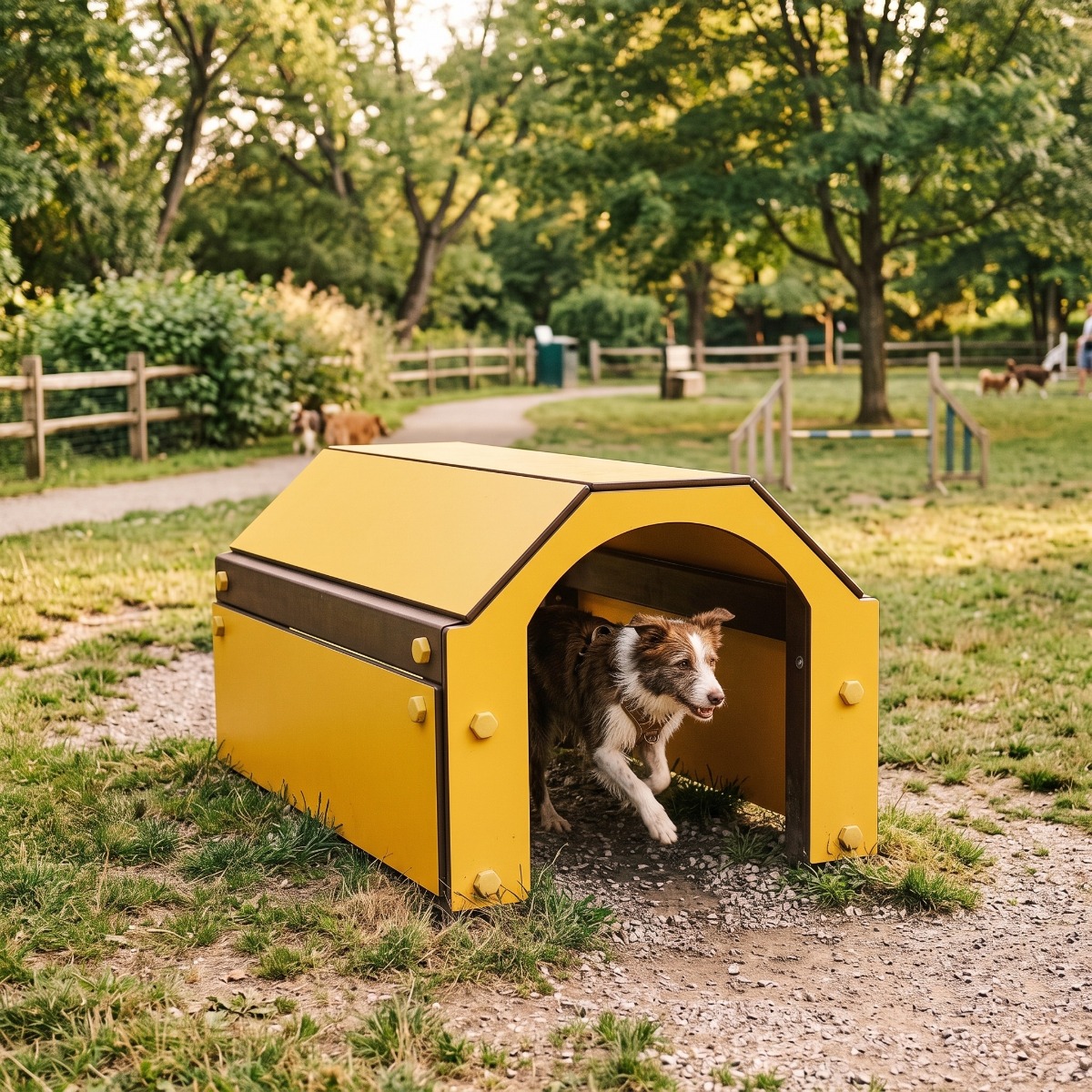 The dimensions They must be compatible with the dogs that will use the course. Equipment that is too narrow or too tall limits usability, while an oversized model can take up space without offering a tangible advantage. In courses frequented by dogs of different sizes, adjustable adjustments and configurations help to use the same obstacle in multiple sessions. Any modifications must be easy and safe to make.
Materials affect durability and maintenance. Treated wood, metal, plastics, and technical fabrics respond differently to sun, rain, and continuous use. Outdoor elements must withstand the elements and be easy to clean. Stability remains a crucial factor: tunnels, jumps, and slaloms must not move unpredictably when the dog comes into contact with the structure.
How to increase difficulty without forcing the dog
The progression should begin with simple exercises, with low obstacles, wide distances, and easily identifiable paths. Only when the dog confidently approaches the object should the length, height, or complexity of the sequence be increased. Repeated hesitation may indicate that the transition was introduced too quickly or that the structure is not stable or comprehensible.
Each session should be adapted to the dog's age, physical condition, and ability. Puppies, seniors, or dogs with joint problems require particularly careful management. This program should not replace the assessment of a competent trainer, instructor, or professional when introducing complex equipment. Gradual training makes the experience more positive and allows skills to be developed without forcing the exercise.
Equipment for professional fields
Professional fields require products designed for frequent use and for dogs with different characteristics. Structures, fasteners, and adjustments must withstand repeated sessions, outdoor exposure, and daily handling. It's helpful to choose coordinated lines that allow for expansion over time. For the handler, the availability of spare parts and ease of maintenance can be just as important as the initial price.
Mistakes to avoid when choosing the route
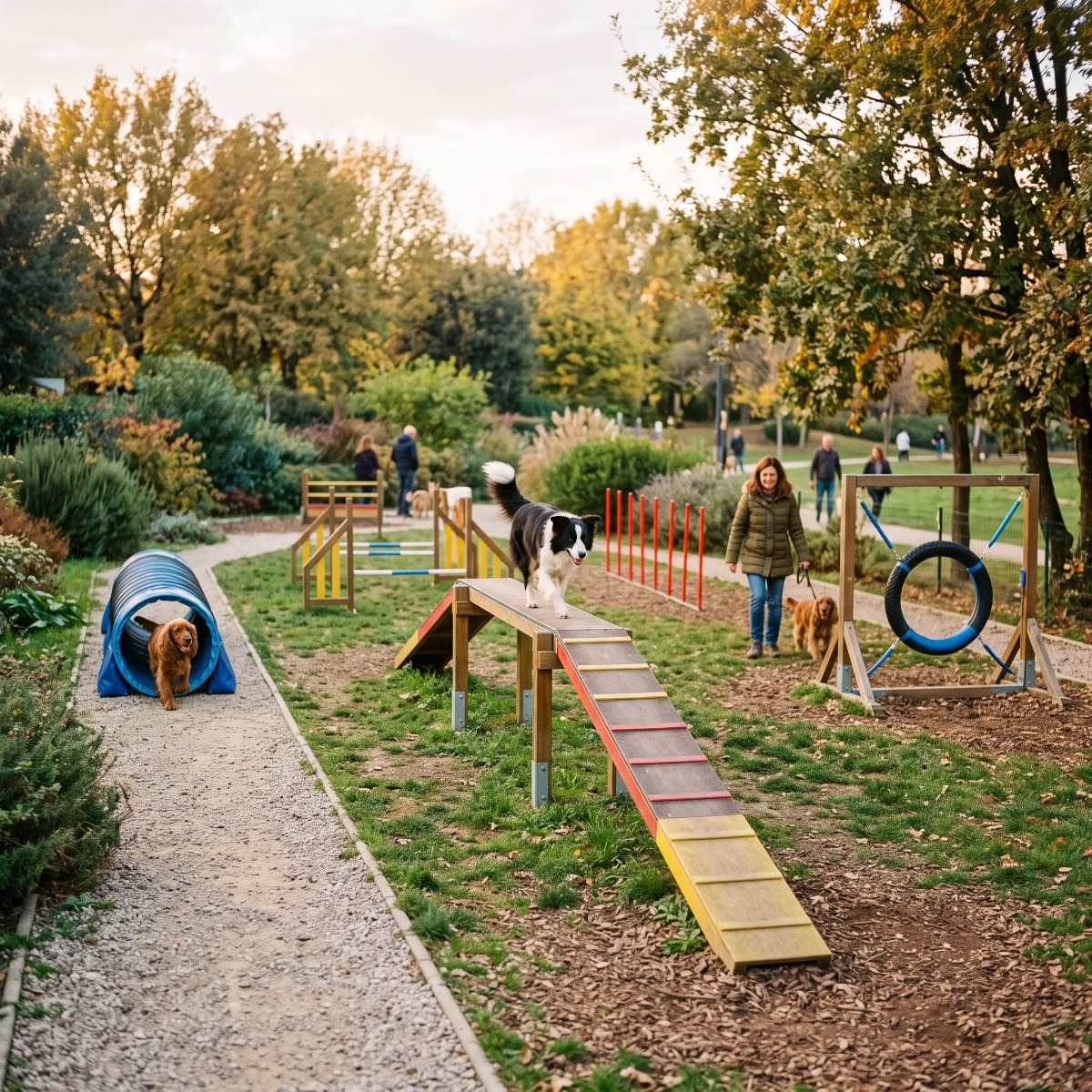 One of the most common mistakes is purchasing too many obstacles of the same type. A sequence consisting almost exclusively of jumps may seem complete, but it develops a limited set of skills and increases repetition. An effective program should include at least a combination of steps, changes of direction, precision, and balance control. This allows for variety in the exercises without overloading the same movements.
Another mistake is to favor complex equipment without considering the space and ability of the users. Walkways, seesaws, and fences require clear areas, stable ground, and competent supervision. Fixing and maintenance are also sometimes overlooked. Before purchasing, it's therefore helpful to consider the area, number of dogs, frequency of use, and the possibility of leaving the obstacles permanently installed.
Professional supplies for dog training camps and dog-dedicated areas
Holity, specialist in professional supplies for institutions, sports facilities and spaces dedicated to animals, proposes equipment useful for organizing dog training courses and activity areas. The availability of tunnels, jumps, slaloms and contact equipment It allows you to create configurations that are consistent with space, dog levels, and frequency of use. This approach helps managers and purchasing managers avoid fragmented or redundant selections.
Holity represents a point of reference for professional equipment intended for dog areas and collective contextsThe choice of obstacles should be based on a thoughtful progression and the quality of the structures, not the quantity of elements installed. A balanced course alternates different exercises, maintains adequate distances, and allows for gradual adjustments in difficulty. This makes the area more functional, varied, and suitable for continuous use.
 English
  Italian
 French
 German
 Spanish