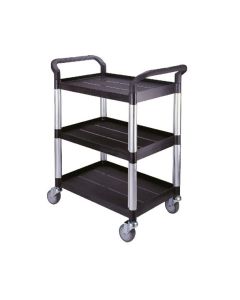
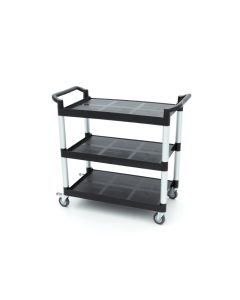
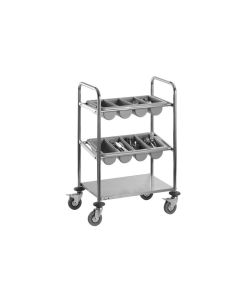
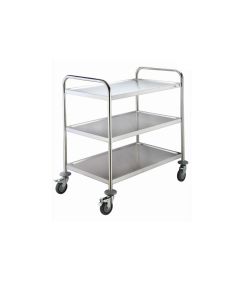
Professional service trolleys facilitate the transport of dishes, food, linen and operating materials. The choice must start from the place where they will be used. Dimensions, shelves and wheels affect daily work. A suitable model reduces unnecessary movements and handling.
A restaurant, a canteen and a hotel do not necessarily require the same configuration. The routes, the load and the frequency of movements vary. Even the image of the trolley can take on a different weight. For this reason, the technical data sheet must be read in relation to the actual use.
The intended use comes before the technical characteristics
The first step is to define what will be transported and between which environments. Plates and glasses require different management than containers, linen or service products. The time in which the trolley is used also matters, because Handling in the kitchen presents different needs than presentation to the customer. The intended use therefore allows you to select only the characteristics that are truly necessary.
It is useful to observe the complete route, from the loading area to the delivery point. Doors, corridors, elevators and changes in flooring can limit the choice more than the nominal capacity. The number of operators involved also affects the configuration. A professional service trolley must integrate into the flow of activity without creating obstacles or requiring continuous corrections during use.
Restaurants, hotels and canteens require different configurations
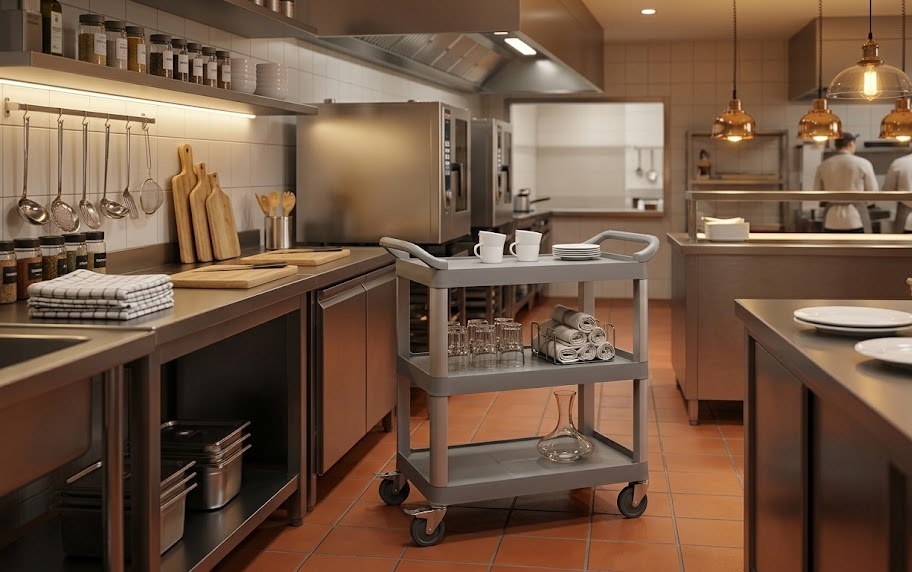
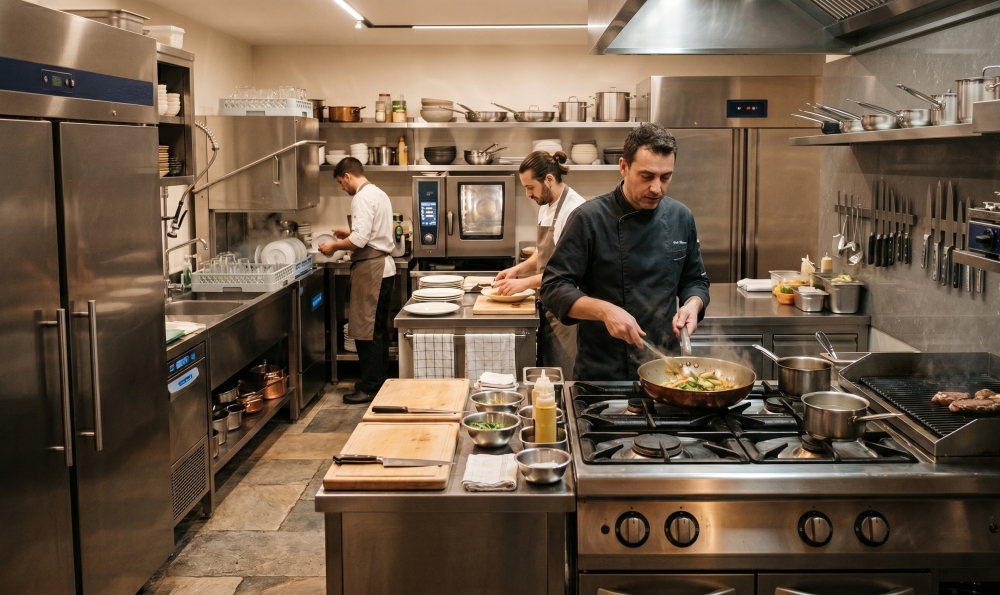
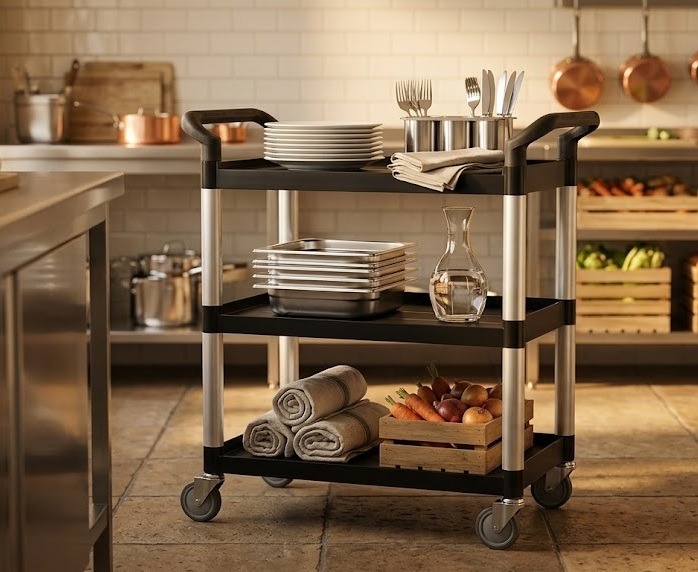 In the restaurant, the trolley can be used to transport dishes, present dishes or support clearing operations. In the dining room, silence, finishes and ease of movement between tables are important. In the kitchen, however, load capacity, resistance and ease of cleaning become central. The same model is not always suitable for both areas, even when the dimensions seem compatible.
In hotels, the trolley can pass through corridors and elevators, while in canteens it must support higher volumes and repeated cycles. Holity, specialist in professional equipment for catering, hospitality and collective structures , offers trolleys intended for different operating contexts. The selection should consider the number of daily services, the distance travelled and the average quantity transported in each trip.
The material influences weight, resistance and maintenance
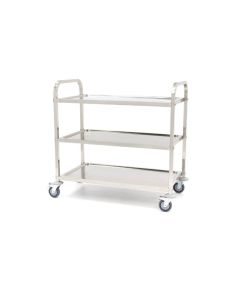
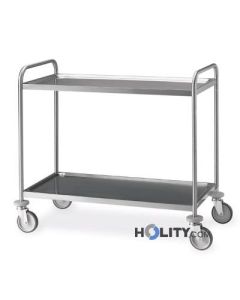
Stainless steel is often chosen in professional kitchens and canteens for its resistance and its surface suitable for frequent cleaning operations. However, the quality of the trolley does not depend only on the declared material. Thickness, structure, joints, and shelf configuration all affect shelf behavior during use. Overall weight must also be considered, especially when frequent movements are required.
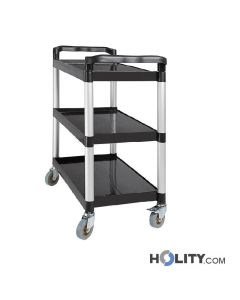
Plastic trolleys can offer lightness and quieter handling, while wood is used primarily in environments where presentation is important. Each material has advantages and limitations that must be weighed against service life. Humidity, cleaning frequency, and the possibility of impacts affect the expected lifespan. The choice must therefore be based on the environment, not on an isolated aesthetic preference.
Shelves and load capacity must be evaluated together.
A greater number of shelves allows you to separate the material and increase the available surface area. However, this does not mean that the trolley can automatically support a higher load. The declared load capacity must be verified in the product documentation, distinguishing, where possible, the overall value from that referring to the individual level. Weight distribution also affects stability during movement.
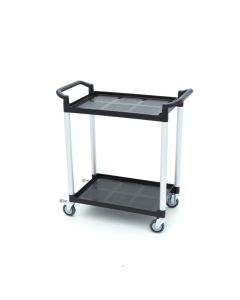
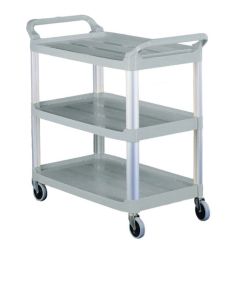
The distance between the shelves must allow objects to be inserted and removed without awkward movements. Trays, containers, and tall dishes may require more space than glasses or small accessories. A three-tier cart may be very capacious, but impractical when the bottom shelf is difficult to reach. The comparison must therefore simultaneously consider capacity, accessibility, and load capacity .
Dimensions and bulk affect everyday practicality
Width and depth must be compatible with the narrowest passages in the route. Measuring only the space in which the cart will be stored is not sufficient. Doors, curves, elevators, and the distance between tables or equipment must be checked. Handles and external accessories can also increase the bulk compared to the surface area of the shelves.
Height affects both operator capacity and comfort. A model that is too low may require frequent bending, while a very tall one may limit visibility during movement. The position of the shelves must be evaluated considering the most recurring operations. Holity, a reference point for professional service trolleys and equipment , allows you to compare measurements and configurations through the specifications of the individual models.
Wheels determine maneuverability and operating comfort
Wheels affect the way the trolley negotiates curves, thresholds and uneven surfaces. Diameter, material and rotation system must be consistent with the floor and the weight carried. Small wheels may be suitable for uniform surfaces, while more complex routes may require different configurations. The presence of brakes facilitates positioning during loading, unloading and service.
In hotels and restaurants, noise also takes on an operational value. Vibrations and sounds produced during passage can disturb customers and guests. In kitchens and canteens, the ability to maneuver the trolley in spaces shared with other operators remains central. An adequate wheel does not eliminate the need to correctly distribute the load, but makes each movement more controllable.
Fixed and folding trolleys meet different needs
Fixed models offer a structure that is always ready for use and are suitable for activities in which the trolley is used continuously. They do not require opening or closing operations and can be placed in a dedicated storage area. However, the footprint remains unchanged even when the equipment is not in use. This aspect must be considered in premises with small warehouses. 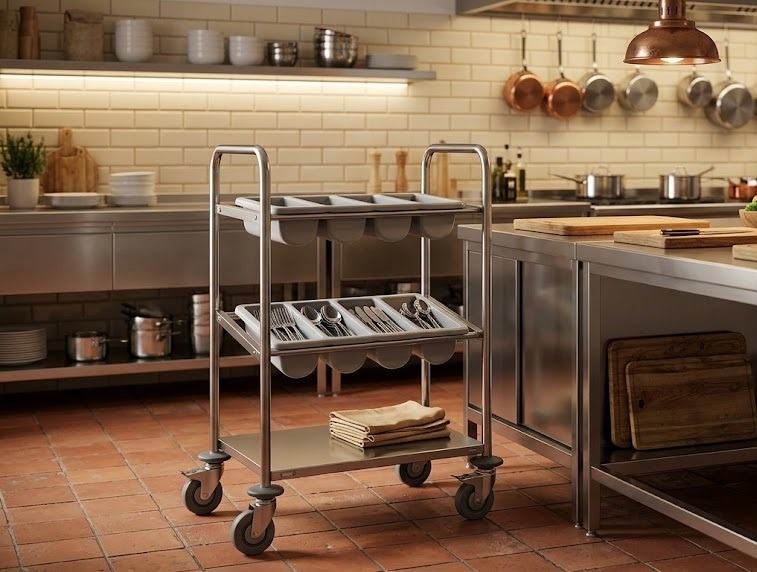
Folding trolleys are interesting for catering, events and activities that need to frequently transport or store equipment. The closing mechanism must be simple, stable and suitable for the expected load capacity. It is also necessary to check the actual size of the closed product. Foldability is an advantage only when it does not compromise the practicality required during service.
Hygiene and maintenance preserve the efficiency of the trolley
Trolleys used with food, dishes or linen must be included in the business's cleaning procedures. Shelves, handles, edges and wheels can accumulate residues during use. The frequency and the products used must comply with the manufacturer's instructions. Easy-to-clean materials simplify the operation, but are not a substitute for regular checks.
Maintenance also includes checking wheels, brakes, joints and fastening systems. Abnormal noises, instability, or difficulty rotating may indicate worn components. Intervening before failure reduces the risk of interruptions during service. The cart should also be stored in a suitable place, avoiding permanent loads exceeding those expected.
The technical data sheet reduces purchasing errors
Photographs help to understand the appearance of the product, but are not sufficient to evaluate its suitability. The technical data sheet must show measurements, material, number of shelves, and wheel characteristics. When available, the declared load capacity must also be checked. Included equipment must be distinguished from optional accessories or shown for illustrative purposes only.
Before ordering, it is useful to compare the dimensions of the cart with the objects it will contain. Trays, boxes, and containers may have standard sizes that do not coincide with the usable surface area of the shelf. Delivery must also be planned, verifying any assembly and access to the premises. A careful reading of the documentation reduces returns, replacements and subsequent adaptations.
A coordinated choice improves the organisation of the service
The trolley produces a concrete advantage when it reduces the number of movements and makes handling more orderly. The largest or most accessorised model is not necessarily the most functional. The choice must connect load, routes, frequency and people responsible for its use. In this way the equipment becomes part of the process and not a simple mobile support.
Holity, leader in the selection of professional equipment for restaurants, hotels, canteens and communities , offers solutions with materials and configurations designed for different needs. The catalogue allows you to evaluate stainless steel trolleys, multi-level models and structures dedicated to service. A comparison based on technical specifications helps identify the product that is best suited to the task. The quality of the choice emerges every day, in the ease with which the trolley accompanies the work.
 English
  Italian
 French
 German
 Spanish