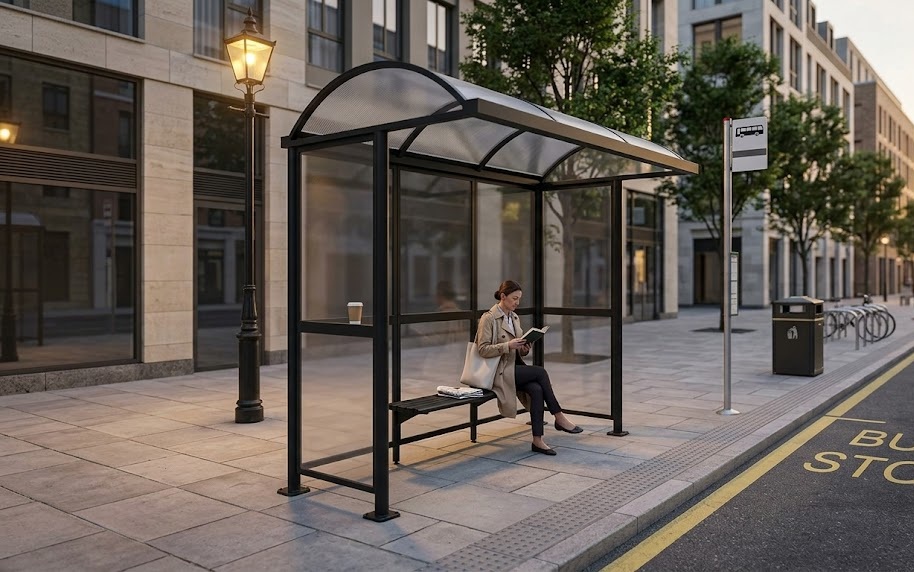
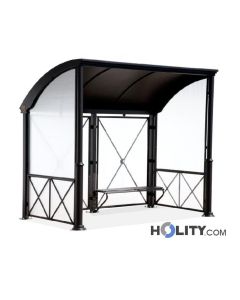
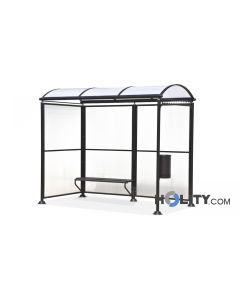
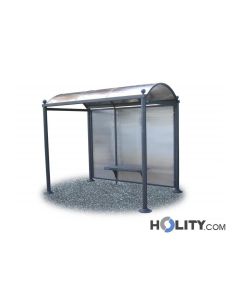
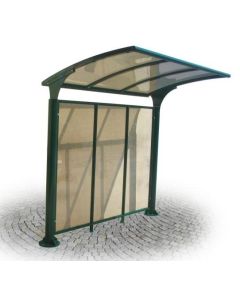
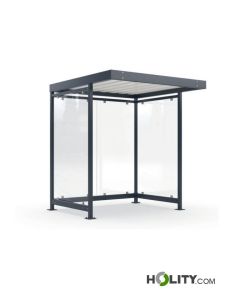
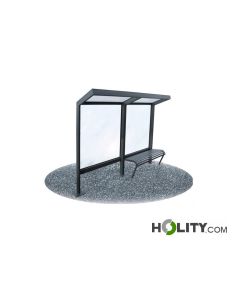
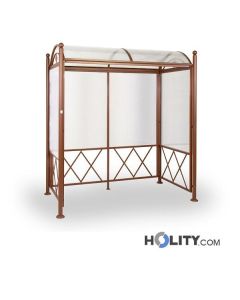
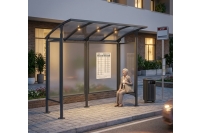
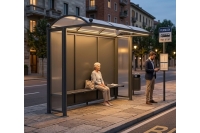
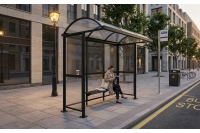
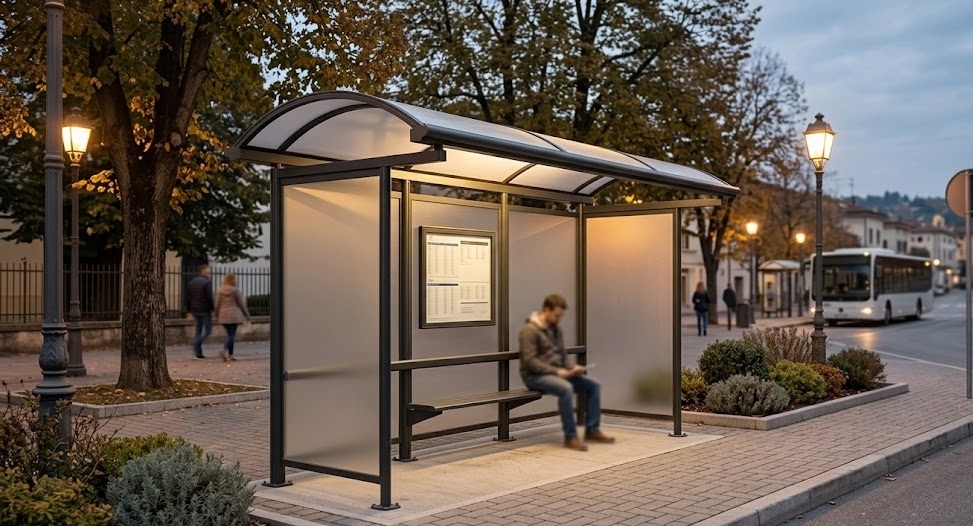
Bus shelters are fundamental elements of street furniture because they make waiting for public transport more comfortable and safe. A well-designed shelter protects passengers from rain, wind and sun, improves the recognisability of the stop and helps to better organise the spaces intended for urban mobility.
The choice of a bus stop shelter must take into account the number of users, the climatic conditions, the available space and the architectural context in which it will be installed.
Why install a bus shelter
A bus stop equipped with a shelter offers citizens a more protected and organised waiting area. The covering limits exposure to rain and sun, while any side walls help reduce the impact of the wind.
In addition to comfort, the shelter helps to clearly identify the stopping point and can integrate seats, information panels and spaces dedicated to public transport timetables.
A well-designed bus shelter transforms waiting time into a more protected, orderly and comfortable experience for all passengers.
How to choose a bus stop shelter
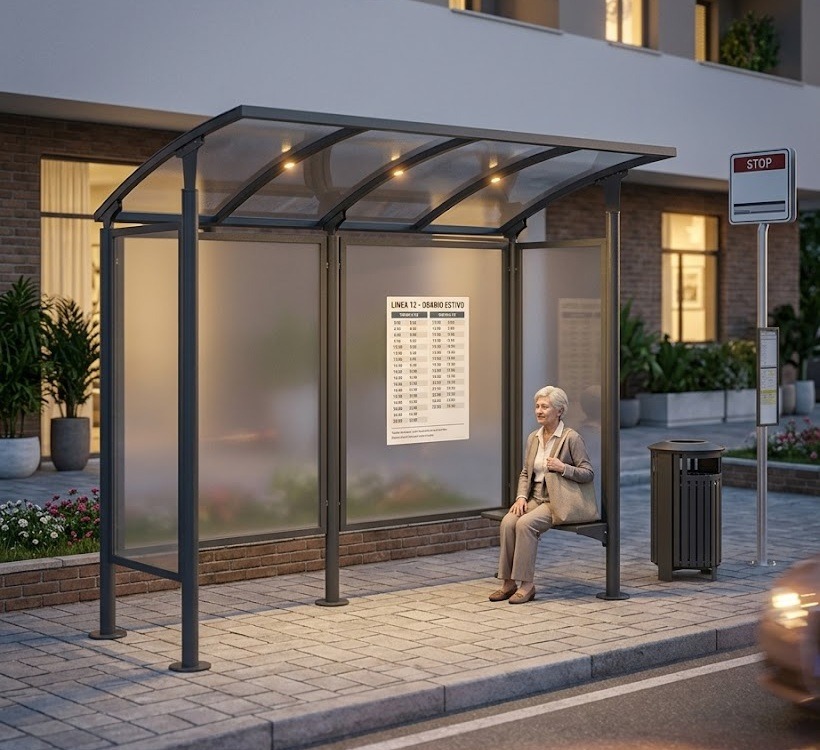 Before installation, it is necessary to evaluate the size of the stop and the average number of users. In highly frequented areas, it is preferable to choose larger structures, while in small towns or along less-used routes, compact shelters may be sufficient.
It is also important to consider the position in relation to the roadway, the presence of sidewalks, pedestrian access and the space required to allow easy circulation.
Bus shelter materials
Bus shelters can be made of steel, aluminum, glass, polycarbonate, or wood. The materials must guarantee resistance to atmospheric agents, stability, and easy maintenance.
Steel or aluminum structures are particularly suitable for urban environments thanks to their robustness, while glass and polycarbonate allow the creation of transparent walls that maintain good visibility of the road.
Wooden bus shelters
Bus shelters Wooden bus shelters are particularly suitable for parks, small towns, rural areas, and contexts where a more natural insertion into the landscape is desired.
Wood must be appropriately treated to resist humidity, rain, and temperature changes. In many cases, it is combined with metal structures to increase stability and durability over time.
Roof and side walls
The roof is the main element of the shelter and must offer adequate protection without reducing visibility. A sufficient depth helps protect passengers from the rain, while the side walls can limit exposure to the wind.
In particularly exposed areas, it is useful to provide partial closure on several sides, while still leaving the route to public transport free and easily accessible.
Seating and comfort while waiting
Integrating a bench or seat increases comfort, especially for the elderly, users with mobility difficulties or passengers who have to wait longer.
Seats must be sturdy, easy to clean and positioned without obstructing passage. In heavily used stops, it is possible to alternate seating and open spaces to maintain good capacity. reception area.
Accessibility of the bus stop
A shelter must be placed in an easily accessible space. The pedestrian path must remain clear and allow the use of the stop even by people with reduced mobility.
It is important to avoid protruding elements or obstructions that could create obstacles and to provide adequate space for waiting without interfering with boarding and alighting from the vehicle. 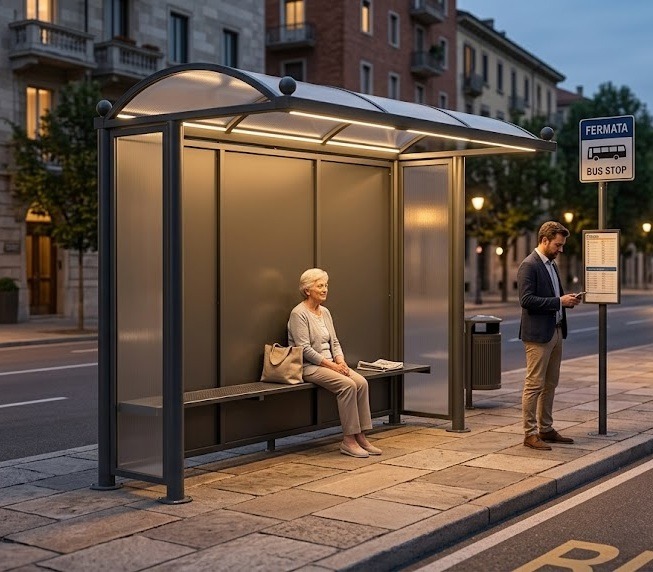
Visibility and safety
The shelter must not prevent passengers from seeing the arrival of the bus nor limit the visibility of motorists. For this reason, transparent walls or laterally open structures are often used.
Good lighting can also improve the perception of safety during the evening hours and make information, timetables and signs at the stop more legible.
Bus shelter maintenance
Periodic maintenance helps preserve the functionality and aesthetics of the structure. It is necessary to check the roofing, panels, fixings, seats and surfaces, intervening quickly in case of damage or wear.
Glass and polycarbonate require regular cleaning, while metal and wooden structures must be checked to prevent corrosion or deterioration.
Mistakes to avoid when choosing a bus shelter
Among the most common mistakes are choosing a structure that is too small, installing it in a position that obstructs passage and using materials that are not suitable for the climatic conditions.
It is also important not to neglect visibility, accessibility, maintenance and the expected number of users, because an effective shelter must be designed according to the real needs of the stop.
Bus shelters for more comfortable stops
Bus shelters improve the quality of public transport spaces by offering shelter, comfort, and greater organization. Choosing the right size, materials, roofing, and seating allows for more functional and welcoming stops.
 English
  Italian
 French
 German
 Spanish