mon-fri 9-13 / 14.30-18.30
Welcome to the section dedicated to Holity.co.uk buying guides. Choosing the right professional equipment is a fundamental investment for the success, efficiency, and safety of your business.
In this space, our experts share technical insights and practical advice to help you navigate the vast Holity catalogue. In our guides, you will find clear information on:
From Urban Furniture to Furniture for Public Authorities and Communities, from equipment for the HoReCa sector to solutions for the Medical-Hospital and Industrial fields: we provide you with all the tools to make an informed choice and purchase professional quality that lasts over time.

Dog waste management is an increasingly important issue for municipalities, condominium administrators, and public facilities that wish to maintain high standards of cleanliness and urban decorum. The presence of dedicated containers not only helps improve the hygiene of shared spaces, but also encourages more responsible behavior on the part of pet owners.
In recent years, the evolution of street furniture has led to the development of increasingly functional, durable, and integrated solutions within the urban context. Modern dog waste containers can include bag dispensers, odor-reducing systems, vandal-proof structures, and materials designed to withstand continuous exposure to atmospheric agents. Choosing the right model requires a careful evaluation of the characteristics of the installation area, pedestrian traffic, and operational needs related to maintenance.
Within the workplace, the meeting room represents a strategic space for discussion, planning and communication meeting room chairs. Chairs play a fundamental role in this context, as they directly influence comfort, posture, and the overall quality of the meeting experience. The choice of seating cannot be random, but must take into account the type of use, the duration of the meetings, and the configuration of the space.
Every meeting has different needs: short operational meetings, executive meetings, conference rooms, or training sessions require specific solutions. For this reason, it's important to understand the available types and the features that distinguish the various models. Holity.co.uk, Leading e-commerce provider of conference room chairs, offers a careful selection that allows you to improve the organization of spaces and make the activities carried out in the meeting room more effective.
The choice of industrial storage systems It's not just about purchasing shelving or metal structures. For a logistics manager, it means defining how goods enter, are moved, remain available, and leave the warehouse without causing delays. An unsuitable solution can take up valuable space, complicate picking, and generate unnecessary operational steps.
In a logistics warehouse Every square meter has an operational value. For this reason, the choice must begin with a concrete assessment of goods, volumes, weights, rotation, and handling methods. A warehouse with standard pallets requires different criteria than a space intended for long materials, industrial components, spare parts, or bulky products.
Identifying the best storage system therefore means comparing the various available solutions based on their intended function. Pallet racking, cantilever structures, modular shelving, and shelf systems meet different needs and must be chosen based on the actual warehouse organization.
The equipment for chemical laboratories includes the set of equipment, instruments and technical furniture needed to carry out analysis, research, quality control and teaching activities in a safe and organised way. Companies, schools, universities, industrial laboratories and research centres have very different needs, but share a common goal: choosing reliable, durable products suitable for everyday use.
Purchasing the right laboratory equipment does not simply mean acquiring technical instruments, but designing a functional, orderly work environment that meets operational requirements. Chemical fume hoods, safety cabinets, balances, laboratory benches, containers and accessories must be chosen according to the type of activity carried out, frequency of use, available space and required level of safety.
For this reason, before making a purchase, it is important to carefully assess which instruments are truly essential and which features they should have according to the context of use. The right choice helps improve laboratory efficiency, reduce risks and optimise investments over time.
The setting up a conference room It requires precise planning of furnishings, technology, and spaces. An improvised layout can reduce visibility, make it difficult to hear, and hinder attendees' movement. Conversely, a well-organized room improves communication and makes every event more professional.
Whether it's a conference room, meeting room, or boardroom, the design must take into account the number of people, the type of event, the duration of the meetings, and the necessary equipment.
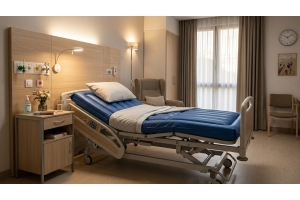
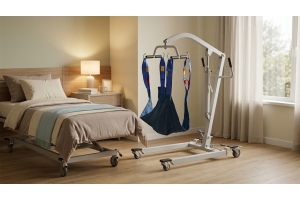
Inside healthcare facilities, thehospital furniture It represents a key element in ensuring comfort, safety, and functionality during the patient's stay. The configuration of hospital spaces is not just about aesthetics; it directly impacts the quality of care and the operational efficiency of healthcare professionals. Each component must be designed to meet clinical, organizational, and health and hygiene needs.
A correct choice of furnishings allows for improved management of daily activities, easier assistance and reduced critical issues related to space. hospital furnishings for hospitalization They must therefore be selected taking into account both the needs of the patient and those of the operators, ensuring a balance between functionality, safety and durability over time.
Inside hotel rooms, every element contributes to defining the quality of the experience perceived by the guest. Among the increasingly widespread amenities, the electric kettles for hotels represent a simple but significant solution, capable of improving the level of comfort and autonomy during the stay.
It is not a secondary accessory, but an element that responds to concrete needs, such as the possibility of preparing a hot drink at any time of the day. In a context in which attention to detail affects the overall evaluation of the structure, the kettle takes on a functional and strategic role.
Within industrial and production contexts, warehouse management represents one of the most critical elements for ensuring operational continuity and process control. Metal warehouse containers fit into this scenario as fundamental tools for organizing materials, optimizing available space and improving the management of logistics flows. Their diffusion is linked to the need for robust, reliable solutions that can be adapted to complex production contexts.
Over time, the role of containers has evolved from a simple storage support to an active component of internal logistics. Today they help make departments more orderly, facilitate handling and reduce the margins of error in daily operations. A correct choice does not only concern the product itself, but the way in which it integrates into company processes, influencing efficiency, safety and productivity.
Within a healthcare space, each element contributes to defining the operational efficiency and quality of the service offered. The term technical furniture for outpatient clinics refers to the set of furniture and solutions designed to support clinical activities, organize instruments and ensure adequate conditions for both healthcare personnel and patients.
The choice of furniture is not just about aesthetics, but directly affects functionality, hygiene and the perception of the environment. In medical practices and clinics, a coherent organization of spaces is a fundamental element for working in an orderly manner and conveying professionalism.
In the context of thestreet furniture, the choice of materials for benches and street furniture It represents a crucial variable both in terms of performance and integration into public spaces. Benches are not simply functional elements, but structural components that contribute to the perceived quality of squares, parks, and community areas. The choice of material directly impacts durability, maintenance, and aesthetic appeal over time.
 English
 Italian
 French
 German
 Spanish