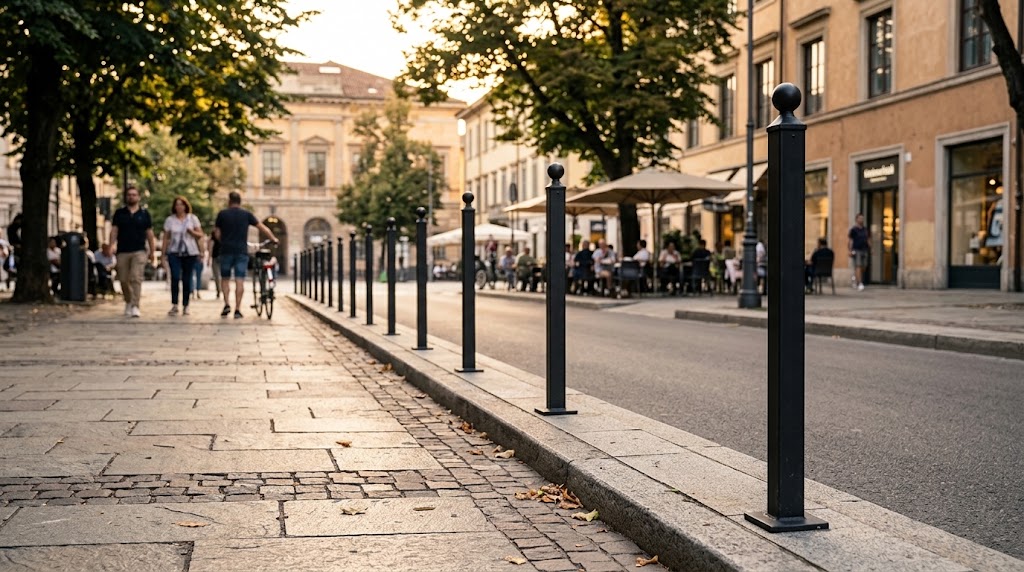
Pavement bollards make the separation between pedestrian paths and spaces intended for vehicles more evident, but their choice requires an evaluation of the entire urban context. Material, dimensions, fixing system and distance between the elements must be coordinated with the function of the area. The bollard should not, in fact, become an obstacle for those using the path. The design must reconcile the effectiveness of the delimitation, usability and integration with other furnishings.
The separation between pedestrians and vehicles must start from the function of the space
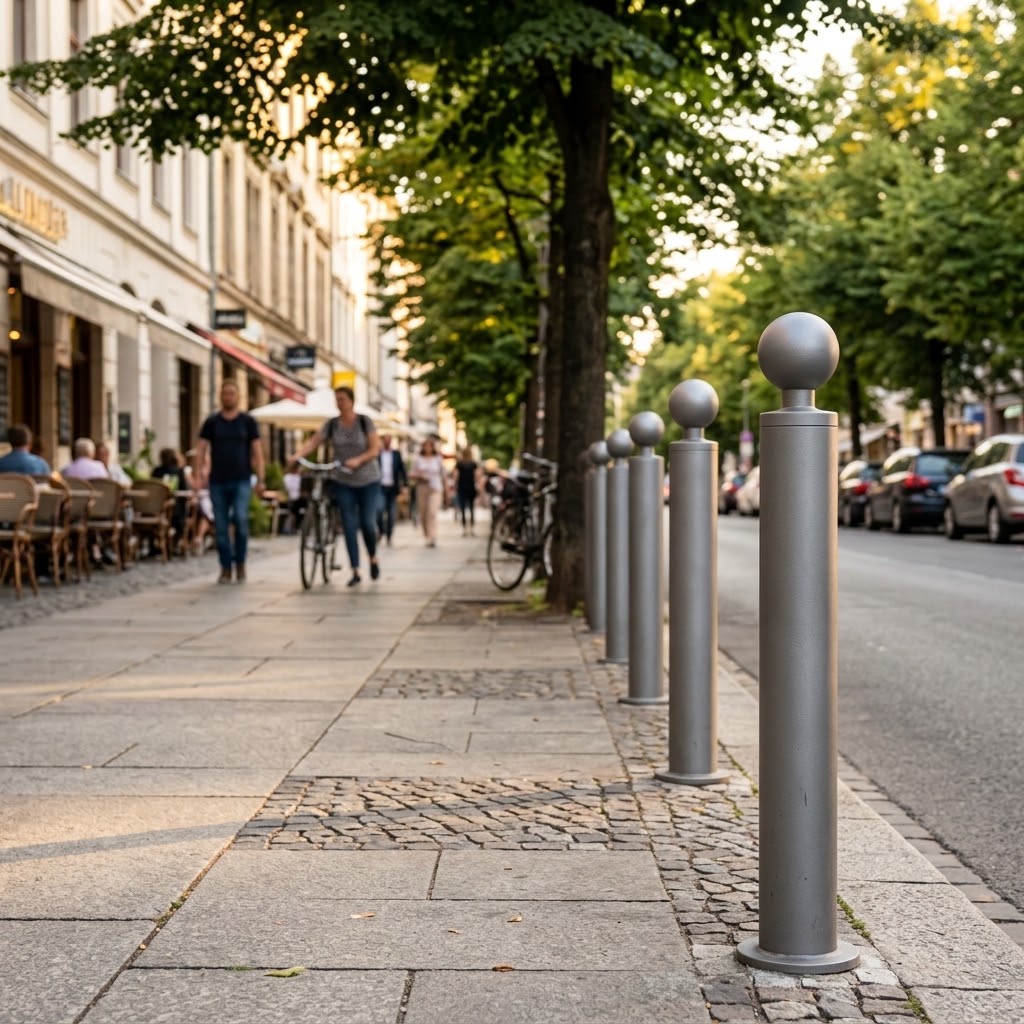 A pavement along a highly frequented road has different needs compared to a predominantly pedestrian square or an access located within a limited traffic zone. Before choosing the model it is therefore necessary to establish what behaviour you want to prevent or discourage. In some contexts, the priority consists in preventing the parking of vehicles, while in others it is necessary to make the boundary between the carriageway and the surface intended for pedestrians clear. The specific function of the delimitation must be defined before evaluating the material, shape and finish of the deterrent .
The frequency with which authorised vehicles must pass also modifies the project. A line intended to remain permanently closed can be created with different solutions from those required in an access used periodically by service, maintenance or emergency vehicles. It is also necessary to observe the direction of pedestrian flows and understand at which points the boundary between the vehicular and pedestrian area is less intuitive. In this way the deterrents become part of the organisation of the space and not a simple succession of elements placed along the edge of the pavement.
The arrangement of the deterrents affects the usability of the pavement
The effectiveness of a delimitation does not depend only on the robustness of the single element. The way in which bollards are distributed along the path also determines their ability to prevent unwanted vehicle access. An excessive distance can make the barrier ineffective, while an overly dense arrangement can compromise the comfort of pedestrian passage. Spacing and position must therefore be defined within the project and not chosen through a standard distance applied indiscriminately to every context. .
The width actually available takes on particular importance on narrower sidewalks, near crossings and at points where poles, bins, signs, trees or other furnishings are already present. Each new element in fact modifies the actually usable section of the path. The design should also consider the opening of doors, any ramps, accesses to buildings and points where pedestrian flows tend to concentrate. A well-organized delimitation must be comprehensible without transforming the path into a sequence of obstacles to be avoided.
Visibility and shape are part of the safety of the path
A deterrent placed near a pedestrian path must be identifiable with sufficient ease under normal conditions of use of the space. Height, shape, contrast with the surrounding environment and any reflective elements can affect perception, especially in poorly lit areas or characterised by a strong chromatic uniformity. Even very low elements must be carefully evaluated because they may be less immediately perceptible while walking. A product that is effective in limiting vehicles must also remain legible for those walking the space .
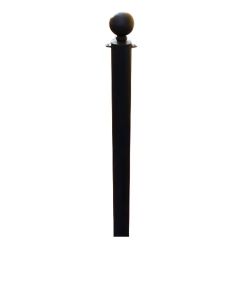
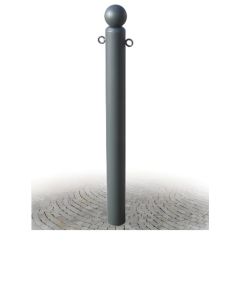
The shape must also avoid features that could create unnecessary risks. Edges, protruding elements and configurations that are not consistent with the path deserve a specific evaluation before installation. The Holity range includes cylindrical, square, spherical and decorative geometric models, so the selection can be tailored to suit your needs. be calibrated to the characteristics of the space. Holity, a specialist in professional supplies for street furniture , thus allows you to compare the aesthetic component with size, height and installation system, avoiding reducing the choice to the visual aspect alone.
Steel, cast iron and concrete respond to different needs
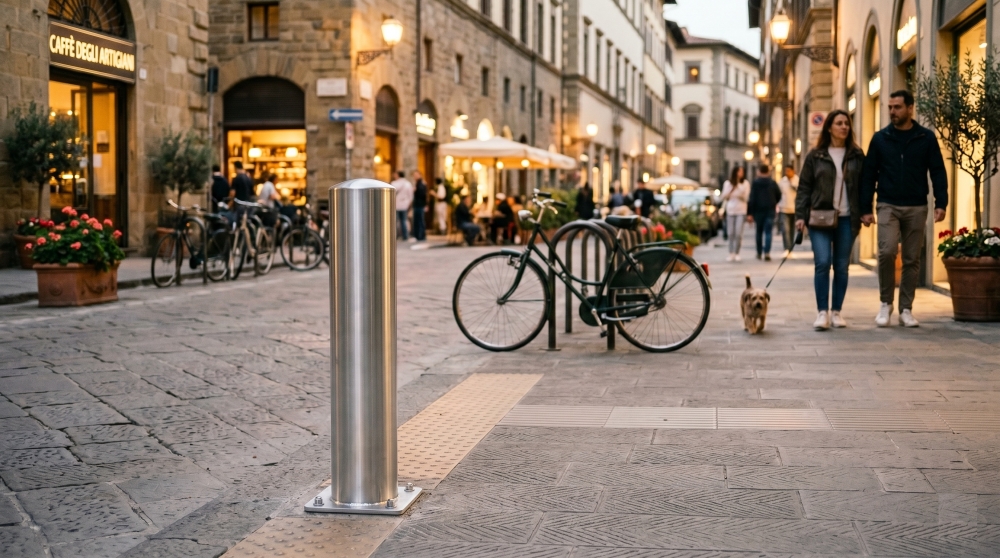
Steel allows you to create posts with relatively small sections and can be suitable when you want a visually light delimitation. Galvanizing, painting and stainless steel also allow you to obtain different finishes depending on the project. Cast iron is often chosen for contexts in which a more marked presence or a language close to traditional street furniture is sought. The material must be evaluated considering external exposure, maintenance, product dimensions and the nature of the space .
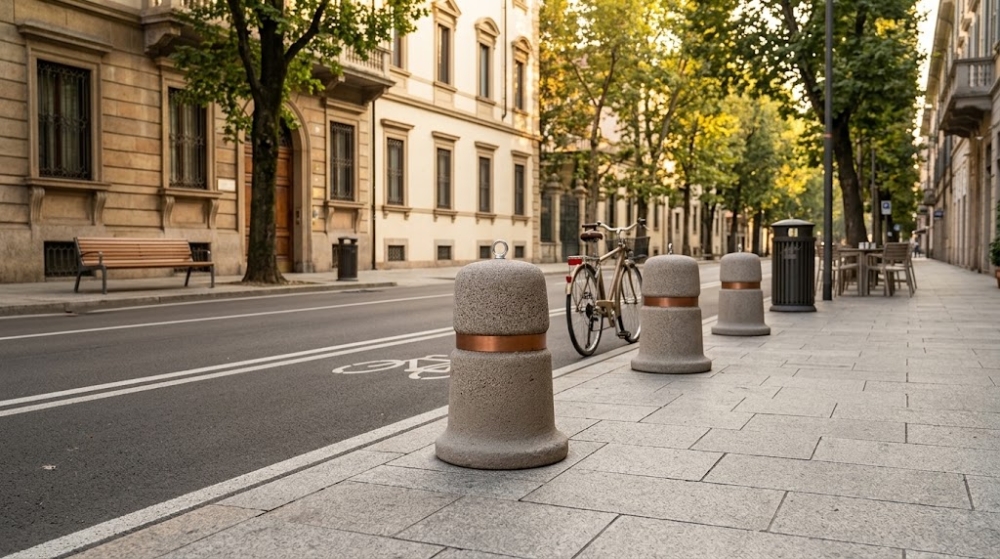
Concrete bollards, on the other hand, introduce mass and a generally greater footprint, characteristics that may be consistent with squares, car parks and areas where a significant visual separation is sought. Some models can simply be placed on the ground, while others have provisions for additional fixing. The Holity category includes professional bollards in steel, cast iron and concrete, with very different sizes and configurations. This assortment allows you to approach the project starting from the actual intended use rather than identifying an absolutely best material.
The fixing system must be consistent with the management of the area
A buried bollard responds to a logic of stable installation and can be indicated when the delimitation is intended to remain over time. The models to be anchored, on the other hand, allow you to work on prepared paving through specific anchoring points. There are also heavy free-standing elements and removable configurations designed for spaces where access must be modifiable. The fixing method is not a product detail, but a decision that influences the daily use of the area .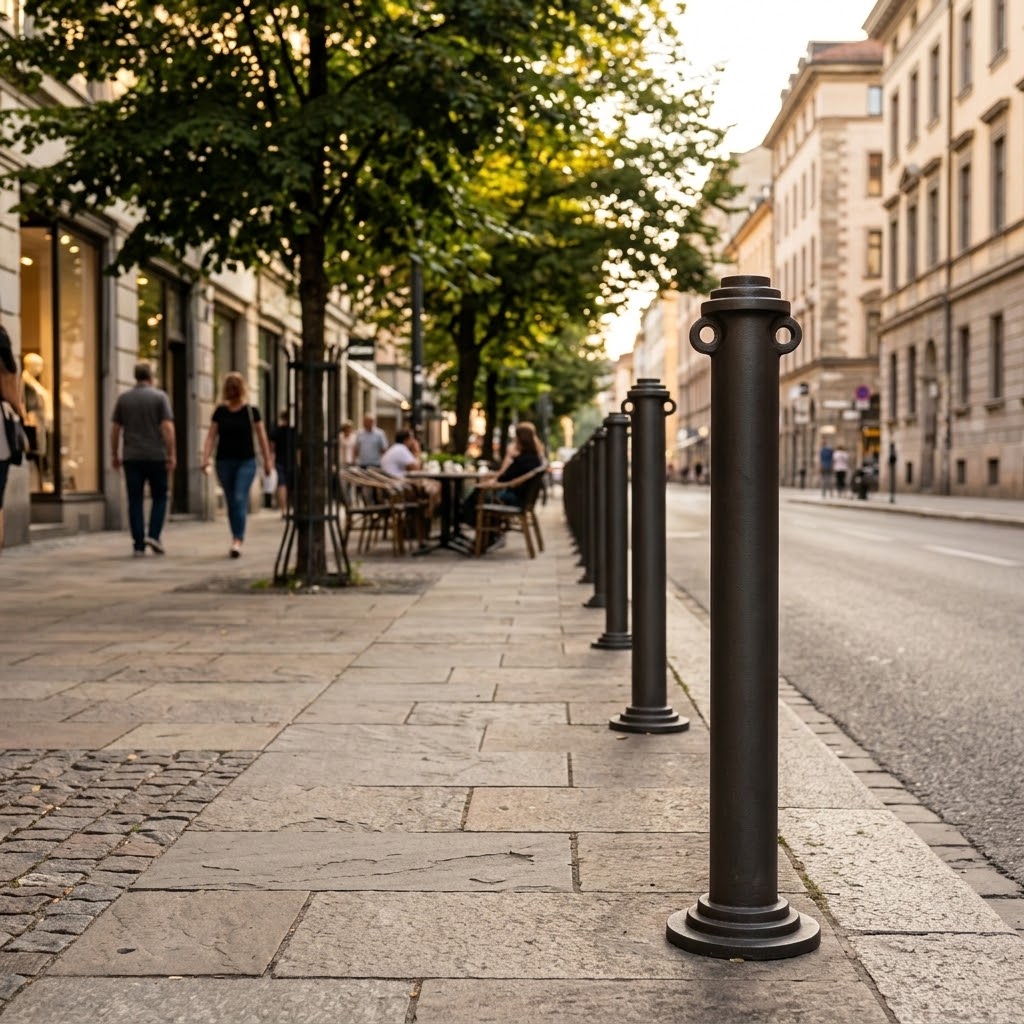
In historic centers or on pavements where invasive interventions must be limited, a solution other than underground installation can meet specific project needs, provided that its stability and suitability are verified. In markets, limited traffic zones or access points occasionally used by authorized vehicles, a removable element can instead offer greater flexibility. Holity offers bollards with different installation systems, including models to be buried, anchored, free-standing and removable . The choice must however be coordinated with the paving, underground services and installation methods. management requirements established by the authority or the owner of the area.
Accessibility and continuity of the route must remain a priority
The installation of a bollard should not unnecessarily reduce the space available for transit. In routes to which accessibility requirements apply, furnishings and other obstacles must be organised so as not to create bottlenecks incompatible with the intended use. This principle becomes particularly important at points where pavements and carriageways meet, on ramps and near crossings. Protecting the route from vehicles and preserving its continuity for pedestrians are therefore objectives that must be addressed simultaneously .
The assessment must also include people who use wheelchairs, mobility aids or who have different perceptual needs. A bollard placed in a seemingly marginal position may interfere with a useful trajectory or make access to a ramp less intuitive. For this reason, distances should not be established solely by observing the size of the vehicle you intend to block. It is necessary to consider the entire section of the route and verify that the new furniture does not introduce one problem while solving another.
The design must integrate with other elements of street furniture
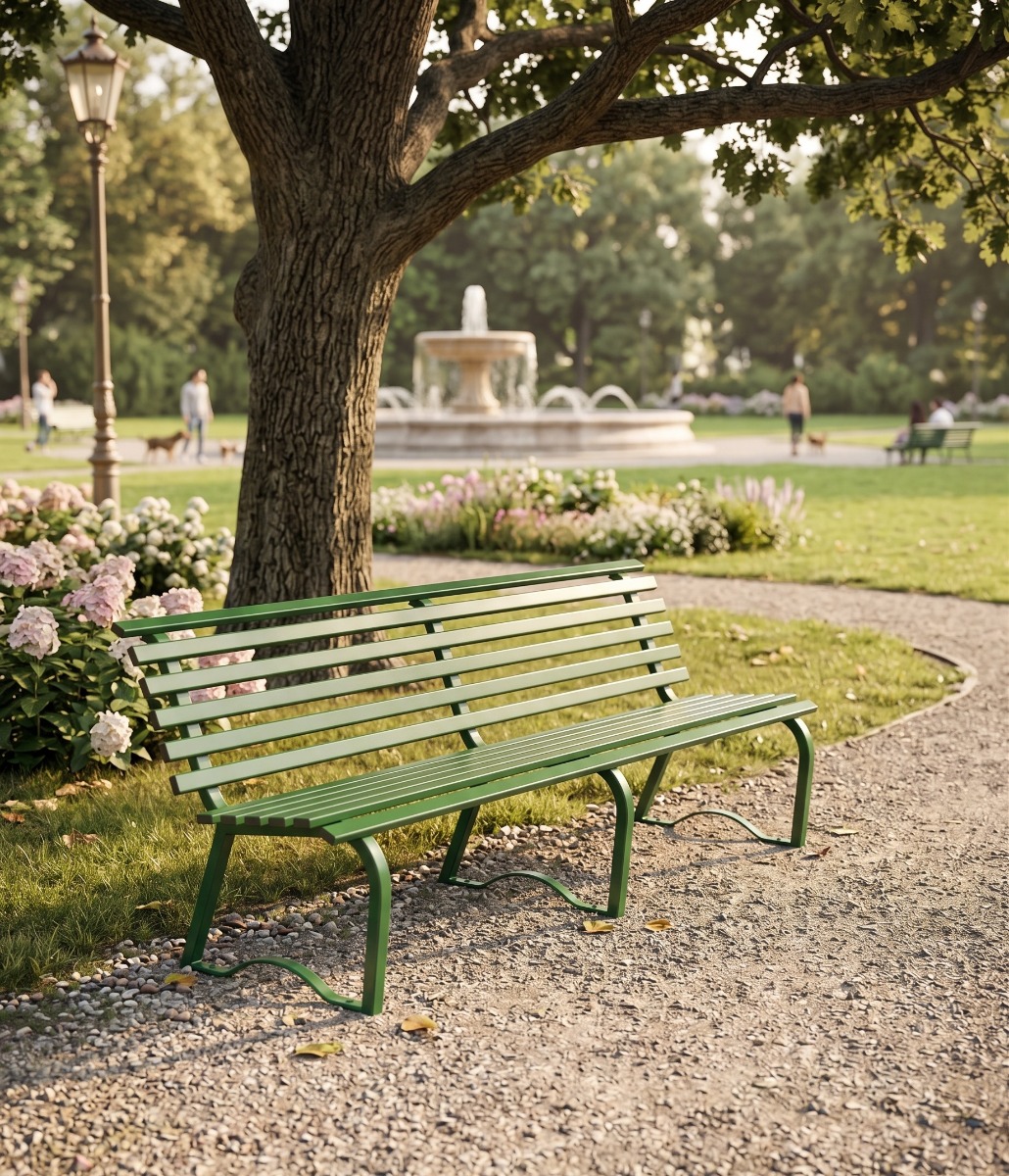
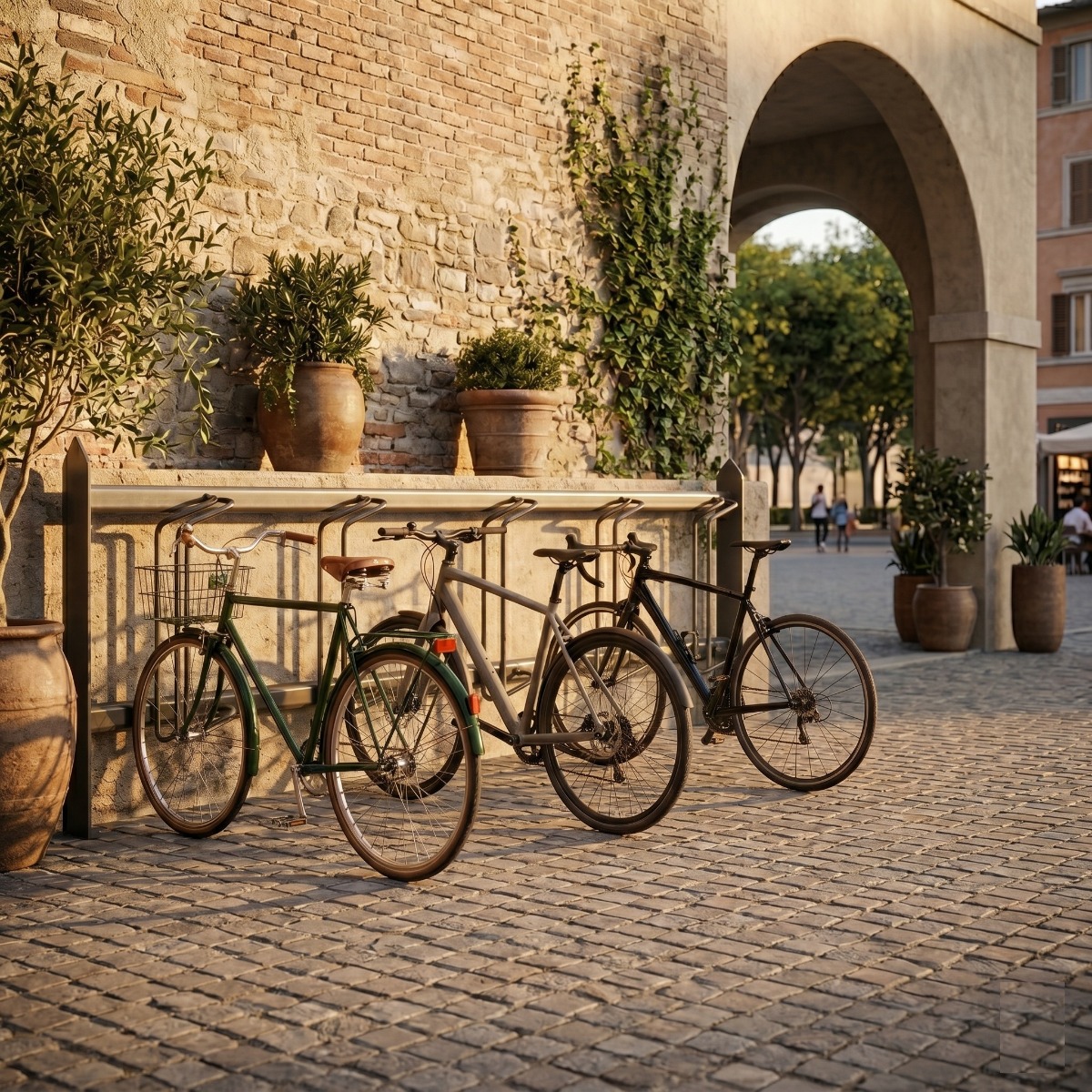
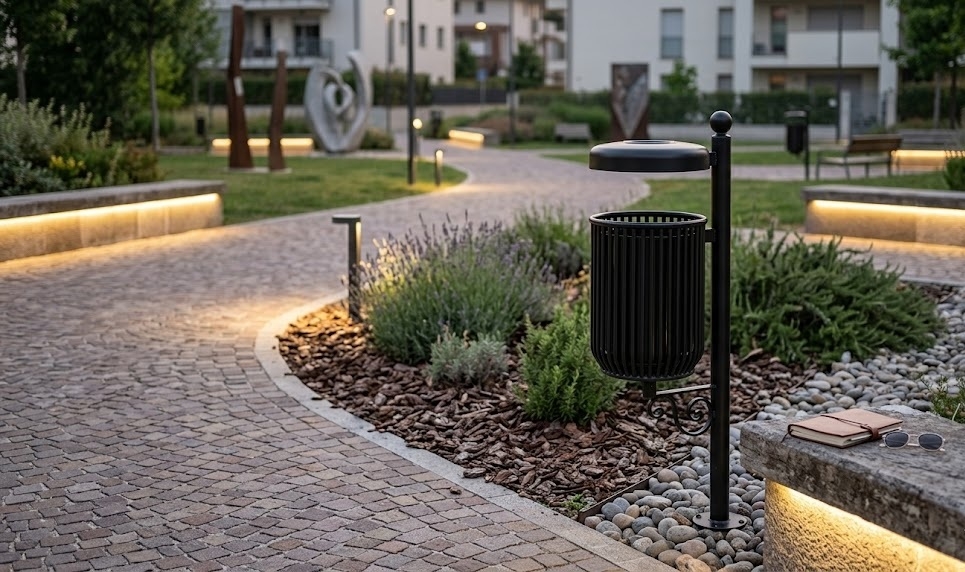
Bollards remain visible in the space for many years and contribute to the overall perception of a street or a square. Shape, color and material should therefore be coordinated with benches, bins, flower boxes, bicycle racks, lighting and paving characteristics. In historic centers, a more traditional solution may be sought, while contemporary interventions may favor linear geometries and essential finishes. Aesthetic integration becomes particularly important when the delimitation is composed of numerous elements repeated along the route .
. Consistency, however, does not mean Choose the most decorative product available. An elaborate geometry must remain compatible with safety, visibility, maintenance, and the actual space available. Repeating the same pattern can also help make the separation between driveways and pedestrian areas more legible. In large projects, it is therefore useful to consider the bollard as part of a coordinated family of furnishings and not as an isolated element chosen at the end of the project.
Installations in public spaces require specific design verification.
When bollards are used as part of road regulations, the project must be verified with respect to the applicable framework and the decisions of the road owner. The Highway Code Implementing Regulations consider parking bollards to be devices that can also be used to delimit pedestrian zones, reserved areas, green spaces, and other spaces. The same framework requires that they be visible, not create a danger to pedestrians, and constitute an effective impediment through consistent characteristics and layout. The simple commercial availability of a model does not replace the verification of its suitability for the specific public intervention .
For this reason, institutions and designers should distinguish the commercial characteristics of the product from the requirements that derive from the specific location. Local regulations, ordinances, road characteristics, pavement protection and accessibility requirements can introduce further conditions to consider. Even the possible presence of chains between multiple bollards must be evaluated with respect to the actual use of the space, avoiding solutions that could interfere with pedestrian passage. Design therefore remains the necessary step to transform a catalogue item into a delimitation correctly inserted into the context.
The final choice must coordinate product, position and use of the space
Before purchasing, it is advisable to define which access must be prevented, how much pedestrian surface must remain free, whether the delimitation will be permanent and which materials are already present in the area. Subsequently, the height, diameter or section, fixing system, finish and any accessory elements can be compared. This method avoids choosing a bollard just because it appears sturdy or because it coordinates aesthetically with the pavement. A good sidewalk bollard must be effective for vehicles without becoming invasive for those who use the space on foot .
Holity, a point of reference in professional supplies for public bodies and street furniture , offers bollards in steel, cast iron and concrete, with stable, removable configurations and different fixing systems. The choice of Pavement bollards should therefore derive from a comparison between function, available route, installation method and language of the urban area. The technical data sheet and the project must be read together, especially when the intervention concerns a road or a public space. In this way the delimitation can be recognisable, consistent with the other furnishings and compatible with the daily use of the pedestrian area.
 English
 Italian
 French
 German
 Spanish