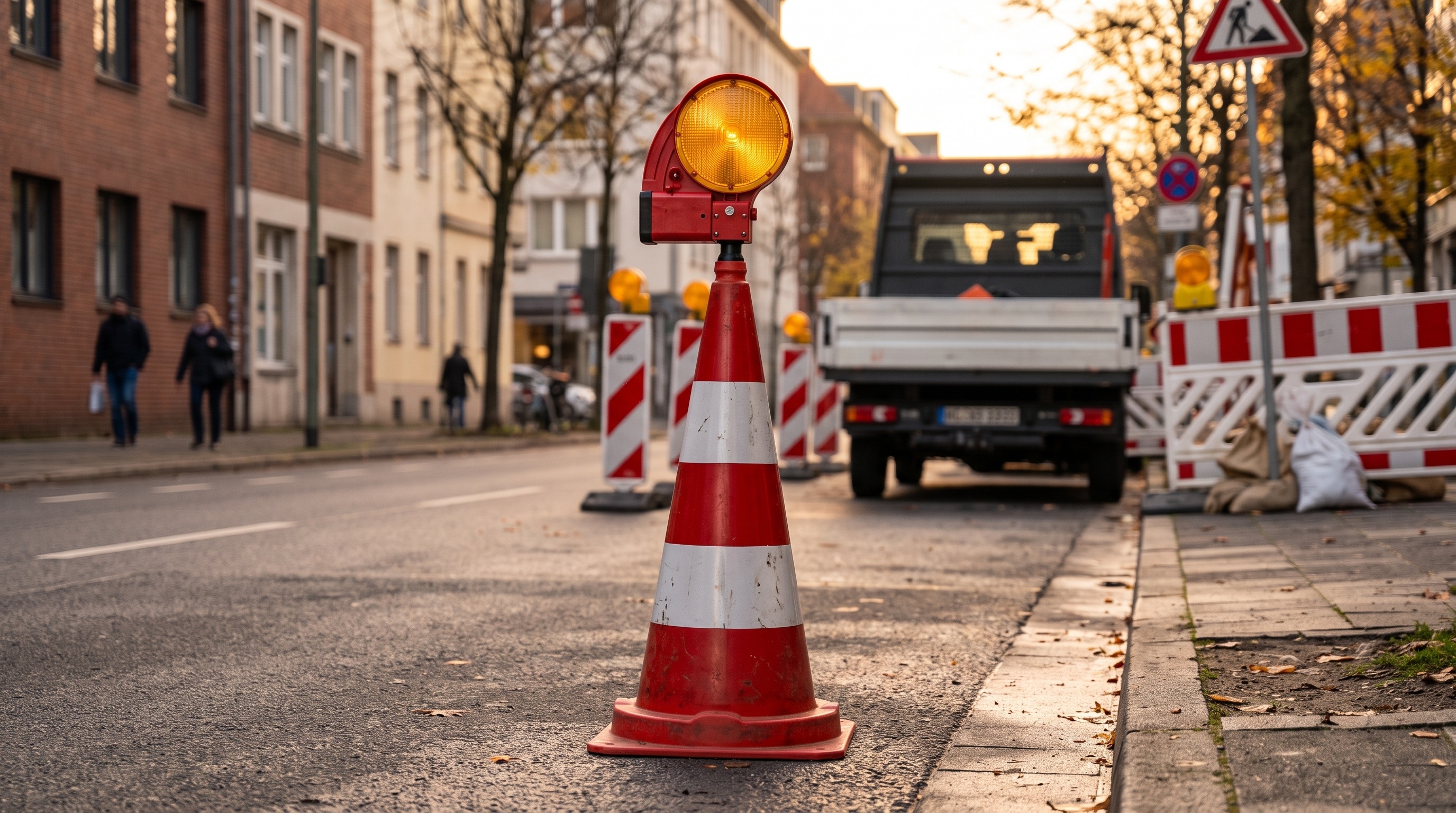
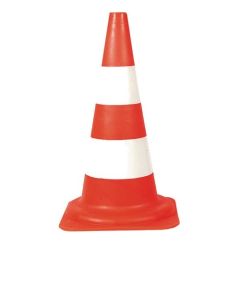
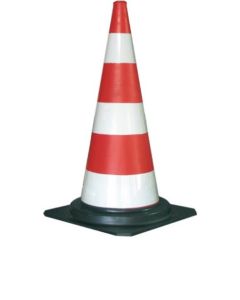
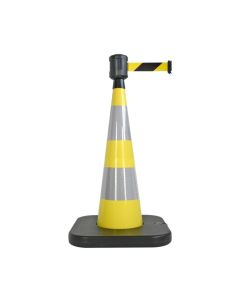
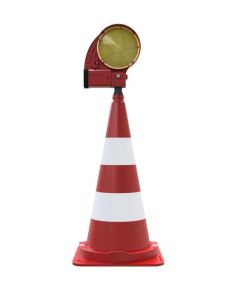
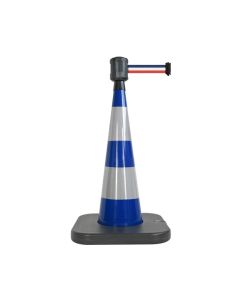
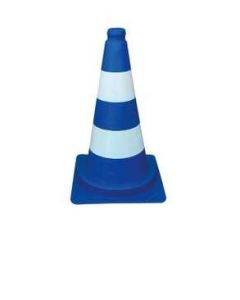
Construction site traffic cones are apparently simple elements, but their choice requires more attention than it might seem. In construction sites, maintenance interventions and temporary delimitations are in fact moved, positioned and removed frequently, often in very different operating conditions. Height, material, structure of the base and reflective elements are characteristics that must be compared in relation to the intended use. Choosing a cone only because it has dimensions compatible with the available space means neglecting many of the factors that affect its daily use.
For companies, bodies and technical operators it is therefore useful to start from the context in which the signalling will be used. A temporary delimitation within an operational area presents different needs compared to an intervention that affects traffic, just as a product moved more quickly requires different requirements. The number of times a day must also be evaluated from a logistical point of view. Visibility, stability, practicality and expected duration must be considered together, always checking the characteristics of the individual model and the provisions applicable to the specific use.
Start from the context of use before choosing the cone
The first selection criterion should not be the height, but the place where the cone will be used . Construction sites, maintenance interventions, company areas and temporary boundaries may require different configurations. It is necessary to understand where the product will be positioned, how long it will remain in use and how often it will need to be moved. This analysis allows the comparison to be narrowed down to models that are consistent with the needs. operational, avoiding purchases based exclusively on price or external appearance.
When the cone is used in the context of temporary road signs, the choice must also be made by checking the regulatory and technical requirements applicable to the specific situation. It is not correct to automatically attribute the same suitability to all cones on the market. Dimensions, construction characteristics and any reflective elements must be checked in the product documentation and related to the context in which it will be used.
How to evaluate the height of construction site traffic cones
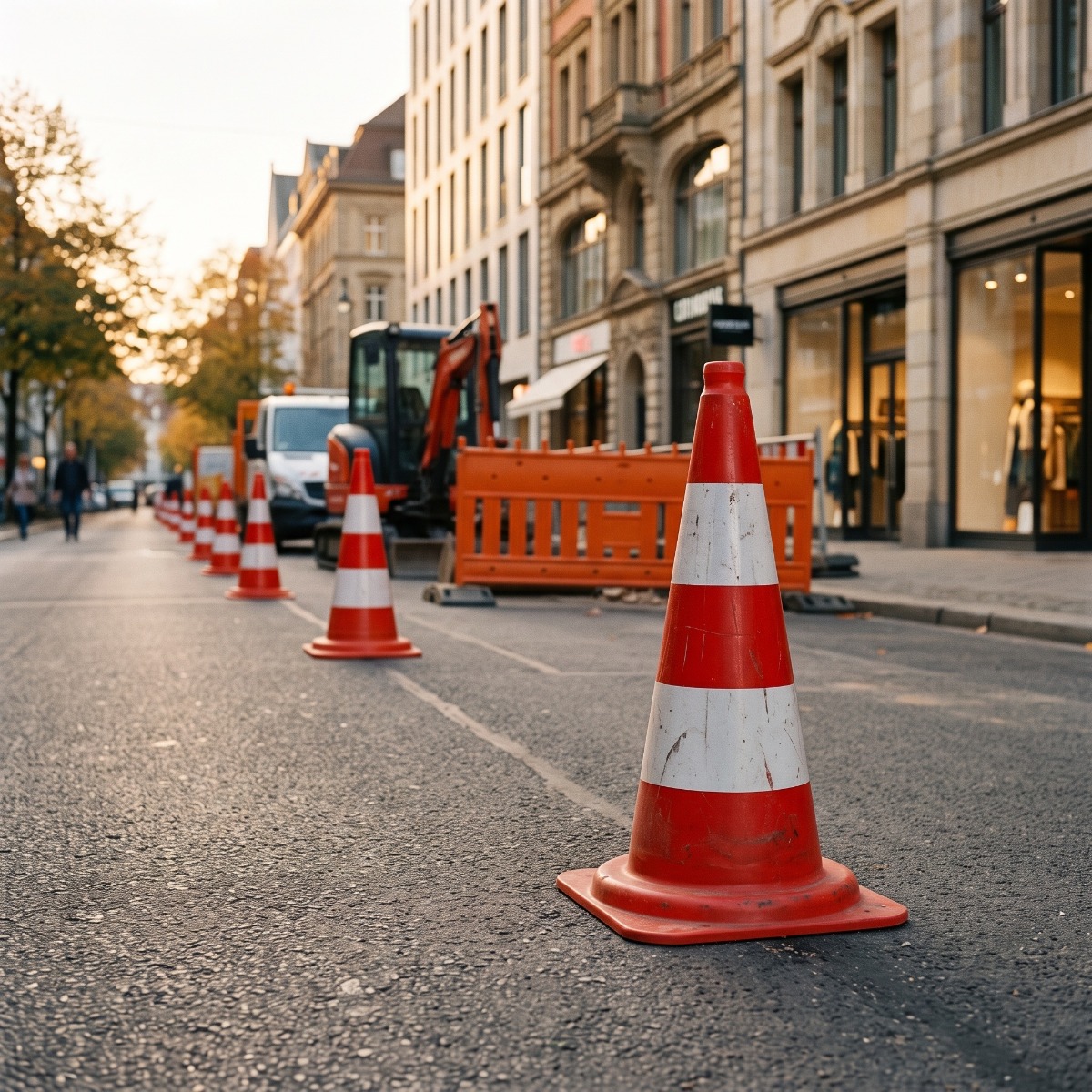 The height is one of the most immediately recognisable characteristics and affects the size and visual perception of the cone. Models of different sizes can be intended for different uses, therefore it is not correct to choose the right one. It is useful to identify an ideal height that is valid for any situation. Before purchasing, it is necessary to check the measurements declared by the manufacturer and compare them with the needs of the intervention and with any requirements foreseen for the use considered.
A higher cone also presents different needs in terms of handling and storage compared to a more compact solution. If the company has to transport numerous elements every day, the dimensions directly influence the organisation of the vehicle and the space intended for storage. The height must therefore be read together with the base, weight and overall dimensions . Evaluating a single dimensional data does not allow you to understand how much the product is actually suitable for the intended management.
The weight of the base and the stability during use
The base is a central element in the structure of the cone because it is the base that supports the cone. contributes to the way the product rests on the surface. Size, shape, material and weight can vary significantly between different models. A more consistent base may behave differently than a lighter solution, but it is not correct to deduce the actual stability just by observing the product. It is necessary to compare the data declared by the manufacturer and consider them in relation to the conditions of use.
The weight simultaneously affects manual handling. A product handled repeatedly must be transported from the warehouse to the vehicle, unloaded, positioned and then recovered. The selection criterion therefore does not consist simply of looking for the heaviest available cone. Stability and ease of handling must find a balance , taking into account the frequency of interventions and the ways in which operators normally manage temporary signs.
Materials: what to check before purchasing
Traffic cones can be made with different materials and construction combinations. The composition declared by the manufacturer must be verified in the technical data sheet of the individual item, avoiding automatically extending the characteristics of a model to the entire category. Flexibility, weight and behaviour during use depend on the specific construction. For a professional purchase, it is preferable to start from the technical data rather than limiting oneself to generic descriptions such as resistant or robust.
The context of use helps to interpret this information. A product intended to be moved frequently may require different considerations than an element used for longer demarcations. Outdoor exposure must also be considered on the basis of the declared characteristics. Holity , a specialist in professional supplies for companies, institutions and operators in the construction sector , allows you to compare solutions intended for different operational needs, checking their specifications before purchasing.
Reflective elements and visibility of the cone
The Recognisability is an essential criterion when evaluating a traffic cone . The colour of the body and any reflective bands contribute to the visual configuration of the product, but even in this case it is necessary to distinguish between generic and specific characteristics of the single model. The number, arrangement and type of the elements present may change, therefore must be verified in the technical documentation before establishing whether a given solution meets the expected needs.
The presence of reflective material should not be interpreted as a universal guarantee of suitability for any context. For uses subject to specific requirements, it is necessary to check the provisions of the applicable legislation and the certified or declared characteristics for the product. Visibility must be assessed in relation to the intended use , avoiding choosing based solely on the perceived colour contrast when looking at a photograph of the cone.
Cones for construction sites and maintenance operations
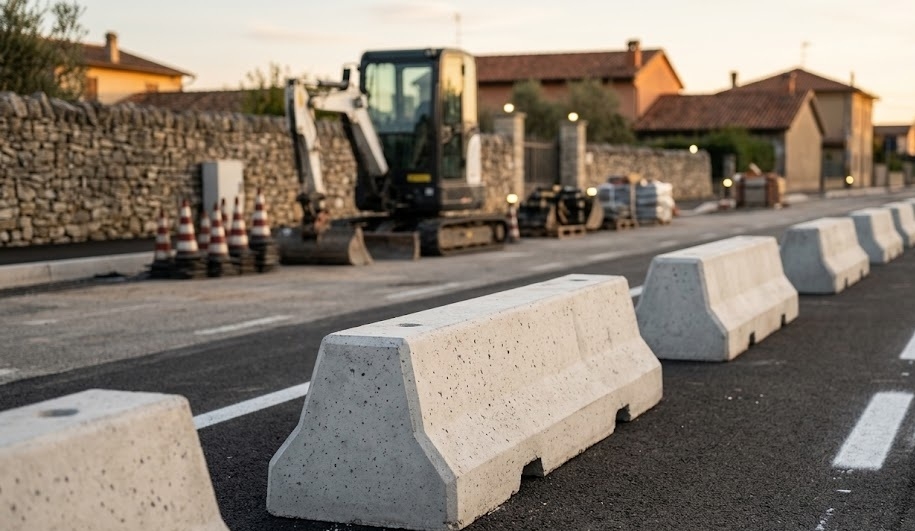
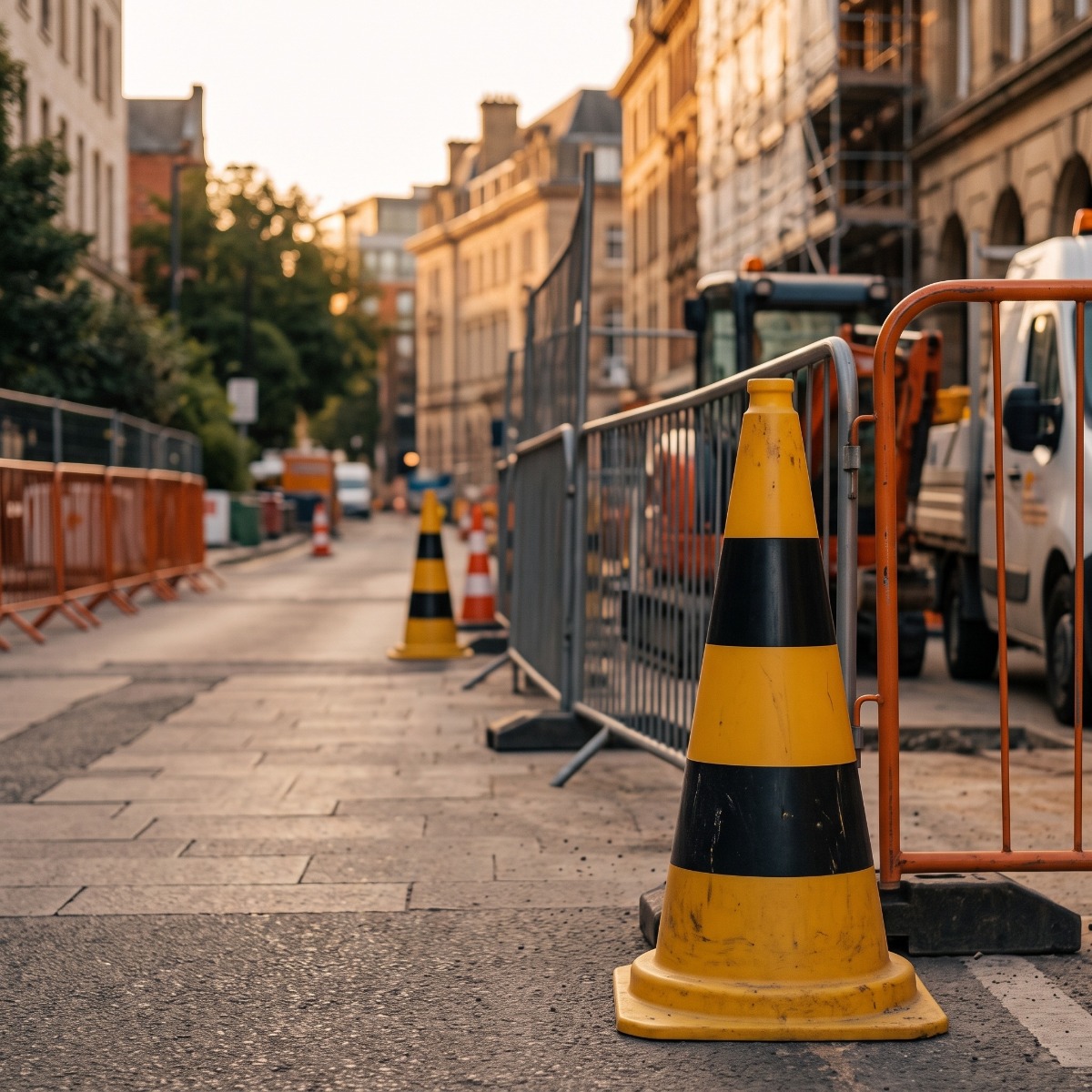 On construction sites and during maintenance activities, the configuration of the area can change during the various work phases. Cones are useful precisely because they allow you to create temporary boundaries and modify them when operational needs change, always in compliance with the applicable procedures and requirements. This flexibility also makes the ease with which the elements can be positioned and retrieved by operators important.
Before purchasing, it is useful to estimate how many cones are normally used in the same operation and how frequently they are transferred between different locations. A company that manages numerous maintenance projects may place greater weight on transport and storage than someone who uses the elements mainly in the same area. The product must adapt to the actual operating cycle , not just to the configuration of the demarcation once installed.
Ease of transport between the depot and the construction site
The Logistics is often considered only after purchase, but can significantly impact daily use. When dozens of cones need to be loaded onto a vehicle, size and configuration take on very concrete significance. Before ordering large quantities, it is important to carefully consider the size and configuration. It is useful to check the characteristics of the model and evaluate the space available on the vehicles normally used by the organization.
The ease of gripping and handling depends on the specific shape of the product, while weight and size affect the work required to transfer it. It is therefore not only necessary to analyze the behavior of the cone once it is already positioned. Professional equipment is also used before and after demarcation : loading, unloading, transport and recovery are part of the same cycle and deserve to be included in the selection criteria.
Stackability and storage of traffic cones
Many professional contexts require the storage of numerous cones in a limited space. When the model is designed to be stacked, this feature can facilitate the organization of the warehouse and the vehicle. The actual stacking method must however be verified on the chosen product, because shape, base and structure can influence the space occupied during storage.
It is useful to consider not only how much space a single cone takes up, but how much of it is normally required for an intervention. This simple evaluation avoids purchasing products that are practical individually but difficult to manage when stored in series. Storage and transport are concrete commercial criteria , especially for companies that use temporary signs every day and must keep vehicles and warehouses tidy.
Expected lifespan and frequency of use
A cone used occasionally and one subjected to daily movements face different operating conditions. Frequency of loading and unloading, outdoor exposure and storage methods can affect the choice of product. For this reason, it is useful to estimate the type of expected use before comparing the alternatives, checking the materials and construction characteristics reported by the manufacturer.
It is not appropriate to make lifespan predictions based solely on the product category or the nominal material. The useful life depends on numerous factors and the actual conditions of use. A more informed selection consists in looking for characteristics consistent with the expected intensity of use and in following the indications relating to product management. In this way, the initial price is read together with the operational destination.
When accessories are needed to complete the delimitation
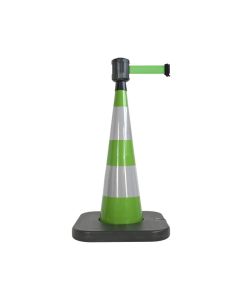
The the construction site road cone can be used as an element of a more complex delimitation, but compatibility with any accessories must be verified on the individual model. Not all configurations automatically allow the use of the same components and it is not correct to assume that any accessory can be mounted on any cone. The technical data sheet and the manufacturer's indications allow you to check the foreseen possibilities.
The choice of accessories must also remain consistent with the context and with the applicable provisions. An internal delimitation of an operational area and a configuration used in the presence of traffic cannot be considered equivalent just because they use similar elements. Holity , a reference point for professional supplies intended for construction sites, building and institutions , allows you to evaluate the equipment as parts of an operating system, rather than as isolated products.
Compare cones starting from the technical data sheet
When two products appear very similar, the technical data sheet helps to identify the differences that really matter. Height, base dimensions, weight, material and reflective elements are among the information to be compared, when declared for the model. The comparison should always be made using data referring to the specific items, without attributing standard characteristics to all traffic cones.
This method is particularly useful in professional purchases, where large quantities are often ordered and a seemingly secondary characteristic can be overlooked. impact on daily organization. Before finalizing the order, it is therefore advisable to correlate technical specifications, quantity required and methods of use . The most coherent product is not necessarily the one with the greatest number of features, but the one that best responds to the expected operating conditions.
Verify requirements and provisions for the intended use
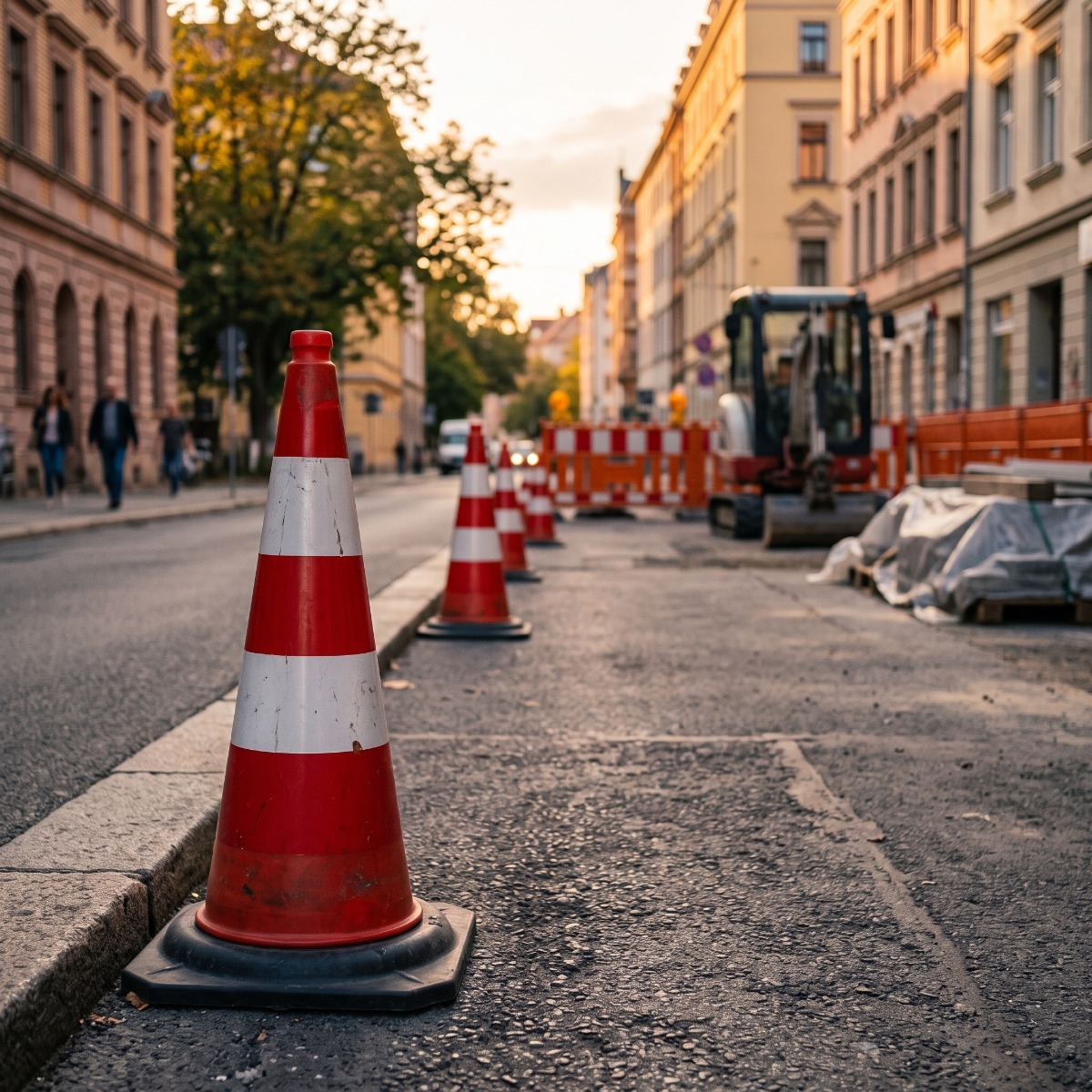 Cones used in the context of temporary signage may fall within contexts regulated by specific requirements. The verification must be carried out in relation to the specific use and current legislation, without relying on generic indications valid for every situation. The institution, company or person responsible for the intervention must ascertain which requirements are applicable before choosing and using the equipment.
Product documentation therefore plays an important role also in the commercial phase. Information on dimensions, materials and any visibility characteristics must be comparable with what is actually supplied. that is required for the intervention. Conformity should not be presumed from the simple name "traffic cone" : it must be verified through the declared characteristics and references pertinent to the specific context of use.
Mistakes to avoid when choosing construction site traffic cones
A frequent mistake is to choose exclusively based on height, considering the largest cone automatically more suitable. In reality, it is necessary to simultaneously evaluate the base, weight, material, visibility and handling methods. Even purchasing large quantities without checking the overall dimensions during transport and storage can create operational difficulties that emerge only when the products enter into daily use.
A second mistake is to consider all products of the same colour or with an apparently similar band to be equivalent. Technical characteristics can vary significantly and should be checked on the actual model. Finally, practicality should not be confused with regulatory suitability. Ease of use and applicable requirements are two distinct aspects that must both be verified before purchasing.
Choosing the right cones means evaluating the entire use cycle
The selection of Construction site traffic cones becomes simpler when approached starting from the specific activity. Where they will be used, how often they will be moved, what space is available for transport and storage, and what visibility characteristics are required are more useful questions than searching for a generically better model. Height and material only become meaningful when linked to these conditions.
Holity , a specialist in professional equipment for companies, institutions and technical operators , offers solutions for construction sites and demarcation that allow you to compare products with different characteristics based on operational needs. Before ordering, it is advisable to carefully check the technical data sheets, intended use and applicable requirements, especially when the equipment is used for temporary road signs. A choice based on these parameters allows you to purchase cones that are consistent not only with the point where they will be positioned, but with all the work necessary to use, transport and store them.
 English
 Italian
 French
 German
 Spanish