The function of the tree protector changes depending on the area to be protected
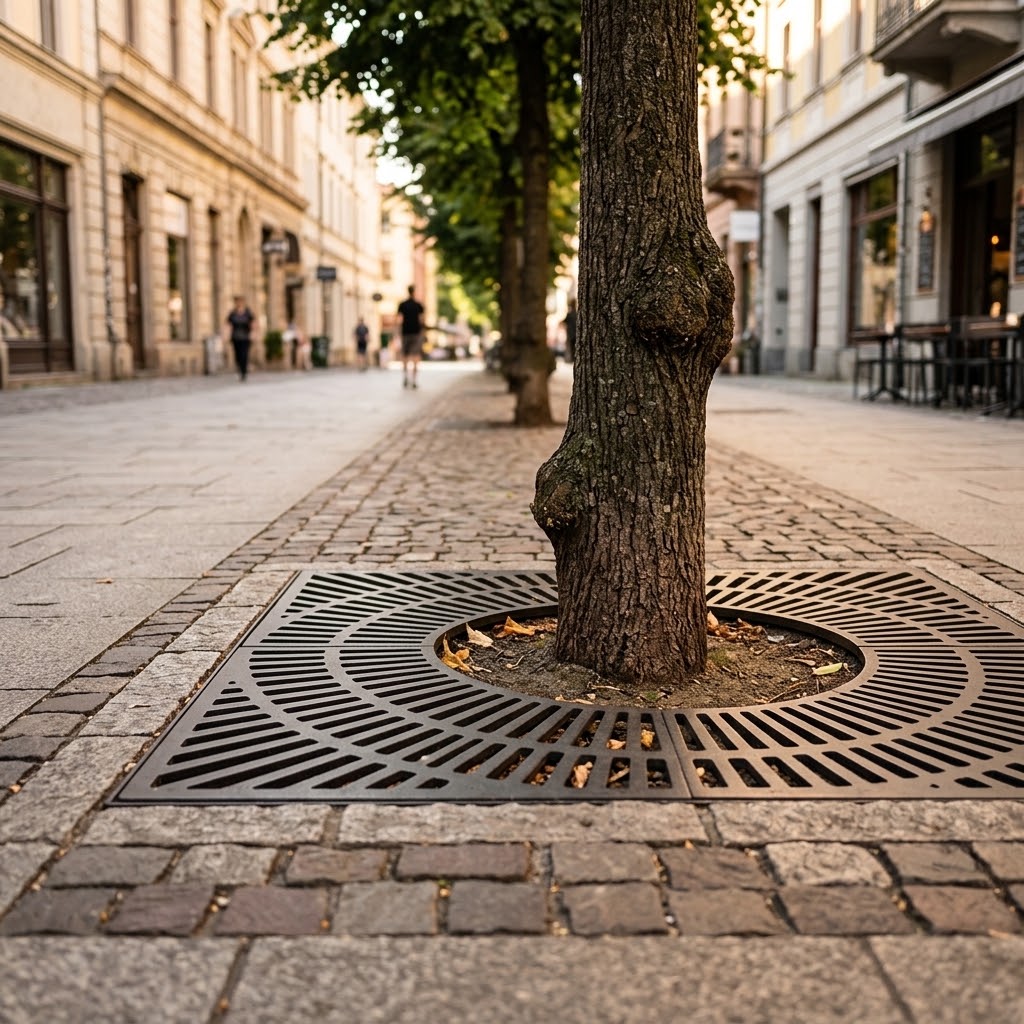 The term Tree protectors indicates solutions used to delimit or protect the area occupied by a tree within an equipped space. A grid placed at ground level mainly affects the area around the base of the tree and helps define the transition between the ground and the pavement. A vertical protection, on the other hand, surrounds the trunk and creates a barrier against impacts from outside. Before choosing the product, it is therefore necessary to establish which risk or design requirement you want to address.
This distinction is particularly important in public spaces, where the same tree may be exposed to very different conditions. On a pedestrian avenue, the orderly arrangement of the surface around the tree may take on greater importance, while near maintenance or passage areas it may be useful to also protect the trunk. In other projects, the two needs may arise simultaneously. The desired function must precede the choice of shape, material and design , avoiding considering all tree protectors as equivalent products.
Horizontal and vertical tree guards meet different needs
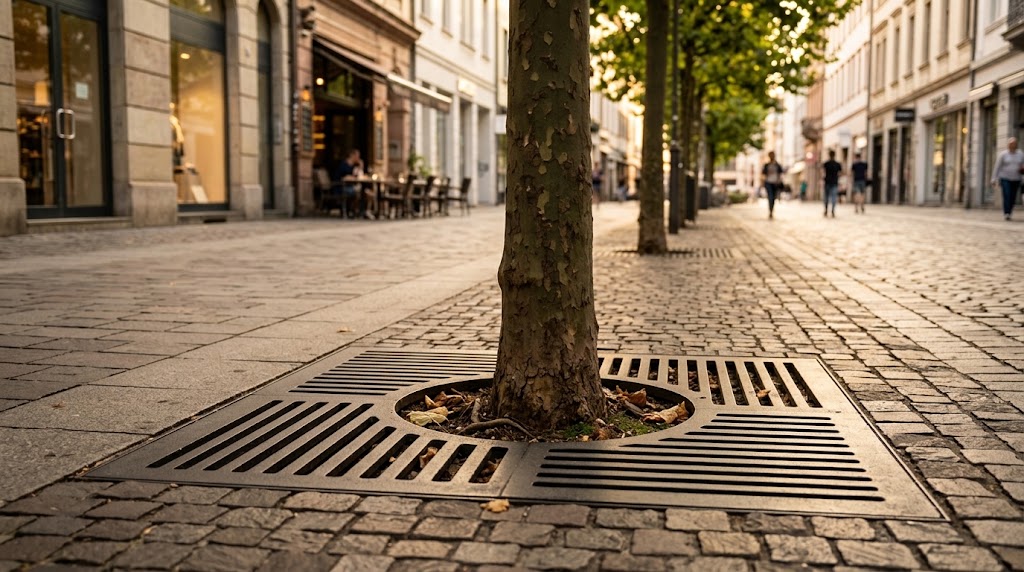
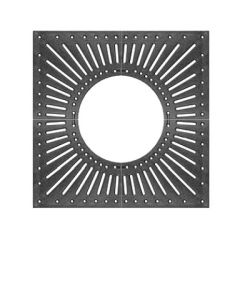
The horizontal tree guard develops around the base of the tree and is normally integrated into the paving or flowerbed arrangement. The professional range includes square and circular models, often made in several elements to be assembled around the trunk. This construction facilitates installation without requiring the plant to pass through a monolithic structure. The horizontal grid is therefore closely linked to the design of the ground area and the geometry of the available space .
The vertical model, on the other hand, performs a function more directly linked to the trunk. The Holity range includes vertical protections in galvanized and painted steel, with modular structures that can be fixed to the ground or, in the pre-arranged models, integrated with a compatible grid. Holity, a specialist in professional supplies for street furniture , offers both types precisely because they meet different design problems. The choice can therefore include a single protection or a coordinated configuration between horizontal element and vertical structure.
The dimensions must leave room for the growth of the tree
One of the most significant errors consists in evaluating only the current dimensions of the plant. The trunk changes over time and a protection chosen with insufficient margins can become progressively incompatible with the development of the tree. For this reason, it is necessary to compare the diameter of the central opening with that of the trunk and with the foreseeable growth of the species. The tree protector must protect without becoming a physical constraint too close to the plant , especially when installed on young specimens.
The external dimensions also deserve the same attention. Holity offers grilles with different sizes, from the most compact configurations to larger models intended for larger urban areas, as well as solutions with different central openings. A larger grille A large planter requires a coherent space in the pavement and cannot be chosen independently of the geometry of the sidewalk or flowerbed. Internal opening and external dimensions must therefore be read together, always checking the actual measurements indicated in the product's technical data sheet.
The installation context guides the choice of the model
A tree guard intended for a park is not necessarily subjected to the same conditions as an element installed along a busy avenue. The intensity of passage, proximity to the pavement, frequency of maintenance operations and possibility of accidental contact with equipment change. The relationship with benches, bins, bollards and other street furniture elements also influences the perception and functionality of the whole. The choice should therefore start from a concrete reading of the space and not from the product observed in isolation .
On sidewalks it becomes particularly important to coordinate the grid with the surrounding surface. In a square it can Aesthetic coherence with paving and other furnishings should take on greater weight, while in public gardens the priorities may be different. The presence of pedestrian traffic also requires attention to the general configuration of the path and the characteristics of the surface. The product must be chosen within the overall project, taking into account the manufacturer's instructions and any requirements applicable to the specific area.
Cast iron and steel respond to different design needs
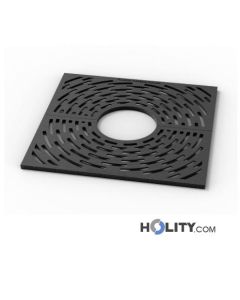
The material affects the weight, appearance, and configuration of the protection. Cast iron is frequently used for horizontal grates intended for street furniture and allows for the creation of robust elements with even complex decorative geometries. The Holity range includes square and circular cast iron models, made of multiple modular elements and with central openings of different sizes. The choice of cast iron must however be evaluated together with the weight, installation system and actual characteristics of the individual product .
Steel is used above all in numerous vertical protections and allows the creation of structures that surround the trunk without enclosing it completely. Some Holity models are made of galvanized and painted steel and are designed for fixing to the ground or to a compatible grid. Holity, a point of reference for professional street furniture , therefore presents solutions that allow different materials to be coordinated according to the part of the tree to be protected. It is not the material itself that determines the best choice, but its coherence with function, installation and context.
A tree grid remains visible for many years and becomes an integral part of the image of a square, an avenue or a public garden. Square and circular shapes generate a different relationship with the pavement, while the design of the openings modifies the visual presence of the surface. In contemporary projects, a more essential geometry may be sought, while historical or traditional contexts may require a different language. Design acquires value when it remains subordinate to the function and dimensions required by the plant. .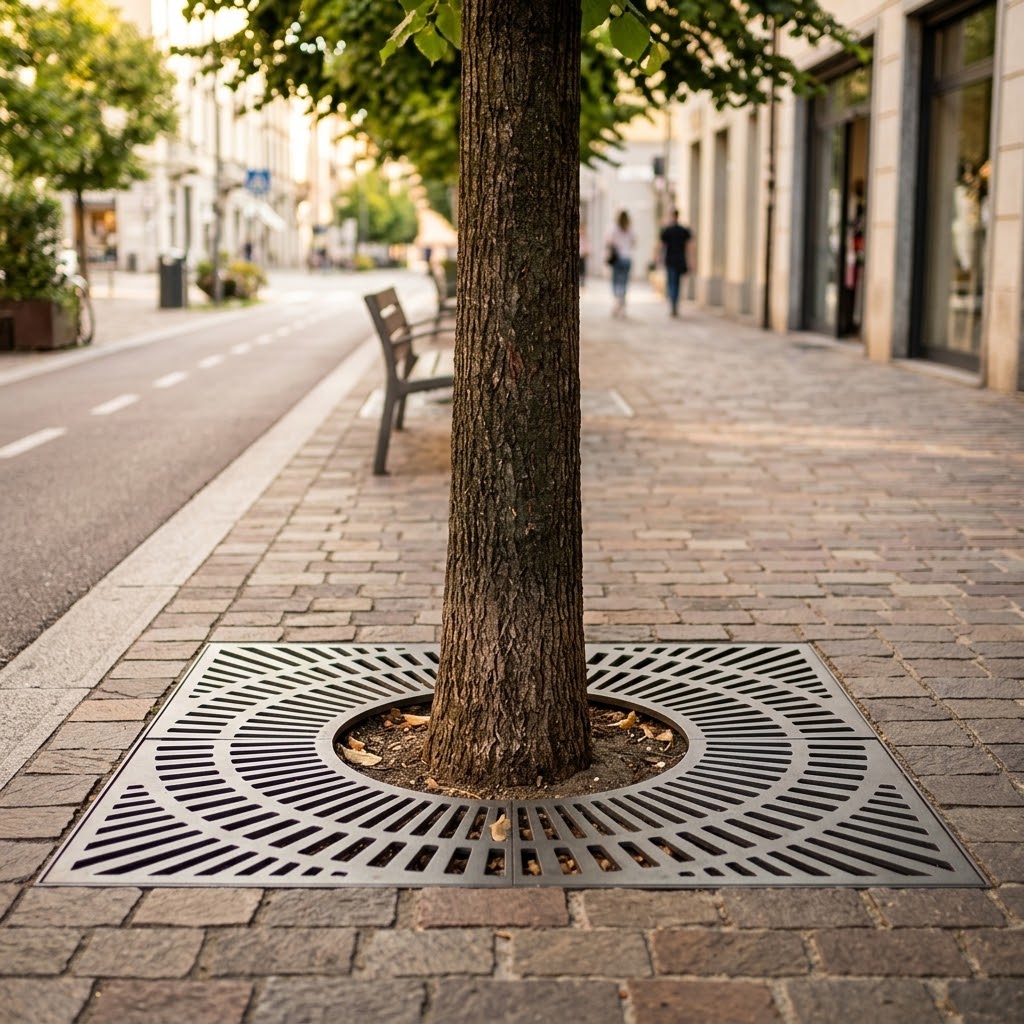
The same logic applies to vertical tree guards. A very evident structure can become a characterizing element of the furniture, while a simpler protection maintains a reduced visual impact. Color, finish, and geometry should be coordinated with the other elements present in the public space, avoiding random combinations. When multiple trees are arranged along the same path, using a uniform solution also helps create greater design continuity and facilitates the management of subsequent replacements or additions.
Installation and maintenance affect the functionality of trees. over time
A correctly chosen tree guard must be able to be installed according to the configuration foreseen by the manufacturer and the project. Many horizontal grids are made up of two or four modular elements, a feature that allows them to be positioned around the tree and subsequently intervene on the area. Some models require a frame or specific fastening systems, while others have different configurations. Before purchasing, it is therefore necessary to check what is included in the supply and which elements are required to complete the installation .
Maintenance does not only concern the metal. Over time, it is also necessary to check the relationship between the central opening and the growth of the trunk, the presence of soil or residues in the openings and the condition of the area underneath. The operations must be able to be carried out without transforming the grid into an obstacle to the management of the plant. A modular structure can be useful precisely because it allows for simpler interventions than elements that are difficult to remove, always following the methods and fastenings foreseen for the specific model.
The correct choice arises from a comparison between tree, space and protection
Before selecting a model it is therefore advisable to put four elements into relation: part of the plant to be protected, current and future dimensions of the trunk, characteristics of the space and installation method. Only after this verification do the material, shape and aesthetic finish become truly significant. A very robust grille may be unsuitable if it has an opening incompatible with the plant, while a well-sized vertical protection may be superfluous where the risk of impacts is minimal. The central criterion remains the compatibility between the product and real conditions of use .
Holity, a specialist in professional supplies for institutions, designers and managers of public spaces , offers horizontal and vertical tree protectors in numerous configurations, with different materials, shapes and sizes. The choice of Tree protectors should therefore start from the role that the product will have to play. play a key role in the project and the future growth of the tree, not just in terms of aesthetics. Comparing technical specifications, central opening, size, material, and fastening system allows you to select models that are truly consistent with squares, parks, avenues, and urban pathways. The result is integrated protection within the space without losing sight of the tree's needs.
 English
 Italian
 French
 German
 Spanish