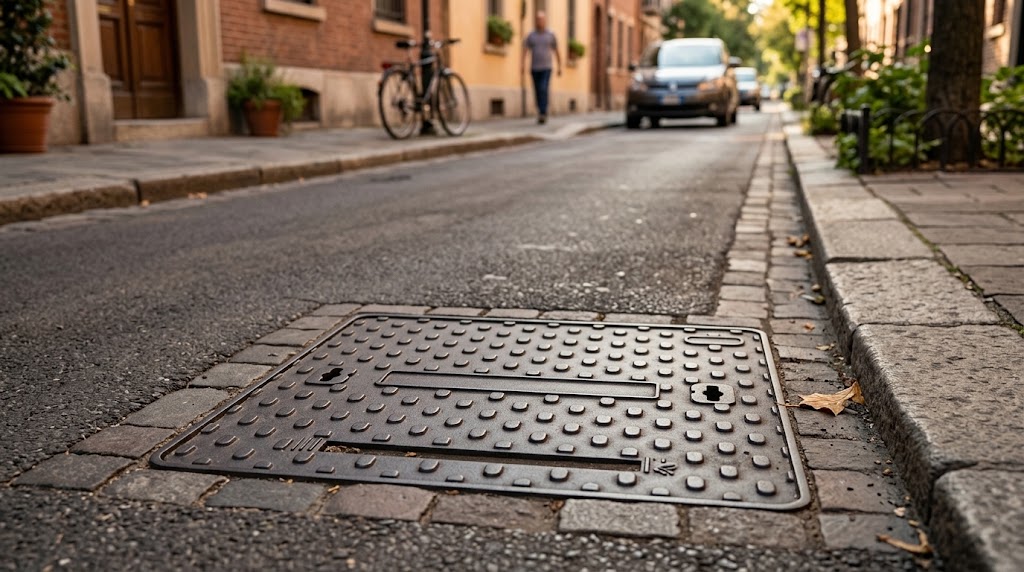
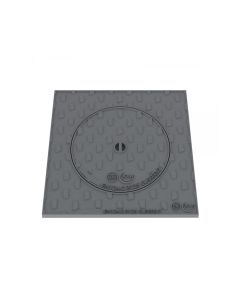
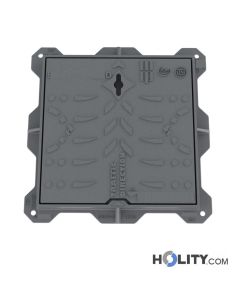
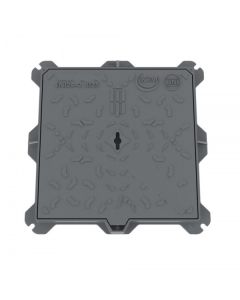
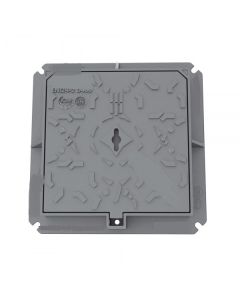
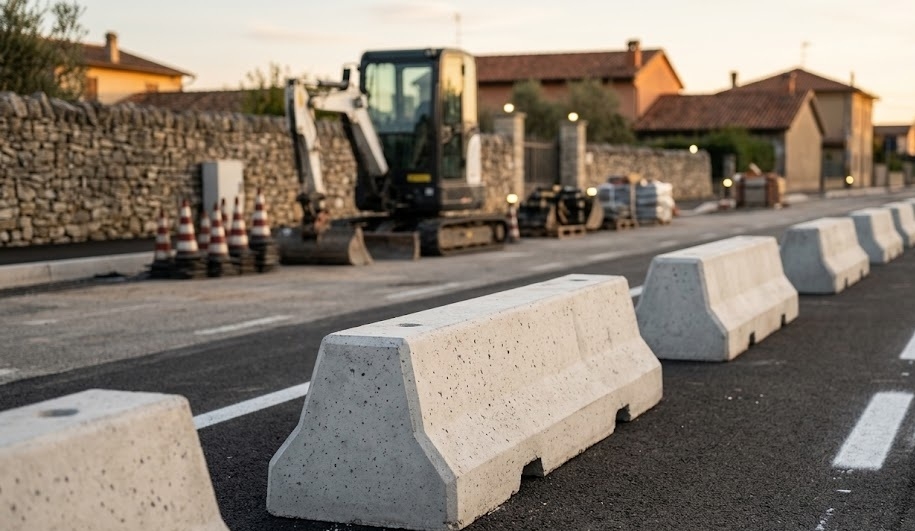
The acronyms B125, C250, D400 and F900 include a letter and a numerical value that identify a specific performance class. The number is linked to the test load expressed in kilonewtons provided for by the classification, therefore B125 corresponds to 125 kN, C250 to 250 kN, D400 to 400 kN and F900 to 900 kN. This data allows for the comparison of products subjected to homogeneous classification criteria. However, it should not be read as a simple indication of the maximum weight of the vehicle that can pass over the manhole cover.
The actual behaviour of an installed device depends on the entire system, including the frame, cover, installation and structure that supports it. Even the stresses generated by traffic do not coincide with a static load applied only once in the laboratory. For this reason, automatically transforming 400 kN into a given vehicle mass can generate incorrect interpretations. The class is mainly used to connect the device to the installation context envisaged by the standard, while the project must evaluate the real conditions of the work.
UNI EN 124 connects each class to the installation point
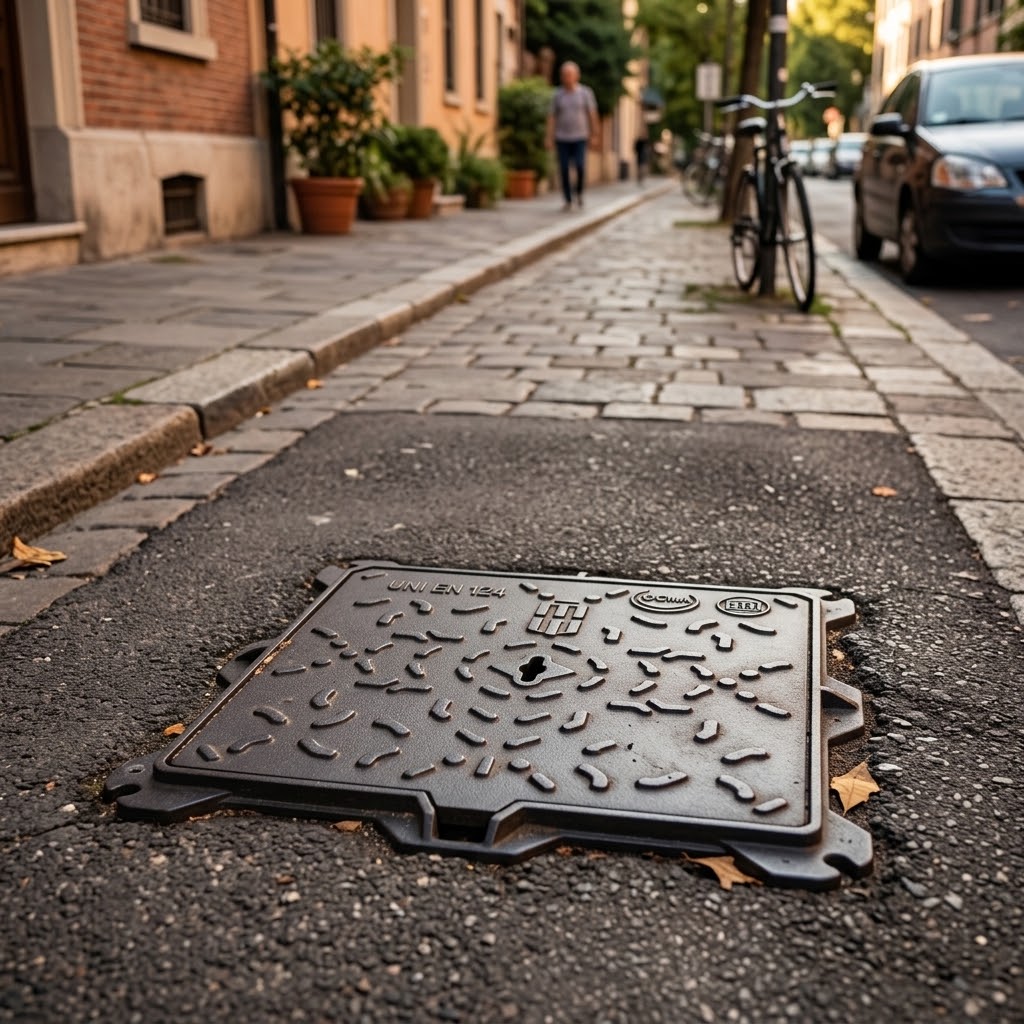 UNI EN 124-1:2015 regulates the classification of crowning and closing devices intended for areas subject to pedestrian and vehicular traffic, within the scope of application envisaged by the standard. The classification includes six levels, A15, B125, C250, D400, E600 and F900, organised in relation to the different installation locations. This means that the choice should not start from the question "which is the most suitable class" but rather from the question "which is the most suitable class". resistant?”, but “where will the manhole cover be installed?”. The exact point on the urban surface determines the minimum level to be taken into consideration.
The standard in fact distinguishes exclusively pedestrian areas, sidewalks, areas close to the roadside, carriageways and environments subjected to particularly high loads. Within the same road, devices belonging to different classes may therefore be required. A manhole cover positioned on the sidewalk is not evaluated in the same way as one placed in the centre of the lane. For designers and technical buyers this distinction is fundamental because it avoids transforming the load class into a simple commercial scale from the “light” to the “heavy” product.
B125 concerns pavements, pedestrian areas and car parks
The B125 class has a test load of 125 kN and is associated with pavements, pedestrian areas and similar surfaces, as well as rest areas and car parks according to the classification provided for by the standard. It is therefore a class frequently encountered in urban projects in which the manhole cover is not positioned directly on the normal roadway. Its presence in a professional catalogue does not mean, however, that it can be used indiscriminately on any surface reachable by a vehicle. The actual position of the device with respect to traffic flows must always be verified.
The Holity range includes various cast iron manhole covers belonging to the B125 class, with different sizes and geometries. Some models are designed to combine access to underground services, a non-slip surface and configurations dedicated to the management of odours coming from the manhole. Holity, a specialist in professional supplies for infrastructures and public spaces, therefore allows you to compare products of the same class also on the basis of size, shape and construction characteristics. The class, however, remains only one of the parameters of the choice and does not replace the verification of the useful light and compatibility with the manhole.
C250 is linked to specific areas of the edge of the carriageway
The C250 class corresponds to a test load of 250 kN and occupies an intermediate position in the classification. Its meaning is often simplified by generically defining it as the "road" class, but this interpretation can be misleading. UNI EN 124 links C250 in particular to the area of the drainage channels along the edge of the road, with dimensional limits defined with respect to the carriageway and the pavement. C250 must therefore be read in relation to the position of the device and not only to the presence of traffic in the vicinity.
This precision is especially useful when purchasing manhole covers and drains for interventions that simultaneously affect the roadside, pavement and carriageway. Two devices a few decimetres apart may be in different conditions of use and require different assessments. Holity also has professional C250 manhole covers in ductile iron with different dimensions, allowing you to compare the class with the geometry required by the manhole. Before ordering, however, it is necessary to verify that the position envisaged by the project is consistent with the class indicated in the technical documentation.
D400 is the reference for carriageways and areas travelled by vehicles
The D400 class, with a test load of 400 kN, is associated with roadways, hard shoulders and parking areas accessible to different types of road vehicles. It is It is therefore one of the most sought-after acronyms when the manhole cover must be inserted directly into a surface affected by normal traffic. The change from C250 to D400, however, does not derive from a simple desire to increase the safety margin. D400 corresponds to a different installation group and must be chosen when the installation point actually falls within that context.
In road projects it is also important to avoid concentrating all the attention on the cover. A D400 class declared by the product cannot compensate for an installation incompatible with the manufacturer's instructions, an incorrectly supported frame or a configuration inconsistent with the manhole. The Holity category includes D400 models in ductile iron with various sizes and configurations, intended for different infrastructure needs. The comparison must therefore include class, clear opening, frame size, opening method and characteristics required by the project.
F900 responds to exceptionally high load conditions
F900 represents the highest level of the EN 124 classification and corresponds to a test load of 900 kN. Its use is linked to areas where particularly high wheel loads may occur, such as specific airport or infrastructure contexts. It is therefore not the class normally chosen for an urban road simply because the most robust product available is desired. The switch to F900 must be motivated by the actual conditions expected in the installation area.
Indiscriminate oversizing does not automatically constitute better design. Products belonging to very high classes may lead to different configurations, weights, costs and handling methods which must have a technical justification. The same principle applies in reverse: an insufficient class cannot be justified solely by the lower cost of the device. The correct choice consists in identifying the class consistent with the area and the operating conditions , inserting it within the overall infrastructure project.
A15 and E600 complete the class scale
Although commercial research often focuses on B125, C250, D400 and F900, the classification also includes A15 and E600. A15 is the level associated with surfaces that can be used exclusively by pedestrians and cyclists, while E600 concerns areas subject to high wheel loads, placing itself between D400 and F900. Knowing the entire scale helps to better understand the meaning of the intermediate classes. B125 or D400 cannot in fact be interpreted correctly without considering the overall logic of the installation groups.
This complete reading is especially useful in complex projects that include multiple surfaces. The same infrastructure may include a pedestrian path, parking lot, roadside, carriageway, and technical area, each with different conditions. It is therefore not necessary for all manhole covers in a project to automatically belong to the same class. Standardization can simplify procurement, but must always remain subordinate to the design verification of the intended use.
Material and dimensions do not replace the load class
Ductile iron is very common in professional manhole covers , but knowing the material is not sufficient to determine the suitability of the product. Two manhole covers made of cast iron may belong to different classes and have different dimensions, closing systems, and intended uses. Likewise, a very heavy model should not automatically be considered to belong to a higher class. Material, weight and class describe different characteristics and must be read separately in the technical data sheet.
Dimensions also require attention. The external measurement of the frame, the clear space available for inspection and the height of the device are not interchangeable data. A manhole cover of the correct class may still be unusable if it is not compatible with the well or with the space available for installation. For this reason Holity, a point of reference for manhole covers and professional equipment intended for institutions and companies, offers solutions with different classes and dimensions, allowing you to compare the performance requirement with the geometric one.
Before purchasing, you must check the marking and intended use
The final stage of the choice should start from the documentation of the specific model. It is necessary to check the declared class, material, dimensions, field of use indicated by the manufacturer and references to the applicable standard, without relying exclusively on the commercial title of the page. In the case of cast iron products, EN 124-1 works together with the specific part of the series relating to the material. The presence of the correct classification must therefore be read in the context of the overall technical documentation.
Understanding the classes road manhole covers finally allows for the comparison of products that are actually suitable for the same installation point. B125 responds to different needs from C250, D400 concerns different surfaces and F900 belongs to even more demanding contexts, while A15 and E600 complete the classification. Holity, specialist in professional supplies for infrastructures, institutions and construction sites, offers a range of manhole covers in different classes, shapes and sizes to support different design needs. The final decision should however derive from the combination of standard, installation site, technical data sheet and designer's instructions, avoiding choosing the class solely on the basis of the highest numerical value.
 English
 Italian
 French
 German
 Spanish