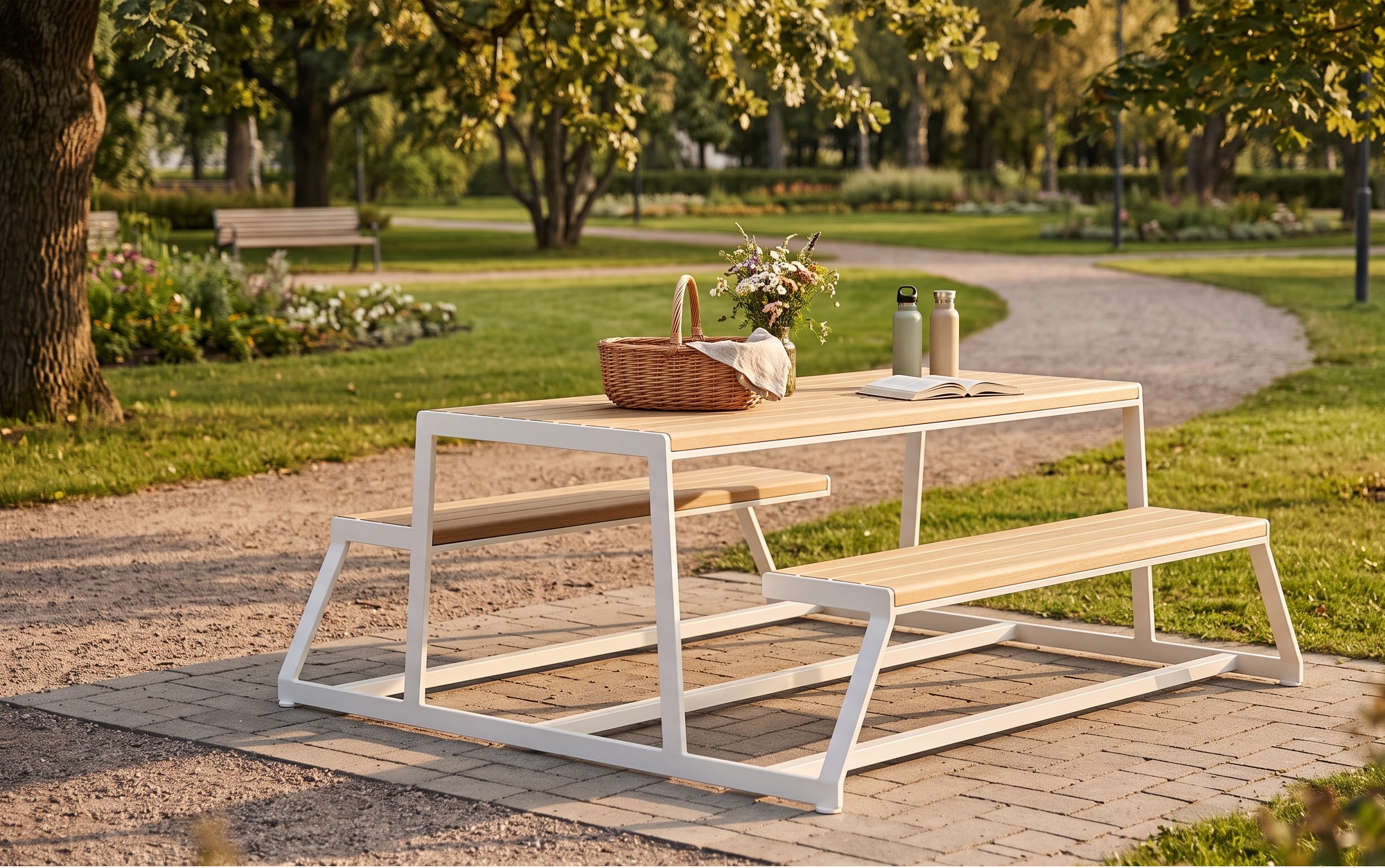
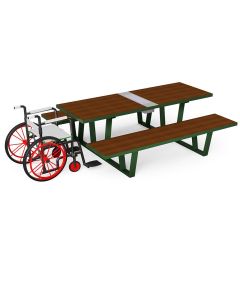
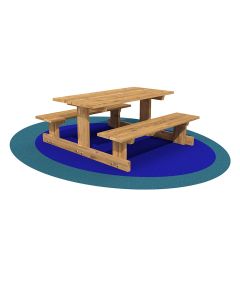
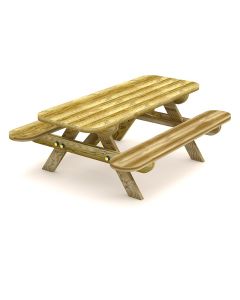
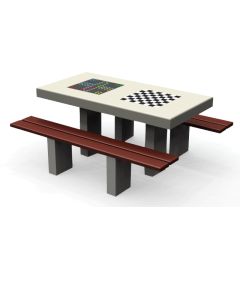
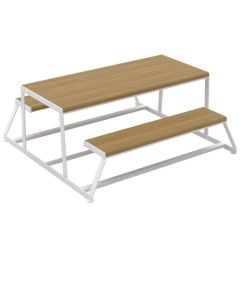
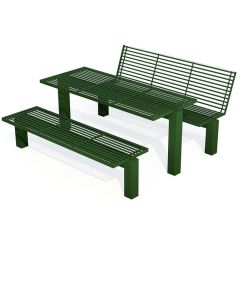
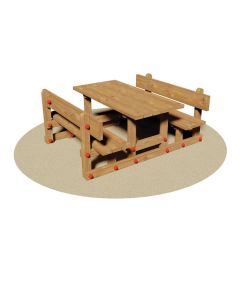
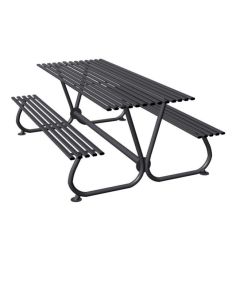
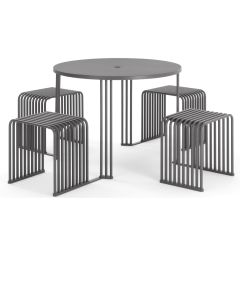
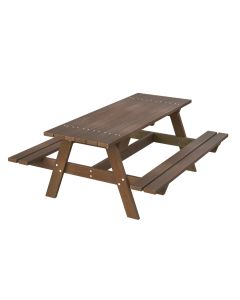
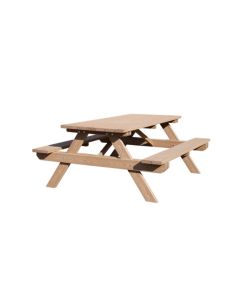
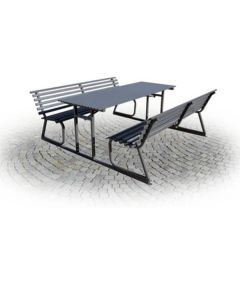
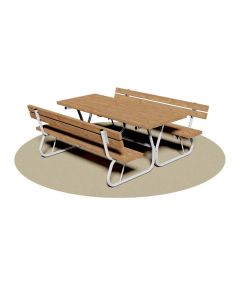
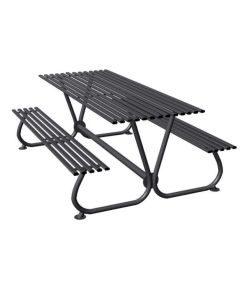
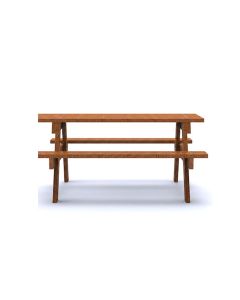
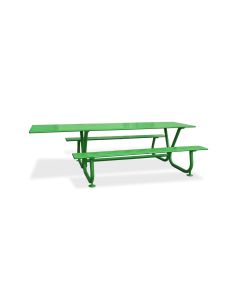
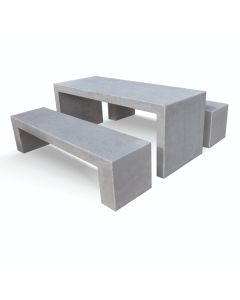
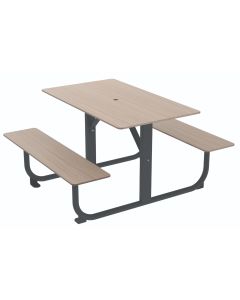
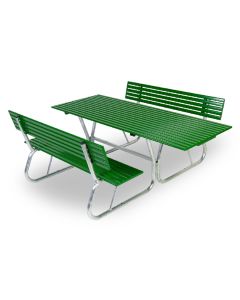
THE picnic tables for communes These are street furniture elements designed to enhance the usability of parks, public gardens, green spaces, nature trails, and outdoor recreational spaces. These aren't just simple outdoor tables, but rather items intended for collective, continuous, and often unattended use. Therefore, they must ensure stability, durability, ease of maintenance, and consistency with the public context in which they are installed.
For technical offices, administrations, and purchasing managers, the choice requires a broader assessment than just the individual model. It's important to consider the required quantities, materials, installation methods, available budget, delivery times, and compatibility with other design elements.street furnitureA well-chosen picnic table improves the use of public spaces, encourages rest, and makes recreational areas more orderly.
Why Picnic Tables Are Important in Public Spaces
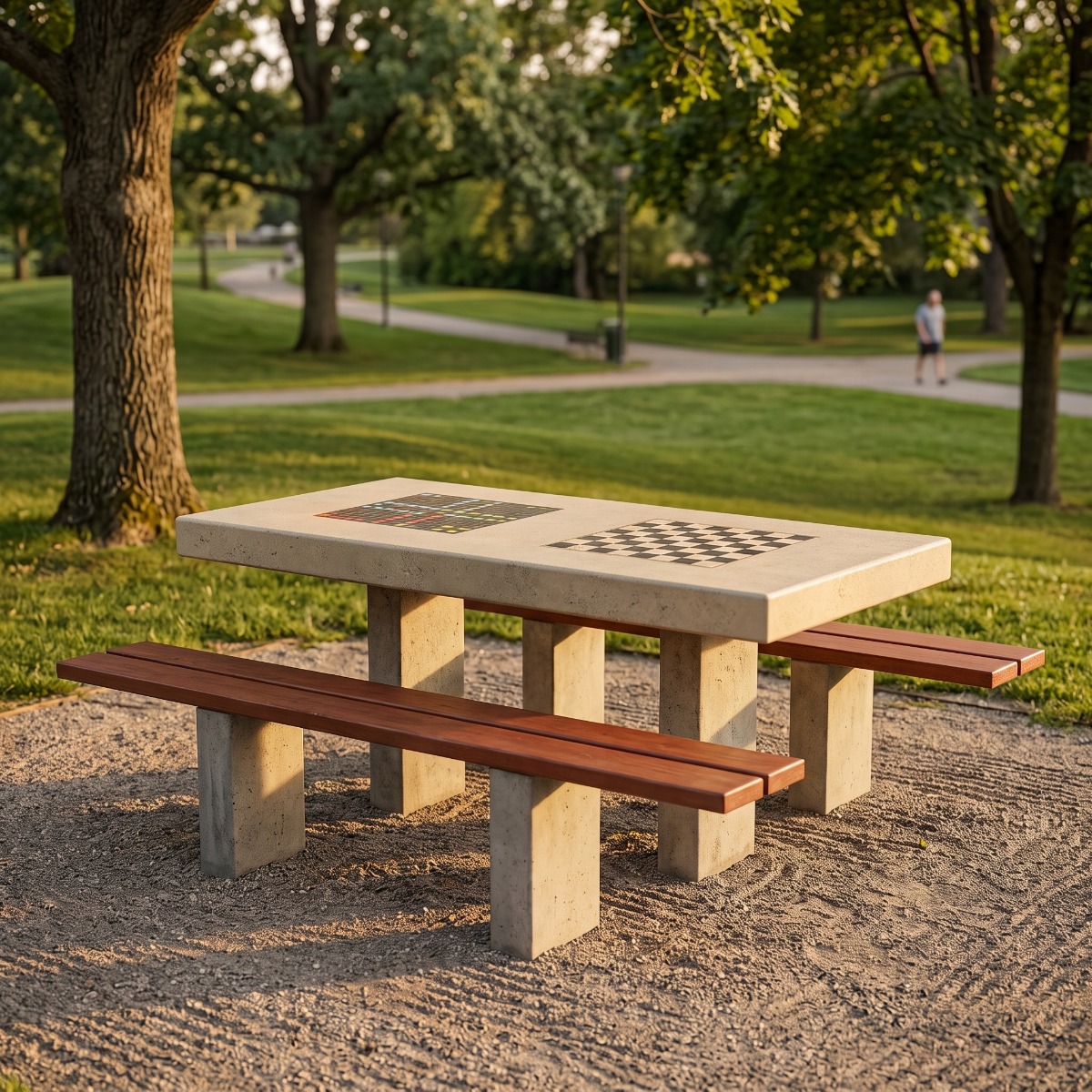 Picnic tables help transform a green space into a truly usable space. In a public park, along a pedestrian path, or in a recreational area, they offer a resting place for families, groups, students, seniors, and citizens. Their presence encourages simple but frequent activities, such as enjoying a meal outdoors, taking a break, reading, or using the area for local events. For this reason, they are among the most useful pieces of furniture in the design of accessible public spaces.
The function is not only practical, but also organizational. An area equipped with well-distributed tables reduces the untidy use of lawns, walls, or improvised seating. picnic tables for municipal green areas They help define visitor areas and direct visitor flows. This allows the municipality to enhance the space and improve the perception of care, order, and availability of services.
Before you buy picnic tables for communesIt's helpful to start with the intended use. A small neighborhood garden has different needs than a large urban park, a designated area along a bike path, or an outdoor space near schools and sports facilities. The number of expected users, frequency of use, and level of exposure all influence the choice of model. The presence of children, families, or large groups can also dictate larger, more robust solutions.
Another criterion concerns the management of public procurement. When an organization needs to furnish multiple areas or replace existing furniture, it becomes important to be able to purchase coordinated models, easily replicable and compatible with the existing catalog. Aesthetic and functional continuity facilitates maintenance and enhances the overall look of urban spaces. From this perspective, the picnic table is not an isolated product, but part of a professional supply system.
Materials, strength and durability for public use
Materials directly impact durability, maintenance, and cost over time. Wooden tables offer a natural look and fit well in parks, wooded areas, and public gardens, but require periodic treatment to maintain good outdoor performance. Metal frames can increase stability and mechanical resistance, especially in high-traffic areas. Recycled plastic or engineered materials can be attractive options when looking for a moisture-resistant product with low maintenance requirements.
For a public body, robustness is an essential requirement. outdoor picnic tables They must withstand rain, sun, temperature fluctuations, intensive use, and potential vandalism. A choice based solely on the lowest price can lead to higher subsequent costs related to repairs, replacements, or premature deterioration. Evaluating materials and structure, however, allows you to orient your purchase toward a more stable and sustainable solution over time.
Installation, fixing and quantity management
THE'installation This is an operational aspect to consider during the selection process. Some picnic tables can simply be placed on the ground, while others require ground anchoring systems to increase safety and stability. In public parks and unattended urban areas, anchoring can be useful to prevent improper movement and limit the risk of damage. The decision depends on the context, the type of flooring, and how often the area is inspected.
Quantity management is equally important for municipalities and administrations. Purchasing a single table requires a different assessment than supplying multiple units for a park or for different areas of the territory. Available space, distances between stations, accessibility for maintenance, and consistency with benches, wastebaskets, drinking fountains, and other furnishings must be considered. A professional purchase allows for better planning of distribution and maintains a consistent line in public spaces.
Green areas, parks, and urban spaces: choosing the right model
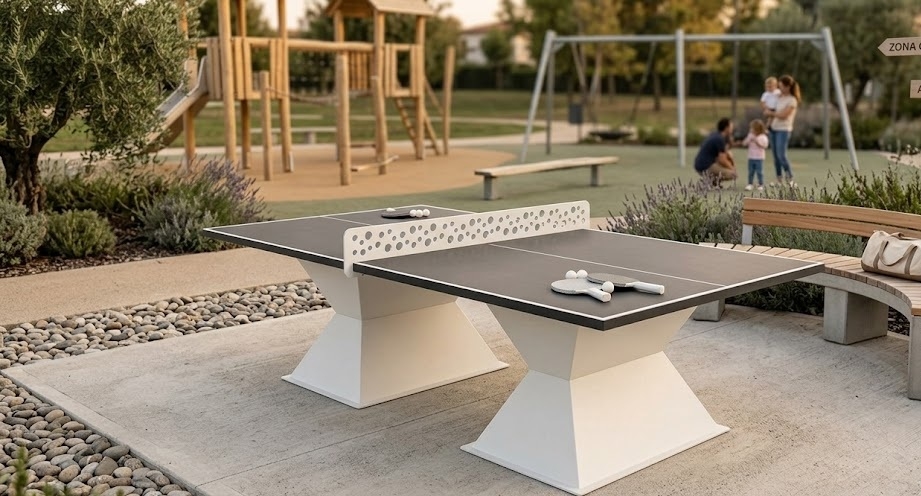
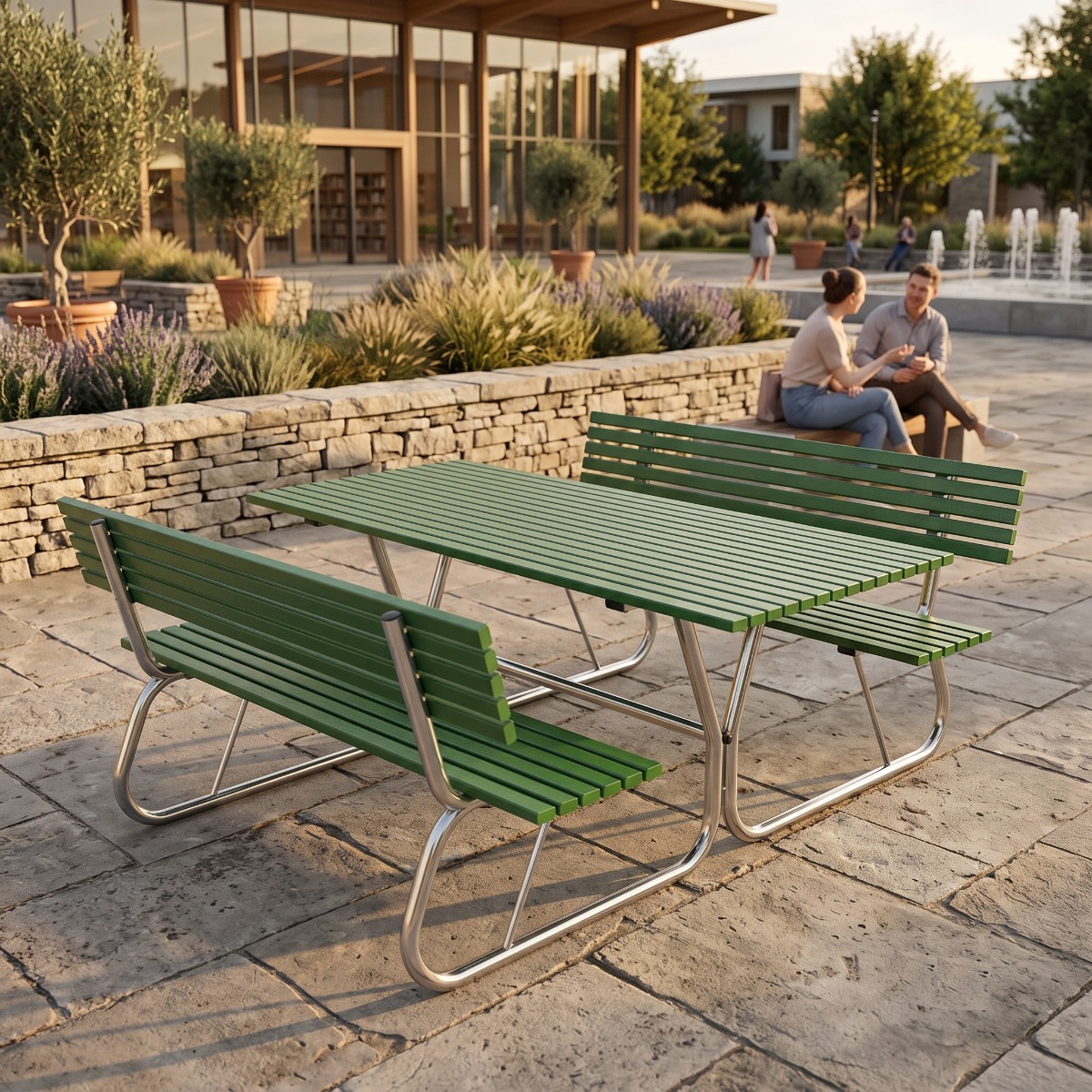 The most suitable model depends on the type of space. In public parks, tables with built-in benches are often preferred, as they offer a complete and compact solution for resting. In more natural green spaces, it can be helpful to choose materials and finishes that integrate with the landscape. In modern urban spaces, however, linear, durable, and easy-to-clean models may be more appropriate. The choice must always combine functionality, aesthetics, and daily maintenance.
For schools, sports facilities, play areas, or recreational spaces, the table must be stable, safe, and suitable for frequent use. The presence of sharp edges, ease of access, and surface resistance are all factors to carefully evaluate. picnic tables for communes They must serve a variety of users and remain in good condition even after many seasons of use. A properly selected model reduces operational issues and improves the experience for those who use the area.
Professional purchasing and catalog management for public bodies
In the B2G context, purchasing picnic tables requires technical clarity and the ability to compare products. Technical departments and purchasing managers need to quickly identify models that match quantities, intended use, materials, and budget. A professional catalog helps compare different solutions and select supplies that comply with the organization's standards. This reduces the risk of purchasing that is inappropriate or difficult to manage over time.
Catalog management is also important for any subsequent purchases. If a municipality needs to expand an equipped area or replace certain elements, the availability of coordinated products facilitates project continuity. Choosing professional picnic tables It allows for a more orderly approach, especially when projects span multiple areas. Therefore, suppliers must be evaluated not only based on price, but also on the breadth of their offerings and reliability.
Specialized supplies for municipal street furniture
The choice of picnic tables for communes It becomes more effective when you start with a supplier specialized in professional equipment and street furniture. Holity, specialist in supplies for institutions, municipalities and collective spaces, offers solutions designed for public settings where robustness, practicality, and continuity of use are key criteria. This approach is useful for administrations that need to purchase products suitable for outdoor installations and frequent use.
Holity, leader in professional equipment for public bodies, companies and operational structures, allows you to evaluate picnic tables and other street furniture with a focus on professional purchasing. For municipalities, technical offices, and purchasing managers, the advantage lies in the ability to choose supplies that are consistent with parks, green spaces, and urban spaces, rather than simply looking at their aesthetics. A well-chosen picnic table contributes to the quality of public spaces and simplifies the day-to-day management of picnic areas.
 English
  Italian
 French
 German
 Spanish