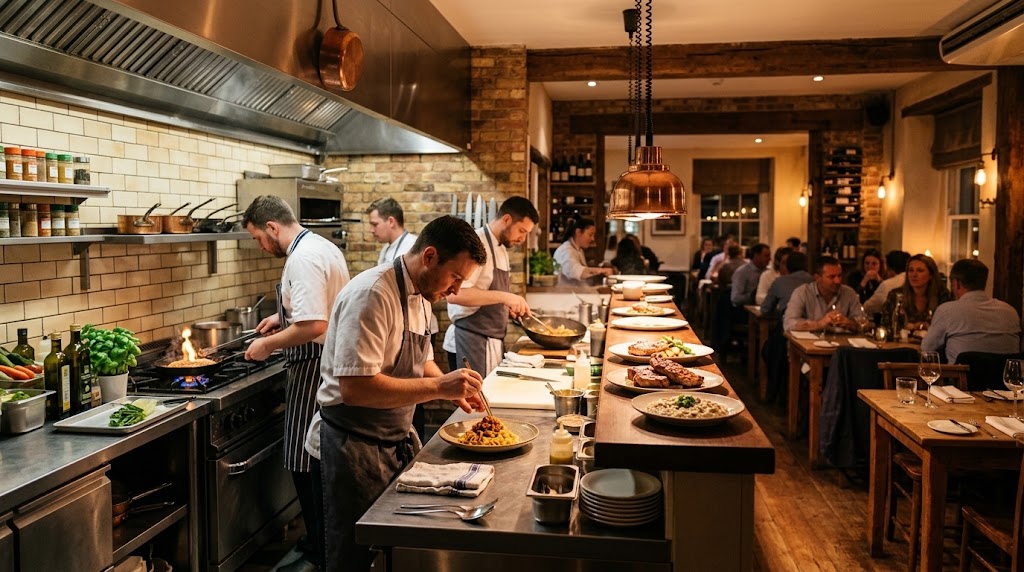
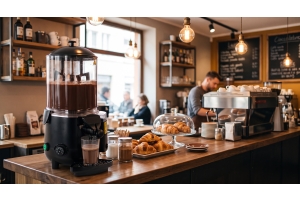
The open kitchen It's an increasingly popular solution in restaurants, bistros, and contemporary venues because it transforms food preparation into an integral part of the customer experience. Seeing the chef at work, observing the kitchen's organization, and perceiving order and cleanliness helps build trust and makes service more engaging.
In a kitchen open to the public, however, every detail becomes visible. This is why it's not enough to plan the layout well: it's essential to choose professional stainless steel kitchen furniture capable of combining hygiene, resistance, functionality and aesthetics.
Open kitchen: why customers like it
 An open kitchen reduces the distance between the dining room and the kitchen and allows diners to directly observe the preparation of their dishes. The chef becomes part of the scene, and the service takes on a show-cooking feel that can enhance the restaurant's identity.
The kitchen's visibility also communicates attention to order and cleanliness. For this reason, the space must always be well-organized, with neat surfaces, properly arranged equipment, and furnishings consistent with the restaurant's style.
Stainless steel kitchen furniture: the heart of a professional kitchen
The stainless steel It's one of the most commonly used materials in professional kitchens due to its durability, ease of cleaning, and ability to adapt to intensive work environments. In an open-plan kitchen, these characteristics become even more important, because the furniture not only serves a functional purpose but also contributes to the overall image of the space.
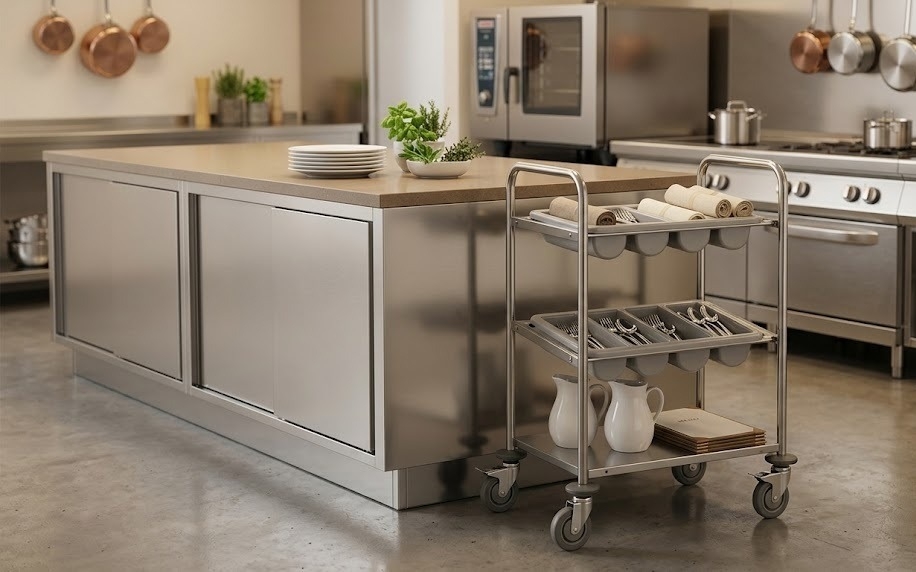
The most commonly used elements include work tables, cabinets, wall units, shelving, sinks, countertops, and stainless steel base units. The choice should be based on the size of the kitchen, workflows, and the various stages of preparation.
Stainless steel work tables and operating surfaces
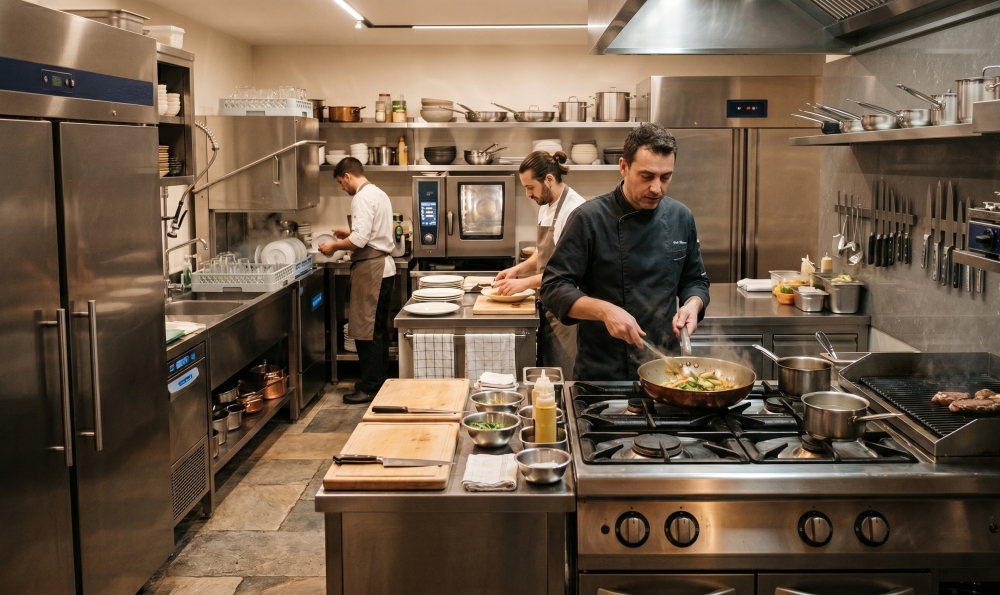
THE stainless steel work tables They represent one of the cornerstones of a professional kitchen's organization. They offer durable, easily sanitized surfaces and can be equipped with lower shelves, backsplashes, or different configurations based on operational needs.
In an open kitchen, it's important to keep the worktops tidy and sized correctly, avoiding piles of utensils or ingredients that could make the space look disorganized to the customer.
Stainless steel cabinets, wall units and shelves
Good organization also involves correct storage management. Stainless steel cabinets and wall units They allow you to keep utensils, dishes and equipment protected and organised, while the shelving allows you to make better use of vertical space.
Reducing the amount of items left on display is particularly important in open kitchens, where order and cleanliness directly impact the perception of the space.
Sinks and washing areas
The washing area must be designed so as not to interfere with the preparation areas. professional stainless steel sinks they can be chosen with one or more tanks and with different dimensions depending on the working volume.
In an open kitchen, it's helpful to organize these activities discreetly and rationally, preventing dirty dishes and washing up from becoming the dominant focus for those observing from the dining room.
How to organize the layout of an open kitchen
The layout should facilitate staff movement and reduce overlap between preparation, cooking, plating, and washing. Each station should have the necessary tools available without requiring staff to constantly move around.
Stainless steel furniture allows for modular and functional configurations, adapting tables, cabinets, and shelves to the available space. A well-designed layout allows for better work and gives customers a sense of greater order and professionalism.
Lighting and presentation of dishes
Lighting also plays an important role in an open kitchen. It must allow workers to work effectively while also enhancing the space seen from the dining room.
In the areas dedicated to the passage of dishes, they can be used food warming lamps, useful for keeping dishes at the right temperature during the stages preceding service and for better organizing the transition between the kitchen and the dining room.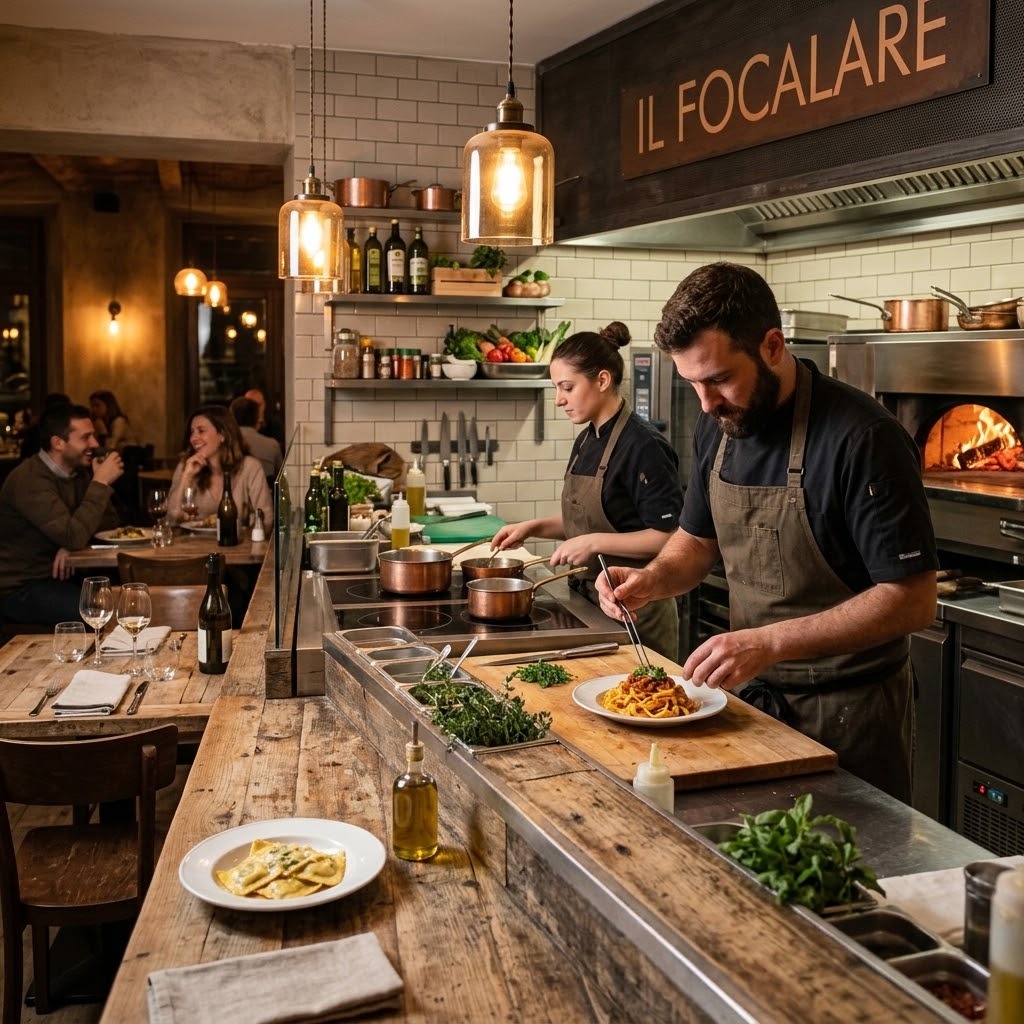
Hygiene and maintenance in a kitchen open to the public
When the kitchen is visible, daily maintenance becomes even more important. Surfaces, countertops, and equipment must be cleaned regularly, while utensils must be stored neatly.
Stainless steel facilitates these operations thanks to its smooth surface and the material's typical resistance. Proper maintenance also helps preserve its appearance over time, a particularly important factor when the furniture is a visible part of the customer experience.
Open kitchen: aesthetics and functionality must coexist
An effective open kitchen shouldn't be just a visual highlight. It must, first and foremost, allow staff to work efficiently, maintaining clear pathways and well-organized workstations.
The choice of a professional stainless steel kitchen furniture It allows you to combine resistance, hygiene and essential design, characteristics particularly suited to environments where the kitchen becomes an integral part of the living room.
How to design a professional open-plan kitchen
To design an open kitchen, it's therefore necessary to coordinate the layout of the spaces, equipment, lighting, and furnishings. Tables, cabinets, wall units, shelves, and sinks must be chosen based on the workflow and number of workers present.
A well-designed space improves staff efficiency while also conveying order, professionalism, and attention to detail to customers. It's precisely this balance between function and aesthetics that makes an open kitchen one of the restaurant's strengths.
 English
  Italian
 French
 German
 Spanish