Choosing a fire extinguisher does not simply mean purchasing a fire-fighting device, but identifying the most suitable solution for the type of environment, the materials present and the level of risk. An office, a bar, a professional kitchen, a warehouse or a technical room may require different extinguishers in terms of capacity, extinguishing agent and fire class.
For this reason, before purchasing it is important to evaluate where the extinguisher will be installed, what equipment is present and what type of fire could develop. On Holity.co.uk a selection of professional extinguishers is available for companies, offices, commercial activities, accommodation facilities, bars, restaurants and technical environments.
Which extinguisher to choose based on the environment?
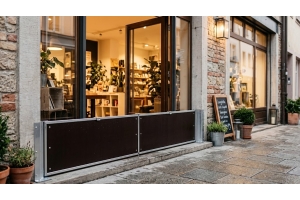
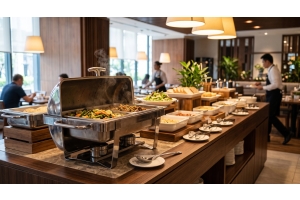
The choice of fire extinguisher depends first of all on the context of use. Each environment presents different risks: in offices there may be electronic equipment, in bars and restaurants there are kitchens and cooking oils, in warehouses there are combustible materials and in hotels there are common areas with a high presence of people.
| Environment |
Recommended fire extinguisher |
Reason for choice |
| Office |
CO2 or powder extinguisher |
Suitable for the presence of electrical equipment and common materials. |
| Bar |
Powder or CO2 extinguisher |
Suitable for commercial activities with electrical equipment and operating areas. |
| Restaurant or professional kitchen |
Class F extinguisher and other devices according to risk assessment |
Specific for fires caused by cooking oils and fats. |
| Technical room or electrical panel |
CO2 extinguisher |
Leaves no residue and is recommended near electrical equipment. |
| Warehouse |
Powder extinguisher |
Versatile on various combustible materials. |
| House or garage |
Powder or CO2 extinguisher, depending on the risk present |
Useful for small fires, electrical appliances or common materials. |
The table provides general information. For activities subject to specific fire prevention obligations, it is always necessary to refer to the risk assessment and applicable regulations.
Fire classes: what do they mean?
To correctly choose a fire extinguisher you need to know the fire classes, that is, the categories that identify the type of combustible material involved. Each extinguisher has on its label the classes for which it is suitable.
| Class |
Type of fire |
Examples |
| Class A |
Solid materials |
Wood, paper, fabrics, plastic. |
| Class B |
Flammable liquids |
Petrol, solvents, paints, alcohol. |
| Class C |
Flammable gases |
Methane, LPG, propane. |
| Class D |
Combustible metals |
Magnesium, sodium, potassium and other specific metals. |
| Class F |
Cooking oils and fats |
Fryers, professional kitchens, restaurants. |
Types of fire extinguishers and their uses
There are different types of fire extinguishers on the market, each designed to intervene on specific risks. The most common are powder extinguishers, CO2 extinguishers, foam extinguishers and class F extinguishers.
Powder extinguisher
The powder extinguisher is one of the most versatile solutions, because it can be used on different classes of fire. It is often used in warehouses, garages, commercial activities, industrial environments and spaces where solid materials, flammable liquids or gases are present.
Powder extinguishers extinguish mainly by suffocation and inhibition of the chemical reaction of combustion. They are effective, but can leave residues, which is why they are not always the most suitable solution for sensitive electronic equipment.
CO2 extinguisher
The CO2 extinguisher is especially suitable for electrical equipment, electrical panels, servers, offices and technical rooms. Its main advantage is that it leaves no residue after use, reducing the risk of damaging sensitive equipment.
It is a very common choice for offices, laboratories, server rooms, shops and environments where electrical or electronic devices are present.
Foam extinguisher
The foam extinguisher is mainly used for class A and B fires. It works by creating a layer that separates the fuel from the oxygen, helping to smother the flames and prevent reignition.
It can be chosen in environments where flammable solid and liquid materials are present, always based on the risk assessment and the technical indications of the product.
Class F fire extinguisher for kitchens
The Class F fire extinguisher is designed for fires caused by cooking oils and fats. It is particularly important in professional kitchens of restaurants, hotels, canteens, bars with food preparation and Ho.Re.Ca. activities.
In the presence of fryers or equipment for cooking with oils, the choice of a suitable extinguisher is essential to intervene correctly and reduce risks during an emergency.

Which extinguisher should you choose for an office?
In an office there are often computers, printers, electrical panels, paper archives and furniture. For this reason, the choice of extinguisher must consider both the electrical risk and the presence of common combustible materials.
CO2 extinguishers are widely used near electrical equipment because they leave no residue. Powder extinguishers can be used in other points of the environment, based on the risk assessment and the distribution of space.
Which extinguisher should you choose for bars and restaurants?
For a bar or restaurant, it is necessary to carefully evaluate the different areas of the business: dining room, counter, kitchen, storage room, electrical panel and escape routes. Powder or CO2 extinguishers can be installed in the dining room or in common areas, while in professional kitchens it is important to provide suitable solutions for edible oils and fats.
In the presence of fryers, hotplates and cooking equipment, the class F extinguisher represents a specific solution for this type of risk. The correct distribution of fire extinguishers must be accompanied by clearly visible signage and documented periodic maintenance.
Which fire extinguisher should I choose for my home or garage?
Even in my home or garage, it can be useful to keep a fire extinguisher to intervene promptly in case of small fires. The areas to evaluate most carefully are the kitchen, electrical panel, garage, boiler room, and areas where flammable materials are present.
A powder extinguisher can offer good versatility, while a CO2 extinguisher may be preferable near electrical devices. The choice must, however, be made taking into account the environment and the instructions on the device.
Fire extinguisher for electrical panels: which one to use?
For electrical panels and electronic equipment, the CO2 extinguisher is often chosen because it leaves no residue and reduces the risk of damage to the components. It is a common solution in offices, technical rooms, server rooms, laboratories and commercial activities.
Before installation, it is important to check that the device is suitable for the environment in which it will be used and positioned in an accessible, visible and correctly signposted way.
Useful accessories for installation and signalling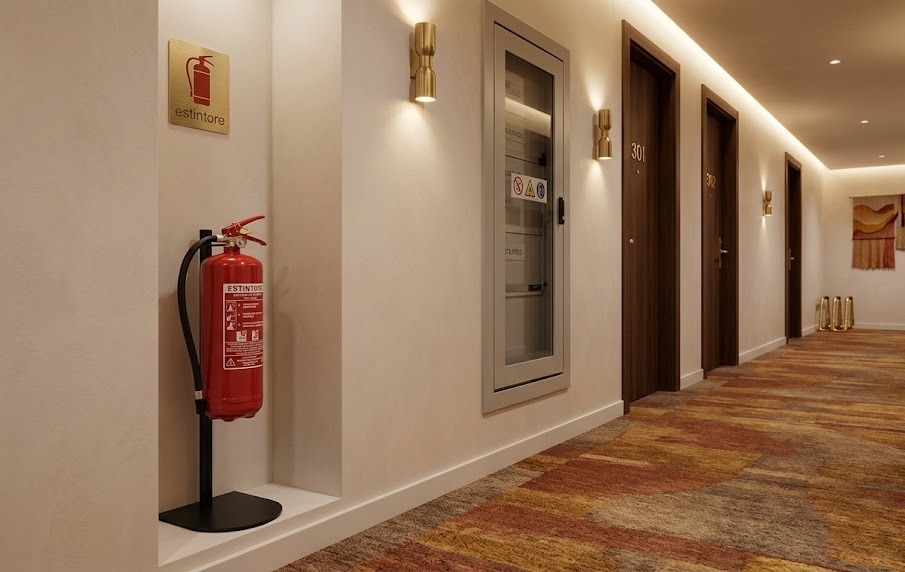
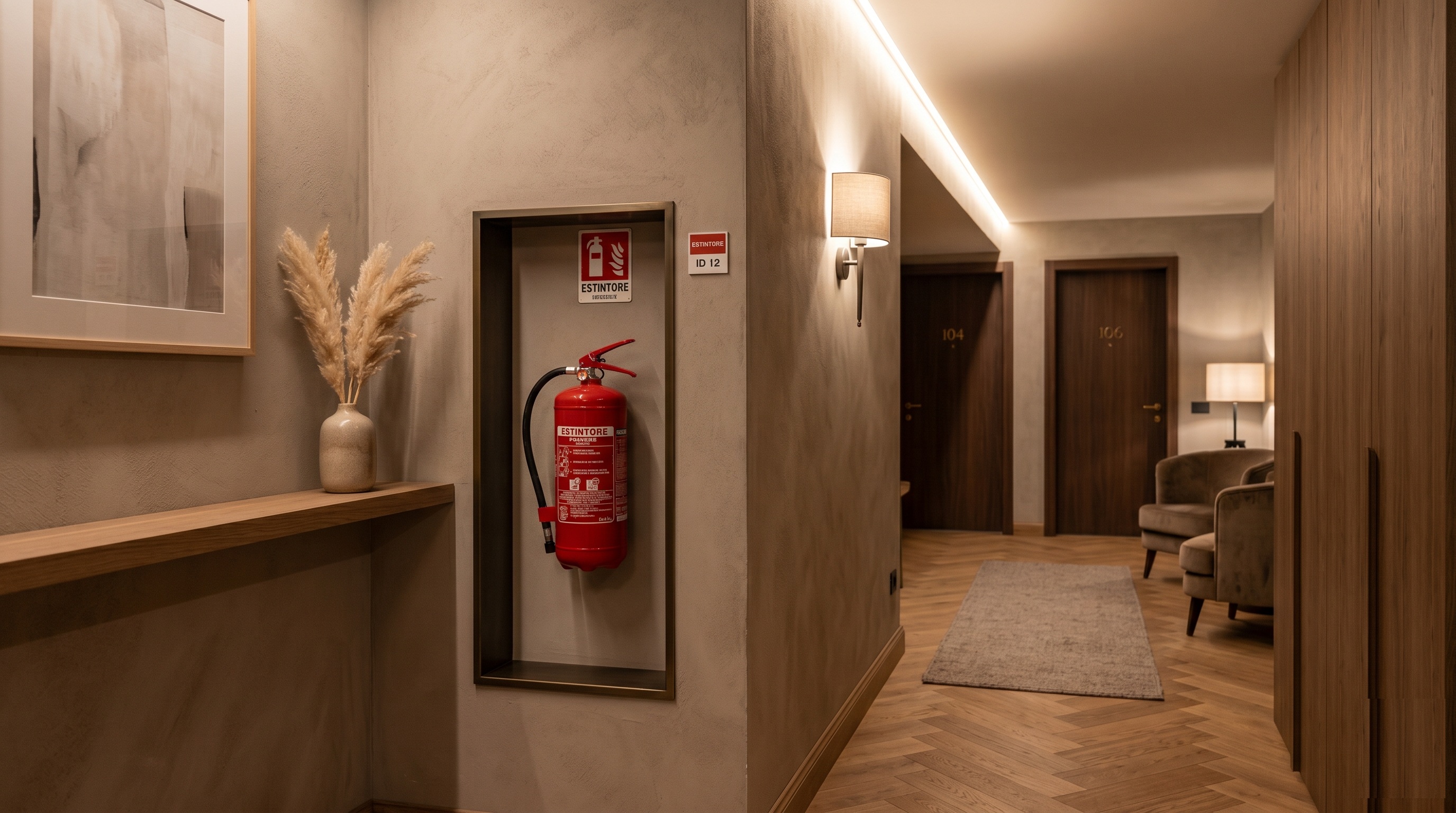
In addition to the choice of extinguisher, it is important to provide accessories and devices that facilitate its identification and use. These include fire extinguisher stands, wall brackets, boxes, fire signs and emergency signs.
Correct installation helps make the fire extinguisher easily accessible and visible in an emergency, especially in public places, such as companies, hotels, bars, and restaurants.
Frequently asked questions about choosing a fire extinguisher
Which extinguisher should you choose for an office?
In an office, CO2 extinguishers are often recommended for electrical equipment and, based on a risk assessment, powder extinguishers for common combustible materials.
Which is better: a powder or CO2 extinguisher?
The powder extinguisher is more versatile, but leaves residues. The CO2 extinguisher is suitable for electrical equipment and technical rooms because it leaves no residue after use.
Which fire extinguisher should I use in the kitchen?
In a professional kitchen, especially where oils and fryers are present, a class F extinguisher is recommended, designed for fires caused by cooking oils and fats.
Which extinguisher should you choose for a bar?
For a bar, it is necessary to evaluate the room, counter, electrical equipment, any kitchen and escape routes. Powder, CO2 or class F extinguishers may be necessary depending on the risks present.
What type of extinguisher should you keep at home?
For the house or garage, you can evaluate a general-purpose powder extinguisher or a CO2 extinguisher in the presence of electrical equipment. The choice must always consider the environment and the type of risk.
Choosing the right extinguisher means increasing the safety of the environment and intervening more effectively in the event of an emergency. On Holity.co.uk you will find fire extinguishers, fire-prevention products, supports, floor lamps and signage for companies, offices, commercial activities and professional structures.
 English
  Italian
 French
 German
 Spanish