Professional and domestic coffee machines: the main differences
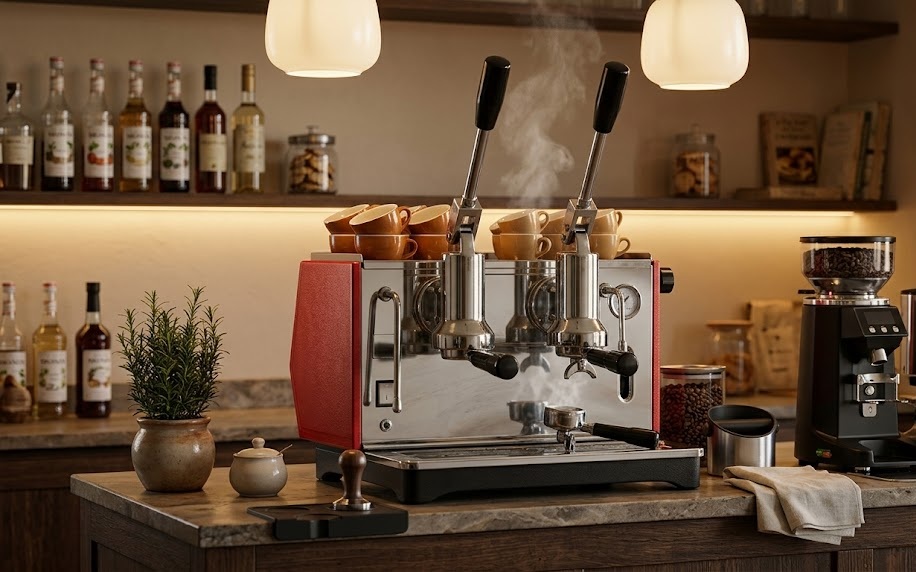
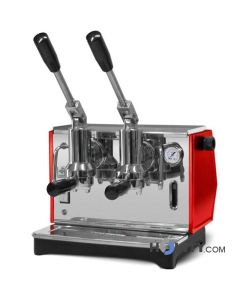
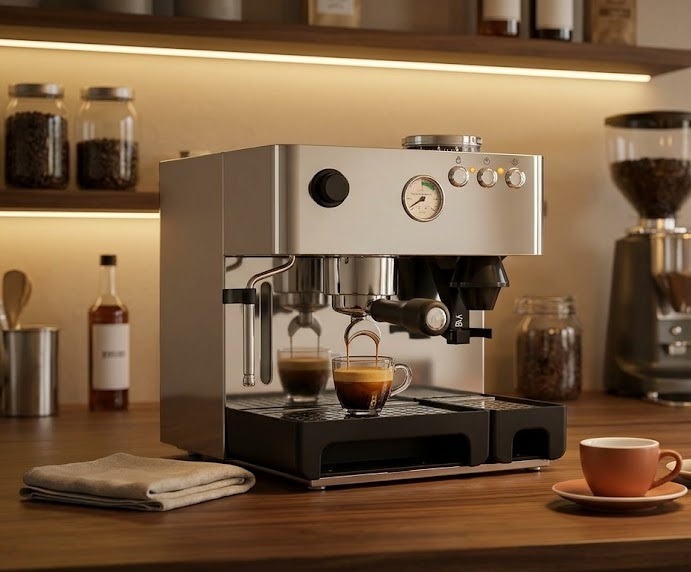 A professional machine is designed to work for many hours a day and prepare numerous drinks consecutively. It generally features more robust components, a higher-performance boiler, greater thermal stability, and dispensing systems designed to speed up the operator's work.
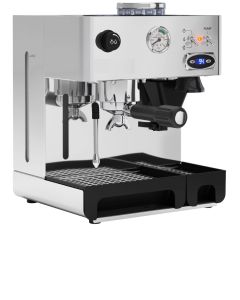
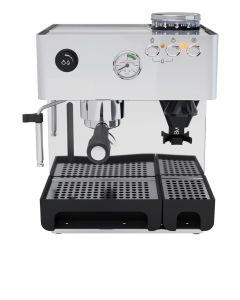
A home machine, on the other hand, is suitable for a limited number of coffees a day. It is smaller, has lower energy consumption, and simple controls, making it ideal for homes, small offices, or environments where coffee consumption isn't constant. The main difference isn't just in the taste of the coffee, but above all in the machine's ability to maintain consistent performance during frequent and consecutive uses.
Ground coffee, pods or capsules
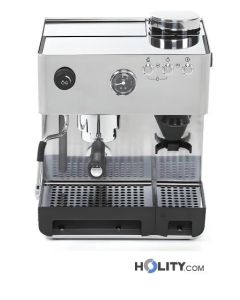
Professional machines often use ground coffee inserted into the filter holder, a solution that allows you to choose the blend, adjust the quantity of product, and adjust the tamping. Some models also include an automatic grinder, allowing you to grind the beans on the spot and preserve their aroma and freshness.
Home coffee machines can use ground coffee, ESE pods, or capsules. Pods and capsules are convenient because they contain a pre-prepared dose, reduce mess, and allow you to choose from a variety of beverages. Ground coffee, on the other hand, offers greater customization options but requires more attention to dose and cleaning.
When to choose a professional coffee machine
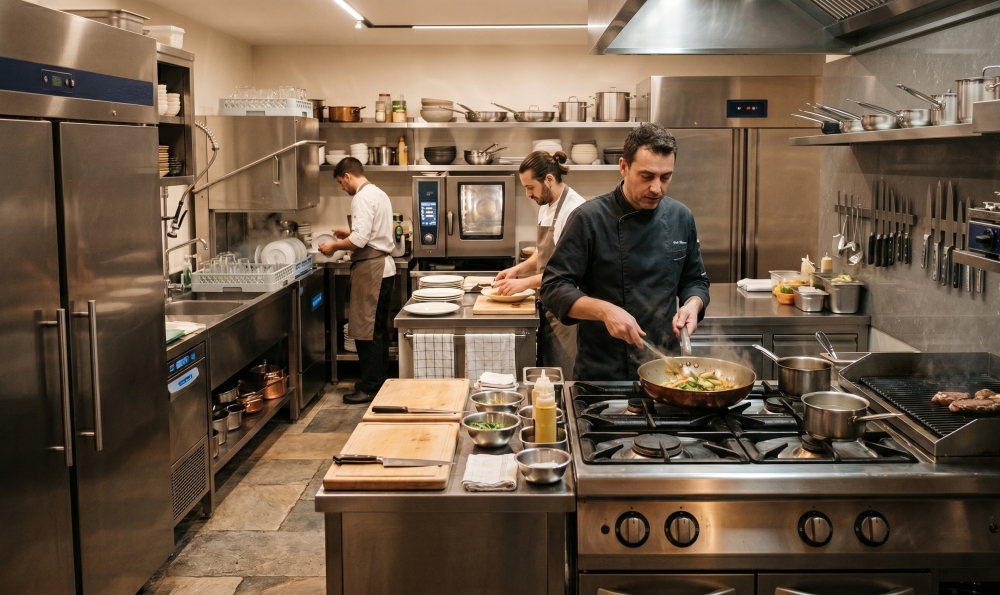
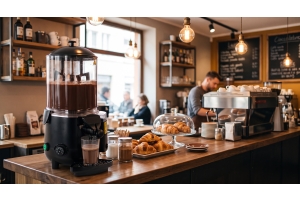
The professional coffee machines They are suitable for bars, restaurants, hotels, breakfast rooms, offices with many employees and businesses where it is necessary to prepare numerous coffees in a short time.
Before purchasing, it's important to evaluate the boiler capacity, the number of brewing units, the presence of a steam wand, the cup warmer tray, the construction materials, and the ease of cleaning. In professional settings, models that allow you to prepare multiple cups at once are also particularly useful.
When to choose a home coffee machine
Home machines are best suited for those who make a few coffees a day and want an easy-to-use appliance. Capsule or pod models offer great speed, while manual machines allow you to use ground coffee and achieve a more personalized result.
For home use, it's helpful to consider size, tank capacity, heat-up time, ease of refilling, and the availability of refills or compatible capsules.
Pressure, temperature and heating times
The quality of espresso depends on the right combination of temperature, pressure, and quantity of coffee. Professional machines generally ensure greater thermal stability during consecutive brewing sessions, while home models may require more time between brewing sessions.
Warm-up time is especially important in professional environments, where the machine must be ready quickly and maintain consistent performance. At home, however, a compact model that reaches temperature in just a few seconds may suffice.
Tank capacity and number of coffees
The water tank of home machines generally has a limited capacity, adequate for a few coffees a day. Professional machines can be connected directly to the water supply or have larger tanks, reducing the need for frequent refills.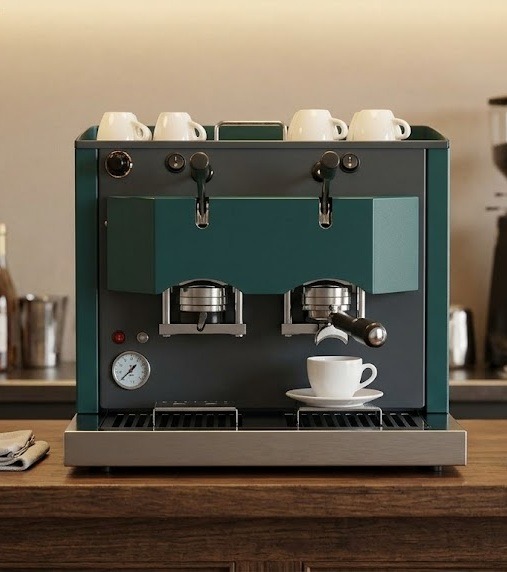
The choice should therefore be proportionate to the expected consumption: an undersized machine slows down the service, while a professional model may be excessive for occasional use.
Cleaning and maintenance
Manual machines require daily cleaning of the filter holder, filters, and steam wand. For professional models, it's important to regularly clean the groups, descale, and perform technical checks to maintain consistent performance.
Capsule or pod machines are easier to manage, but still require cleaning of the drip tray, tank, and dispensing group.
Manual, pod and capsule machines
Manual machines are suitable for those who want to adjust the amount of coffee and obtain a more personalized beverage. ESE pods are convenient and produce less residue, while capsules allow you to easily choose between different blends and beverages.
For those seeking convenience and speed, a capsule machine can be a good solution. Those who prefer to control the dose and blend may prefer a manual model with a filter holder.
Which coffee machine should you choose?
The choice depends primarily on the number of coffees you want to make and the level of control you desire. For bars, hotels, restaurants, and businesses with a high level of service, a robust and fast professional machine is preferable. For homes or small offices, a compact model using pods, capsules, or ground coffee may suffice.
Before purchasing, it is advisable to compare capacity, materials, heating times, cleaning methods and the cost of individual consumption, so as to identify the model best suited to your needs.
Frequently Asked Questions
Does a professional machine always make better coffee?
It can offer greater stability and adjustability, but the result also depends on the blend, the grind and proper maintenance.
Are pods or capsules better?
Capsules are practical and available in many variants, while ESE pods are generally easier to dispose of and allow for quick use.
How many cups of coffee can a home coffee maker make?
It depends on the model, but it is designed primarily for occasional use and not for continuous service like that of a bar.
When is it best to choose a professional machine?
When you need to prepare several consecutive coffees, maintain a stable temperature and reduce waiting times.
Choose the coffee machine based on its use
The difference between professional coffee machines and home machines primarily concerns production capacity, components, service continuity, and level of customization. Correctly evaluating these factors allows you to obtain quality coffee and choose a machine suited to your usage volume.
 English
  Italian
 French
 German
 Spanish