mon-fri 9-13 / 14.30-18.30
Welcome to the section dedicated to Holity.co.uk buying guides. Choosing the right professional equipment is a fundamental investment for the success, efficiency, and safety of your business.
In this space, our experts share technical insights and practical advice to help you navigate the vast Holity catalogue. In our guides, you will find clear information on:
From Urban Furniture to Furniture for Public Authorities and Communities, from equipment for the HoReCa sector to solutions for the Medical-Hospital and Industrial fields: we provide you with all the tools to make an informed choice and purchase professional quality that lasts over time.

The AED defibrillators Devices intended for businesses, schools, sports facilities, and organizations must be chosen considering the installation environment, usage, and technical features. Automatic or semi-automatic operation, battery life, electrodes, pediatric mode, and accessories all impact the device's long-term management. Evaluating these aspects before purchasing allows you to identify a solution consistent with the facility's needs and properly plan checks and replacements.
THE walkers for the elderly These aids are designed to provide support during daily movements. They can be used at home, in the corridors of a care facility, during short walks, or on more regular outdoor routes. Their function is not simply to support the person's weight, but to promote more controlled movement and greater safety when balance, strength, or endurance are reduced.
The bus shelters They are essential elements in the organization of public transport stops. They protect users from the sun, rain, and wind, make the stop more recognizable, and contribute to the overall quality of the urban space. For a municipality or a designer, however, choosing a shelter isn't just about choosing an aesthetically pleasing model. The structure must be consistent with the number of users, the width of the sidewalk, the climate exposure, and the characteristics of the neighborhood.
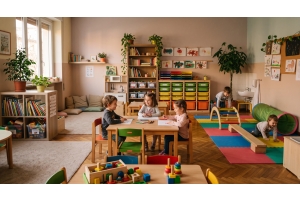
To understand how much it costs to furnish a classroom it is necessary to look beyond the price of a single desk. The budget includes student workstations, a teacher's desk, a teacher's chair, cabinets, storage units, and other items related to the teaching model adopted. To these items may be added transportation, delivery to the floor, assembly, and collection of replaced furniture. The final cost therefore varies based on the number of students, the size of the room, and the quality required.
Indoor walkers intended for nursing homes, clinics, and wards must be chosen considering the spaces in which they will be used. Width, depth, wheels, and braking systems affect maneuverability in corridors, rooms, and elevators. Even a few centimeters can make a difference in narrow passageways. For this reason, the selection must start from the actual characteristics of the structure and daily routes.
The corner protectors for schools help protect corners, columns, walls and furniture in spaces used by children every day. The choice depends on the area to be protected, the size of the space and the type of activity carried out. Materials, thickness and fixing system should be assessed according to the intended use. A careful analysis of the environment makes it possible to identify suitable protections for classrooms, corridors, play areas and other school spaces.
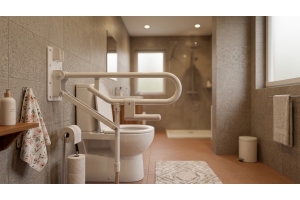
Public restroom furnishings must meet the needs of spaces used by many people every day. Sanitary fixtures, accessories and surfaces should therefore be durable, practical and easy to maintain. The choice depends on the number of users, frequency of use and type of facility. Careful planning helps create functional spaces that are easier to manage over time.
Furnishing a physiotherapy clinic requires careful planning of the available space and the equipment that is actually needed. Treatment tables, professional seating, trolleys and storage solutions should be arranged to support daily work while keeping circulation areas clear. The choice depends on the services provided, the size of the clinic and the number of treatment stations required. A well-planned layout creates a more organised, functional and easier-to-manage professional environment.
Modular school desks and tables make it possible to adapt the classroom quickly for teacher-led lessons, individual activities and group work. Shape, dimensions, height and configuration options determine how the furniture can be arranged. Mobility and overall footprint should also be assessed in relation to the available space. A coordinated choice therefore helps create more flexible and functional learning environments.
Professional service trolleys facilitate the transport of dishes, food, linen and operating materials. The choice must start from the place where they will be used. Dimensions, shelves and wheels affect daily work. A suitable model reduces unnecessary movements and handling.
A restaurant, a canteen and a hotel do not necessarily require the same configuration. The routes, the load and the frequency of movements vary. Even the image of the trolley can take on a different weight. For this reason, the technical data sheet must be read in relation to the actual use.
 English
  Italian
 French
 German
 Spanish