
mon-fri 9-13 / 14.30-18.30
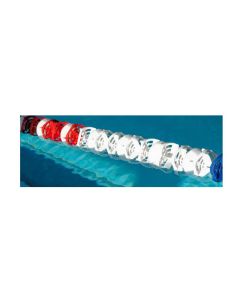
Floating lane h1009_09 20 m for swimming pools with Ø85 mm PP discs and AISI316 stainless steel cable. Anti-turbulence, space-saving for amateur use.
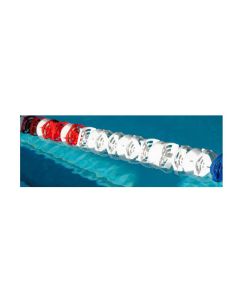
25-meter lane for h1009_03 swimming pools with Ø85 mm PP anti-turbulence disks and Ø6 mm plastic-coated AISI316 stainless steel cable. Space-saving for training.
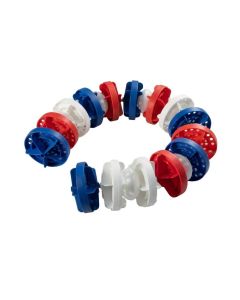
20 m floating pool divider h1009_14 for FINA pools with Ø120 mm PP disks and Ø 6 mm AISI316 stainless steel cable. For competitions and training.
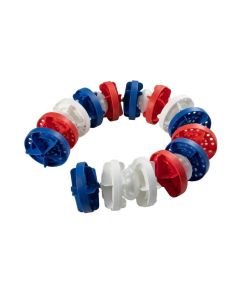
25-meter floating lane divider h1009_05 for FINA swimming pools with Ø120 mm anti-turbulence PP disks and AISI316 stainless steel cable. For racing and training.
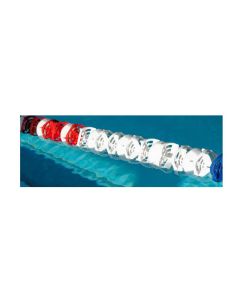
30-meter floating lane h1009_10 for amateur swimming pools with Ø85 mm PP discs and plastic-coated AISI316 stainless steel cable. For training.
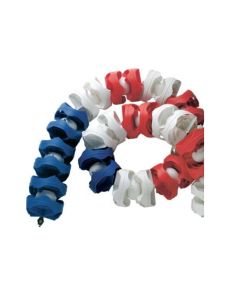
Floating lane 20 meters h1009_11 for FINA pool with asymmetric Ø150 mm discs in PP and plastic-coated stainless steel rope. For competitions.
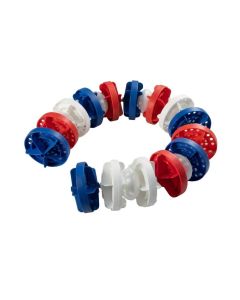
30 m floating divider h1009_13 for FINA pool with Ø120 mm PP discs and Ø 6 mm AISI316 stainless steel rope. For competitions and training.
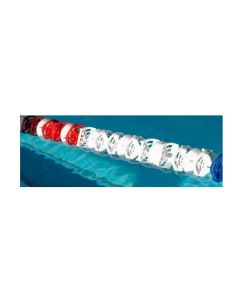
50 m floating lane h1009_04 for swimming pool with Ø85 mm anti-turbulence PP disk and plastic-coated AISI316 stainless steel. For training.
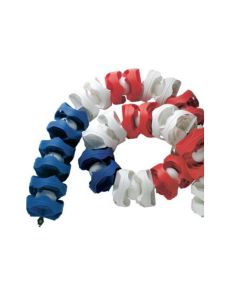
25-meter floating lane h1009_07 for FINA swimming pools with asymmetric Ø150 mm PP discs and plastic-coated stainless steel rope. For competitions.
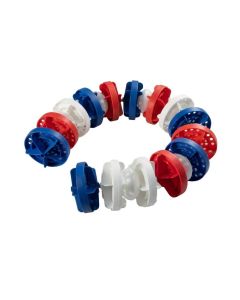
50 m swimming pool lane h1009_06 for FINA pools with Ø120 mm anti-turbulence PP disks and Ø 6 mm AISI316 stainless steel cable. For competitions and training.
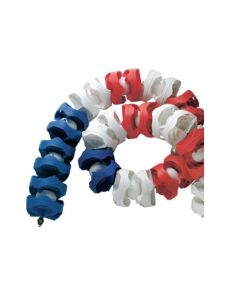
h1009_12 30 m floating swimming pool lane for FINA competitions with Ø150 mm asymmetric PP disks and AISI316 stainless steel cable. For competitions.
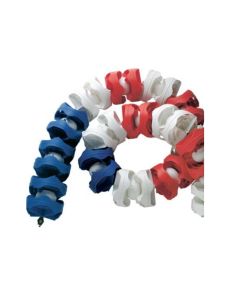
50 m floating lane h1009_08 for FINA swimming pools with Ø150 mm asymmetric PP disks and plastic-coated stainless steel rope. For competitions.
The professional outfitting of water basins intended for competitive swimming, sports training, or recreational activities requires structural components capable of ensuring wave motion control and swimmer safety. Floating pool lanes represent the fundamental technical solution for delimiting swimming spaces, optimizing hydrodynamics within the tanks, and drastically reducing the turbulence generated by athletes during progression. Designed to resist the aggressive action of chemical agents such as chlorine and isocyanuric acid, as well as ultraviolet rays, these floating barriers combine high-density plastic materials with high mechanical resistance support cables to ensure lasting tension stability.
Every swimming facility, whether public, managed by sports clubs, or part of high-level hospitality structures, requires specific configurations capable of responding to hydrodynamic stresses and intensive daily use. The adoption of the latest generation wave-breaking hydrodynamic rotors allows for the absorption and dissipation of the water's kinetic energy instead of reflecting it towards adjacent lanes, creating homogeneous swimming conditions for all lane users. Choosing the correct components directly influences the level of athletic performance that can be hosted and the facility's compliance with international standards of the discipline.
The primary function of separation lines within a sports water body goes far beyond the simple visual subdivision of training spaces. The use of professional-level floating pool lanes is essential for dampening the onset of surface waves and near-shore turbulence, which would otherwise limit the swimmer's stability and speed. Thanks to an engineered design that integrates rotating modules mounted on a stainless steel or high-tenacity synthetic fiber cable, the hydrodynamic thrust produced by arm and leg strokes is rapidly fractionated and neutralized. This phenomenon reduces the reflection of waves from the perimeter walls of the tank, standardizing buoyancy and gliding conditions along the entire race or training course.
In addition to the benefits in terms of fluid physics, floating boundaries constitute an indispensable device for managing operational safety within swimming facilities. In multifunctional contexts where swimming schools, open swimming, and fitness courses coexist, the clear definition of water zones prevents collisions and interference between users with different rhythms and abilities. The structural robustness of the floats also guarantees prolonged resistance to the continuous tensile stresses imposed by manual tensioning systems or spring ratchets, keeping the line perfectly taut and preventing sagging over time. Investing in quality wave-breaking components means reducing extraordinary maintenance costs and protecting the overall investment of the facility management.
The landscape of tank delimiters is divided into different technical configurations, developed to respond precisely to various intended uses, from Olympic basins to recreational structures. Standard training solutions use cylindrical or spherical floating modules alternated with low-density polyethylene spacers, ideal for delimiting open swimming lanes where wave impact is contained. Conversely, wave-breaking lines for competitive events are composed of a continuous succession of independent rotating wave-breaking disks with shaped vanes, designed to capture water and channel the energy of turbulence inside the disk itself, dissipating it before it transfers to the adjacent lane.
Constituent materials represent a further element of differentiation between the various types on the professional market. Floats made of high-density polyethylene (HDPE) stabilized against UV rays and ozone and chlorine attack guarantee high chromatic and mechanical stability over time, avoiding structural embrittlement phenomena. The supporting core of the line can vary from AISI 316 stainless steel cables, endowed with exceptional corrosion resistance and high breaking loads for permanently outfitted tanks, to high-tenacity polyester ropes, preferred in temporary or amateur facilities for their practicality in storage and handling on lane storage trolleys.
Identifying the ideal configuration for your swimming facility requires a detailed analysis of the tank's usage profile, the dimensions of the water surface, and the daily flow of users. The first decision factor lies in the diameter of the wave-breaking disks: the 70 mm or 100 mm versions are particularly suitable for recreational pools, school facilities, or 25-meter tanks dedicated to general training, where the visual footprint and the overall weight of the line must remain contained. Should the facility host official competitions or high-level competitive training, it is necessary to opt for wave-breaking disks with diameters from 120 mm up to 150 mm, capable of offering a significantly higher wave absorption capacity and ensuring maximum hydrodynamic neutrality between athletes.
A recurring error to avoid during the technical specification phase is the undervaluation of anchoring and tensioning hardware. The purchase of high-level floating lines must always be combined with stainless steel compensation springs and suitable ratchet tensioners, capable of absorbing dynamic load variations caused by water oscillations and dives from the starting block. Carefully evaluating the provision of cup-style fixing hooks and the presence of protection devices for the tank walls prevents damage to ceramic or mosaic linings, ensuring a stable installation, free of mechanical play and compliant with the facility's dimensional specifications.
The installation of lanes within sports facilities intended for official competitions is regulated by strict standards defined by the discipline's governing bodies, including directives from the International Swimming Federation (World Aquatics) and national federations. These regulations precisely prescribe the diameter of the floats, the mandatory color code for the visual identification of race paths, and the chromatic composition of the perimeter and central sections. Specifically, lines must feature a defined color combination along the 25 or 50-meter extension to clearly indicate to athletes the turning points and the distance from the edge, reducing the risk of improper impact against the wall.
From the perspective of hygienic-sanitary and structural safety, floating pool lanes must be made exclusively of non-toxic plastic substances, free of phthalates and without sharp edges or molding burrs that could cause friction injuries to swimmers. Plastic components must fully comply with European directives regarding materials in contact with water intended for bathing and show high chemical inertia towards standard sanitizing products. Verification of the anchoring systems' compliance with nominal tension and the absence of microplastic release into the filtration circuit are essential requirements to ensure the facility's suitability for inspections by the competent health authorities.
Explore all the products in the category and compare the available solutions to find the one best suited to your operational context.
Traditional lanes use simple floats to delimit spaces, while wave-breaking lanes employ engineered rotating disks that capture and dissipate the kinetic energy of the waves created by swimmers, reducing turbulence in the pool.
For competitive events and Olympic facilities, wave-breaking disks with a diameter between 120 mm and 150 mm are recommended, as they can effectively absorb the wave generated by high swimming speeds.
The length of the line must correspond to the exact distance between the pool wall anchors, taking into account the footprint of the damping springs and the stainless steel tensioners in the calculation.
Yes, professional floating lanes are made of high-density polyethylene (HDPE) with anti-UV additives, designed to resist the corrosive action of chlorine, cyanurates, and salt electrolysis systems.
AISI 316 stainless steel cable represents the ideal choice for fixed installations thanks to its high tensile strength and corrosion resistance, while synthetic ropes are suitable for temporary use.
Colors visually identify the race lanes and signal to swimmers the proximity of the turning walls (the last 5 meters) according to international standards established by World Aquatics.
To protect ceramic or liner surfaces, synthetic rubber protections should be installed on the end hooks, and compensation springs should be used to cushion mechanical stress on the anchoring points.
Lanes should be wound onto specific stainless steel lane storage trolleys, rinsed with fresh water to remove chemical residues, and stored in areas protected from continuous direct sunlight.
 English
  Italian
 French
 German
 Spanish