mon-fri 9-13 / 14.30-18.30
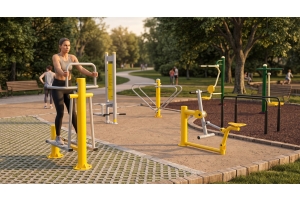
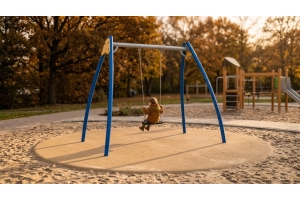
Understand how to design a playground It means correctly organizing spaces, equipment, routes, and services for children and their caregivers. An effective project must combine safety, accessibility, inclusion, and quality of life playground furniture, creating an environment suitable for different age groups and consistent with the context in which it will be implemented.
Whether it's a public park, a school campus, a shared green space, or a hospitality facility, design must begin with an analysis of the available space and continue with the selection of play equipment, flooring, and furnishings. A proper distribution of functions creates a safer, more organized, and more enjoyable play area.
The medical bed It represents one of the most important elements within a professional office, specialist clinic, or healthcare facility. Used during visits, consultations, diagnostic tests, and treatments, it significantly contributes to patient comfort and the healthcare professional's efficiency. For this reason, choosing the most suitable model requires a careful evaluation of numerous technical and functional aspects.
Professional kitchens for the foodservice industry must meet very different requirements than those for domestic environments. Restaurants, hotels, canteens, food processing plants, pastry shops, and Ho.Re.Ca. businesses require spaces designed to ensure operational efficiency, hygiene, durability, and ease of maintenance. In this context, professional stainless steel kitchens For years, they have been the benchmark for the furnishing of environments dedicated to food preparation.
Damage caused by accidental impacts is one of the most frequent problems in industrial and logistics environments. Warehouses, production areas, distribution centers and company car parks are characterized by the continuous movement of forklifts, pallet trucks, trolleys and other handling equipment that can come into contact with columns, shelves, pipes and load-bearing structures. In this context, industrial edge guards play a fundamental role in protecting infrastructure and ensuring the safety of operational activities.
The construction of a gym dedicated to rehabilitation requires a precise project, built around the needs of patients, physiotherapists, and the healthcare facility. The choice of rehabilitation gym equipment, the layout of spaces and the organization of internal routes directly impact the quality of service and the daily functionality of the environment.
Plastic New Jersey barriers and concrete versions are two of the most widely used solutions today for demarcating work areas, managing traffic, and protecting public and private spaces. Although they share the same main function—separating and securing certain areas—these two types have different characteristics that make them more or less suitable for specific contexts of use.
The choice between a concrete or plastic New Jersey barrier does not depend exclusively on cost, but must also consider aspects such as impact resistance, ease of handling, durability, installation method, and type of use. Understanding the differences between the two solutions allows you to make a more informed choice and identify the product best suited to your operational needs.
Industrial and professional activities require reliable, durable equipment designed to ensure high safety standards. Among the most widely used tools for maintenance, installation, logistics, and plant management operations, telescopic industrial ladders represent a particularly popular solution thanks to their versatility and ability to adapt to different operating contexts.
The ability to adjust the height according to work needs allows you to use a single piece of equipment for multiple applications, optimizing storage space and improving operational efficiency. However, to choose the most suitable model, it is necessary to carefully evaluate a series of technical characteristics that directly impact the safety and durability of the ladder.
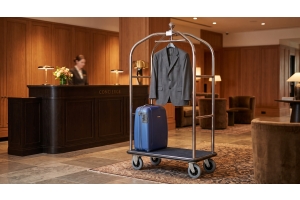
Understanding how much it costs to furnish a hotel is essential when opening a new accommodation facility or planning to renovate the rooms and common areas. The budget depends on the number of rooms, the hotel category, the quality of the supplies and the level of customization required. In particular, the prices of hotel furniture can vary significantly depending on the equipment planned for the rooms, reception and shared spaces.
To build a realistic budget it is therefore useful to divide the investment by individual areas and distinguish between essential furnishings, functional accessories and supplies that have the greatest impact on the guest's perception.
Opening a veterinary practice is a significant investment that requires careful planning from both a financial and organizational standpoint. Beyond the bureaucratic and regulatory aspects, it is essential to carefully evaluate the budget needed to set up the space, purchase equipment, and ensure a functional environment for professionals and patients. Understanding the real cost of a veterinary practice allows you to develop a sustainable project and avoid unexpected expenses during the initial phases of the business.
Needs can vary significantly depending on the type of facility, the services offered, and the level of specialization expected. A small practice dedicated to basic visits will have different costs than a facility that integrates advanced diagnostics, surgery, or hospitalization. Analyzing the main expense items is the first step in building a realistic and growth-oriented business plan.
The bus stop shelter is a fundamental element of street furniture dedicated to public transport: it protects passengers while waiting, contributes to the comfort of the stop and allows for the space intended for users to be organised in a more functional way. The choice of shelter must therefore consider not only the design, but also materials, dimensions, accessibility, resistance to atmospheric agents and characteristics of the installation site.
There are bus stop shelters made of steel, wood, glass, polycarbonate and combined materials, as well as standard, prefabricated and self-supporting models. Knowing the differences allows municipalities, public bodies, transport companies and designers to identify the most suitable solution for the urban and extra-urban context.
 English
  Italian
 French
 German
 Spanish