
mon-fri 9-13 / 14.30-18.30

Absorbency kit for chemicals h1043_60 in a polypropylene wall-mounted cabinet. Minimum absorption 58 lt, with pads, socks, and pillows. Dim. 616x270x735 mm.
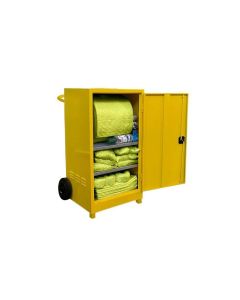
181 lt chemical spill kit in a wheeled metal cabinet. Dimensions: 580x460x1000 mm. Steel sheet with wheels and safety lock.
Safety management within industrial and production environments requires the adoption of highly efficient preventive and containment measures, especially in the presence of hazardous liquid substances. Spill kits represent the fundamental technical solution for responding promptly to accidental releases of hydrocarbons, chemicals, acids, or industrial liquids of various kinds. These solutions combine in a single pre-configured system all the absorbent material and protective equipment necessary to circumscribe the affected area, neutralize the danger, and proceed with the subsequent remediation of floors or soil, drastically reducing the risk of environmental pollution and workplace accidents.
The integration of these systems within corporate safety protocols not only responds to an ethical imperative for environmental protection but also satisfies specific legislative requirements regarding health and safety in the workplace. Every configuration, whether it’s an emergency spill kit structured within a mobile container or a fixed station, is developed to ensure immediate activation by operators, who can intervene without losing precious time searching for individual absorbent components. The correct placement of these devices at critical fluid storage and handling points constitutes the pillar of a modern and efficient industrial risk management strategy.
The adoption of a dedicated device such as an emergency response kit guarantees an immediate reaction capacity that minimizes downtime and damage to corporate infrastructure. When an accidental spill occurs, the capillarity and rapid absorption of the internal material prevent the liquid from reaching drains, gullies, or the surrounding ground, avoiding environmental disasters and heavy criminal and administrative penalties. The professional absorbent materials contained in the kits have a retention capacity significantly higher than old traditional methods like sawdust, which besides being inefficient increases the volume of waste to be disposed of and can generate fire risks or dangerous chemical reactions.
From an operational standpoint, having a pre-organized system optimizes internal safety logistics because it concentrates in a single visible and accessible point both the pillows and socks for delimiting the fluid perimeter, and the absorbent pads for surface removal. This systemic approach also allows non-specialized but appropriately trained personnel to operate according to standardized and safe procedures, limiting exposure to toxic vapors or direct contact with corrosive substances. The presence of a watertight and identifiable container also ensures that the materials remain dry and protected from dust, humidity, and external contamination until the actual moment of need, preserving their effectiveness over time.
The safety equipment market offers various logistical configurations to respond to the specific layouts and mobility needs of industrial sites. The wheeled bin spill kit represents the choice for large plants, mechanical workshops, and loading/unloading areas, where the distance between storage points can be considerable and requires the rapid transport of large volumes of absorbent directly to the site of the event. The drums and wheeled bins, made of high-density polyethylene resistant to impact and chemical agents, protect the contents and subsequently serve as approved temporary containers for collecting saturated material awaiting disposal.
For different operational contexts or for equipping company vehicles intended for the transport of dangerous goods, the use of the bag format or the cabinet spill kit in metal or plastic is preferred. Waterproof bags and duffels offer exceptional flexibility and a small footprint, perfect for being stored in truck cabs or near small hydraulic machinery. Wall-mounted stationary cabinets, on the other hand, are used to create fixed and clearly visible first-response points inside chemical laboratories, dosing departments, or paint warehouses, ensuring that the absorbent spill kit is always associated with a specific workstation considered high risk.
The selection of the correct containment system must be based primarily on the chemical compatibility of the absorbent materials with the liquids stored within the facility. A frequent error lies in using generic hydrocarbon absorbents on strong acid spills, with the only result being the failure to retain the fluid or, in the worst cases, the melting of the polypropylene itself. Chemical spill kits for industrial products are specifically formulated with chemically inert materials treated not to react with aggressive substances, acids, bases, and unknown liquids, differing clearly from "oil only" versions which are hydrophobic and designed exclusively to float on water and absorb oils and fuels.
Another critical factor in the choice is the estimate of the maximum foreseeable spill volume, calculated based on the capacity of the largest container present in the work area. Purchasing a bag with an absorption capacity of twenty liters for a department where two-hundred-liter drums are handled constitutes a serious undervaluation of the risk that exposes the company to structural and regulatory dangers. It is essential to carefully evaluate the composition of the kit, ensuring that the ratio between pads, boundary socks, and pillows is balanced for the geometric conformation of the spaces and that suitable personal protective equipment is included, such as long-sleeve nitrile gloves, goggles, and bags for special waste.
The presence of containment systems responds to precise regulatory obligations established by the Consolidated Law on Occupational Safety and European directives on the protection of environmental matrices. The employer has the duty to evaluate all risks present in the company and to prepare the necessary emergency measures to counter them, including devices for the control of accidental releases of substances classified as dangerous for health or the environment. Failure to provide a suitable spill kit near tanks, cisterns, or decanting areas can be contested by supervisory bodies as an organizational deficiency in emergency management, resulting in heavy penalties.
In addition to the physical presence of the device, current regulations require that the materials used comply with industrial absorption standards and that personnel be adequately trained on use procedures. After use, all exhausted materials that have absorbed the dangerous substance change their legal nature, transforming into hazardous special waste that must be stored in compliance with environmental laws and identified with the correct EWC code. The kit container itself, if approved, supports this transitional phase of safe storage, preventing dangerous fluids from leaching back into the surrounding environment during the temporary storage period.
Explore all products in the category and compare available solutions to find the one best suited to your operational context.
A compliant kit must include barriers or socks to circumscribe the liquid, absorbent pads or sheets for surface removal, pillows to block crevices, heavy-duty disposal bags with relative ties, and minimum personal protective equipment such as specific gloves and protective safety goggles.
Hydrocarbon materials are oleophilic and hydrophobic, so they absorb oils while repelling water, ideal for outdoor use or in ports. Chemical product kits are instead universal or chemically inert, designed to absorb aggressive liquids, acids, bases, and aqueous solutions without deteriorating or triggering dangerous reactions.
The devices must be placed in strategic high-risk areas that are clearly visible and marked, such as drum storage areas, fluid decanting zones, maintenance workshops, and loading bays. They must be located close to the potential danger but in a safe position, to allow immediate access without obstacles.
The calculation must be based on the principle of the worst credible scenario, evaluating the volume of the largest container present in a specific area. If 60-liter drums are handled, the adjacent kit must guarantee a retention capacity similar or close to that volume to effectively contain the initial impact wave.
Spent absorbent materials assume the hazard class of the liquid they have retained. They must be collected in the sealed bags present in the kit, placed in suitable containers, and cataloged with the specific EWC code for special or hazardous waste, to then be entrusted exclusively to authorized disposal companies.
Polypropylene does not have a real chemical expiry date, but storage conditions affect its effectiveness. If stored inside sealed bins or cabinets protected from UV rays, extreme humidity, and dust, the materials maintain their absorbent properties unaltered for many years.
 English
  Italian
 French
 German
 Spanish