
mon-fri 9-13 / 14.30-18.30
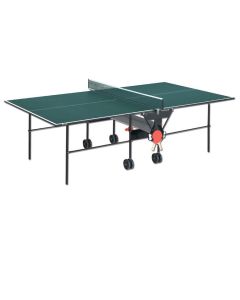
Folding and mobile table tennis table, for indoor use. Materials: bilaminate melamine and painted steel.
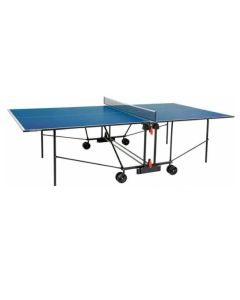
Indoor ping pong table ideal for hotels, schools, parish centers.
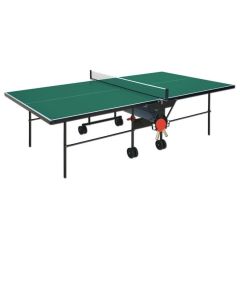
Outdoor ping pong table, folding, on wheels. Materials: melamine resin and painted steel.
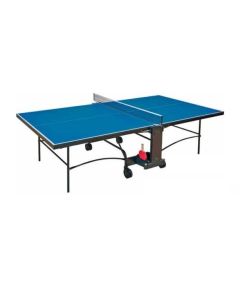
Folding table tennis table ideal for recreational use and training.
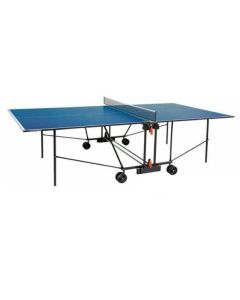
Outdoor ping pong table. Ideal table for youth centers and schools.
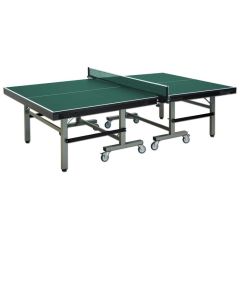
Indoor table tennis table, foldable, ITTF certified. Materials: bilaminated melamine and painted steel. 8 wheels.
Table tennis tables represent a versatile solution for recreation and training in public and private contexts. From schools to community centers, from hotels to accommodation facilities, these tables are used in environments where it is necessary to combine practicality, resistance, and compliance with international standards. The choice of the correct type depends on the context of use, environmental conditions, and frequency of use, as the indoor and outdoor variants have significantly different construction characteristics.
The table tennis table market is divided into folding and fixed solutions, with various degrees of mobility and closing systems that facilitate storage and transport. ITTF (International Table Tennis Federation) certified professional models guarantee compliance with competitive regulations, while recreational versions prioritize robustness and ease of maintenance.
Holity.com offers a structured range of table tennis tables intended for communities, accommodation facilities, and sports centers, with particular attention to technical performance and durability over time.
Table tennis tables prove to be indispensable for facilities that intend to offer structured recreational activities and technical training. In community centers and youth centers, these tables promote gathering and physical movement among young people and adults, with limited investment compared to other sports infrastructures. The construction versatility allows the product to be adapted to multiple scenarios: a folding model with wheels transforms multipurpose environments into spaces dedicated to table tennis without space compromises.
In hotels and accommodation facilities, table tennis tables increase the entertainment offer and differentiate the stay experience, generating added value for guests of all ages. The construction quality of professional models guarantees continuity of use without premature breakage, reducing replacement and extraordinary maintenance costs. Furthermore, ITTF-approved tables bring credibility to those who intend to organize tournaments or competitive training sessions, attracting conscious practitioners and increasing the reputation of the facility.
The possibility of playing alone, thanks to the closing system that allows one side of the table to be raised, makes the product suitable even for users who wish to practice without playing partners.
The market basically offers two categories: indoor tables and outdoor tables. The former use bilaminated melamine for the playing surface, a material that guarantees a consistent bounce and a smooth surface, ideal for competitive dynamics. The support structure uses painted tubular steel, which provides stability during intense shots. These models usually include side containers for rackets and balls, a handle locking system, and, in some cases, eight multi-directional wheels that facilitate movement. Indoor tables are suitable for frequent use in climate-controlled environments, where humidity and sun are not degrading factors.
Outdoor tables are distinguished by a surface made of melamine resin, a material subjected to anti-oxidation treatments against UV rays and constant humidity. The steel of the structure receives a specific coating to resist atmospheric agents. These models typically feature a folding system and robust wheels for transport on uneven surfaces. Melamine resin does not absorb humidity, avoiding swelling and deformation over time. Some outdoor tables for intense use incorporate a locking system with an ergonomic handle and still allow solo play by keeping one of the sides raised. The choice between indoor and outdoor directly affects purchase costs and operational life in the respective contexts.
The decision between models must start from environmental analysis: closed and climate-controlled spaces require indoor tables, while covered areas exposed to thermal variability and humidity benefit from outdoor models. The expected frequency of use must be evaluated; facilities with high traffic require tables with more robust construction, preferably ITTF certified, capable of withstanding prolonged mechanical stress. The need for storage influences the choice between fixed and folding models: the latter represent the mandatory solution when space is limited.
A common mistake consists in underestimating the importance of the closing system and the wheels. A faulty folding mechanism quickly becomes an economic loss, while poor quality wheels quickly deteriorate the floor or make movement difficult. Checking that the chosen model has dedicated containers for accessories reduces the risk of losing balls and rackets, a recurring problem in shared environments. For facilities that plan competitions, ITTF certification is not a simple feature of prestige, but rather an essential technical requirement for the approval of official tournaments. Conversely, for exclusively recreational uses, non-certified models offer the same playing pleasure with less investment.
Always consider the available dimensions and verify that the table does not occupy passage or safety spaces in the designated environment.
Table tennis tables intended for regulated competitions must meet ITTF standards, which govern surface dimensions (274 x 152.5 cm), net height (15.25 cm), and other technical parameters. These standards guarantee international uniformity and allow official recognition of matches and tournaments. ITTF certification represents a competitive advantage for facilities that intend to host competitive events recognized by national and international federations. The materials of the playing surface must have specific bounce and friction characteristics, verifiable through standardized tests.
Even for recreational use, safety standards for the finished product are applicable, regarding structural stability, the absence of dangerous edges, and the mechanical resistance of the supporting elements. In public environments such as schools and community centers, tables must pass checks on compliance with safety requirements relating to furniture and furnishings for community use, as regulated by European standards EN 1729 and derivatives. The materials used must be non-toxic and appropriate for contact with users of all ages. Accommodation facilities that install table tennis tables in common areas must also guarantee compliance with fire safety and accessibility regulations, especially if the table occupies escape routes or areas where disabled or elderly people circulate.
Explore all the products in the category and compare the available solutions to find the one best suited to your operational context. Whether you are setting up a recreational space in a school, a community center, a hotel, or a facility, carefully evaluate the technical characteristics, certification, and mobility systems offered by the different models.
Indoor tables use bilaminated melamine for the surface, ideal for competitive bounce, with a painted steel structure. Outdoor ones mount melamine resin treated against UV and humidity, with specific materials and coatings to resist atmospheric agents. The choice depends on the environment where the table is to be placed.
Yes, some models in our catalog are ITTF approved, therefore suitable for regulated competitions. Non-certified models still maintain high construction standards and are perfectly suited for recreational use and amateur training without perceived quality limitations.
Yes. The closing mechanism allows one of the two sides of the table to be raised, transforming it into a bounce wall. This function makes the table usable even solo, increasing its versatility of use in community and hotel contexts.
The ITTF regulation dimensions are 274 centimeters in length by 152.5 centimeters in width, with a net height of 15.25 centimeters. Most of the tables in our catalog respect these measurements, ensuring compatibility with international competitive standards.
Folding models have a handle locking system and are equipped with multi-directional wheels, which facilitate movement on flat floors. The mechanism allows the table to be reduced to a small footprint for vertical storage or towing, ideal for environments with limited space.
Outdoor tables with a melamine resin surface and painted steel resist weathering and prolonged wear better. Indoor tables with bilaminated melamine maintain superior performance in climate-controlled environments, but require protection from excessive humidity and direct sunlight to preserve their characteristics over time.
Yes, table tennis tables represent a consolidated recreational attraction in hotels, resorts, and community facilities. They increase the entertainment offer for guests of all ages and differentiate the stay experience. Robust and easily maintainable models ensure continuity of use without significant operational issues.
Prices range from approximately 367 euros for simple folding models to over 1,000 euros for ITTF-certified professional tables with eight wheels. The majority of models include containers for rackets and balls. See the product sheets for specific details on included accessories and available configurations.
 English
  Italian
 French
 German
 Spanish