
mon-fri 9-13 / 14.30-18.30
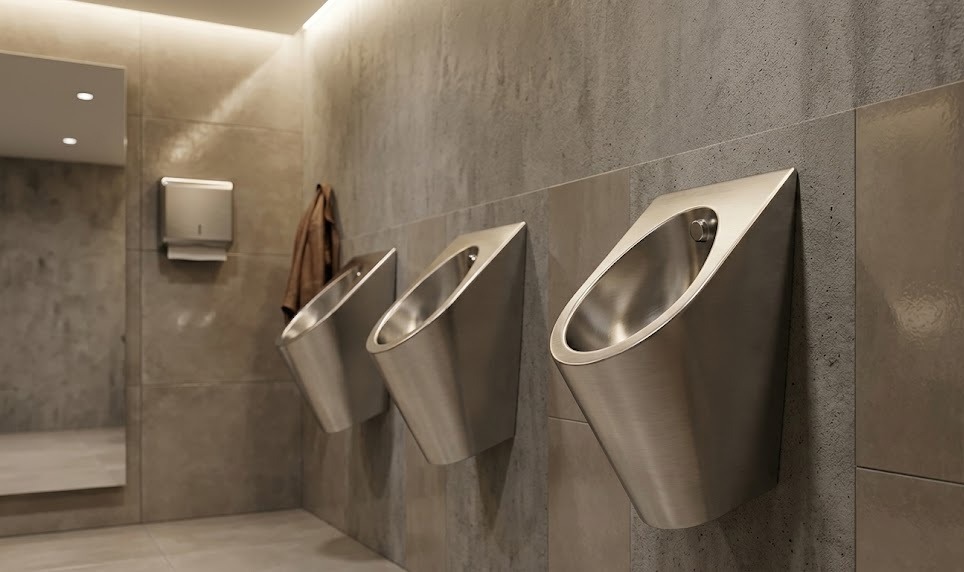
Managing restrooms within a public space is one of the most complex challenges for any administrator or designer. Choosing the right stainless steel toilets and urinals isn't simply a matter of specifications, but a strategic and far-sighted investment in terms of absolute hygiene, extreme durability, and economic sustainability. Whether you're fitting out a hospital, a correctional facility, a stadium, a gym, or a high-traffic rest area, traditional ceramic sanitary ware often suffers from limitations related to porosity and structural fragility. This buying guide is designed to help you navigate the various stainless steel models in our catalog, analyzing construction types, hydraulic parameters, and regulatory requirements to help you select the ideal product for your facility.
In the holity.co.uk catalogue, the range of stainless steel sanitary ware is divided into specific configurations designed to optimise space, simplify cleaning and ensure maximum efficiency of use.
Targeted solutions for managing flows in men's toilets, designed to reduce waiting times and maximise available linear space.
Stainless steel toilets offer differentiated responses based on the complexity of installation and the aesthetic or safety requirements of the rooms.
To configure a supply suitable for intensive stress, it is essential to set the search filters based on specific mechanical and hydraulic resistance parameters.
The chemical composition of stainless steel determines the longevity of the sanitary fixture based on the aggressiveness of the environment:
Before confirming the purchase, it is essential to check the pressure requirements and diameters of the existing pipes:
In unattended public facilities, passive safety is paramount. Models with vandal-resistant features incorporate hidden fixing screws, reinforced covers and rounded edges to prevent snagging. To ensure full accessibility for users with motor disabilities or reduced mobility, the catalogue offers dedicated solutions with seat heights calibrated between 460 mm and 480 mm, in full compliance with international guidelines for overcoming architectural barriers.
Stainless steel sanitary fixtures for collective use must be provided with technical documentation and CE marking to certify compliance with public health requirements. Toilets must pass the hydraulic resistance and disposal capacity tests required by the EN-997 standard, while urinals comply with the EN-14688 standard, which certifies their useful depth and structural resistance to impacts through falling steel ball tests. In hospital and clinical environments, the non-porous surface of stainless steel guarantees full compatibility with sanitization cycles using saturated steam up to 120°C, preventing the proliferation of microorganisms and bacterial biofilms.
Hospitals, Clinics and Nursing Homes: The recommended choice is wall-hung WCs in AISI 316 steel or hygienic monoblocks compliant with the DIN-4601-1 standard (seat height 460-480 mm). They facilitate quick cleaning of the floor, are resistant to aggressive chemical disinfection and ensure easy lifting for patients.
Stadiums, Gyms, Large Events and Stations: In contexts with very high simultaneous traffic, multiple wall-mounted or battery-operated urinals combined with high-thickness floor-standing toilets are preferred. They reduce customer waiting times, resist forced mechanical stress and optimise the facility's water consumption.
Penitentiary Institutions and Psychiatric Facilities: It is mandatory to install sanitary fixtures with the maximum anti-vandalism configuration. Models with welded monoblock bodies, rounded edges, the absence of removable covers and systems with completely hidden screws eliminate the risk of break-ins, self-harm or detachment of the device from the wall.
Invest in maximum durability, reduce extraordinary maintenance costs and guarantee an impeccable standard of hygiene for your users. In the online catalog of holity.co.uk you will find a special selection of toilets, bidets and urinals in AISI 304 and 316 stainless steel, developed by the best manufacturers in the sector to guarantee an operating life of more than 20 years without alterations to the satin or polished finish.
Use our navigation filters to select the structural type (wall-hung or floor-standing), configure the vandal-proof variants or identify the models with increased height for the disabled. Are you a public body, a designer or a healthcare company and do you need a dedicated quote, support for tender specifications or purchases through MePA? Contact our customer service today to receive customized technical advice for your project.
What is the nominal thickness of stainless steel sheet recommended to ensure the acoustic and mechanical stability of the sanitary fixture?
In high-traffic public or healthcare building projects, engineering standards require the use of stainless steel sheets with a nominal thickness of 1.2 mm to 1.5 mm (up to 2.0 mm for ultra-high security prison variants). A high structural thickness not only prevents deformations or dents due to concentrated loads or violent mechanical impacts, but also significantly dampens the resonance frequencies and the metallic noise generated by the turbulent flow of water during the flushing phase.
Do stainless steel sanitary fixtures require a provision for earthing (equipotential) connection inside the bathroom?
Yes, in compliance with the electrical safety requirements set out in the CEI 64-8 regulation for rooms containing bathrooms or showers, stainless steel toilets and urinals are configured as conductive foreign bodies. Professional bodies include a special threaded pin welded to the back of the frame, specifically designed for connection to the building's earthing bar, eliminating the risk of dangerous electrical voltages from dispersion.
How do the "no-touch" automatic flush systems with hidden radar integrated into stainless steel urinals work?
Unlike traditional infrared photocells exposed from the front, high-tech models integrate special radar sensors positioned entirely on the back of the steel body or inside the hydraulic siphon. This system detects the variation in thermal and electrical conductivity of the liquid conveyed inside the flush pipe, automatically activating the solenoid valve. This hidden configuration eliminates any snags and the risk of vandalism.
How does robotic TIG welding finish affect the prevention of microbiological contamination?
Excellent construction processes use continuous TIG (Tungsten Inert Gas) welding, which fuses the metal joints into a single monolithic block without coarse filler material. Compared to mechanical assemblies made with rivets or screws, TIG joints are subsequently brushed and pickled to eliminate any micro-cracks or structural porosity, preventing the nesting of bacterial biofilms, limescale and organic particles.
Is it possible to connect stainless steel toilets to pre-existing floor (S-trap) or wall (P-trap) waste systems during renovations?
Yes, hydraulic compliance is guaranteed by the universal design of the internal rear pipes of the stainless steel bowl. Alignment with standard system diameters (100 mm for the sewer manifold) is managed by inserting special flexible technical bends or high-tight PVC eccentric fittings. Since the external metal body completely envelops the components, the entire hydraulic connection group remains protected and invisible to the end user.
What construction features do stainless steel toilets integrate to support eco-friendly low-flow flush systems?
State-of-the-art EN-997-compliant toilets feature a hydrodynamic design of the internal cup and the siphon chamber shaped to optimize the Venturi effect. This profile reduces the surface friction of the water and allows the flushing and waste disposal cycle to be completed using reduced water volumes, equal to just 4.5 litres (or 4.5/3 litre dual-flush configurations) instead of the traditional 6 or 9 litres, promoting water savings in the building.
 English
  Italian
 French
 German
 Spanish