
mon-fri 9-13 / 14.30-18.30
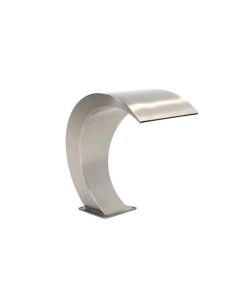
Satin-finished AISI 316-L stainless steel swimming pool fountain. Dimensions: D 47 x W 35 x H 48 cm.
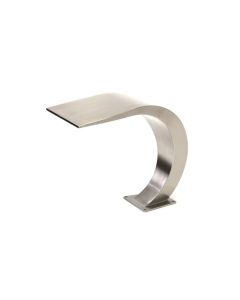
Extended fountain for swimming pools and wellness in polished AISI 316-L stainless steel. Dimensions: D 59 x W 35 x H 48 cm.
Pool fountains and waterfalls represent essential elements in the design of any aquatic space, whether residential or professional. These complements are not limited to decorative functions but integrate functional aspects related to water recirculation, the creation of sensory effects, and the improvement of the overall user experience. The choice of a pool fountain or waterfall directly affects the perceived quality of the environment, the thermal stratification of the water, and the aesthetic value of the entire structure. Primarily made of stainless steel, these solutions guarantee durability, corrosion resistance, and minimal maintenance over time. Regardless of the pool size or the surrounding architectural style, there is a wide range of types suitable for every operational context.
A pool fountain or waterfall transforms the aquatic space into a complete multisensory experience. The continuous movement of water generates natural sound effects that contribute to user relaxation, while the thermally managed flow helps maintain more uniform temperatures in the pool. From an aesthetic point of view, these elements act as focal points capable of significantly elevating the perceived value of the environment. In the professional field—hotels, wellness centers, spas, accommodation facilities—fountains and waterfalls add a layer of luxury that justifies higher rates and improves the service reputation. In residential contexts, the installation of a waterfall or fountain transforms a simple pool into a personal oasis, a space where recreation is intertwined with physical and psychological well-being.
Practical benefits also include improved water circulation, reducing stagnation areas and supporting filtration systems. The waterfalls created by these structures facilitate natural water oxygenation, decreasing the chemical load needed to maintain water quality. Furthermore, the hydromassage effect generated by the flow stimulates blood circulation, offering benefits comparable to light therapeutic treatments. The installation versatility allows these elements to be adapted to existing pools without the need for invasive structural work.
In sports centers and public facilities, pool fountains represent a strategic investment to increase the attractiveness of the facility and differentiate it from the competition. The sensory experience created by the sound and sight of the water flow reduces stress and increases overall user satisfaction. Thermal structures and wellness centers use these elements as an integral part of the service narrative, communicating quality, attention to detail, and commitment to holistic well-being. Even in public environments such as water parks or municipal facilities, waterfalls and fountains serve as an identifying element, creating a recognizable visual brand identity. Research in hospital and rehabilitation settings has shown that aquatic environments enriched with waterfalls promote faster recovery cycles, thanks to the combination of hydrotherapy and sensory stimulation.
Pool fountains and waterfalls differ in geometry, construction material, installation methods, and technical water delivery specifications. Wall waterfalls represent the most versatile solution, installable directly onto existing walls, creating a linear water flow that slides continuously and predictably. Available in varying depths (from 35 cm to over 60 cm), they adapt to spaces of all sizes. Sheet of water fountains offer a sophisticated visual effect through a uniform dispersion of the flow, ideal for modern and minimalist pools where sober design is a priority. These models require precise water pressure management to maintain a constant and homogeneous sheet.
For high-impact scenic applications, column waterfalls rise vertically creating majestic flows from bottom to top, perfect for large pools or luxury resorts. AISI 316-L stainless steel waterfalls represent the highest quality standard, thanks to superior resistance to corrosion even in environments with salt water or intense chemical treatments. Corner fountains, designed specifically for pool corners, optimize space without sacrificing aesthetic impact. Some models incorporate integrated LED lighting, transforming the waterfall into a scenic element even during evening and night hours, with the possibility of varying colors and light intensity. Water jet waterfalls, with pressurized outlets, generate vigorous and invigorating flows, ideal for areas dedicated to aquatic massage or dynamic cooling.
In addition to standard types, the market offers hybrid solutions that combine decorative functions with active circulation (dynamic fountains), where the integrated pump manages both aesthetics and filtration. The choice between pre-assembled and modular models depends on installation needs and the complexity of the desired geometry. Some manufacturers offer modular fountains, allowing for the creation of customized effects through the progressive addition of elements. Alternative materials to stainless steel—such as reinforced polyester resin or artificial stone—offer different aesthetic opportunities but require more frequent maintenance. The depth of the water outlet varies significantly between models: thin sheet fountains (10-15 mm) create ethereal effects, while thick jet waterfalls (40-60 mm) guarantee superior acoustic and visual impact. The type of final grid or screen also influences water dispersion: tight meshes generate fine misting, wide meshes allow more compact jets to pass.
The selection of a pool fountain or waterfall requires a preliminary assessment of specific technical and contextual parameters. The first decision criterion concerns the dimensions of the tank and the available space: a small residential pool (under 30 sqm) benefits from compact wall or corner fountains, while medium-large structures (40-100 sqm) tolerate column or sheet of water waterfalls. The water flow rate of the existing or to-be-installed pump determines the type of flow achievable: standard pumps (2-5 kW) support wall waterfalls and sheet of water, while column waterfall applications require larger systems (7-15 kW). A common mistake is underestimating the energy requirement: high visual impact waterfalls consume more energy than minimalist decorative fountains. Climate and exposure are critical factors: in marine environments or with salt water, AISI 316-L stainless steel becomes non-negotiable; in indoor pools with standard chemical treatment, AISI 304 steel may be sufficient. The overall aesthetics of the structure must guide the chosen geometry—modern lines support sheet of water and minimalist waterfalls, while classic designs pair better with columns and volumetric flows.
A frequently overlooked aspect concerns compatibility with existing filtration and recirculation systems. Integrating a waterfall into an already operational system requires assessment of pressure losses, water speed at the outlets, and the hydraulic balance of the entire circuit. The water outlet depth (thickness of the sheet or jet) varies in direct proportion to the pressure: choosing a type incompatible with the system leads to poor aesthetic results or malfunctions. Acoustic impact also deserves attention: strong jet waterfalls generate noise levels above 70 dB, undesirable in evening residential contexts; thin sheets of water maintain levels around 50-55 dB. Ease of maintenance and cleaning is decisive for public or professional facilities: removable grids and smooth materials limit the accumulation of algae and limescale. Finally, evaluate the future possibility of modifications—some modular models allow configuration changes without complete disassembly, reducing costs and downtime in case of aesthetic updates.
The installation of pool fountains and waterfalls is regulated by technical and regulatory standards that vary based on the type of structure (residential, commercial, public) and geographical jurisdiction. At the European level, standards EN 13451 (safety requirements for pool equipment) and EN 13287 (water circulation systems) govern construction parameters, hydraulic compatibility, and safety margins. All pumps and components in contact with water must comply with hygiene and health directives (European Directive 98/83/EC on water intended for human consumption, even if not directly applicable, provides reference criteria). In Italy, Legislative Decree 81/2008 (safety in the workplace) applies to professional systems, requiring risk assessments, component certifications, and complete technical documentation. Fountains with LED lighting must comply with low voltage (EN 60950) and electromagnetic compatibility (EN 61000) standards. Materials in direct contact with water must be certified not to release toxic substances, particularly for stainless steels, documentation is required to attest to chemical composition and resistance to pitting corrosion (ASTM certifications or equivalent).
From a construction standpoint, waterfalls must integrate without compromising the structural integrity of the pool. Fixing points require load calculations (the weight of the water in the waterfall, plus the hydrodynamic force of the flow) and substrate strength certifications. Wall fountains require minimum anchoring every 60-80 cm to ensure stability even in the event of accidental lateral pressure. Drainage/overflow systems must prevent flooding: each waterfall must have an anti-flood siphon and water level control systems. In public environments, accident prevention regulations prescribe protection against accidental falls near high waterfalls (generally, barriers or warnings for heights above 1.5 meters). Periodic maintenance is mandatory: weekly visual checks, bi-weekly cleanings, monthly mechanical inspections for pumps and seals. For professional systems, technical documentation must include hydraulic diagrams, certificates of conformity, maintenance instructions, and a periodic control plan, usually entrusted to certified specialized technicians.
Explore all products in the category and compare the available solutions to find the one best suited to your operational context. The choice of a pool fountain or waterfall impacts the aesthetic, functional, and sensory quality of the aquatic space: a conscious decision guarantees lasting benefits over time.
The wall waterfall creates a compact and volumetric water flow that slides vertically, generating a marked sound impact and a powerful visual effect. The sheet of water fountain, on the other hand, disperses the flow uniformly in a thin thickness (10-20 mm), creating a refined and minimalist visual effect with less noise. The choice depends on the architectural style and the level of noise tolerated.
AISI 316-L stainless steel is the gold standard for marine environments, thanks to its superior resistance to pitting corrosion caused by chlorides. AISI 304 steel, less expensive, is suitable for indoor pools with standard chemical treatment. For intense saline environments, also consider elastomer coatings or specific resins, although they require more frequent maintenance than stainless steel.
 English
  Italian
 French
 German
 Spanish