
mon-fri 9-13 / 14.30-18.30
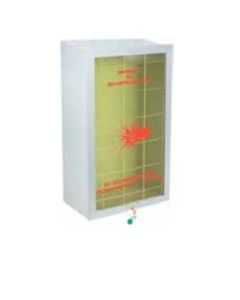
Recessed fire cabinet in steel and aluminum, 37x18x61 cm. Discrete and resistant solution for the protection of safety equipment in offices and apartment buildings.
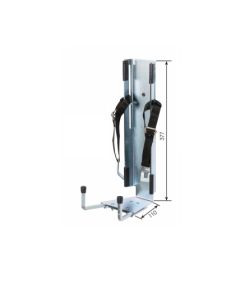
Universal metal fire extinguisher support (Ø 100-200 mm), with panic release system and control seal, ideal for heavy vehicles and buses.
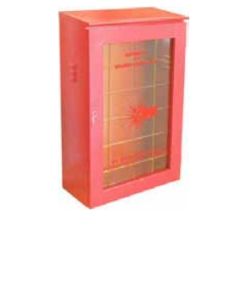
Empty fire hydrant cabinet in red painted steel (37x18x61 cm). Designed for wall-mounted installation in industrial and civil outdoor environments.
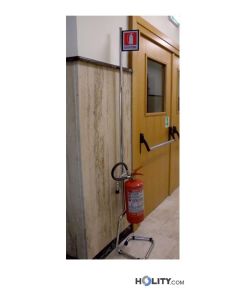
Mobile chrome-plated aluminum fire extinguisher floor stand, height 192 cm with projecting sign. Lightweight, self-standing and ideal for offices and public spaces.
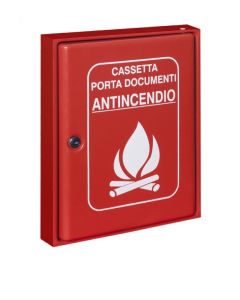
Red ABS document holder box (W26xD4.5xH32.5 cm) with lock, ideal for the protected storage of fire registers and certifications.
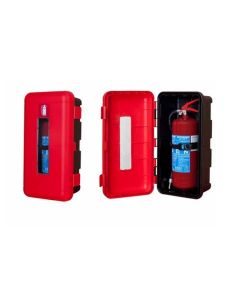
Polypropylene fire extinguisher cabinet for 6 kg. Dimensions 335x240x620 mm. Weather-resistant, with internal fixing ring.
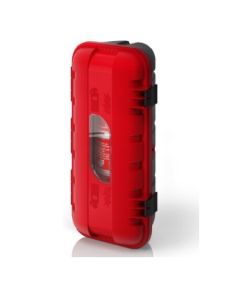
6 kg fire extinguisher cabinet in polypropylene and polycarbonate, 287x220x600 mm, TÜV certified for fixed or vehicle installation.
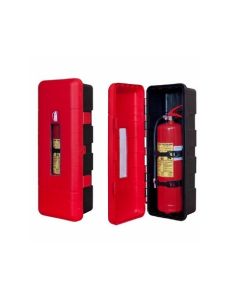
Molded polypropylene fire extinguisher cabinet, 335x240x865 mm. Universal for models from 5 to 12 kg with integrated fixing ring.
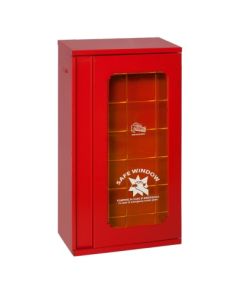
Cabinet for 6 kg fire extinguishers in Red RAL 3000 painted steel, 325x200x602 mm, equipped with a breakable plate for quick emergency access.
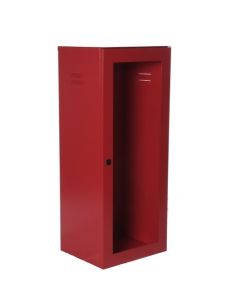
Anti-corrosion metal fire extinguisher cabinet for 5-12 kg models. Dimensions 325x250x802 mm with PVC closure and yellow breakable plate.
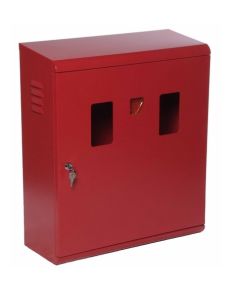
Double fire extinguisher cabinet in RAL 3000 red painted steel, 550x220x640 mm. Accommodates two 6 kg units with safety edges and inspection windows.
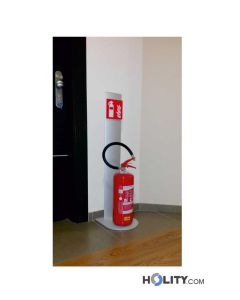
Aluminum fire extinguisher floor stand with 15x15 cm signage plaque. Height 100 cm, minimal design for prestigious offices and public spaces.

Aluminum and iron fire extinguisher stand, height 180 cm. Modern design with signage plate and stable base for public buildings and HoReCa.
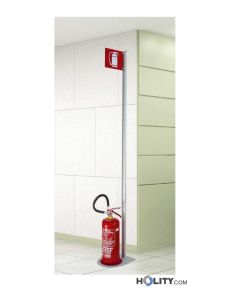
Mobile fire extinguisher stand in aluminum and chrome-plated brass. Height 100 cm, stable 38x23 cm base and projecting sign for safety signage.
Fire extinguisher cabinets represent an essential solution for fire protection in outdoor, industrial, and civil environments. These specialized containers offer robust shelter for extinguishers, protecting them from atmospheric agents and corrosion while allowing rapid access in case of emergency. Made of highly resistant materials such as painted steel, stainless steel, and polypropylene, fire extinguisher cabinets guarantee durability over time and compliance with current fire regulations. Their versatility makes them indispensable in various contexts: from industrial complexes to public buildings, from hospitality facilities to road and rail transport systems.
The importance of correct extinguisher placement lies not only in the physical protection of the device, but in the need to maintain immediate visibility and accessibility in critical situations. Modern cabinets incorporate transparent inspection windows, portholes for visual charge monitoring, and quick-opening systems with break-glass panels, elements that transform these containers from simple protective boxes into active components of an integrated fire system. Furthermore, quality cabinets feature rounded safety edges, visible signage, and a design studied to integrate into environments without compromising aesthetics.
The choice to install extinguishers protected in dedicated cabinets brings a series of concrete advantages from both a safety and maintenance perspective. Protecting extinguishers from the elements and mechanical damage significantly extends their operational life, reducing early replacement costs caused by corrosion, wear, or aesthetic deterioration. In outdoor environments, where humidity, thermal variations, and chemical agents can quickly compromise functionality, the cabinet becomes an essential investment. Furthermore, a well-designed cabinet facilitates periodic maintenance: operators can easily inspect the devices, verify the pressure charge status, and schedule checks without having to locate the extinguisher in critical or inaccessible points.
From an emergency operational standpoint, a well-positioned and signaled fire extinguisher cabinet reduces reaction times in case of fire. The visibility guaranteed by safety signage (flag signs, ISO pictograms) makes it immediate to identify the fire protection device even in low-light conditions or cluttered spaces. Metal cabinets with break-glass panels allow instant access to the extinguisher through controlled breakage of the glass or plastic, eliminating the need to search for keys or complicated releases in critical moments. This aspect is particularly relevant in contexts where first-response personnel may not be specialized (offices, shops, tourist facilities).
The market offers a significant variety of fire extinguisher cabinets, primarily differentiated by construction material, capacity, and opening system. Painted steel cabinets, usually in RAL 3000 red, represent the most common solution in civil and industrial fields thanks to the combination of mechanical resistance, durability, and low cost. These models are typically equipped with doors that open by pushing or pulling, fitted with robust hinges and closing mechanisms that ensure a tight seal even in humid environments. Stainless steel cabinets, on the other hand, find application in contexts where corrosion represents a higher risk, such as coastal areas, chemical plants, or areas where aggressive vapors are used.
Polypropylene and polycarbonate cabinets offer distinct characteristics: they are significantly lighter, impact-resistant, and easy to install, and they do not require anti-corrosion maintenance. These plastic materials are ideal for indoor environments, for mobile applications on vehicles, or where weight is a critical factor. An additional category includes double cabinets, specifically designed to house two extinguishers simultaneously, useful in large spaces or when fire regulations require multiple safety stations. Finally, there are specialized solutions such as hydrant cabinets, built with specific dimensions to house fire hoses and nozzles, or document cabinets made of rigid ABS with a lock, designed to protect fire registers and certificates of conformity.
Selecting the appropriate fire extinguisher cabinet requires a careful evaluation of various technical and contextual parameters. The first element to consider is the volumetric capacity: cabinets must be sized to comfortably house the extinguishers required by the fire risk assessment, without however being oversized in tight spaces. Users frequently make the mistake of choosing generic cabinets without checking the exact dimensions of the extinguisher (diameter and height), risking the purchase of a container that does not allow correct installation or that compromises access. A second fundamental criterion concerns the destination environment: for outdoor installations, it is imperative to opt for corrosion-resistant materials (stainless steel or specific coatings); for humid environments like professional kitchens or laundries, stainless steel or plastic is preferable; for areas with a risk of frequent mechanical impacts, metal cabinets are more appropriate.
An often-overlooked aspect concerns the access system and compliance with safety regulations. If the cabinet is intended to function as a first-aid station in public environments or with untrained personnel, it is essential that it is equipped with break-glass panels or facilitated openings that do not require special tools. Visual signage plays a crucial role: flag signs, internationally recognizable ISO 7010 pictograms, and standardized colors (red for fire cabinets) facilitate instinctive identification. A common mistake consists of installing cabinets in poorly visible positions or without adequate signage, which nullifies their protective function by drastically reducing their operational utility. Finally, considering whether the cabinet will be wall-mounted, on a mobile floor stand, or integrated into a furnishing system should guide the choice of construction type and the overall weight of the finished product.
In Italy, the design and installation of fire extinguisher cabinets is primarily regulated by Legislative Decree 81/2008 (Consolidated Law on Safety at Work) and technical standards of the UNI EN 3 series. UNI EN 3-7 specifies construction requirements for extinguishers and, by extension, for their containers, mandating that cabinets ensure effective protection while maintaining immediate accessibility in case of emergency. Cabinets must have smooth internal surfaces to avoid damage to extinguishers during extraction, transparent windows for visual monitoring of charges, and a minimum number of ventilation points to avoid humidity buildup. Resistance to atmospheric agents is certified according to international standards involving accelerated corrosion tests, especially for cabinets intended for outdoor use.
From a fire safety perspective, UNI 9994 standards address safety design in companies and provide that extinguishers be installed so as to be visible, easily accessible, and clearly marked. Cabinets must be positioned at a height between 100 and 180 cm from the floor (in spots easily reachable by people of different heights), maintain a maximum distance of 15 meters from the potential ignition point, and be accompanied by luminescent signage complying with the ISO 7010-W001 standard. For installations in public environments (offices, schools, commercial establishments), compliance with the requirements of the Ministerial Decree of 7 August 2012 on the Fire Safety Code is mandatory, which establishes specifications regarding maintenance, inspection, and documentation. Cabinets must bear clear indications of when they were subjected to checks and when the next scheduled maintenance is due.
Explore all products in the category and compare the available solutions to find the one best suited to your operational context. Whether you need to protect an outdoor station, integrate a fire system in a public area, or equip a fleet of vehicles, our catalogue includes cabinets for every technical and dimensional need, with certified materials and solutions already compliant with current fire regulations.
Painted steel cabinets offer greater resistance to mechanical impacts and long durability, ideal for industrial and exposed outdoor environments. Polypropylene plastic is lighter, does not require anti-corrosion maintenance, and is better suited for mobile installations on vehicles or in confined spaces, although it has lower impact resistance.
Single cabinets for 6 kg extinguishers typically have dimensions around 325x200x600 mm, while models for 5-12 kg reach 335x240x865 mm. For hydrants, cabinets are larger, around 37x18x61 cm. It is essential to check the exact dimensions of the extinguisher before purchase to ensure correct placement.
UNI regulations provide for an installation height between 100 and 180 cm from the floor, preferably positioned so as to be visible and easily reachable by people of different heights. The position must be kept at a maximum distance of 15 meters from fire risk areas.
Compliant cabinets bear certification marks such as TÜV, CE, or explicit references to UNI EN 3-7 and UNI 9994 standards on the technical documentation. Always check that the manufacturer provides detailed technical sheets and quality control certificates at the time of purchase.
Yes, but it is advisable to ensure that the wall is dry and that the cabinet is positioned to allow light rear air circulation to avoid humidity buildup. For environments particularly exposed to direct rain, prefer stainless steel or specific anti-oxidant coatings.
Yes, double cabinets like the 550x220x640 mm model are specifically designed to comfortably house two 6 kg extinguishers each. Check the maximum load capacity indicated by the manufacturer, generally sufficient to contain the combined weight of the extinguishers and withstand wear over time.
Use the international ISO 7010-W001 pictogram (white extinguisher symbol on a red background) and a projecting flag sign. For outdoor installations or in poorly lit areas, it is appropriate to add luminescent elements complying with the ISO 7010 standard to ensure visibility in low light conditions.
The cost varies from 35-40 euros for simple plastic models up to 270-300 euros for chrome aluminum floor stands with signage. The average lifespan of a quality steel cabinet is 10-15 years with correct maintenance; plastics last about 8-10 years. Annually check the corrosion status and the functionality of the opening system.
 English
  Italian
 French
 German
 Spanish