Buying Guide: How to Choose Professional Coffin Carts for Funeral Homes, Funeral Homes, and Cemeteries
When organizing funeral services, the handling of coffins requires equipment capable of supporting heavy loads and facilitating movements while respecting the safety of the operators and the decorum of the ceremony. professional coffin trolleys, also called funeral carts or casket-handling carts, are wheeled supports designed to facilitate the transport and positioning of coffins within funeral homes, chapels of rest, places of worship, cemeteries, and other compatible environments. They can help reduce the need for manual lifting during certain phases of the service, but their use does not automatically eliminate the risks associated with handling loads. The choice must consider the overall weight of the coffin, the dimensions of the casket, the passageways, the characteristics of the flooring, and the loading and unloading methods. The catalog of Holity.co.uk comprehends foldable and extendable coffin trolleys, mainly made of aluminum and stainless steel, with different finishes and adjustment configurations. There are models with declared load capacity of 280, 300 and 454 kg, wheels of varying diameters, and compact structures designed for easy transport and storage. The range also includes a motorized model for electronically lifting the support surface. This purchasing guide analyzes types, load capacities, wheel characteristics, materials, maintenance, regulatory requirements, and price ranges to help funeral homes, funeral home managers, and cemetery service managers identify the cart best suited to their needs.
1. Structural types: accordion-style extendable carts vs. ceremonial display carts
The configuration of the trolley must be chosen in relation to the frequency of movements, the size of the coffins and the possibility of using the same support during transport and the ceremonial stop:
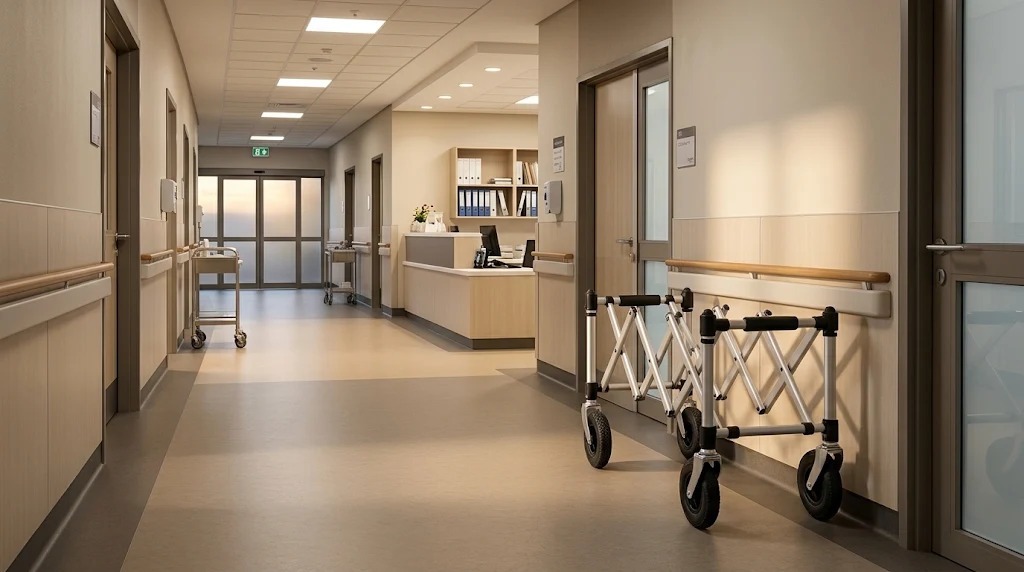
Extendable coffin trolleys (accordion / pantograph): Folding and extendable carts are designed to reduce bulk when not in use, facilitating transport and storage in available spaces. The Holity catalog features several aluminum models with stainless steel joints and components, featuring foldable structures. Some versions are approximately 13 cm thick when folded, while other products have different dimensions. The h687_91 model, for example, offers four lengths and four working heights to choose from, with dimensions varying according to configuration. It's important to distinguish between the simple folding option and the adjustment of the useful length: not all carts allow for free adaptation to any trunk size. Before purchasing, it's important to check the open and closed dimensions, the support surface, the load capacity, and the presence of any locking devices. The empty weight contributes to ease of handling, but it doesn't guarantee that every operation can be carried out safely by one person.
Ceremony trolleys and funeral chapel supports: When displaying the coffin in chapels, funeral homes, chapels, and places of worship, it may be necessary to use a support that ensures stability and an appearance appropriate to the context. Some foldable coffin carts can also be used as temporary supports during the coffin's stay, if this is specified by the manufacturer. The Holity catalog includes models with silver, bronze, and black finishes, suitable for a variety of aesthetic purposes. However, it is not correct to attribute to all these products a rigid, single-piece structure, velvet upholstery, or solid brass details. Before ceremonial use, it is important to check the cart's stability when parked, the characteristics of the support points, and the possible need for accessories for draping or protecting the coffin. For example, for the h687_91 model, a draping attachment kit is available upon request.
Trolleys with upper roller conveyors and sliding surfaces: Some professional coffin handling systems may include rollers or surfaces designed to facilitate the transfer of the coffin between compatible equipment. These devices must be differentiated from common folding carts, and their availability cannot be assumed for all products in the category. Verified Holity specifications primarily document carts with upper supports and extendable structures; the presence of a roller conveyor must therefore be confirmed for each individual model. Even when rollers are present, transferring the coffin requires load control and verification of surface alignment. It is incorrect to consider the system completely frictionless or capable of eliminating any need for manual assistance. Handling must be performed in compliance with the manufacturer's instructions and the safety procedures adopted by the company.
2. Structural load capacity: from standard models (280-300 kg) to high capacity versions (454 kg)
The manufacturer's declared load capacity is one of the key parameters for choosing a trolley. It must be compared with the overall weight of the coffin, including any accessories, and should not be interpreted as a universal guarantee of stability under all handling conditions.
Capacity from 280 kg to 300 kg: The Holity catalog features numerous coffin carts with a declared capacity of 300 kg, including at least one 280 kg model. These values indicate the maximum load specified by the manufacturer for the specified conditions of use, but do not constitute a mandatory minimum threshold established by law. To select a cart, it is necessary to know or conservatively estimate the total weight of the coffin, including the deceased, the casket, and any additional components. The presence of coverings, metal accessories, or counter-walls can affect the overall weight. Not all coffins are equipped with a zinc outer casing: its presence depends on the burial and transport methods, and applicable regulations. The choice of cart must also consider the correct distribution of the load on the structure, avoiding unstable supports or weight concentrations not specified by the manufacturer.
Reinforced 454kg capacity (for heavy loads): For handling needs requiring a higher capacity, the Holity catalog includes the h687_91 trolley, with a rated load capacity of 454 kg. This model uses an aluminum frame with stainless steel joints and offers a choice of four lengths and four heights, making it suitable for coffins of varying sizes within the manufacturer's specifications. The 454 kg capacity does not automatically constitute bariatric certification or a guarantee of suitability for any oversized coffin. In addition to weight, it is necessary to check the coffin's width, usable support surface, center of gravity, and road conditions. The rated load capacity does not allow for overcoming obstacles, tackling slopes, or carrying out unintended transfers. For particularly heavy loads, handling procedures, the number of operators involved, and any need for additional equipment must also be evaluated.
3. Wheel geometry, independent brakes and handling on surfaces
Wheels affect the maneuverability of the coffin cart, its behavior during movement, and its interaction with pavement. The choice must consider diameter, tread material, brakes, and road conditions:
Swivel wheels and rotation systems: Holity coffin carts are available with four swivel wheels, designed to facilitate maneuverability when transporting coffins. This ability to swivel the wheels can be useful in corridors, funeral homes, and other spaces with limited space. The characteristics of the swivel supports, bearings, and any locking systems vary by model. It is incorrect to assume that all wheels use sealed bearings or guarantee frictionless rotation. The maneuvering range also depends on the size of the cart, the length of the coffin, and the arrangement of obstacles. Before use, it is important to check that the path is sufficiently wide and that the wheels are in good condition.
Rubber tread and rolling materials: Various models use wheels designed to facilitate movement and limit vibration and noise during operation. The tread material can affect rolling resistance, wear resistance, and compatibility with surfaces. However, not all wheels are necessarily made of thermoplastic rubber or non-marking polyurethane. The actual characteristics must be verified in the product data sheet. In particular, it is important to distinguish between:
Noise reduction: Wheels in proper condition, with appropriate materials and rotation systems, can help make movement more discreet. Complete silence of the trolley cannot be guaranteed: noise also depends on the load, the surface being traveled, the speed, and the condition of the components.
Floor protection: For use on marble, parquet, stone, and other delicate surfaces, it's best to choose wheels compatible with the floor. Even treads labeled as non-marking can cause marks or damage if abrasive residue, heavy loads, or improper handling are present. Before moving the wheel, it's advisable to check the condition of the wheels and ensure the surface is clean.
Locking systems and parking brakes: Some carts may be equipped with braking systems or wheel locks, useful during parking and positioning operations. The presence, number, and operation of brakes must be verified for each model: it is incorrect to automatically assign two or four independent brakes to all carts in the same category. A parking brake, when present, helps reduce the risk of involuntary movement on a suitable surface, but it does not guarantee the cart's immobility on excessive slopes, impacts, or improperly distributed loads. For parking during ceremonies, it is important to choose a stable and level surface, avoiding using the cart on ramps or sloping floors unless expressly permitted by the manufacturer.
Wheel diameter and obstacle clearance: In the Holity catalogue there are coffin trolleys with wheels of diameter equal to 125 mm and 200 mm, depending on the model. Larger diameter wheels may make it easier to overcome small irregularities compared to more compact wheels, but they do not automatically make the cart suitable for gravel, steps, or curbs. Performance also depends on tread width, load distribution, type of pavement, and conditions of use. For outdoor cemetery paths, it is necessary to check for unevenness, gaps, slopes, and unconsolidated surfaces. Wheel diameter must be evaluated along with the overall height of the cart and the ability to align it with the loading platforms of the equipment used.
4. Construction materials, corrosion resistance and cleanliness
Coffin trolleys can be used indoors and, where applicable, along outdoor routes. The choice of materials must take into account frequency of use, exposure to humidity, and cleaning and maintenance requirements:
Anodized aluminum and aluminum alloys: Aluminum is one of the primary materials used in the collapsible coffin carts available on Holity. It offers a good weight-to-mechanical characteristics ratio, making it suitable for the construction of collapsible structures and components intended for frequent handling. Some models feature an anodized finish, available in silver, bronze, or other shades. Anodizing contributes to surface protection, but the thickness of the treatment and wear resistance depend on the product specifications. It's not correct to automatically assign all carts an anodizing thickness of 15-20 micrometers. When choosing a model, it's important to check the empty weight, load capacity, quality of the joints, and the folded dimensions. Even a relatively lightweight cart must be handled in compliance with safety procedures and environmental conditions.
Stainless steel and metal components: Several Holity carts combine an aluminum frame with stainless steel joints, pins, or other components. This solution allows for the use of different materials based on the structural needs of the individual elements. Not all products are made entirely of AISI 304 stainless steel, and it's incorrect to assume that the presence of steel components guarantees complete freedom from deformation or corrosion. Resistance depends on the alloy, profile geometry, load conditions, and maintenance. Chrome or metallic finishes can enhance the cart's aesthetics, but corrosion resistance must be assessed based on the materials declared by the manufacturer. For models intended for frequent use, it's important to periodically check the condition of joints, fasteners, and support surfaces.
Cleaning and chemical compatibility: The surfaces of coffin carts must be kept clean according to the manufacturer's instructions and the procedures adopted by the funeral home. The choice of cleaning agents must take into account the presence of aluminum, stainless steel, coatings, nylon components, rubber, and other materials used in joints and wheels. Not all carts are compatible with disinfectants containing alcohol, chlorine, or quaternary ammonium salts in the same concentrations. Any disinfection treatment must be performed when necessary, using appropriate products and following the instructions for use. Cleaning is not a substitute for mechanical maintenance: it is also advisable to periodically check the operation of the wheels, the condition of the opening systems, and the possible need for lubrication of moving components.
5. Economic planning and spending bands
The Holity catalog includes coffin trolleys with different prices depending on the capacity, structure, adjustment options, and possible motorization. At the time of inspection, the assortment presents a indicative price range from approximately €754.00 to €2,570.00, excluding VAT, subject to change based on available models and commercial updates:
Entry price range (approximately €754.00 - €1,200.00, excluding VAT): Holity offers a variety of foldable and extendable aluminum coffin carts, some with stainless steel components, designed for professional casket handling. The Holity catalog includes models with a rated load capacity of 280 or 300 kg, with various finishes and wheel diameters. Examples include the h687_96 cart, with a load capacity of 300 kg and open dimensions of 108 x 48 x 55 cm, and the h687_94, h687_86, and h687_89 models, designed to take up less space when folded. The availability of brakes, handles, and any accessories must be verified in the technical data sheet. This range may be of interest to funeral homes requiring a compact cart, but the choice should be based on compatibility with the coffins and transport conditions.
Mid-range (approximately €1,200.00 - €1,800.00, excluding VAT): This range includes professional carts with additional features compared to the more basic configurations, including models with multiple levels of adjustment and higher load capacities. The Holity catalog includes the h687_91 cart, with a declared load capacity of 454 kg, four selectable lengths, four adjustable heights, and 200 mm swivel casters. The structure combines aluminum and stainless steel, and the model has an empty weight of approximately 20 kg. These features can be useful when the workstation needs to be adapted to different hoods and working heights. It is not correct to automatically classify the presence of upper roller conveyors, ceremonial coverings, or simultaneous braking systems as belonging to this range. The actual features must be verified for each individual product.
High-end (approximately €1,800.00 - €2,570.00, excluding VAT): This range includes professional configurations with specific features, including the h687_92 motorized trolley. This model is made of aluminum, has a declared load capacity of 300 kg, and is equipped with an electronic lifting system with an 18 V battery, charger, and remote control. Motorization can facilitate height adjustment of the support, but it does not mean the trolley is autonomous in horizontal movement or can perform coffin transfers without operator intervention. For these products, it is important to check the lifting range, controls, battery maintenance, and any applicable regulatory requirements. A higher price does not necessarily equate to a higher load capacity: the comparison must take into account the actual functions, structure, and declared intended use.
Request a personalized quote on Holity.co.uk
Organize the movement of coffins with the professional coffin trolleys Available on Holity.co.uk. Browse the catalog to compare folding and extendable models, configurations with multiple adjustment levels, and versions equipped with motorized lift. Evaluate the declared load capacity, open and closed dimensions, frame material, and wheel diameter, choosing the cart based on the operating space and route characteristics. Funeral directors may also consider compatibility with the hearse's cargo area, ease of storage, and the availability of accessories for ceremonial setup. A choice based on actual product specifications helps organize transportation and, where possible, reduce the need for manual handling.
Request a personalized quote Contact the Holity.co.uk sales team for information on available models, technical specifications, supply conditions, and purchasable accessories. For specific needs, you can request details regarding load capacity, dimensions, adjustment systems, and, where applicable and available, the manufacturer's compliance documentation. Comparing configurations, load capacities, and usage methods allows you to identify the coffin cart best suited to your company or facility's service organization.
Frequently Asked Questions
What is the practical difference between an extendable accordion-style coffin trolley and a fixed funeral chapel trolley?
The accordion-style cart (pantograph) is a compact, foldable device: when folded, it takes up very little space (often less than 25 cm) and can be stowed in a funeral van or hearse compartment, opening in seconds to accommodate caskets of any size during recovery, transfer, and the funeral procession. The fixed funeral cart, on the other hand, is a rigid, single-piece structure featuring high-quality ceremonial finishes (chrome, gilded brass, or bronze) and padded perimeter supports. It is designed to remain permanently inside chapels, churches, or funeral homes, offering an elegant, solemn, and immovable wake base.
Which load capacity should I choose between 280 kg, 300 kg and 454 kg?
The 280-300 kg capacity is the ideal standard for ordinary funeral services, supporting the combined weight of an average-sized body, the solid wood casket, the internal zinc casing, and metal accessories with ample safety factors. The 454 kg (Heavy-Duty) capacity is specifically engineered for bariatric caskets of extraordinary size and weight, as well as for intensive use in crematoria, municipal cemetery warehouses, and hospital mortuaries, where the trolley is subjected to dynamic stresses and continuous loads during a heavy duty cycle.
Can the wheels of the coffin trolley damage or scratch the marble of churches or parquet?
No. Professional coffin carts for funeral use are equipped exclusively with soft vulcanized thermoplastic rubber or non-marking polyurethane wheels, coupled with sealed ball bearings. This special compound distributes pressure on the ground, leaves no marks or black streaks on light-colored floors, and allows for smooth and perfectly silent movement even over shiny and delicate surfaces such as antique marble, liturgical mosaics, granite, and parquet floors in funeral homes.
How do you prevent the fine wood bottom of the trunk from getting scratched when loading it onto the trolley?
The upper surfaces of funeral carts house protective pads and profiles made of high-density molded silicone rubber or velvet inserts that prevent metal-wood contact. Furthermore, many advanced models are equipped with integrated upper roller conveyors composed of sliding rubber or nylon idler rollers: the coffin glides gently on the rollers during transfer from the hearse without any sliding friction, preserving the paintwork and wax finish of the wood.
How does the price range of the category (€754.00 - €2570.00) correlate with the construction features?
The price range reflects the kinematic complexity, load capacity, and quality of the metal alloys. The entry-level range (€754.00 - €1200.00) includes compact, extendable scissor carts in anodized aluminum or chromed steel with a standard load capacity of 280-300 kg and braked wheels. The mid-range range (€1200.00 - €1800.00) includes reinforced models with larger diameter wheels (160-200 mm) for outdoor cemetery flooring, gold/bronze-plated ceremonial display carts for funeral chapels, and models equipped with upper rollers. The top-of-the-range range (€1,800.00 - €2,570.00) includes special bariatric trolleys weighing up to 454 kg with heavy-duty reinforced double-pantograph frames, shock-absorbing bearings, and calibrated working heights for crematoria, observation warehouses, and large-scale supplies for public cemetery contractors.

 English
 Italian
 French
 German
 Spanish