
mon-fri 9-13 / 14.30-18.30
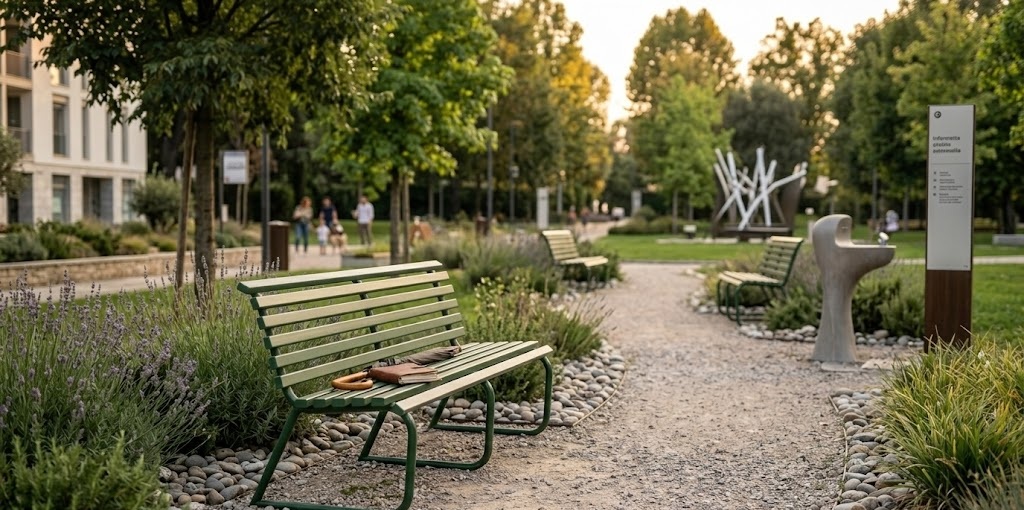
The design of open spaces and community gathering areas hinges on the selection of seating elements, capable of transforming a simple transit area into a place for meeting, relaxation, and socializing. Choosing the right street benches isn't simply an aesthetic decision; it represents a strategic, long-term investment in public decor, citizen safety, and the enhancement of the local area. Whether redeveloping a historic square, furnishing a municipal playground, landscaped the gardens of a hospitality facility, or enhancing the nature trails of a protected area, each context requires a specific type of seating. This buying guide is designed to guide you through the various solutions in our online catalog, analyzing the most durable construction materials, precise dimensional parameters, and essential regulatory requirements for a long-lasting, professional supply.
In the public furniture market, the main classification of outdoor benches is based on the nature of the construction materials. The choice of material directly affects the aesthetics of the urban context, the resistance to vandalism and the ordinary management costs.
Characterised by a modern, minimal and geometric line, these benches use load-bearing structures in hot-dip galvanised steel, tubular profiles or sides in heavy cast iron.
Advantages: They offer excellent structural resistance to mechanical loads and intensive stresses. The hot-dip galvanisation protects the metal thoroughly from rust, while the epoxy powder paint finish allows for extensive colour customisation (RAL scale). They are extremely easy to clean and sanitise.
Disadvantages: They can be subject to strong thermal shock (being very hot if exposed to direct summer sun or cold in the middle of winter).
Ideal for: Contemporary urban centres, busy squares, train stations, commercial areas and contexts exposed to high pedestrian density.
They represent the traditional choice par excellence, capable of evoking warmth, visual comfort and familiarity. They use precious woods such as exotic wood or pre-treated Nordic pine.
Advantages: Perfect landscape and aesthetic integration with natural environments. Wood guarantees optimal thermal comfort in any season, not overheating under the sun and inviting a prolonged and pleasant stay.
Disadvantages: They require periodic cycles of ordinary maintenance (application of impregnants and anti-UV protectors) to prevent biological degradation caused by mould and humidity.
Ideal for: Municipal parks, public and historic gardens, schoolyards, tree-lined avenues and nature or mountain trails.
Monoblock or combined elements with an impressive structural weight, made with high-strength concrete (HPC) or draining concrete, often finished with marble chips.
Advantages: They represent the definitive solution against vandalism and theft attempts thanks to their own weight. They are practically indestructible, resistant to impacts, scratches, abrasions and do not require any protective treatment over the years.
Disadvantages: Zero flexibility of movement once positioned on the ground and need surfaces suitable to support the massive load.
Ideal for: Historic squares, seafronts, unguarded peripheral parking areas and urban areas subject to frequent acts of vandalism.
To integrate a public seat that perfectly meets the needs of the community, it is essential to set the search filters by analyzing the dimensional specifications and construction details.
The geometric parameters of the benches must be evaluated to ensure comfortable stopping and harmonious positioning within the available floor plan:
The seat configuration should be defined based on the average time expected for users:
To guarantee structural stability against extreme weather events (strong gusts of wind) and forced mechanical stresses, the benches must have certified fixing systems. The models in our catalogue include flanged bases for direct anchoring to concrete or stone floors, or upright extensions (brackets) designed for burial and cementing in dedicated excavations.
Supplies intended for public administrations and municipal tender specifications must comply with rigorous standards. Seats must guarantee a minimum distributed load capacity (generally between 300 and 500 kg) and the absence of sharp edges or trapping points. Furthermore, compliance with accessibility requirements (Ministerial Decree 236/1989) and the CAM (Minimum Environmental Criteria) certification ensure that the wood comes from sustainably managed forests (FSC or PEFC) and that the manufacturing processes are environmentally friendly.
Playgrounds and school green areas: Benches made of autoclave-treated pine wood (Class IV) with backrests are preferred, rounded at the corners to ensure maximum accident safety for children, offering a comfortable seat for parents and carers.
Historic centres, period squares and seafronts: The perfect combination combines the timeless charm of cast iron sides worked with fine wood slats, or the use of single-piece concrete benches with a grit finish. They are perfectly resistant to saltiness and blend in with the surrounding classical architecture.
City avenues, business areas and stations: The optimal choice falls on benches made of galvanised and painted steel with a geometric and minimal design. They offer maximum hygiene, resistance to the continuous stresses of commuters and integrate perfectly into modern and digitalized urban contexts.
Redevelop your open spaces and offer citizens a comfortable and safe parking experience. On Holity.co.uk you will find a complete and certified selection of professional street furniture benches, structured to meet any budget requirement within a flexible price range from 0 to 5000 euros for a single module or multiple configurations.
Use our side navigation filters to select the suitable material (wood, metal or concrete), check the presence of the backrest and set the millimetric sliders for height, length and depth. If you are a public administration, an architect or a construction company and you need a dedicated quote for large quantities, technical support for tenders (MePA) or CAM compliance certifications, contact our customer service today to receive customized advice.
How are the thermal conductivity coefficients of metals attenuated in steel benches to avoid thermal shock in summer and winter?
All-metal benches are subject to significant surface temperature variations due to solar radiation or frost. To counteract this phenomenon without sacrificing the strength of steel, professional models adopt spaced slat configurations or micro-perforated shells. The segmentation of the surface reduces the area of continuous contact with the user's body and activates a constant flow of air that dissipates heat through natural convection. Furthermore, the application of special thermosetting polyester powder coatings with reflective pigments reduces the radiative absorption of the sheet metal, mitigating the "hot surface" effect in the summer months.
What is the chemical-physical mechanism of the Class IV autoclave treatment of Nordic pine and how does it prevent rotting in the joint areas?
The Class IV autoclave treatment involves the introduction of the wooden strips into a watertight cylinder where a deep vacuum cycle is applied to extract the air from the plant cells. Subsequently, the chamber is pressurized by introducing water-soluble solutions based on copper salts and biocides. This process forces the active ingredients to penetrate deep into the sapwood of the wood, creating a permanent chemical barrier that is resistant to xylophagous fungi, insects, and microorganisms that live in humid environments. In joint areas, where water stagnation is frequent, this deep impregnation prevents hydrolysis of the wood fibers, ensuring the structural integrity of the bench even in constant contact with wet ground or grass.
How does the formulation of high-strength concrete (HPC) with marble chips affect resistance to vandalism and forced removal?
High-performance concrete (HPC) is characterized by an extremely dense cementitious matrix, obtained by reducing the water-to-bedding ratio and integrating selected aggregates such as marble chips. This composition gives the monoblock exceptional compressive and abrasion resistance, making the surface immune to scratches, deep nicks, vandalism, and the action of solvents contained in spray paints. Furthermore, the high specific weight of the product (which often exceeds 300-400 kg per module) generates such a static inertia that structural anchoring to the ground is unnecessary in many contexts, eliminating the likelihood of malicious overturning or unauthorized forced removal.
What construction measures prevent the onset of galvanic corrosion at the connection points between the heavy cast iron sides and the steel screws?
When two metals with different electrochemical potentials (such as cast iron and common steel) come into contact in the presence of an electrolyte (rainwater, saline humidity), a galvanic cell is activated which accelerates the corrosion of the less noble metal. To inhibit this degradation at the fastening points of hybrid benches, manufacturers use exclusively stainless steel screws or steel with a geometric zinc and aluminum coating (geomet). Furthermore, insulating nylon or Teflon washers are inserted that physically interrupt the electrical circuit between the cast iron side and the bolt, protecting the coupling from atmospheric aggression.
How do the seat height set at 450 mm and the backrest inclination angle meet the accessibility requirements set by Ministerial Decree 236/1989?
Ministerial Decree 236/1989 imposes precise ergonomic requirements to ensure the inclusiveness and usability of public furniture by elderly users or users with reduced motor function. A standardized seat height of 450 mm from the floor allows the knee to flex at approximately 90 degrees, keeping the feet firmly supported on the ground and reducing the moment of force required by the leg muscles to lift. The backrest, configured with an inclination between 95 and 105 degrees with respect to the seat, distributes the weight of the trunk in a relaxing way on the lumbar region, offering a safe and stable postural relief point.
How are benches intended for public furniture tested to certify their resistance to distributed loads of up to 500 kg without permanent deformation?
Verification of the mechanical resistance of a contract bench is carried out through strict static and dynamic test protocols in the laboratory. A standardized vertical load equivalent to 500 kg is applied to the seat surface (simulating the co-presence of 4 bariatric users) for an extended period of time. Flexure sensors record the elastic deformation of the steel, wood, or concrete; upon release of the load, the structure must return perfectly to its native geometric dimensions, recording a permanent deformation equal to zero. Further tests apply lateral and longitudinal pulling forces on the backrest to simulate the dynamic stresses caused by forced pushing or improper use.
 English
  Italian
 French
 German
 Spanish