
mon-fri 9-13 / 14.30-18.30
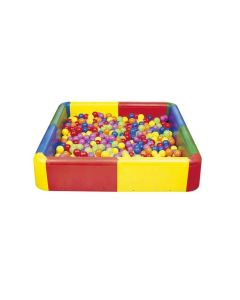
Modular ball pit in rigid plastic (130x130x30h cm) for nurseries. Interlocking colored polypropylene blocks, easy to disassemble.
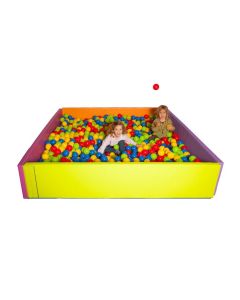
Foldable ball pit (120x120x40 cm) in high-density foam and PVC. Safe, hygienic and space-saving. Ideal for nurseries and schools.
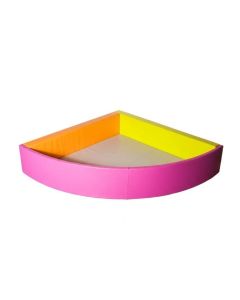
Foldable ball pit for children (150x40x15 cm). In non-deformable high-density foam and antibacterial PVC. EU certified.
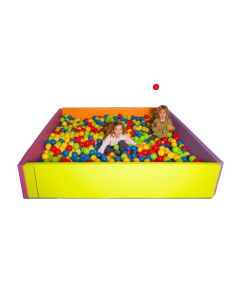
Folding ball pit (200x120x40 cm) in high-density foam and PVC. Safe, non-deformable and space-saving. For nurseries and schools.
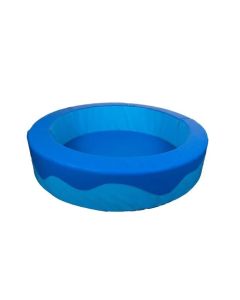
Round ball pit (Ø 150x30 cm) in high-density foam and antibacterial PVC. Safe, soft, and bite-proof structure for nurseries.
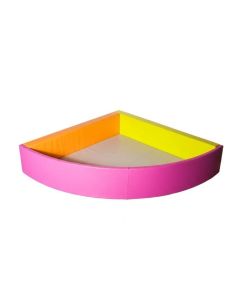
Corner ball pit (190x40x15 cm) in high-density foam and antibacterial PVC. Safe, bite-proof and EU certified.
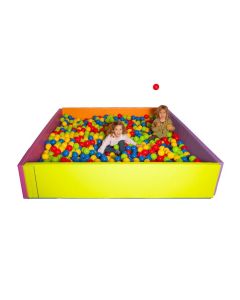
Folding ball pit (200x200x40 cm) in high-density foam and PVC. Safe, hygienic and space-saving. Ideal for nurseries and schools.
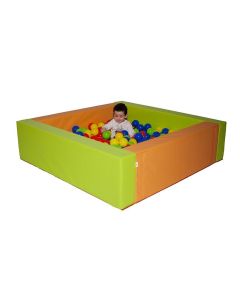
Square ball pool for children (150x150x40 cm) in high-density foam (25 kg) and PVC. Safe, antibacterial and equipped with a practical snap-on closure.
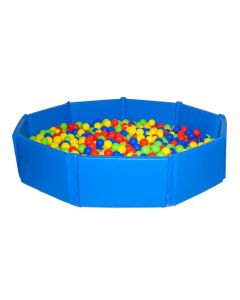
Round ball pit for children (Ø160x40 cm) with 7 sections. Foldable, made of high-density foam and antibacterial PVC. Safe for nurseries.
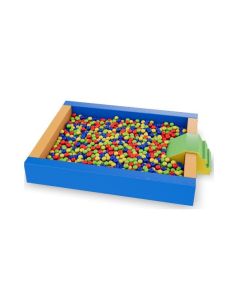
Ball pit for preschools (200x150x40 cm) in high-density foam and antibacterial PVC. Safe, soft and certified.
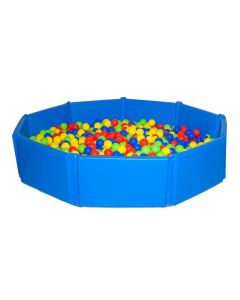
Round ball pit (Ø 200 cm, 9 sections) in high-density foam and antibacterial PVC. Foldable, safe and ideal for nurseries.
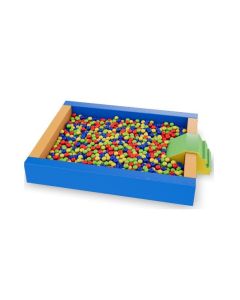
Square ball pit (200x200x45 cm) for children in high-density foam and antibacterial PVC. Safe, bite-proof and certified.
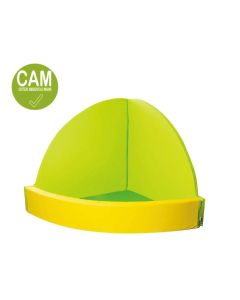
Soft corner ball pit “Angolo di bosco” (146x146x136h cm) in polyurethane foam. Super-washable, class 1 fire-retardant and antibacterial coating.
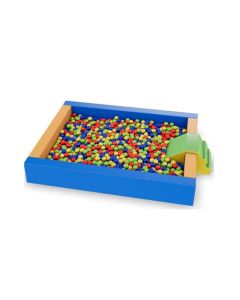
Ball pit (200x250x45 cm) for children in high-density foam and antibacterial PVC. Safe, bite-proof and certified.
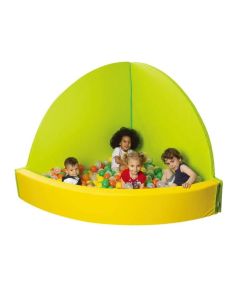
Ball pit in expanded polyurethane (146x146x136h cm). Class 1 fire-retardant coating, antibacterial and super-washable. 500 balls included.
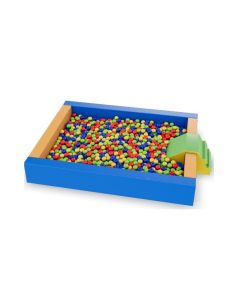
Children’s ball pit (300x200x45 cm) in high-density foam and antibacterial PVC. Safe, bite-proof, and EU certified.
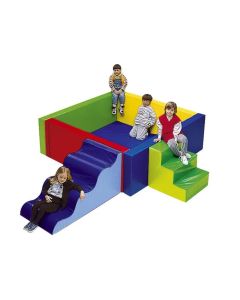
Soft modular pool (200x200x65h cm) in expanded polyurethane. Super-washable fireproof class 1 coating. Anti-shock velcro fastening.
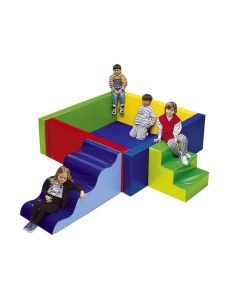
Soft pool 200x200x65h cm in expanded polyurethane with 3000 balls. Super-washable, antibacterial, and class 1 fire-retardant coating.
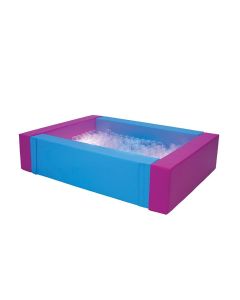
Foam ball pit (200x150x45 cm) for kindergartens. Blocks with velcro and interactive light bar reactive to sounds and movements.
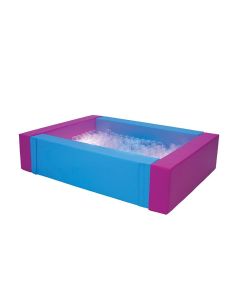
Interactive foam ball pit (200x200x45 cm). Blocks joined with velcro and light reactive to sounds/movements. For preschools.
The ball pit represents a play and educational furniture element indispensable for child-oriented facilities, recreational spaces, and therapeutic contexts. Designed to ensure maximum safety and stimulate the psychomotor development of little ones, this structure – often also referred to as a children’s ball pool – fits perfectly with the needs of playrooms, nurseries, preschools, shopping centers, and play areas in hotels and restaurants. The integration of a soft pool equipped with colored spherical elements offers a protected environment where children can explore movement, develop motor coordination, and interact socially in total peace of mind.
The construction quality of these professional furniture elements is based on the use of high-density materials for the perimeter structure, covered in washable, non-toxic technical fabrics resistant to the intensive wear typical of high-traffic environments. Choosing a professional solution means ensuring a lasting investment that meets the strictest European safety standards, while offering a first-class attraction capable of enhancing any professional space dedicated to the hospitality and entertainment of children.
Installing a ball pit within a professional facility is not just an entertainment choice, but responds to specific pedagogical and functional purposes. From the perspective of child development, immersion in a children’s ball pool offers a complete sensory experience, stimulating proprioception, balance, and spatial perception. The pressure exerted by the small spheres on the body provides constant tactile feedback, also very useful in occupational therapy and psychomotor pathways to support the management of sensory integration in the early years of life.
In commercial and recreational settings, soft containment structures offer maximum peace of mind to operators and parents, as the combination of expanded polyurethane edges and a padded bottom reduces the risk of violent impacts to zero. The activities carried out inside them also encourage spontaneous socialization and sharing among several children at once, transforming the play area into a natural gathering point within playrooms or waiting spaces in HO.RE.CA. and healthcare contexts.
In addition to the playful and therapeutic benefits, the adoption of professional pools ensures simplified logistical and hygienic management, a critical factor for any business open to the public. The synthetic coverings used in childhood structures are designed to resist detergents and sanitizers without undergoing deformation or color loss, ensuring impeccable hygienic standards with quick and effective routine maintenance operations.
The modular construction of these items also allows for efficient management of available space, offering companies the possibility to configure custom play areas, easily integrated into existing layouts. The high durability of the components drastically reduces periodic replacement costs, making the purchase an amortizable long-term investment for any operator in the educational and entertainment sector.
The landscape of recreational structures offers a diversified range of configurations to respond to different environment volumes and expected attendance. The traditional ball pit with a fixed perimeter, usually square or rectangular in shape, represents the ideal solution for dedicated corners within schools and playrooms, thanks to the ease of placement against existing walls. For larger spaces or indoor playgrounds, circular and angular variants offer excellent distribution options, optimizing the flow of children and ensuring a soft and welcoming visual impact within the room.
Perimeter walls are made with high-density polyurethane foam blocks that guarantee correct structural support even when users lean against the edges, avoiding the risk of tipping or the pool bulging. The external covering is generally made of coated PVC or technical eco-leather, sound-absorbing, fire-retardant materials, free of phthalates and resistant to mechanical tears and continuous rubbing.
Variants also differ based on capacity and the diameter of the internal spherical elements. A classic children’s ball pool in a professional setting uses high-resistance PE plastic elements, soft to the touch but non-deformable, made with air blowing to avoid the presence of rigid welds or sharp edges that could scratch young users.
The spheres are available in a wide chromatic spectrum to create stimulating visual combinations or monochromatic palettes dedicated to design contexts or Snoezelen multi-sensory paths. It is also possible to opt for integrated structures equipped with soft access slides, climbing ramps, or modular units connectable via high-strength Velcro, which allow for the expansion of the play area over time following the growth of the hospitality or educational business.
Selecting the most suitable equipment requires careful analysis of the intended use and the primary age target of the users. For nurseries and spaces dedicated to early childhood (0-3 years), it is advisable to focus on a children’s ball pool characterized by low edges, generally between 30 and 40 centimeters, to allow easy independent access and facilitate constant supervision by educators.
Conversely, for playrooms, playgrounds, or recreational centers aimed at children aged 3 to 10, it is preferable to opt for a ball pit equipped with higher sides (up to 60-80 centimeters) and thicker walls to guarantee structural stability under the push of a greater dynamic mass and during simultaneous use by multiple users.
A fundamental criterion concerns the exact calculation of the quantity of spheres needed for the ideal filling of the pool, a determining factor for the playful effectiveness and safety of the installation. The most common error during the purchase phase consists in underestimating the volume of the structure, leaving the pool half-empty and nullifying the desired protected immersion effect.
Furthermore, it is necessary to carefully evaluate the perimeter free space required by safety regulations around the structure, ensuring adequate impact zones with additional anti-trauma flooring where the pool is combined with slides or climbing modules. Choosing products with waterproof coverings and zippers covered by protection flaps prevents the accumulation of dirt in the crevices, significantly simplifying periodic sanitization.
The installation and use of play equipment within public and commercial structures are regulated by precise European safety standards aimed at protecting children’s health. A ball pit intended for professional use must fully meet the requirements of the UNI EN 1176 standard relating to equipment for play areas, in addition to complying with the UNI EN 71 standard on toy safety.
Covering materials must have fire reaction certification (usually Class 1 or 1IM) and demonstrate the total absence of harmful substances such as phthalates, heavy metals, and toxic flame retardants, in compliance with REACH community regulations. The plastic spheres must possess non-toxicity and crush resistance certificates to prevent them from fragmenting, creating sharp parts or small inhalable pieces.
For hospitality structures, schools, and play centers, the correct archiving of conformity certificates issued by the manufacturer represents a fundamental requirement for passing inspections by supervisory bodies and ensuring insurance coverage for the facility.
Alongside the structural aspects, it is essential to establish an internal protocol for the systematic cleaning and disinfection of both the containment module and the individual small spheres, using automated ball-washing machines or dry steam sanitization processes conducted with products suitable for children’s skin contact. Rigid compliance with these parameters ensures full legal conformity and maximum safety for all young visitors.
Explore all the products in the category and compare the available solutions to find the one best suited to your operational context.
A professional ball pit is a modular padded structure designed for public and community spaces. Made of expanded polyurethane and covered in non-toxic technical fabric, it contains deformable plastic spheres to offer children a safe recreational and motor experience.
Dimensions vary based on the room’s capacity. For playrooms and high-traffic spaces, structures with sides between 200 and 300 centimeters and side heights of about 50-60 centimeters are recommended to accommodate multiple children simultaneously in total safety.
The calculation depends on the volume of the pool. As a guide, to cover a surface area of one square meter with an immersion height of about 30 centimeters, approximately 500-600 balls with a standard diameter of 7.5 centimeters are needed to ensure optimal filling.
The external PVC structure is sanitized daily with neutral detergents and medical-surgical devices. The balls can be sanitized periodically via dedicated automatic washing machines that vacuum, wash with a disinfectant solution, and dry the elements in a continuous cycle.
They must comply with European standards EN 1176 and EN 71 for toy safety. Foam materials and coverings must guarantee Class 1IM fireproof certification and be completely free of phthalates or harmful chemicals according to the REACH regulation.
Balls for professional use are made of high-density polyethylene by air blowing. This process gives high elasticity that allows the sphere to deform under the pressure of body weight and instantly return to its original shape without breaking.
Yes, the ball pool is widely used in occupational therapy and psychomotricity. It stimulates coordination and balance, providing proprioceptive and sensory stimulation fundamental for cognitive and motor development in early childhood.
 English
  Italian
 French
 German
 Spanish