
mon-fri 9-13 / 14.30-18.30
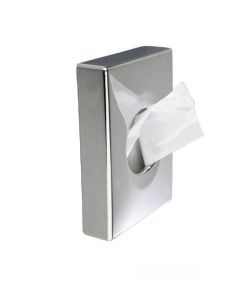
Pack of 3 pieces
€26.46 VAT excl.Sanitary bag dispenser in chrome-plated ABS and polypropylene, 138x100x28 mm. Versatile wall-mounted or countertop installation for public facilities.
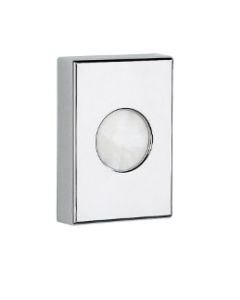
Chrome ABS sanitary bag dispenser, 13.6x9.5x2.8 cm. Compact and durable solution for professional restrooms and the HoReCa sector.

Sanitary bag dispenser in black AISI 304 stainless steel, wall-mounted, 13.5x28 cm. Ideal for high-traffic restrooms.
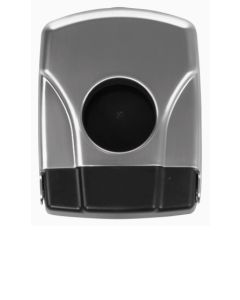
Stainless steel sanitary bag dispenser, dimensions 120x40x155 mm. Compact and resistant structure for professional public restrooms.
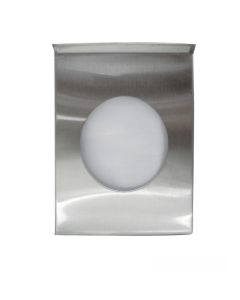
Stainless steel sanitary bag dispenser with polished or satin finish. Compact dimensions 136x95x23 mm, ideal for professional hygiene.
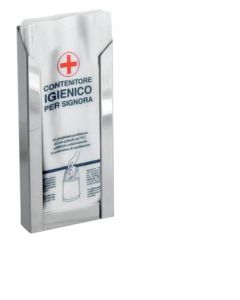
AISI 304 stainless steel sanitary bag dispenser (W13.5xH28 cm) with wall mounting. Compact design for professional public restrooms.

Sanitary bag dispenser in polished or satin stainless steel. Dimensions 13x4.5x27cm, wall-mounted, ideal for public bathrooms and hotels.
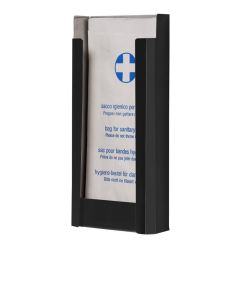
Painted steel sanitary bag dispenser pocket (290x130x45 mm). Made in Italy anti-fingerprint and ultra-resistant design for the HoReCa sector.
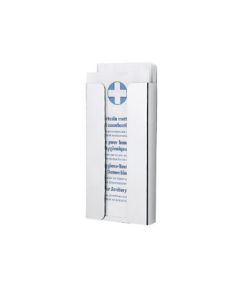
Pack of 10 pieces
€261.20 VAT excl.Steel sanitary bag holder, 23.7x12.4x3.4 cm. Durable structure with top opening, ideal for professional HoReCa restrooms.
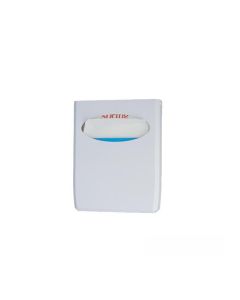
Wall-mounted white ABS toilet seat cover dispenser. Compact dimensions 235x290x57 mm, ideal for professional restrooms and space-constrained environments.
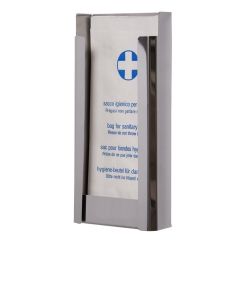
Polished stainless steel sanitary bag dispenser (290x130x45 mm). Robust and corrosion-resistant Made in Italy design for public restrooms.
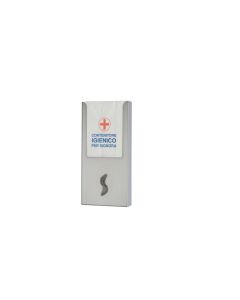
Pack of 2 pieces
€64.42 VAT excl.Professional paper sanitary bag dispenser in AISI 304 stainless steel, dimensions 280x130x40 mm. Ideal for high-traffic toilets.
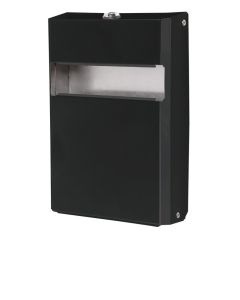
Professional dispenser for toilet seat covers in painted steel, 210x65x300 mm. Made in Italy product with anti-vandal lock and fixing kit.
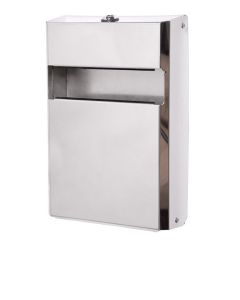
Professional toilet seat cover dispenser in polished AISI 304 stainless steel. Dimensions 210x65x300 mm, Made in Italy with safety lock.
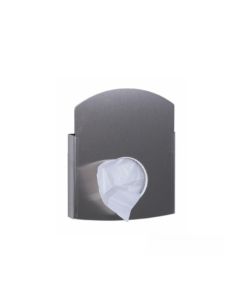
Stainless steel sanitary bag dispenser, 165x135x25 mm. Robust and compact, ideal for wall-mounted installations in professional environments.
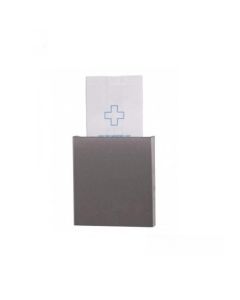
Stainless steel sanitary bag dispenser, dimensions 170x154x25 mm. Wall-mounted, slim design for professional restrooms.
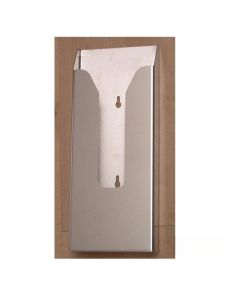
Sanitary bag dispenser in AISI 304 stainless steel. Dimensions 280x125x33 mm. Ultra-compact design for wall-mounted installations in public bathrooms.
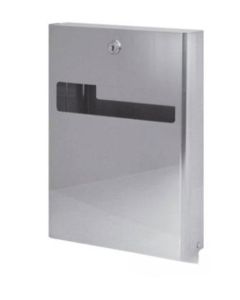
Professional stainless steel toilet seat cover dispenser (21.5x6x29 cm), available in polished or satin finish for public restrooms.
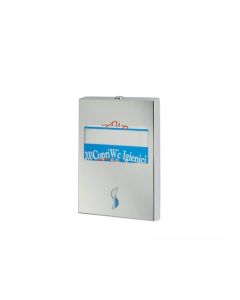
Toilet seat cover dispenser in AISI 304 stainless steel, 316x215x47 mm. Compact design with level control window for professional hygiene.
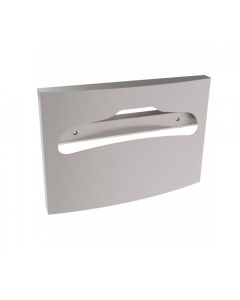
Toilet seat cover dispenser in AISI 304 stainless steel, dimensions 285x400x50 mm. Durable and high-capacity, ideal for high-traffic restrooms.
Toilet seat cover and sanitary bag dispensers are essential solutions for hygiene management in public restrooms, offices, and healthcare facilities. These devices dispense protective paper for the toilet seat and collect sanitary waste in a discreet and hygienic manner, reducing direct contact between users and common surfaces. The choice of the right dispenser directly affects the perception of cleanliness and professionalism of the environment, as well as influencing maintenance costs and the comfort of end users.
Installing dedicated dispensers for toilet seat covers and sanitary bags significantly transforms the user experience in public restrooms. These devices offer immediate hygienic protection, allowing users to apply a disposable barrier before using the seat, a practice recognized as effective prevention against contamination. At the same time, sanitary bag dispensers provide a discreet solution for the disposal of personal items, eliminating embarrassment and ensuring compliance with public health and privacy regulations. For facilities managing high user flows—shopping centers, motorway service areas, stations, hospitals—these dispensers drastically reduce cleaning times, limit resource waste, and maintain constant hygienic standards throughout the day.
From a management perspective, well-positioned and easily accessible dispensers decrease extraordinary cleaning interventions and extend routine cleaning intervals. Their presence also communicates attention to the well-being of guests, increasing the reputation of the facility. Many public space managers find that a restroom equipped with these accessories records fewer complaints and more positive reviews from customers, a significant aspect for commercial activities and hospitality structures.
There are several categories of dispensers on the market, each suitable for specific contexts. Stainless steel dispensers represent the most common solution in high-traffic public restrooms: corrosion-resistant, easy to sanitize, and available in polished or satin finishes, they adapt to both modern and traditional environments. These models support significant weight and maintain structural integrity even in high humidity conditions, typical of bathrooms. Chromed ABS dispensers, on the other hand, offer an economical alternative without compromising on durability, ideal for facilities with tighter budgets or less critical environments in terms of humidity. There are also specific models: pocket-sized dispensers, compact and discreet, perfect for small bathrooms or limited spaces, and wall-mounted models with a rotating dispensing mechanism, which facilitate paper extraction.
Regarding sanitary bags, dispensers vary mainly in capacity and opening method. Some models feature a circular front opening that allows insertion without manual contact, while others have a more traditional flap door. Capacity varies from small personal dispensers to containers capable of holding dozens of bags, suitable for very high-traffic facilities. Some dispensers combine both functions—toilet seat cover and sanitary bag collector—into a single unit, optimizing space and simplifying installation. The materials used always guarantee resistance to humidity and ease of cleaning, non-negotiable prerequisites for this type of accessory.
Selecting the appropriate dispenser requires evaluation of multiple technical and operational factors. First, it is essential to estimate the volume of use: a medical office with few patients per day does not have the same needs as a shopping center managing thousands of visitors. For high-traffic environments, it is recommended to prioritize stainless steel models with higher capacity, capable of reducing refill frequency and maintaining order during peak hours. A common mistake is underestimating the importance of the installation position: the dispenser must be visible, easily reachable without having to move from the toilet, and positioned so as not to obstruct passage in narrow bathrooms. Dimensions become critical in compact spaces—a compact vertical pocket model (30x45x290 mm) takes up minimal space, while a larger dispenser (320x65x300 mm) needs a dedicated wall.
A second aspect concerns the type of fixing available: models designed for wall mounting require more complex installation interventions, while dispensers that can be placed on a flat surface offer greater flexibility, especially in temporary contexts or where it is not possible to intervene on the wall structures. The choice of material depends on environmental conditions—in areas with high humidity or subject to steam, stainless steel is always preferable to ABS, as it does not degrade over time and maintains hygienic properties. Furthermore, consider the aesthetic finish: a modern bathroom benefits from clean lines and satin finishes, while more classic environments can enhance polished finishes. Finally, always check the compatibility of the dispenser with the paper and bag formats available on the market, to avoid future supply difficulties.
Dispensers for public restrooms, although not subject to specific rigid certification regulations like other sanitary furnishings, must still comply with a series of standards aimed at ensuring hygiene, safety, and functionality. The UNI EN 12621 standard defines the general requirements for hygienic item dispensers, specifying criteria for robustness, corrosion resistance, and ease of cleaning. Materials must be non-toxic, not release harmful substances even in conditions of prolonged humidity, and allow for routine sanitization with common disinfectants used in public restrooms. The standard also provides that dispensing mechanisms be designed to minimize manual contact, reducing the risks of pathogen transmission.
Recurring aspects emerged from best practices concern compatibility with workplace safety regulations: dispensers must be installed so that they do not constitute obstacles for emergency evacuation and do not protrude dangerously into passage areas. In healthcare contexts, such as hospitals and clinics, the application of more rigid standards is frequent, with the obligation of certified materials complying with European directives on products in contact with food (although indirectly applicable for cross-contamination prevention). Maintainability is a crucial requirement: dispensers must allow for easy opening for refilling without requiring special tools, facilitating the work of cleaning staff and reducing intervention times. In some European countries, ISO 14855 certification for paper biodegradability is becoming prominent, pushing towards the use of eco-compatible papers and bags, an aspect increasingly requested by management sensitive to environmental sustainability.
Explore all the products in the category and compare the available solutions to find the one best suited to your operational context, evaluating materials, dimensions, capacity, and fixing types based on the specific characteristics of your space and the hygienic needs of your facility.
Stainless steel offers greater corrosion resistance, prolonged durability, and better cleanability in humid environments, although it requires a higher initial investment. Chromed ABS is more economical, lightweight, and suitable for less critical contexts, but in very high-traffic restrooms, it tends to degrade more quickly.
The capacity should be proportionate to the average number of daily users and the cleaning staff’s replacement frequency. A restroom in an office of 50 people can use a 10-15 unit model, while shopping centers require a capacity of 30-50 bags to reduce refills during peak hours.
Dispensers that can be placed on a flat surface are ideal for temporary or provisional installations, as they do not require wall interventions. They are easily relocatable and do not compromise permanent structures, although they require available space near the toilet.
No, they mainly require routine cleaning with common disinfectants used in public restrooms and periodic refilling of materials. For stainless steel, the use of specific detergents is recommended to avoid streaks; ABS models tolerate a wider range of chemical products.
Yes, there are compact vertical pocket models (30x45x290 mm) specifically designed for narrow spaces. These maintain full aesthetic functionality while occupying minimal space, and it is common to find them in aircraft, railway, and small venue toilets.
The UNI EN 12621 standard is the main reference for hygienic dispensers. In hospitals, add certifications for material biocompatibility, compliance with European directives on products in indirect contact with food, and compatibility with high-power enzymatic disinfectants used in healthcare environments.
Significantly: stainless steel (AISI 304) allows sanitization with weak acids and alcohol without damage; chromed ABS is robust but more sensitive to aggressive solvents. In very high-use restrooms, the choice of material determines durability in the medium term (5-10 years).
Yes, some combined dispensers integrate both functions into verticalized structures, saving space and simplifying installation. They are particularly useful in small bathrooms where available wall space is critical for the simultaneous installation of multiple accessories.
 English
 Italian
 French
 German
 Spanish