
mon-fri 9-13 / 14.30-18.30
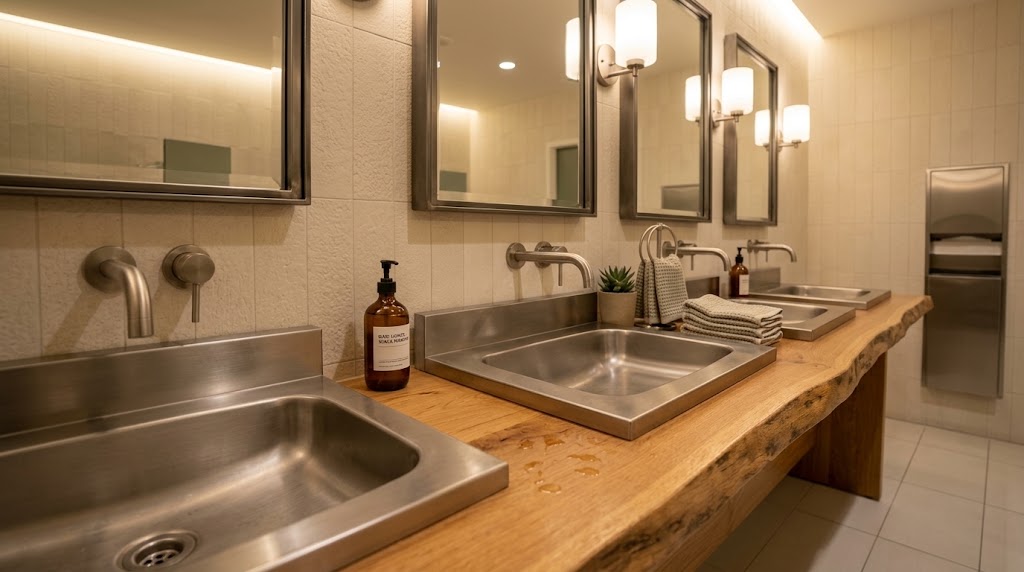
In high-traffic environments such as public restrooms, hospitals, schools, stations, gyms, and professional kitchens, the choice of bathroom fixtures must meet rigorous hygiene criteria, maximum durability, and ease of sanitization. Choosing the ideal stainless steel sinks isn't just a simple furniture purchase; it means equipping the structure with mechanically indestructible components that are immune to corrosion, non-porous, and resistant to vandalism and aggressive chemicals. From compact circular sinks for small restrooms to multiple rectangular sinks for intensive in-line use, the selection on Holity.co.uk allows you to profile each solution based on geometry, installation type, surface finish, and current regulatory frameworks. This buying guide will guide you in selecting the perfect sink, analyzing shapes, sizes, integrated accessories, and price ranges.
The planimetric configuration of the sink must be selected based on the size of the room and the number of users expected for each access shift:
Almost all the professional sinks in the catalogue are made of AISI 304 Stainless Steel (18/10), an alloy containing 18% Chromium and 8% Nickel:
The choice of external finish affects the aesthetics of the bathroom and the time dedicated to ordinary maintenance:
For a proper installation, it is necessary to evaluate the technical features of the tub:
The range available in our store covers the purchasing needs from the single service bathroom to the fitting out of large industrial complexes, moving within a price range between €44.00 and €1437.00:
Sinks intended for use in public places and offices must satisfy specific legal and safety requirements:
Equip your facility with robust, hygienic sanitary fixtures that comply with current regulations. Explore the online catalog on Holity.co.uk to find the most suitable model: set the shape (circular, rectangular, shell, angular or oval), select the dimensions and choose the finish between glossy or satin.
Request a personalized quote today: our sales team is at your complete disposal to provide you with technical data sheets with quotes, material conformity certifications and reserved offers for batch orders.
Why is AISI 304 stainless steel the ideal choice for sinks installed in healthcare and public environments?
AISI 304 stainless steel contains a high percentage of chromium and nickel which develops an invisible and self-regenerating passivation film on the surface. This layer completely prevents oxidation and the formation of rust, making the material completely water-repellent and immune to the action of soaps and disinfectant detergents. Furthermore, the smooth, non-porous surface prevents the adhesion of organic biofilms and bacteria, allowing for immediate sanitization in compliance with the most stringent hygiene and health standards.
What advantages does a satin finish offer compared to a polished one in a frequently used sink?
The satin (or brushed) finish is subjected to a mechanical process that creates parallel micro-lines on the surface of the metal. This matte finish offers a great practical advantage in public bathrooms: it hides the streaks left by the evaporation of water drops and limescale residues, making fingerprints and small surface scratches caused by daily use less visible, reducing the need for aesthetic cleaning.
How should routine maintenance be carried out on stainless steel sinks to preserve their shine and avoid streaks?
Daily cleaning simply requires the use of a soft microfibre cloth dampened with hot water and neutral degreasing detergents. To remove limescale, you can use solutions based on citric acid or diluted vinegar, taking care to rinse thoroughly. It is strictly forbidden to use steel wool, abrasive metal sponges, pure bleach or muriatic acid, which could scratch the surface or damage the passivation layer of the steel.
Is it possible to install a stainless steel sink on plasterboard walls or lightweight partitions?
Yes, stainless steel sinks have a significantly lower weight than their ceramic counterparts. However, for installation on plasterboard walls or lightweight partitions it is essential to provide metal reinforcement plates or certified wall brackets inside the wall frame. This prevents the pushing stresses exerted by the user during washing from damaging the wall surface.
How does the price range in the category (€44.00 - €1437.00) correlate with the size of the sink, the thickness of the steel and the accessory controls?
The pricing structure is determined by the metric development of the sanitary fixture, the thickness of the AISI 304 stainless steel sheet and the presence of mechanical or electronic components. The entry-level options (€44.00 - €150.00) include compact circular built-in or wall-mounted toilet bowls. The intermediate range (€150.00 - €450.00) refers to individual rectangular wall-mounted sinks with tap hole and shell models with siphon covers. The top-of-the-range prices (up to €1437.00) are reserved for large in-line collective sinks (from 2 to 4 stations), surgical sinks for hospital use and industrial handwashing units complete with pedal or photocell operation for contract catering.
 English
  Italian
 French
 German
 Spanish