
mon-fri 9-13 / 14.30-18.30
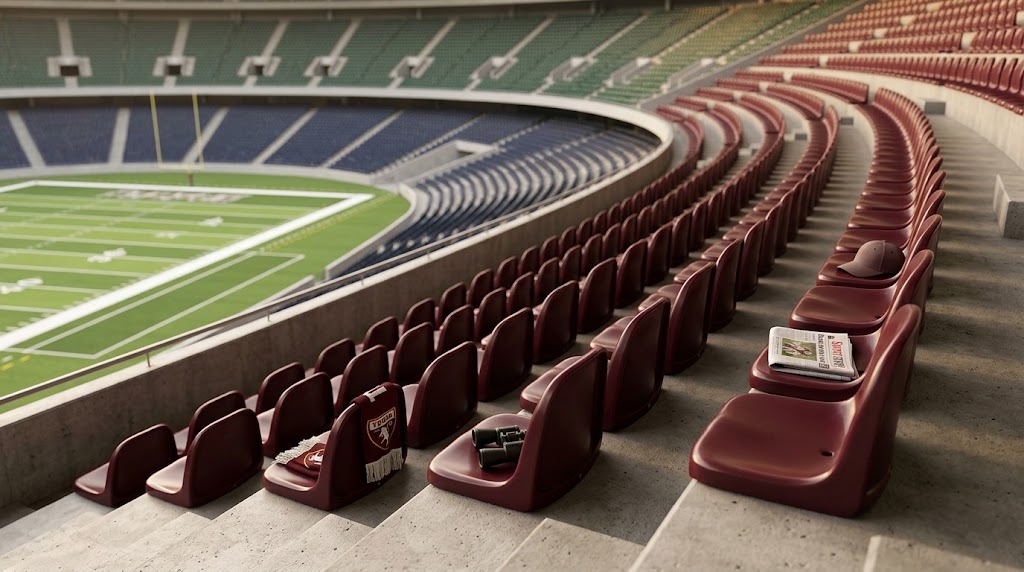
Whether you're renovating a large municipal stadium, furnishing the grandstands of a sports hall, equipping a multi-sports facility with new seats, or furnishing a school auditorium, managing spaces intended for spectators requires the utmost attention. Choosing the ideal seating for stadiums and sports facilities isn't just a simple furniture purchase; it means installing technical devices designed to ensure the safety of the public, resist wear and tear from vandalism and the elements, and strictly comply with current fire safety regulations. An orderly and stable positioning of plastic seats helps organize the flow of people, define fan sectors, and facilitate rapid evacuation maneuvers in the event of an emergency. From high-backed monocoques to compact backless models for steeply sloping stands, the range available in the Holity.co.uk catalogue offers certified solutions compliant with UNI EN 13200 standards. This purchasing guide analyses types, plastic polymers, fireproof certifications and fastening systems to guide you towards an informed choice.
The shape of the monocoque must match the required level of comfort, the slope of the grandstand and the metrics of the steps:
The solution of choice for modern sports facilities, top-tier stadiums, sports halls, auditoriums and multipurpose rooms.
Ultra-compact systems designed to optimise passage space and reduce the weight of the structure.
The polymers used for the moulding of monocoques define the mechanical resistance against impacts and the response to climatic factors:
The installation of seats in facilities open to the public is subject to mandatory legislative constraints:
The anti-tipping resistance depends on the correct selection of the metal assembly kit:
The Holity.co.uk navigation filters allow you to match the size of the seat to the available step pitch:
The assortment available on our store guarantees maximum convenience for small sports fields or large supplies for municipal stadiums, moving within a price range between €14.00 and €33.00 for a single seat:
Bring the stands of your sports facility up to standard, ensure maximum comfort for your fans and guarantee compliance with fire regulations with the stadium seats available on Holity.co.uk. Explore the online catalogue to select the most suitable model: set the geometry (with or without backrest), choose the fireproof finish and identify the colour options (red, blue, green, black, grey, yellow) to compose the social colours of your club.
Request a personalised quote today: our sales team is at your complete disposal to provide you with technical data sheets, Class 1 fire approval certificates and reserved offers for batch orders.
What characteristics must the Class 1 fireproof certification have to be approved by the Fire Brigade?
The fireproof certification (Class 1 fire reaction or Class 1 IM for padded seats) certifies that the plastic resin used for moulding the shells has been treated with flame-retardant additives. During laboratory tests, the seat exposed to a direct heat source does not fuel combustion, does not produce flammable molten droplets and self-extinguishes when the flame is removed. The supplier must issue the certificate approved by the Ministry of the Interior to allow testing and the issuing of the Fire Prevention Certificate (CPI) for the system.
How do you calculate the number of seats to be installed along a staircase while maintaining safety distances?
To calculate the number of seats per row, measure the total length of the staircase expressed in centimetres (excluding escape routes and access steps) and divide it by the nominal width of the seat (usually between 40 and 45 cm per seat). To ensure easy passage, the depth of the step (step) must allow a clear passage width of at least 35-40 cm between the front of the seat and the riser of the next step.
How do anti-UV treatments protect polypropylene seats from premature aging?
Direct solar radiation transmits Ultraviolet Rays that break the polymer chains of traditional plastics, causing the pigments to fade and the material to yellow or crystallize (which becomes fragile and tends to crack on first impact). Stadium seats for outdoor use are molded with resins enriched with UV stabilizer masterbatches (HALS), which absorb radiation while maintaining the color brightness and flexible mechanical strength for over 10-15 years of exposure to atmospheric agents.
What are the installation differences between fixing on a horizontal surface and fixing on the step riser?
The horizontal fixing exploits the walkable surface of the step: the anchors are drilled vertically into the concrete. The (vertical) fixing on the riser requires the seat or frame to be anchored to the vertical wall of the step. The fixing on the riser is very popular in open-air stadiums because it leaves the underlying floor free, making cleaning and washing the steps incredibly easy and quick using a pressure washer or mechanical broom.
How does the price range in the category (€14.00 - €33.00) correlate with the type of polymer, the backrest and the fire safety certifications?
The price structure is determined by the mass of plastic resin used, the presence of the backrest and the quality of the polymer. The entry-level range (€14.00 - €20.00) includes standard polypropylene flat seats without backrests for covered stands or small fields. The mid-range price range (€20.00 - €27.00) includes mid-backed chairs in Class 1 fire-retardant certified polypropylene with UV treatments. The top-of-the-range prices (up to €33.00) include high-strength chairs in vandal-resistant polyamide (nylon), certified Class 1 IM fire resistance, with an AISI 304 stainless steel fixing kit for municipal stadiums and contract sports halls.
 English
  Italian
 French
 German
 Spanish